Last Updated: July 4, 2026 | Originally Published: July 7, 2026
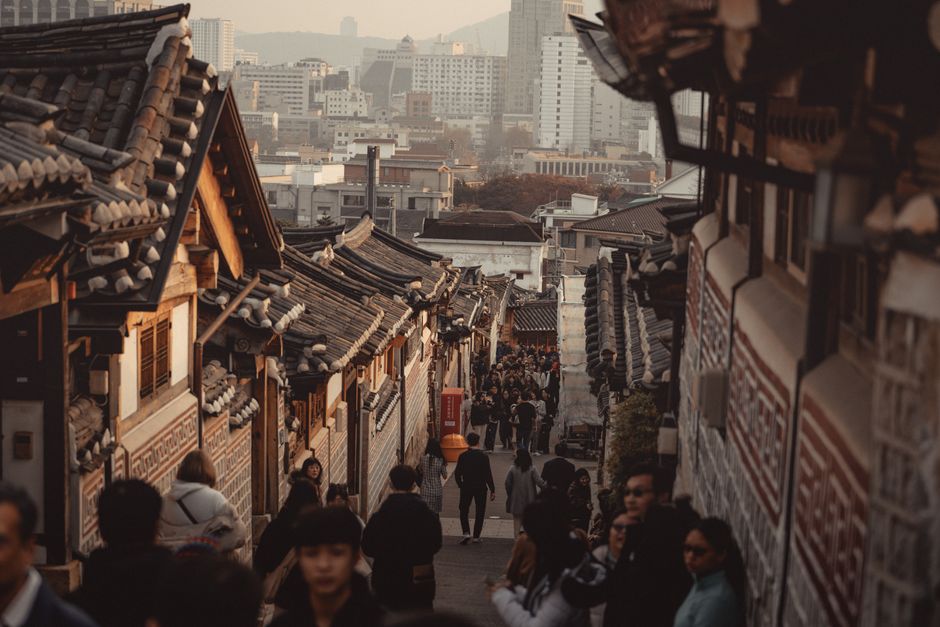
- Ikseondong is a warren of restored 1920s hanok alleys filled with indie cafés, boutique shops, and restaurants, just east of Insadong in Jongno. It is free to walk, open 24/7 as a neighbourhood, though individual shops set their own hours.
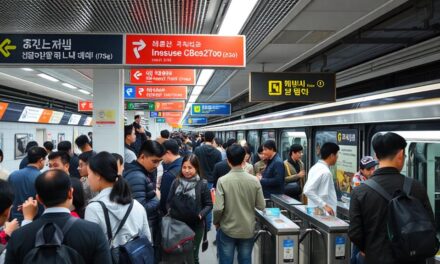
- Take Line 1, 3, or 5 to Jongno 3-ga Station, Exit 4—a 1-minute walk to the alley entrance. Exit 6 also works (2 minutes).
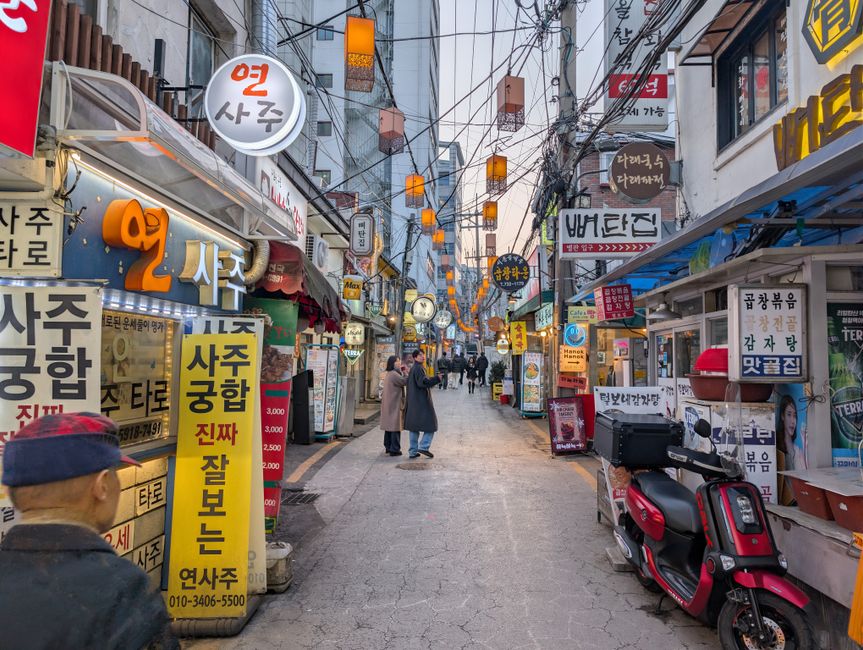
- Shops and cafés generally open 10:00–21:00. The alleys themselves are open any time—best photographed in early morning (empty) or evening (lantern-lit).
- Unlike Bukchon (private residences with “quiet” signs), Ikseondong is a commercial hanok zone—you are supposed to go inside. The buildings are smaller, denser, and more intimate.
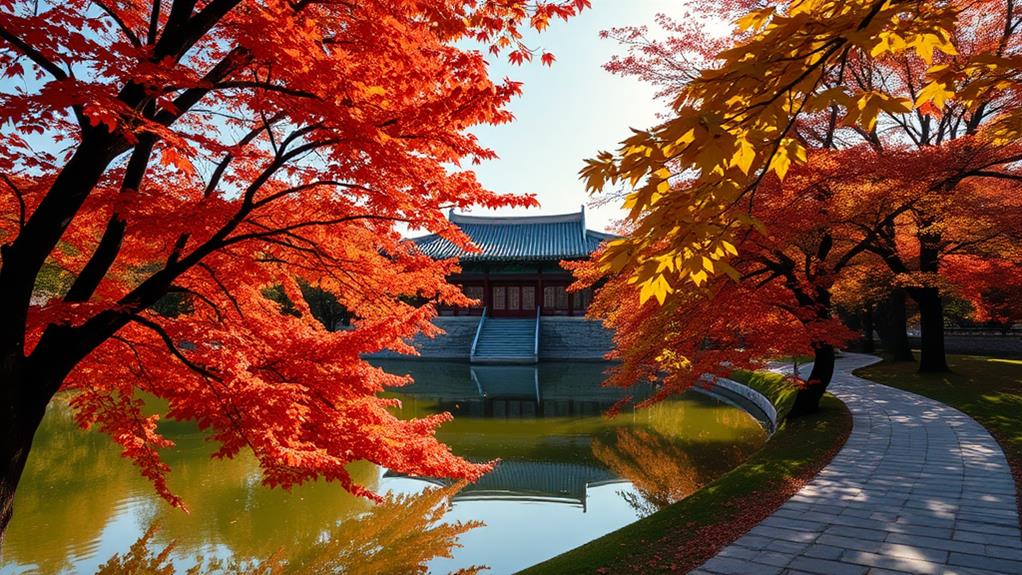
Ikseondong is what happens when someone takes a 1920s hanok slum scheduled for demolition, fills it with pour-over coffee, vintage ceramics and a soufflé pancake shop, and calls it a day. The result is Seoul’s most photogenic alley grid—tight, crooked, and almost entirely flat-lay friendly.
I found it by accident while walking from Jongmyo Shrine toward Insadong. A side alley opened into a courtyard with a café that had exactly four tables and a cat that clearly owned the place.
I sat, ordered a matcha latte for about 6,500 KRW, and burned an hour watching people walk past the hanok window frames. It was the best unscheduled hour of my trip.
A short history of Ikseondong
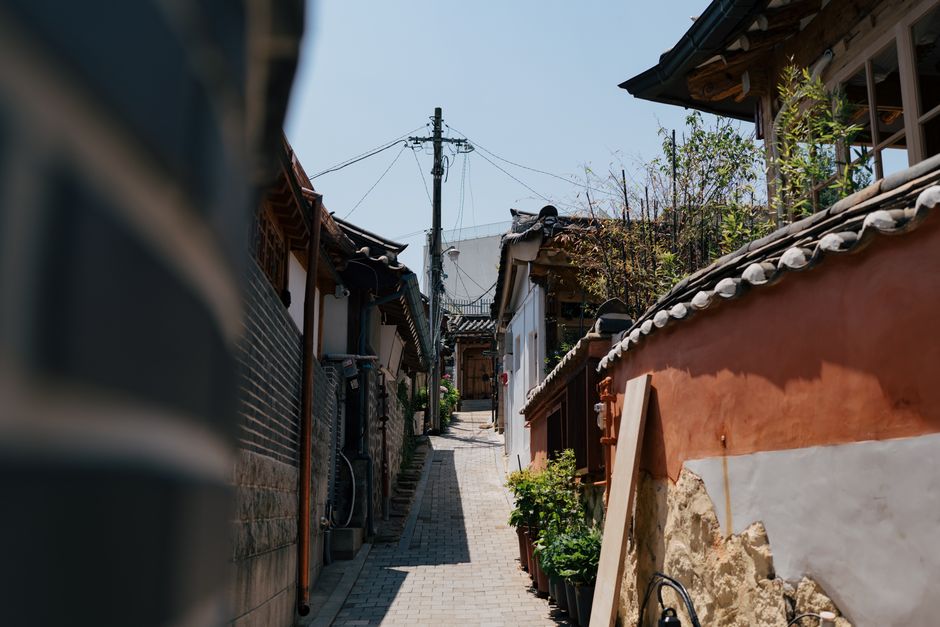
Ikseondong was built in the 1920s as Seoul’s first planned hanok residential district—dozens of traditional Korean courtyard homes laid out on a grid for a rising middle class. Unlike the grander palaces and upper-class hanok of Bukchon, these were smaller, denser, and built for clerks and merchants.
By the 2000s the district was decaying and largely empty, with several alley sections slated for demolition. A grassroots preservation push in the mid-2010s, combined with a wave of young entrepreneurs opening cafés and shops in the vacant hanok, turned the neighbourhood around.
Seoul designated it a Hanok Preservation Area, and by 2018–19 it had become the city’s hottest indie-cultural district. Visit Seoul lists Ikseondong among its recommended “hanok alley” walking routes.
Today Ikseondong works because The Korea Tourism Organization now promotes the area as a model of hanok-based cultural tourism. it kept the bones: the tile roofs, the wooden beams, the alley width wide enough for exactly one person and a selfie stick.
It just swapped the residents for baristas and ceramicists who pay to maintain those bones.
What to see & do in Ikseondong
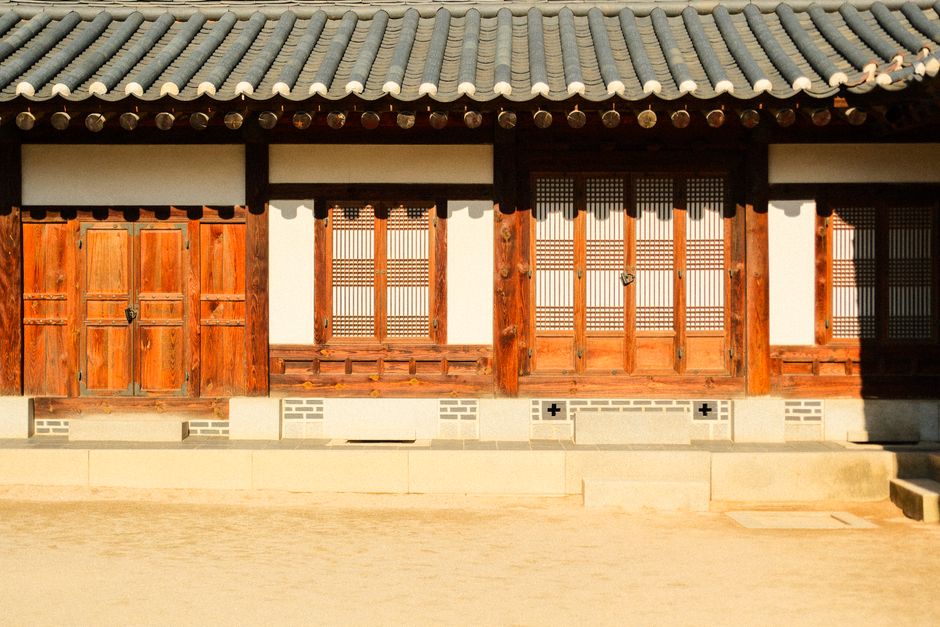
The alleys themselves. The main draw is simply wandering. The alley grid is roughly five blocks by three blocks, and every lane twists into a courtyard or dead-ends at a café with a hanok-framed window.
Do not follow a map—follow the sound of espresso machines and the smell of baking butter.
Indie cafés. Ikseondong has the densest concentration of independent coffee shops in Seoul. Names change frequently, but the format is consistent: pour-over in ceramic cups, hanok courtyard seating, and a pastry counter of madeleines or scones. Budget about 5,500–8,000 KRW for a coffee.
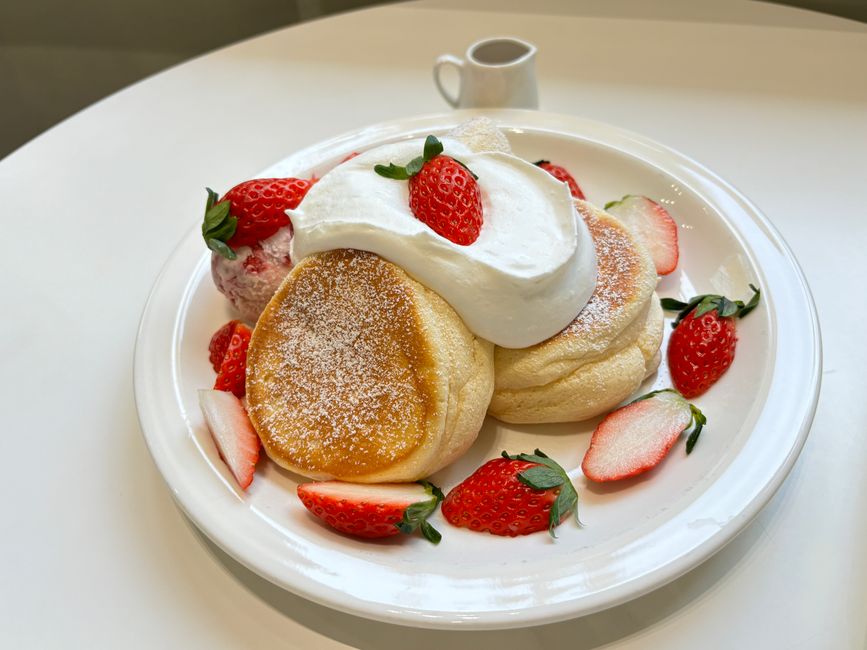
The soufflé pancake spot (typically a 20–30 minute wait) is an Ikseondong ritual at this point.
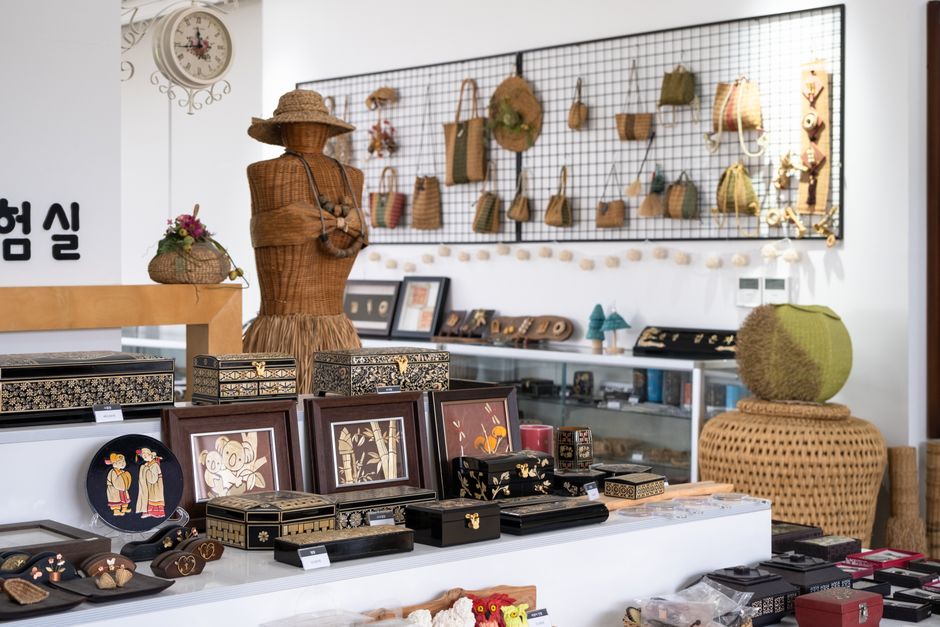
Vintage and boutique shops. Small ateliers sell handmade jewellery, ceramics, hanbok-inspired clothing, and design goods. Prices are boutique-level (expect 20,000–80,000 KRW for clothing), but the curation quality is high. Several shops occupy single-room hanok where the owner sits in the courtyard and sews while you browse.
Restaurants and makgeolli bars. The food options are concentrated on the wider lanes: Korean-Italian fusion, tteokbokki with cream sauce (don’t knock it until you try it), and makgeolli bars in converted hanok basements. Dinner for two runs roughly 30,000–60,000 KRW depending on the spot.
Tickets & opening hours (2026)
| What | Hours | Price | Note |
|---|---|---|---|
| Hanok alleys | 24/7 | Free | Respectful noise levels near residences |
| Cafés | ~10:00–21:00 | ~5,500–8,000 KRW per drink | Hours vary by shop; some close Mondays |
| Boutiques | ~11:00–20:00 | Free entry; purchases 10,000–80,000 KRW | Many closed Mondays or Tuesdays |
| Restaurants | ~11:30–22:00 | ~15,000–30,000 KRW per person | Lunch last order ~14:30 |
“Ikseon-dong is a hanok preservation area where 1920s traditional Korean homes have been transformed into cafés, restaurants, and shops. Narrow alleyways create an intimate atmosphere that contrasts with the high-rise developments surrounding it.”
How to get there
| Method | Route | Walk from station |
|---|---|---|
| Subway (best) | Line 1 / Line 3 / Line 5 → Jongno 3-ga Station, Exit 4 | ~1 minute |
| Subway (alt) | Line 1 / Line 3 / Line 5 → Jongno 3-ga Station, Exit 6 | ~2 minutes |
| Walk from Insadong | From Insadong main street, walk east on Donhwamun-ro | ~7 minutes |
Exit 4 is the direct shot: one minute from the turnstile to the first alley. Exit 6 also works and involves slightly less stair-climbing.
If you are already in Insadong, the walk east takes about 7 minutes and passes through a less-touristed stretch of Jongno that is worth the detour on its own.
Best time to visit
Ikseondong works across all four seasons because the cafés provide refuge from heat, cold and rain. Spring (late March–May) and autumn (September–October) are the ideal walking months, with mild temperatures and good alley light for photos.
Summer means humidity, but the hanok courtyards shade well and the iced-latte-to-Instagram-post pipeline functions at full capacity. Winter brings fewer tourists and a cozier atmosphere—a hot yuja-cha (citron tea) in a hanok café with snow on the roof tiles is peak Ikseondong.
Time of day matters more than season. The 10:00–11:30 AM window on a weekday is the quietest—cafés are open, shops are setting up, and the lanes are near-empty. Afternoon (13:00–16:00) is peak crowd. Evening (18:00–20:30) has the best atmosphere and lighter foot traffic than the afternoon push.
Ikseondong at a glance
| Detail | Info |
|---|---|
| Best for | Cafés, boutique shopping, hanok photography, wandering |
| Time needed | 1.5–3 hours |
| Cost | Free to walk; coffee ~5,500–8,000 KRW; meal ~15,000–30,000 KRW |
| Best day | Weekday morning or evening (avoid Saturday afternoons) |
| Language | Korean; café staff usually speak basic English |
Where to eat nearby
Inside Ikseondong: The neighbourhood has roughly 30–40 cafés and 15–20 restaurants packed into its alleys. Makgeolli bars, tteokbokki fusion spots, Korean-Italian places, and dessert cafés cover most bases. Wandering and choosing by sight beats a pre-planned list—the best spot is usually the one that smells best from the alley.
Jongmyo Shrine area (3-minute walk south): Traditional Korean restaurants and samgyeopsal spots line the streets between Ikseondong and Jongmyo. These cater to a local office-worker lunch crowd and tend to have genuine pricing (8,000–12,000 KRW for a set lunch).
Insadong (7-minute walk west): Tea houses, traditional Korean restaurants, and the Ssamziegil food court for a wider range of options including vegetarian bibimbap and temple-style cuisine.
Combine it into a Seoul day
Start at Jongmyo Shrine (UNESCO World Heritage, Line 1 Jongno 3-ga, Exit 11) around 9:00 AM when it opens and the guided tour is available. Walk 3 minutes north to Ikseondong around 10:30 AM and spend 2–3 hours: coffee, alley wandering, boutique browsing, lunch in a hanok courtyard.
Walk 7 minutes west to Insadong for antiques, tea, and Ssamziegil shopping. From there, Jogyesa Temple is a 5-minute walk north. This entire loop—Jongmyo to Ikseondong to Insadong to Jogyesa—fits comfortably in a 6–7 hour day of walking and spending.
Is Ikseondong worth visiting?
If you like independent cafés, crooked alleys, and the feeling of discovering a place the guidebook does not fully explain, yes. If you prefer wide-open boulevards, polished shopping centres and straight lines, you may find it claustrophobic. For the right traveller, Ikseondong is a top-three Seoul afternoon.
What’s nearby
- Korea Travel Guide—your hub for Seoul, Busan, and beyond
- Insadong Guide—Seoul’s traditional culture street, a 7-minute walk
- 7-Day Seoul Itinerary for Culture Lovers—fit Ikseondong into a deep Seoul week
- Jongmyo Shrine—UNESCO World Heritage royal Confucian shrine, 3 minutes south
Frequently Asked Questions
What is Ikseondong?
Ikseondong is a preserved district of 1920s hanok (traditional Korean houses) turned into cafés, boutiques, restaurants and galleries, tucked into the Jongno neighbourhood of central Seoul. It is one of the oldest surviving hanok districts in the city.
How do you get to Ikseondong?
Line 1, 3, or 5 to Jongno 3-ga Station, Exit 4. The first alley entrance is about one minute from the exit. Exit 6 is a two-minute alternative.
Is Ikseondong free?
Yes, the neighbourhood alleys are public streets and free to walk. Individual shops, cafés and restaurants charge for their goods and services—coffee runs about 5,500–8,000 KRW, and meals about 15,000–30,000 KRW per person.
What is the difference between Ikseondong and Bukchon?
Bukchon is a residential hanok district where visitors are asked to stay quiet and keep moving through streets of private homes. Ikseondong is a commercial district—the hanok house cafés, shops and restaurants that you are meant to enter and spend time in.
The alleys are narrower and the atmosphere is more intimate.
When is the best time to visit Ikseondong?
Weekday mornings (10:00–11:30 AM) for near-empty alleys and no café queues. Evenings (18:00–20:30) for lantern-lit atmosphere and lighter crowds. Avoid Saturday afternoons due to heavy congestion in the narrow lanes.
How long should I spend in Ikseondong?
Allow 1.5 to 3 hours—enough time for a coffee, alley wandering, a couple of boutique shops, and lunch. You can walk the entire district in about 45 minutes if you do not stop.
Are there toilets in Ikseondong?
Public toilets are available in Jongno 3-ga Station and at Jongmyo Shrine nearby. Most cafés provide toilets for customers.
What is nearby Ikseondong?
Jongmyo Shrine (3 minutes south), Insadong (7 minutes west), Jogyesa Temple (12 minutes northwest), and Changdeokgung Palace (10 minutes northeast). All are walkable.
More on Seoul:

Written by East Asia Explorer Editorial Team
Sam Konneh is an AI strategist and digital marketer based in Seoul, South Korea. With years spent living, working, and exploring across Korea, Japan, and China, he shares firsthand insights into East Asia's cultures, hidden gems, and everyday life. A graduate of Inha University and KDI Graduate School, Sam combines data-driven expertise with on-the-ground experience. His journey also includes studying in Malaysia and traveling through Southeast Asia. Through practical tips, local stories, and travel guides, he helps fellow explorers discover both the celebrated highlights and the lesser-known corners of East Asia.