Last Updated: September 22, 2026 | Originally Published: September 4, 2026
Quick Answer: Japan Luggage Forwarding (Takkyubin)
- Yamato TA-Q-BIN and Sagawa Express forward bags hotel-to-hotel overnight for roughly ¥2,000–¥3,600 per suitcase
- Drop off at any 7-Eleven, FamilyMart, or Lawson using a free paper slip — no Japanese required
- Cut-offs: noon at hotel front desk, 3pm at a convenience store for next-day delivery
- Max size: 160cm total dimensions and 25kg (Yamato) or 30kg (Sagawa)
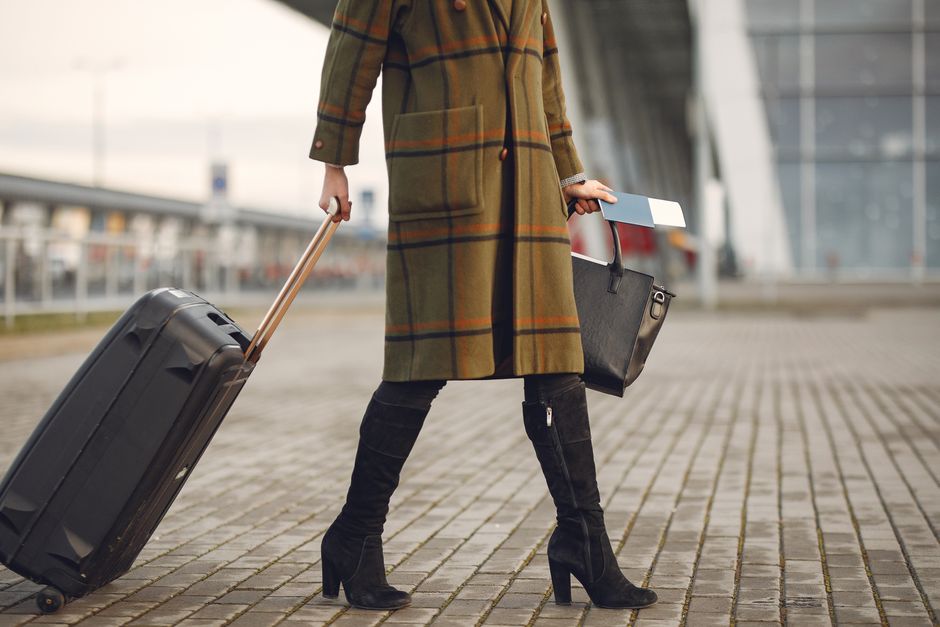
Dragging a 23kg suitcase through Shinjuku Station during rush hour is not the Japan trip you planned. Takkyubin solves this.
Japan’s nationwide door-to-door courier network is so reliable that the Japan National Tourism Organization (JNTO) lists it as a primary strategy for multi-city itineraries.
I forwarded my bags from Tokyo to Kyoto on a Tuesday morning; they were at hotel reception by 5pm Wednesday — while I rode the Shinkansen hands-free.
This guide covers every step: cost comparison, drop-off options, airport forwarding from Narita (NRT) and Kansai Airport (KIX), and how to fill in the slip when you can’t read Japanese.
Last updated: July 29, 2026
What Is Takkyubin — and Why Japan’s Courier Culture Is Different
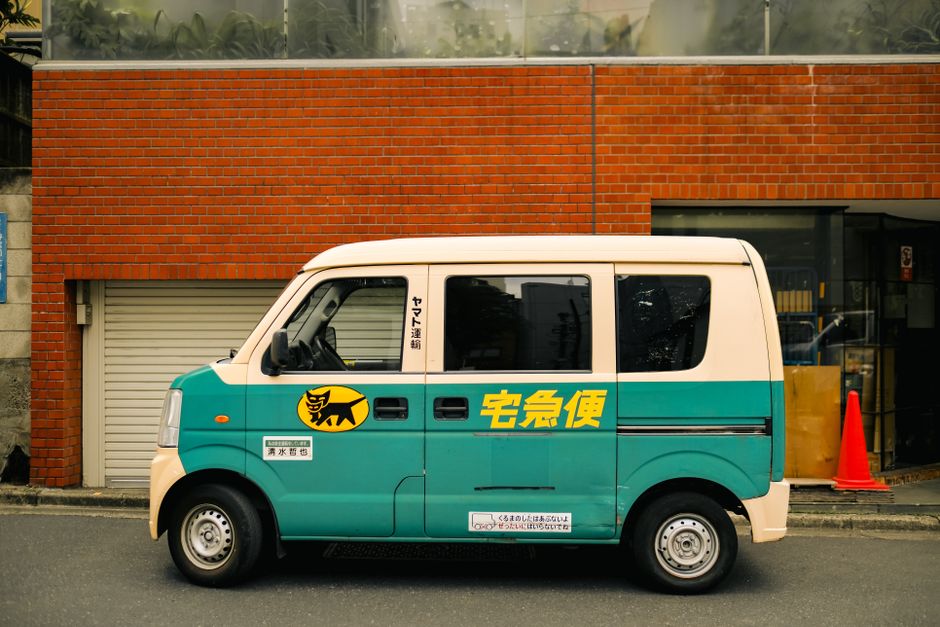
Takkyubin (宅急便) means “home express delivery” — a category name, like “Xerox” for photocopying. Yamato Transport’s TA-Q-BIN and Sagawa Express’s Hikyaku are the two dominant brands. Both run a same-area and next-day courier web across all 47 prefectures.
The system works because Japanese hotels take deliveries seriously. Most 3-star and above properties hold forwarded bags until you check in — even hours before your room is ready. That expectation is baked into Japanese hospitality in a way that makes takkyubin genuinely practical for international tourists.
For a typical itinerary — Tokyo → Kyoto → Osaka — you send your large bag the morning before departure. You ride the Shinkansen with just a day-pack. Your bag waits at the next hotel. The experience is categorically different from dragging luggage through multiple train changes.
How Much Does Takkyubin Cost? Yamato vs Sagawa Price Comparison
Both services charge by size tier (total dimensions) and distance zone. A standard 26-inch suitcase from Tokyo to Kyoto typically costs ¥2,000–¥3,200. Approximate 2026 prices:
| Size Tier | Max Total Dimensions | Yamato (Tokyo→Kyoto, approx) | Sagawa (Tokyo→Kyoto, approx) |
|---|---|---|---|
| Size 80 | ≤80cm | ¥1,150–¥1,980 | ¥1,100–¥1,900 |
| Size 100 | ≤100cm | ¥1,390–¥2,310 | ¥1,300–¥2,200 |
| Size 120 | ≤120cm | ¥1,620–¥2,640 | ¥1,550–¥2,550 |
| Size 140 | ≤140cm | ¥1,850–¥3,000 | ¥1,780–¥2,900 |
| Size 160 (max) | ≤160cm | ¥2,080–¥3,300 | ¥2,000–¥3,200 |
Most checked airline suitcases (26-inch) fall in Size 120–140. Budget ¥2,000–¥3,000 per bag per leg. A household of two going Tokyo→Kyoto→Osaka spends roughly ¥8,000–¥12,000 total — less than two Shinkansen reserved seat upgrades.
Yamato TA-Q-BIN’s English website (kuronekoyamato.co.jp/en/) has a price calculator. Enter pickup prefecture, delivery prefecture, and bag size for an exact quote before you drop off. Sagawa doesn’t have a direct English calculator — use Yamato’s tool for comparative estimates.
Where to Drop Off: Convenience Store vs Hotel Front Desk
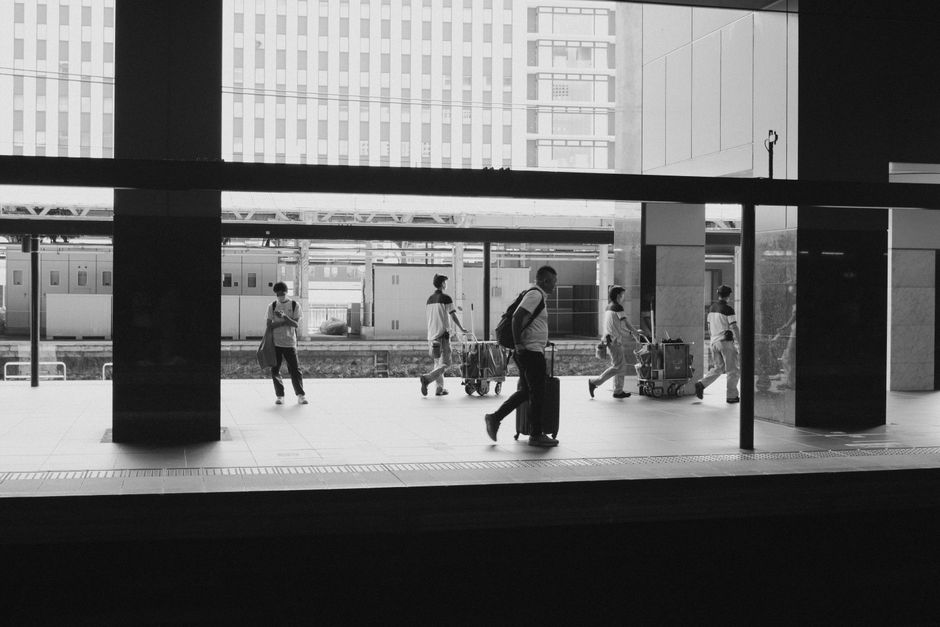
The easiest option is any 7-Eleven, FamilyMart, or Lawson — all three accept Yamato TA-Q-BIN slips. Japan has roughly 55,000 convenience stores nationwide, so there is almost always one within a 5-minute walk.
Hotels work too, but timing differs. A hotel front desk sends bags with the day’s scheduled Yamato pickup — usually between 11am and 12pm. Miss that window and your bag ships the next morning. Convenience stores accept drop-offs until 3pm for next-day delivery.
Step-by-step drop-off at a konbini:
- Pick up a yellow Yamato slip at any konbini or hotel front desk (free)
- Fill in destination address, recipient name, and your phone number (see the slip guide below)
- Hand the bag and slip to the konbini staff — they weigh it and issue you a tracking stub
- Track delivery at kuronekoyamato.co.jp or via the Kuroneko Members app
Dropping off after 3pm at a 7-Eleven or FamilyMart shifts dispatch to the following day. Your bag then arrives two days out, not one. If your next hotel check-in is tomorrow, you will arrive before your luggage.
Drop off before noon to be safe — hotel desks are even stricter, with most cutting off at 11am–12pm.
Airport-to-Hotel: Sending Bags from Narita or Kansai Airport
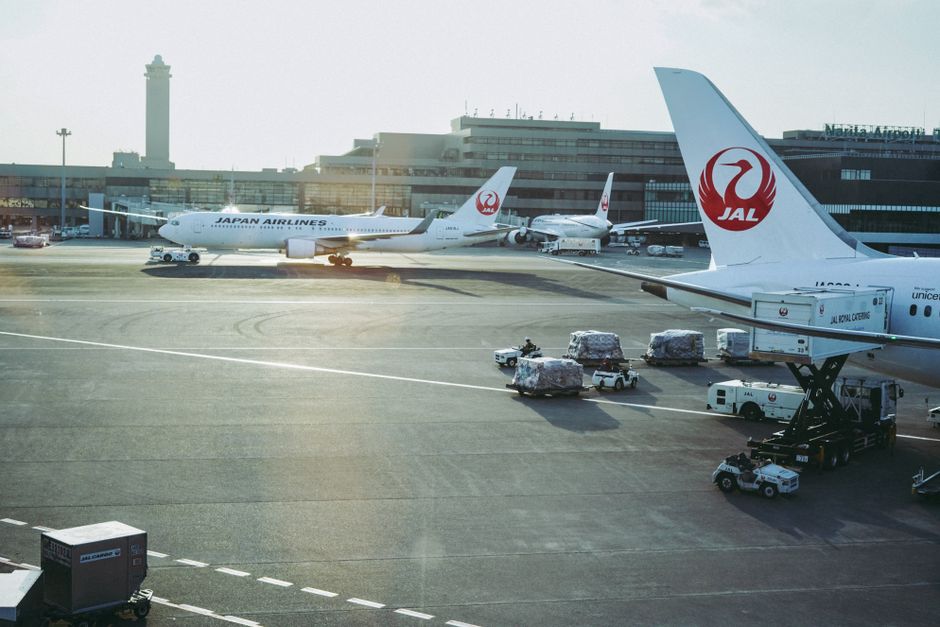
Japan’s two main international gateways are the most tourist-friendly entry points for takkyubin. Both Narita International Airport (NRT) and Kansai International Airport (KIX) have Yamato TA-Q-BIN service counters in the arrivals hall — look for the black-cat logo just past customs exits.
At NRT, Yamato counters are on the first floor of Terminal 1 (North and South Wings) and Terminal 2. At KIX, the counter is on the first floor of the main passenger terminal building arrivals area.
Some smaller airports (Haneda, Chubu) also have Yamato desks but with more limited capacity.
Airport-to-hotel forwarding costs approximately ¥2,000–¥3,600 depending on bag size and destination. Bags forwarded before noon typically arrive at Tokyo or Osaka hotels the following day by 5pm–8pm. KIX to central Osaka hotels can sometimes deliver same-evening for early morning arrivals.
According to the Japan National Tourism Organization, forwarding bags from the airport on arrival day is one of the most effective ways international visitors can enjoy smooth travel between multiple cities without luggage burden.
Klook and airport bus operators sometimes bundle luggage forwarding with limousine bus or N’EX transfer packages.
If you’re flying into NRT and heading to a Tokyo hotel, check whether the Narita Express (N’EX) package desk includes a forwarding voucher — occasionally the bundled option matches or beats the Yamato counter price.
How to Fill the Takkyubin Slip Without Reading Japanese
Per the Japan National Tourism Organization, the yellow Yamato slip has six fields. Convenience store staff rarely help with English addresses — fill it yourself before you approach the counter.
- 送り先 (Destination): Write the hotel’s full address in romaji. Most hotel websites list the English address — screenshot it before you check out of your current property.
- お届け先電話番号 (Recipient phone): The hotel’s main phone number. Check Google Maps or your booking confirmation for the number.
- ご依頼主 (Sender): Your name, your current hotel address, and your mobile number. Include a country code if you’re using a foreign SIM or roaming number.
- 品名 (Contents): Write “衣類” (clothes) or “travel goods.” Domestic forwarding doesn’t involve customs — just be honest.
- コワレモノ取扱い (Fragile): Check this box for electronics, souvenirs, or glass items. No extra charge; it triggers more careful handling.
- お届け希望日 (Preferred delivery date): Write tomorrow’s date in the YYYY/MM/DD format boxes. Leave the time blank unless you know your check-in window.
According to the Taiwan Tourism Bureau, yamato’s routing system can process romaji addresses for most Japanese hotel names. Writing the hotel name clearly in both romaji and katakana (ask your current hotel reception to help) eliminates any ambiguity for rural or small properties.
“Luggage delivery services are available throughout Japan and are popular among tourists traveling between multiple cities. Using this service allows visitors to travel comfortably and experience Japan more freely.” — Japan National Tourism Organization (JNTO)
Hotel-to-Airport: Returning Bags Before Your Flight
The return direction — hotel to airport — is where takkyubin prevents the worst part of a Japan departure: navigating Tokyo rush hour with full luggage to catch the Narita Express.
Forward from your last hotel 2 full days before your flight (not the day before). The airport Yamato service center needs processing time for sorting. Address bags to: Yamato Transport Service Center, Narita Airport Terminal [1 or 2], marked with your flight number and departure date.
Pick up bags at the service center on departure day. The Yamato desk at NRT Terminal 1 and Terminal 2 opens at 7am — early enough for morning flights.
Cost mirrors the inbound direction: ¥2,000–¥3,600 depending on size. The 2-day advance rule is the one thing most first-timers miss — plan your Tokyo departure hotel booking around it.
Budget ¥2,000–¥3,600 per bag. Drop off before noon at your hotel or before 3pm at a 7-Eleven or FamilyMart. Write the destination hotel address in romaji. Check the “fragile” box for electronics. For airport arrivals, use the Yamato counter in the arrivals hall at NRT or KIX.
For departure, forward bags 2 days before your flight and pick them up at the airport service center on the day you fly.
Frequently Asked Questions
What is the maximum size and weight for takkyubin?
Yamato TA-Q-BIN accepts bags up to 160cm total dimensions (length + width + height) and 25kg. Sagawa accepts up to 160cm and 30kg. A standard 26-inch checked suitcase typically falls in Size 120–140.
Can I use takkyubin to forward bags internationally?
No — takkyubin is a domestic Japan service only. For shipping internationally from Japan, use Japan Post EMS or a dedicated courier like FedEx. Within Japan, takkyubin is faster and cheaper than the post office for large bags.
What if my bag is delayed or damaged?
Yamato TA-Q-BIN’s standard compensation covers up to ¥30,000 per shipment for damage. Delayed delivery is rare but happens during peak periods (Golden Week, Obon). Check the tracking number on your stub via the Yamato website. For damage claims, submit within 14 days of delivery.
Will the hotel hold my bag before check-in?
Yes — most Japanese hotels, including business hotel chains like Toyoko Inn and Dormy Inn, hold forwarded bags even hours before check-in. Email the hotel before sending to confirm, especially for smaller or budget properties. Ryokan typically accept deliveries too — just ask when you book.
Is there an English tracking option?
Yamato’s English tracking portal is available at kuronekoyamato.co.jp/en/. Enter the tracking number from your slip stub. The Kuroneko Members app (App Store and Google Play) is Japanese-only but the status codes are readable once you’re past the login screen.
More on Japan Destinations:

Written by East Asia Explorer Editorial Team
Sam Konneh is an AI strategist and digital marketer based in Seoul, South Korea. With years spent living, working, and exploring across Korea, Japan, and China, he shares firsthand insights into East Asia's cultures, hidden gems, and everyday life. A graduate of Inha University and KDI Graduate School, Sam combines data-driven expertise with on-the-ground experience. His journey also includes studying in Malaysia and traveling through Southeast Asia. Through practical tips, local stories, and travel guides, he helps fellow explorers discover both the celebrated highlights and the lesser-known corners of East Asia.