Last Updated: July 14, 2026 | Originally Published: July 7, 2026
- Namdaemun Market is Korea’s oldest and largest open-air market, open since 1414, with roughly 10,000 vendors across dozens of streets. It is free to enter and open daily.
- Take Line 4, Hoehyeon Station, Exit 5—a 1-minute walk to the market entrance. Exit 5 puts you in the thick of the accessories-and-souvenir alley within 30 seconds.
- Individual stalls set their own hours; core activity runs roughly 11:00–17:00 for retail and extends into the evening for the food alleys. Most stalls are closed Sundays and major public holidays.
- Do not miss the Galchi Jorim Alley (braised beltfish) and the Kalguksu Alley (hand-cut noodle soup)—two narrow food lanes serving some of the cheapest sit-down meals in central Seoul.
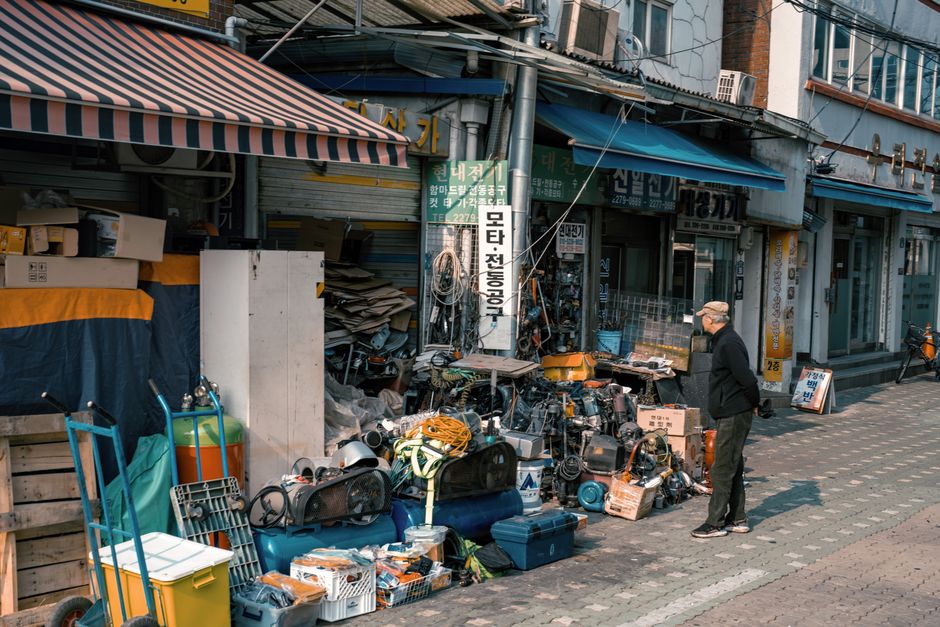
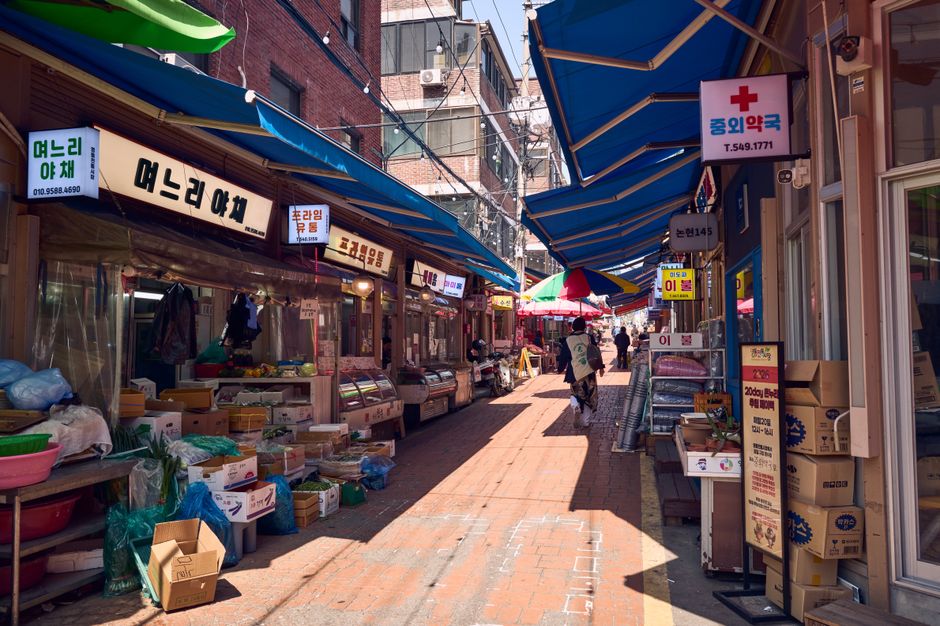
Namdaemun is not curated. It is not organised. It smells of grilled fish, synthetic fabric and vehicle exhaust in roughly equal measures, and the aisle you came in through will not be the aisle you leave by. That is the point.
My first visit I walked in looking for a cheap backpack and walked out 90 minutes later holding three pairs of socks, a bag of hotteok, a kitchen timer I never used, and a surprisingly good knock-off hat.
I spent maybe 18,000 KRW total and consider it one of the better afternoons I have had in Seoul.
A short history of Namdaemun Market
Loved what you saw at Namdaemun? The same K-beauty staples are a click away. Shop authentic K-beauty at K-Beauty Content, shipped direct from Korea.
Namdaemun dates to 1414, when the Joseon court established a government-licensed market outside the southern gate of Seoul’s fortress wall. The Namdaemun gate (Sungnyemun) itself was built in 1398—the oldest wooden structure in Seoul—and the market took its name from the “Great South Gate.”
It survived Japanese occupation, the Korean War, and several fires, including the 2008 arson that destroyed the gate’s wooden pagoda (restored 2013). The market itself never stopped trading through any of it—vendors set up stalls while the gate scaffolding was still up.
Today it is a designated tourist zone and remains a genuine wholesale-retail hybrid. If a street-food stall in Myeongdong sells something, Namdaemun probably sells the ingredients a block away for half the price. The Seoul Metropolitan Government recognises Namdaemun as a Special Tourist Zone.
What to see & eat at Namdaemun Market
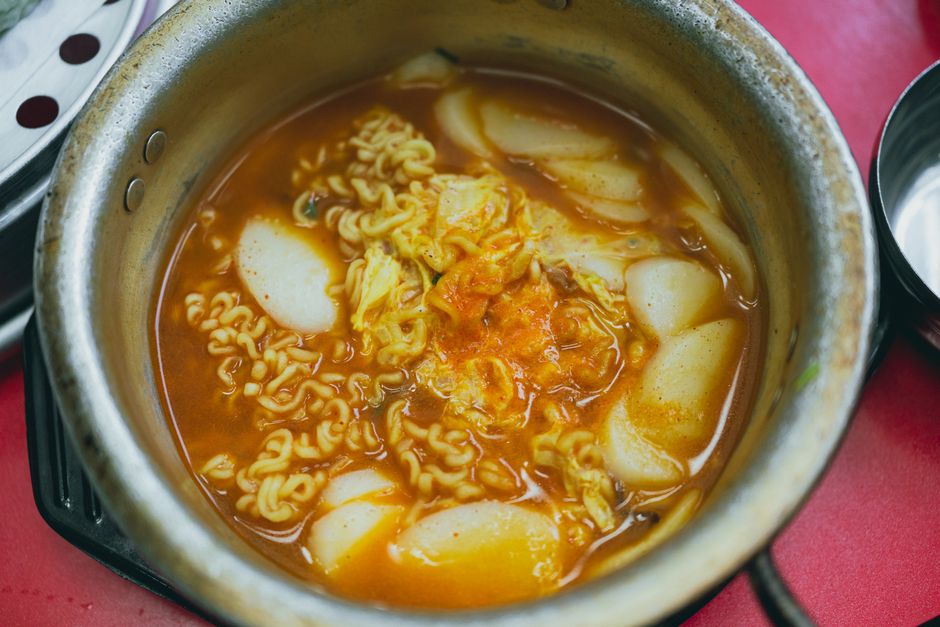
Galchi Jorim Alley. A single lane of hole-in-the-wall restaurants all cooking the same dish: galchi jorim (beltfish braised in a spicy soy-and-radish broth). The fish arrives in a bubbling stone pot with banchan (side dishes) for around 10,000 KRW per person.
Sit at a shared table, point at the menu photo, and do what everyone else is doing: eat the fish, spoon the broth over rice, repeat.
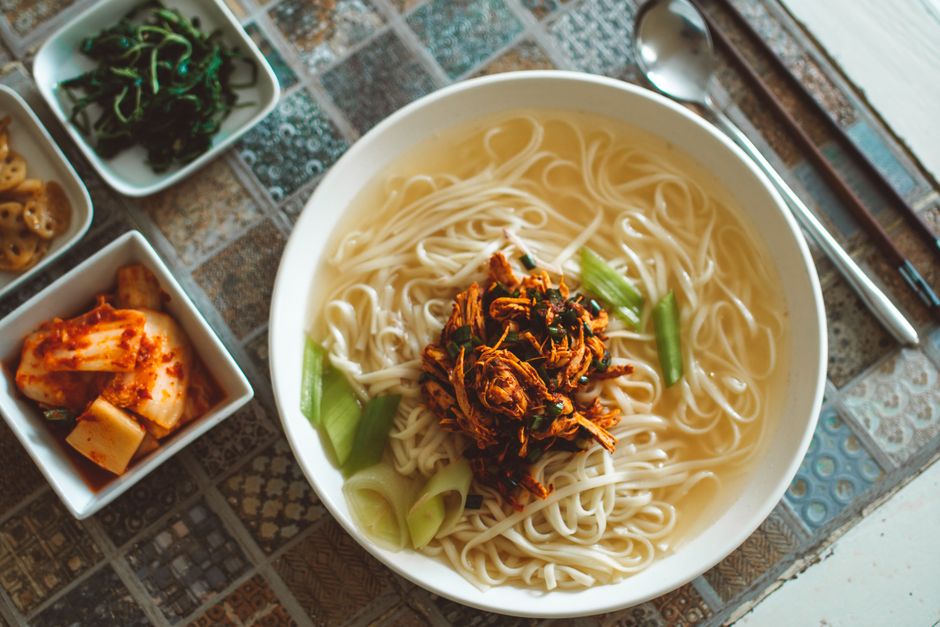
Kalguksu Alley. A separate narrow lane dedicated to hand-cut noodle soup. Each restaurant has a woman in the window rolling and cutting dough by hand. A bowl of kalguksu runs about 7,000–9,000 KRW. The broth is anchovy-based, the noodles are chewy, and the tables are elbow-to-elbow.
Ginseng and dried goods section. The central covered section sells Korean red ginseng, dried seafood, seaweed sheets, and medicinal herbs in bulk.
Even if you are not in the market for ginseng root, the visual chaos of stacked glass jars and the sharp, earthy smell of the alley is worth a walk-through.
Accessories and souvenir wholesale. The lanes nearest Hoehyeon Station Exit 5 sell hats, luggage, socks, jewellery, phone cases and cheap souvenir hanbok keychains. Prices are the lowest in central Seoul, and haggling is expected—offer roughly 20 percent less than the first price and meet somewhere in the middle.
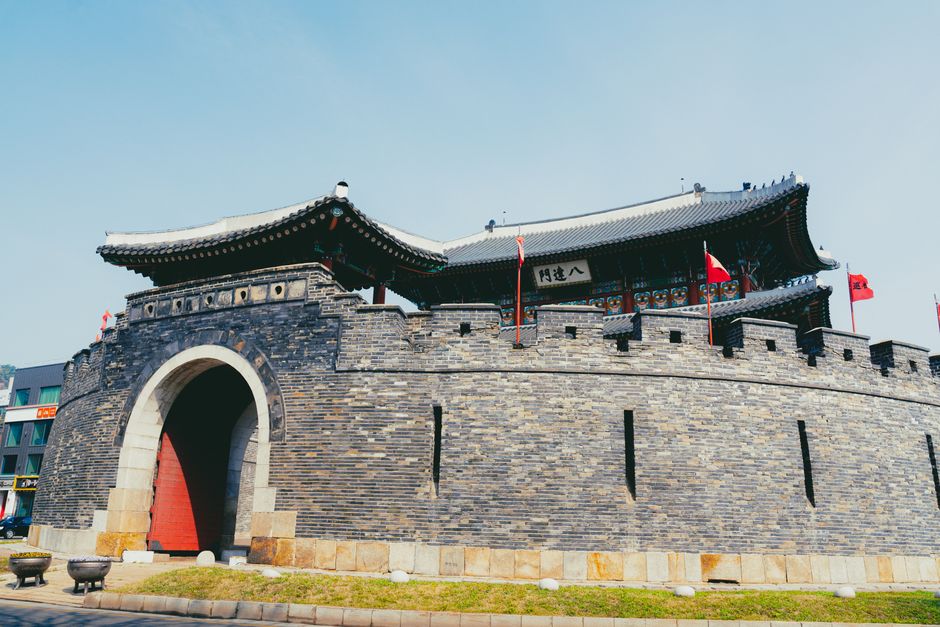
Sungnyemun (Namdaemun Gate). The gate itself sits at the southern edge of the market on its own traffic island. Climb the pedestrian overpass for a clean photo angle without cars in the frame. The gate is open for exterior viewing 24/7.
The gate is a Cultural Heritage Administration-designated National Treasure (No. 1) of South Korea.
Tickets & opening hours (2026)
| What | Hours | Price | Note |
|---|---|---|---|
| Market (general) | ~11:00–17:00 | Free | Individual stall hours vary |
| Food alleys | ~11:00–21:00 | ~7,000–12,000 KRW per meal | Peak lunch 12:00–13:30 |
| Sungnyemun Gate | Exterior viewable 24/7 | Free (exterior) | Interior access check with CHA |
| Most stalls closed | Sundays | N/A | Some food stalls remain open |
“Namdaemun Market is the single largest and oldest market in Korea, with over 10,000 stores. It offers a wide range of goods from clothing and accessories to ginseng and local street food, and it attracts over 400,000 visitors each day.”
How to get there
| Method | Route | Walk from station |
|---|---|---|
| Subway | Line 4 → Hoehyeon Station, Exit 5 | ~1 minute |
| Subway (alt) | Line 1 → Seoul Station, Exit 7 | ~7 minutes |
| Walk from Myeongdong | From Myeongdong Station Exit 5, walk south on Toegye-ro | ~10 minutes |
Hoehyeon Exit 5 is the unanimous correct answer here. You surface on the corner of the accessories alley, and within 90 seconds you are surrounded by stalls. Seoul Station Exit 7 is the backup route—it is a longer walk but useful if you are coming via KTX or AREX.
Best time to visit
Weekday mornings (Tuesday through Friday, 10:30–11:30 AM) are the sweet spot. The stalls are fully set up, the food alleys are just starting to cook, and the crowd density is roughly a third of a Saturday afternoon. You can move through the narrow lanes without playing shoulder Tetris.
Spring (March–May) and autumn (September–November) deliver comfortable temperatures for outdoor market walking—between 8 and 22 degrees Celsius depending on the month. Summer is hot and humid, and the covered sections trap heat, but the fresh-pressed fruit juice stalls multiply and cold naengmyeon appears on the food-alley menus.
Winter (December–February) means cold fingers and shorter tempers, but the steaming kalguksu and hotteok taste better at 2 degrees Celsius than they do in August. The market is less crowded in winter, especially on weekdays.
Namdaemun Market at a glance
| Detail | Info |
|---|---|
| Best for | Street food, bargain shopping, ginseng, souvenirs |
| Time needed | 1.5–3 hours |
| Cost | Free entry; food ~7,000–12,000 KRW per meal; haggling expected |
| Best day | Tuesday–Friday (avoid Sundays) |
| Toilets | Public toilets near Gate 1 and inside Hoehyeon Station |
Where to eat nearby
Galchi Jorim Alley (inside the market): The undisputed first stop for lunch. Braised beltfish with banchan for about 10,000 KRW per person. All the restaurants are variations on the same theme; pick the one with the shortest visible wait.
Kalguksu Alley (inside the market): Hand-cut noodles in anchovy broth for roughly 7,000–9,000 KRW. Look for the woman rolling dough in the window—that is the fresh sign.
Hotteok Street stalls: Vendors along the main alleys sell hotteok (sweet-filled pancakes) for about 2,000–3,000 KRW. The honey-and-nut variety is standard; look for the seed-filled version if you want something less sweet.
Seoul Station area (7-minute walk): Several Korean BBQ and bibimbap restaurants line the streets between Namdaemun and Seoul Station, catering to commuters. Good for a sit-down meal if the market food alleys feel too cramped.
Combine it into a Seoul day
Start at Sungnyemun Gate around 10:00 AM for photos without crowds. Walk the 2 minutes north into Namdaemun Market and spend about 90 minutes eating through the food alleys (galchi jorim for main, hotteok for dessert) and browsing the accessory lanes.
Exit the market to the east and walk about 10 minutes to Myeongdong for cosmetics shops and street food. From Myeongdong, the Namsan cable car to N Seoul Tower is a 10-minute uphill walk (Line 4 Myeongdong, Exit 3). Finish with the tower at sunset.
Is Namdaemun Market worth visiting?
If you want a clean, curated shopping experience, no. If you want Seoul’s oldest living market—one that predates the invention of the shopping mall by roughly five centuries—then yes. Go hungry, go on a weekday, and accept that you will get slightly lost in an alley of ginseng jars.
That is the Namdaemun experience.
What’s nearby
- Korea Travel Guide—your hub for Seoul, Busan, and beyond
- Budget-Friendly Street Food in Seoul—where to eat well for under 10,000 KRW
- 24 Hours in Seoul—fit Namdaemun into a tight schedule
- N Seoul Tower & Namsan Guide—the cable car and tower, 15 minutes away
Frequently Asked Questions
What is Namdaemun Market?
Namdaemun Market is Korea’s oldest and largest open-air market, operating since 1414 with roughly 10,000 vendors selling clothing, accessories, ginseng, dried goods, souvenirs, and street food. It sits just south of the Namdaemun Gate (Sungnyemun) in central Seoul.
Is Namdaemun Market free?
Yes, entry to the market is free. Individual purchases and food are paid per stall—street food items range from about 2,000 to 5,000 KRW, and sit-down meals in the food alleys cost about 7,000 to 12,000 KRW.
What is the best subway station for Namdaemun Market?
Line 4, Hoehyeon Station, Exit 5. You exit directly into the market’s accessory-and-souvenir lane. Seoul Station Exit 7 (Line 1) is a 7-minute backup route.
Is Namdaemun Market open on Sunday?
Most goods stalls close on Sundays. A handful of food stalls near the main entrance remain open, but the majority of the market is shuttered. Tuesday through Friday is the best window for a full Namdaemun experience.
What is the most famous food at Namdaemun Market?
Galchi jorim (braised beltfish) in the dedicated Galchi Jorim Alley and kalguksu (hand-cut noodle soup) in Kalguksu Alley are the two signature dishes. Hotteok (sweet pancakes) from street stalls are the essential dessert.
Can you haggle at Namdaemun Market?
Yes, haggling is expected in the goods lanes. Start by offering about 20 percent less than the first quoted price. Food stalls have fixed (and already low) prices.
What is Sungnyemun (Namdaemun Gate)?
Sungnyemun is Seoul’s southern fortress gate, built in 1398—the oldest wooden structure in Seoul. It was severely damaged by arson in 2008 and restored in 2013. The exterior is viewable 24/7 from the southern edge of the market.
How much time should I spend at Namdaemun Market?
Allow 1.5 to 3 hours—about 45 minutes to eat lunch in the food alleys and the remainder to browse the goods lanes, photograph the gate, and get slightly lost in the ginseng section.
More on Seoul:

Written by East Asia Explorer Editorial Team
Sam Konneh is an AI strategist and digital marketer based in Seoul, South Korea. With years spent living, working, and exploring across Korea, Japan, and China, he shares firsthand insights into East Asia's cultures, hidden gems, and everyday life. A graduate of Inha University and KDI Graduate School, Sam combines data-driven expertise with on-the-ground experience. His journey also includes studying in Malaysia and traveling through Southeast Asia. Through practical tips, local stories, and travel guides, he helps fellow explorers discover both the celebrated highlights and the lesser-known corners of East Asia.