Last Updated: June 28, 2026 | Originally Published: November 30, 2024
Complete Guide to Japanese Bento Boxes: Ekiben, Named Shops, Real Prices, and Shinkansen Tips 2026
Last updated: 2026-06-28
- Standard ekiben (train station bento) cost ¥1,000–¥2,000 at major JR stations; convenience store bento run ¥350–¥650 at 7-Eleven, FamilyMart, and Lawson
- Top named ekiben brands: Kiyoken (Yokohama, founded 1908), Masunosushi (Toyama, pressed trout sushi in cedar box since 1905)
- Buy ekiben at least 30 minutes before departure; platform vendors disappear when the bell rings — and most stalls are cash only
- Kyoto kaiseki bento at department stores and temple markets runs ¥2,000–¥5,000 — the premium tier but genuinely worth it once
Japan’s bento box culture runs deeper than a packed lunch. It’s a centuries-old framework of nutrition, aesthetics, and regional pride — and every prefecture does it differently.
This guide covers the named brands, actual prices, platform logistics, and regional styles that most travel articles skip entirely.
What Is an Ekiben — and Why It’s Different From a Regular Bento?
Ekiben (駅弁) literally combines eki (station) and bento (boxed meal). These are bento sold specifically at train stations and on board certain long-distance trains.
The difference from a standard bento: ekiben are designed to be eaten at room temperature over a 1–3 hour journey, so the dishes are chosen for their ability to hold flavor cold. Soy-braised meats, pickled vegetables, pressed sushi, and rice balls dominate.
According to the Japan National Tourism Organization (JNTO), ekiben culture dates to the 1880s, when Japan’s national railway network was being built and station vendors began selling rice balls wrapped in bamboo leaves to hungry passengers.
Kiyoken: The Ekiben Brand Every Japan Traveler Should Know
Kiyoken (崎陽軒) was founded in Yokohama in 1908. Their shumai bento (シウマイ弁当) has been sold at Yokohama Station and major Tokyo-area JR hubs since before World War II.
A standard Kiyoken shumai bento costs around ¥950–¥1,100 and includes pork shumai dumplings, macaroni salad, kamaboko fish cake, takenoko bamboo shoots, and seasoned rice. It’s deliberately unfussy and cold-tolerant.
You’ll find Kiyoken stands at Yokohama, Shin-Yokohama, Tokyo, and Shinagawa stations. They also sell in most New Days convenience stores inside JR East stations.
Masunosushi: Toyama’s Cedar-Box Trout Sushi Ekiben
Masunosushi (ますのすし) from Toyama Prefecture is one of Japan’s most famous regional ekiben. The company has been pressing masu (cherry trout) sushi in round cedar boxes since 1905.
Each box contains vinegared rice and masu fillets pressed into a disc shape inside a curved cedar wood case. The cedar slightly flavors the rice — you’ll notice it on the first bite.
Price: approximately ¥1,300–¥2,000 depending on the tier. Masunosushi sells a standard version (丸形) and a premium “special” version with extra masu layering. Both are sold at Toyama Station and at Toyama Airport, and you can also find them at select Tokyo department store ekiben events.
The cedar boxes are reusable and commonly taken home as souvenirs. A smaller single-portion version was introduced in recent years for solo travelers.
Kyoto Bento: Kaiseki Style at ¥2,000–¥5,000
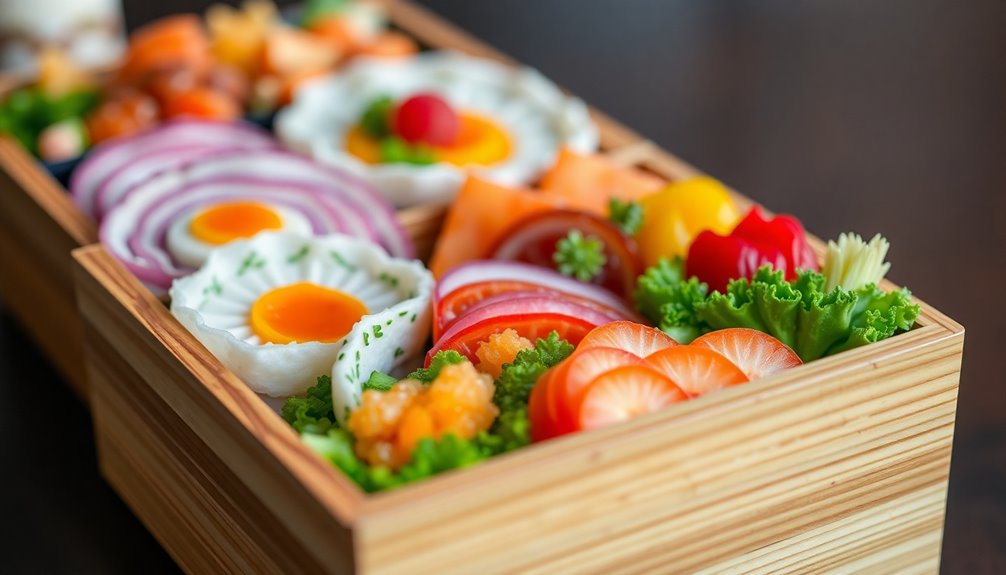
Kyoto’s bento scene reflects the city’s kaiseki (懐石) food culture — small, precisely arranged dishes that emphasize seasonal ingredients and visual balance.
You’ll find two main tiers in Kyoto:
- Department store bento counters at Isetan Kyoto (in Kyoto Station) and Takashimaya on Kawaramachi: ¥2,000–¥3,500 for full kaiseki-style boxes with seasonal garnishes, pickled vegetables, and grilled fish or chicken.
- Nishiki Market vendors (Nishiki-koji, Kyoto’s covered food market): standalone bento-style items like individually priced obanzai side dishes you assemble yourself. Budget ¥800–¥1,500 to put together a filling meal.
According to the Japan National Tourism Organization (JNTO), Kyoto’s shokado bento — the four-compartment lacquer box format used in kaiseki dining — traces its origins to 17th-century calligrapher and tea master Katagiri Shokado, whose studio box design was later adapted for food presentation. The format remains the reference standard for refined bento presentation in Japan today.
The ekiben sold at Kyoto Station itself (inside the Asty Kyoto echelon on the concourse level) range from ¥1,000 for rice-and-protein boxes to ¥3,500 for full kaiseki sets. The premium counter opens at 8:00 AM and regularly sells out by 11:00 AM on weekends.
Osaka Makunouchi Bento at Shin-Osaka Station
Osaka’s traditional bento style is makunouchi (幕の内) — a variety box containing small portions of many dishes. The name comes from theater tradition, where bento were sold between acts (during the “makuuchi” interval).
Shin-Osaka’s shinkansen concourse has one of the largest concentrations of ekiben in Japan — over 30 vendors in the underground shopping level directly below the shinkansen ticket gates.
Price range: ¥1,080–¥1,780 for standard makunouchi boxes. Look for vendors selling takoyaki-style bento (dried octopus in rice), beef shabu-shabu bento, and the regional specialty of pressed oshizushi.
The 551 Horai brand — famous for pork nikuman buns — also operates a bento stall at Shin-Osaka. Their 551-branded ekiben includes nikuman, shumai, and rice and costs around ¥1,300.
Hiroshima’s Anago Meshi: The Ekiben Worth a Detour
Hiroshima Prefecture is the home of anago (saltwater eel) cuisine, and the local ekiben reflects this. The city’s most famous station bento is anago meshi — seasoned rice topped with braised conger eel cut into thick pieces.
The most recognized anago meshi ekiben sold at Hiroshima Station costs approximately ¥1,300–¥1,600. It comes in a flat box lined with waxed paper, and the eel is glazed in a tare sauce similar to unagi kabayaki but less sweet.
Anago is cheaper and more sustainable than freshwater unagi (eel), and Hiroshima’s version tends to be more savory than sweet. First-timers often prefer it to unagi bento once they try it.
Kanazawa’s Gold-Leaf Lacquer Bento: Where to Buy
Kanazawa (金沢) is the historic capital of Kaga Province and Japan’s leading center for lacquerware (Wajima-nuri) and gold-leaf craftsmanship. Bento containers made here are among the most expensive in Japan.
A functional Kanazawa lacquered bento box — not an ornamental piece, but one designed for actual use — costs ¥8,000–¥25,000 at craft shops in the Higashiyama Higashi geisha district and the Kenroku-en garden area. These are lifetime-use items, not something you buy for one train ride.
For eating in Kanazawa, the station’s Rinto underground mall (directly connected to JR Kanazawa Station) has a well-stocked ekiben section with crab bento (kani meshi, ¥1,200–¥2,200) and the regional specialty of pressed soba noodle bento.
Price Comparison: Ekiben vs. Konbini vs. Department Store Bento
Here’s what you’ll actually spend depending on where you buy:
| Bento Type | Typical Price | Best For | Payment |
|---|---|---|---|
| Convenience store (7-Eleven, FamilyMart, Lawson) | ¥350–¥650 | Budget travelers, late-night eating | Cash + IC card + card |
| Standard ekiben (major JR station) | ¥1,000–¥1,800 | Train journeys, regional flavors | Usually cash only |
| Premium ekiben (Kiyoken, Masunosushi) | ¥1,300–¥2,200 | Signature regional specialties | Cash only at most stalls |
| Department store bento counter | ¥1,500–¥3,500 | Variety, quality, card payment accepted | Cash + card |
| Kyoto kaiseki bento | ¥2,000–¥5,000 | Special occasion, fine dining to go | Cash preferred |
Platform Buying Logistics: The 30-Minute Rule and Cash Traps
Buying ekiben on a shinkansen platform is one of the great Japan travel experiences — but it has real practical traps that can leave you hungry.
The 30-minute rule: Most ekiben stalls on shinkansen platforms have their best stock available 30–45 minutes before departure. Popular boxes — especially Toyama’s masunosushi and premium Kyoto boxes — sell out before the departure bell at busy hubs like Kyoto, Shin-Osaka, and Hakata.
Cash only at most stalls: IC cards (Suica, ICOCA, Pasmo) work at some New Days convenience stores inside stations, but standalone ekiben stalls almost universally require cash. There are 7-Bank ATMs in most JR stations, but they can have queues during rush hour.
Nozomi problem: The Nozomi is the fastest Tokaido Shinkansen service and stops at fewer stations. At non-terminus stations (not Tokyo, Shin-Osaka, or Hakata), Nozomi dwell time is 2–3 minutes. You cannot leave your seat, exit to the platform, find a vendor, and reboard in that time. If ekiben shopping matters to you, book Hikari (which stops more often and dwells 3–5 minutes) or plan to buy before boarding.
Dietary Considerations: Vegetarian, Vegan, and Halal Bento in 2026
Japan’s bento culture has historically been protein-heavy and fish-forward, but options are widening in tourist cities.
Vegetarian bento are widely available at department store counters in Kyoto, Osaka, and Tokyo — look for boxes labeled 精進料理 (shojin ryori, Buddhist temple cuisine) or 野菜弁当 (vegetable bento). These usually cost ¥1,200–¥2,500.
Vegan options are harder. Dashi (fish stock) appears in most Japanese rice seasonings, pickles, and sauces. The safest bento for strict vegans: buy from a convenience store and check the ingredient list (ingredients in Japanese are required by law; Lawson’s international stores in tourist areas sometimes have English labels).
Halal-certified bento are rare at traditional ekiben stalls but available at certified restaurants and select department stores in major cities. The Japan Muslim Association website maintains a current list of halal-certified food sellers near major stations.
Tokyo Bento Scene: Character Bento, Isetan Depachika, and Convenience Stores
Tokyo doesn’t have one signature ekiben the way Yokohama has Kiyoken or Toyama has Masunosushi. Instead, the city’s strength is variety.
The underground food halls (depachika) of Isetan Shinjuku, Mitsukoshi Ginza, and Shibuya Hikarie each have 20–40 bento options from ¥1,000–¥4,000. These rotate seasonally and represent the widest selection you’ll find anywhere.
Character bento (charaben, キャラ弁) — bento with rice and vegetables shaped into anime or cartoon faces — are popular at specialty shops in Akihabara and Harajuku. These are mostly takeaway lunch items for the domestic market, priced at ¥800–¥1,500.
For daily eating, Tokyo’s 7-Eleven locations consistently earn praise for bento quality. The tamago gohan (egg rice) sets and salmon onigiri bento run ¥450–¥620 and are genuinely well-made. The 7-Eleven at major stations also stocks limited-edition regional ekiben from partner producers — these rotate monthly.
Frequently Asked Questions
What is the difference between ekiben and regular bento?
Ekiben are sold specifically at train stations or on board trains. They’re designed to be eaten cold over a journey of 1–3 hours, so the dish selection prioritizes foods that hold texture and flavor without refrigeration. Regular bento from convenience stores or restaurants may require reheating.
Are ekiben available on all shinkansen lines?
No. On-board cart service is available on most Tokaido, Sanyo, and Tohoku Shinkansen services, but the selection is limited — usually 3–6 options. The full range of ekiben is only available on station platforms before boarding. Platform selection varies by station; Kyoto, Shin-Osaka, Tokyo, and Hakata have the largest choice.
Can I use IC cards (Suica, ICOCA) to buy ekiben?
At most standalone ekiben stalls on platforms, no — cash only. IC cards work at New Days convenience stores and vending machines inside JR stations, but not at traditional ekiben vendors. Bring ¥5,000–¥10,000 in cash if you plan to buy on the platform.
How long before departure should I buy ekiben?
At minimum 30 minutes before your train departs. For popular regional ekiben (masunosushi, Kiyoken, premium Kyoto kaiseki boxes), arrive 45–60 minutes early, especially on weekend mornings. Heavily trafficked Friday-evening and Sunday-evening departures sell out faster.
Is Kiyoken only available at Yokohama Station?
No. Kiyoken has stands at Yokohama, Shin-Yokohama, Tokyo, and Shinagawa stations. They also sell through New Days convenience stores inside most JR East stations in the greater Tokyo area. The brand is not available at stations south of Shin-Yokohama on the Tokaido Shinkansen line.
What makes masunosushi from Toyama unique?
Masunosushi is pressed (oshizushi) rather than hand-rolled or nigiri. It uses masu — cherry trout from Toyama’s Jinzu River — pressed onto vinegared rice and shaped into a disc inside a round cedar box. The cedar wood gives the rice a subtle woody fragrance. The format is designed to improve with time, tasting best 2–4 hours after pressing, which makes it ideal for train eating.
Are there annual ekiben festivals or events?
Yes. Takashimaya department stores across Japan hold annual “Ekiben Fair” events, typically in January and February, where regional ekiben producers set up temporary stalls. The Tokyo and Osaka Takashimaya events are the largest, regularly hosting 200+ varieties from across Japan — many available nowhere else in the city during the rest of the year.
What’s the best bento for a vegetarian first-timer in Japan?
Look for shojin ryori (Buddhist temple cuisine) bento at Kyoto’s department store counters, or a tofu-centered bento at Isetan Shinjuku or Mitsukoshi Ginza. Prices run ¥1,500–¥2,500. For budget vegetarian eating, 7-Eleven’s vegetable onigiri sets are widely available and clearly labeled.
More on Transportation:
Planning a trip to Japan?
Check out our Japan Travel Hub for more guides, including JR Pass Guide 2026.

Written by East Asia Explorer Editorial Team
Sam Konneh is an AI strategist and digital marketer based in Seoul, South Korea. With years spent living, working, and exploring across Korea, Japan, and China, he shares firsthand insights into East Asia's cultures, hidden gems, and everyday life. A graduate of Inha University and KDI Graduate School, Sam combines data-driven expertise with on-the-ground experience. His journey also includes studying in Malaysia and traveling through Southeast Asia. Through practical tips, local stories, and travel guides, he helps fellow explorers discover both the celebrated highlights and the lesser-known corners of East Asia.