Published: July 9, 2026
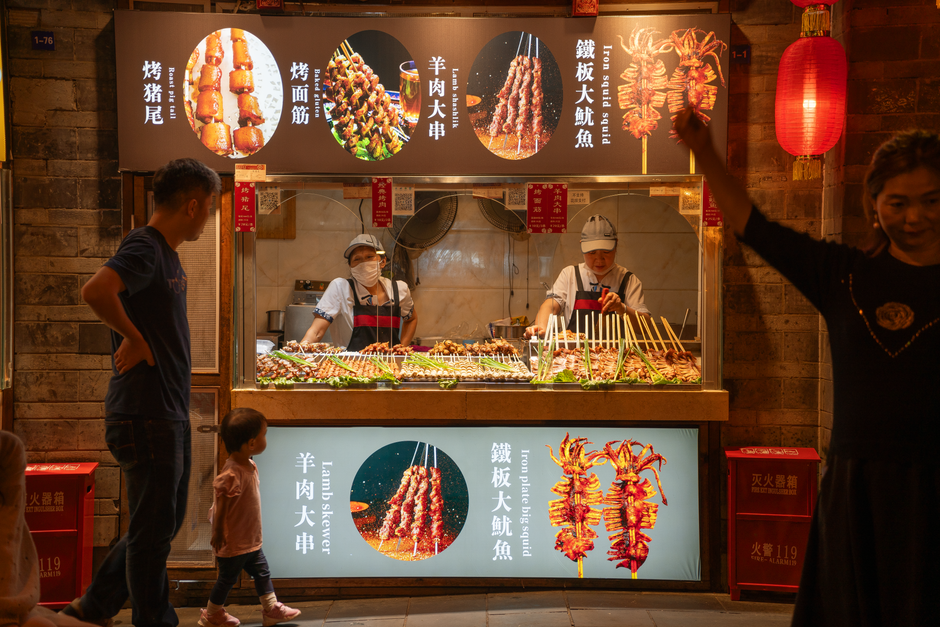
- Skip Kuanzhai Alley and Jinli Street — they’re tourist-priced food courts where dan dan noodles cost 3–4x the neighborhood rate
- Head to Yulin for hotpot and street BBQ (RMB 80–150/person all-in), Hongpailou for street food, and Tongzilin for expat-friendly local spots
- Breakfast staples run RMB 8–15 total; a full eating day costs RMB 80–200 eating strictly at local spots
- Sichuan ma (numbing from peppercorn) and la (chili heat) are separate sensations — you need to calibrate for both
- WeChat Translate’s camera mode reads Chinese menus instantly; download it before you land
Chengdu has UNESCO City of Gastronomy status, 13 Michelin-starred restaurants, and a food identity so strong that locals will argue about the best mapo tofu spot the way other cities argue about football teams.
Most English-language guides route visitors straight to Kuanzhai Alley — a photogenic historic corridor where a bowl of dan dan noodles costs RMB 35–55 instead of the neighborhood rate of RMB 8–12. This guide routes you somewhere else.
I ate through Chengdu’s residential neighborhoods in 2026, from 7 AM breakfast stalls near the Shaocheng wet market to midnight hotpot queues in Yulin. Here’s what matters: where locals go, what they order, the prices they actually pay, and how to navigate it all without speaking Mandarin.
The Tourist Trap You Need to Know About First
Kuanzhai Alley (宽窄巷子) and Jinli Street (锦里) are Chengdu’s most visited food zones. They’re also its worst value by a wide margin.
A standard bowl of dan dan noodles costs RMB 8–12 at any neighborhood stall. The same dish inside Kuanzhai Alley runs RMB 35–55. The atmosphere is more photogenic. The food, in my experience, is rarely better — and sometimes noticeably worse.
The same markup applies near the Chengdu Research Base of Giant Panda Breeding. Eat a full meal before visiting. The neighborhood around the base has almost nothing worth eating at local prices.
This isn’t a reason to skip Kuanzhai Alley entirely — it’s a genuinely beautiful historic precinct worth walking. Just don’t eat there.
Chengdu’s Breakfast Culture: The Meal Locals Never Skip
Eating breakfast out is a daily ritual in Chengdu, not a weekend indulgence. Street stalls and small storefronts open by 7 AM and fold up by 9:30–10 AM when the morning rush ends.
This is the heartland of Chengdu’s xiaochi (小吃) tradition — small, filling, affordable dishes that require real skill and cost almost nothing to eat. A full breakfast rarely exceeds RMB 15. That’s not a bargain; that’s the going rate.
What to Order for Breakfast
Dan dan noodles (担担面) are Chengdu’s most iconic morning noodle. Sesame paste, chili oil, and black vinegar sit at the bowl’s base. You mix it through thin wheat noodles yourself.
One serving is intentionally small — locals order two, or one dan dan plus a side dish. RMB 8–12 per bowl at street level.
Sweet water noodles (甜水面) use thick, chewy wheat noodles with a mildly sweet, nutty sauce of chili oil and crushed peanuts. They taste nothing like any “sweet” dish you’ve encountered elsewhere. RMB 8–10 per bowl.
Zhong dumplings (钟水饺) are red-oil dumplings named after a vendor who started selling them in 1931. The filling is pure pork — no vegetables. The sauce leans sweet-savory rather than fiery.
They’re the most accessible entry point for spice-cautious visitors. Order a half-portion (半份, bàn fèn) first. RMB 10–15 per portion.
Egg pancakes (蛋烘糕) cook over charcoal in small iron molds — fluffy egg pancakes stuffed with red bean, peanut paste, or savory meat. A good stall has a queue by 8 AM. The red bean version is the classic. RMB 5–8 each.
Leaf jelly (叶儿粑) are glutinous rice parcels wrapped in banana leaves, filled with minced pork or sweet sesame. Less well-known internationally, completely standard locally. RMB 3–5 each.
Where to Find Authentic Breakfast
The best breakfast clusters surround wet markets (菜市场). The Shaocheng area near People’s Park has a dense ring of breakfast stalls around its perimeter. Arrive before 8:30 AM to catch fresh batches.
Hongpailou (红牌楼), a southern residential district, runs an active breakfast street aimed entirely at locals. No tourist infrastructure — just stalls doing high-volume morning trade. It’s one of the best places in the city to eat for under RMB 20 total.
University districts are equally reliable. The south perimeter of Sichuan University’s Wangjiang campus has a full breakfast street aimed at students — low prices, high turnover, and reliably good food because students are demanding customers.
The Dishes That Define Chengdu (Beyond Hotpot)
Hotpot is spectacular. But Sichuan’s culinary depth runs through dishes that don’t involve a communal pot of boiling oil. These are the ones that explain what Chengdu actually eats day to day.
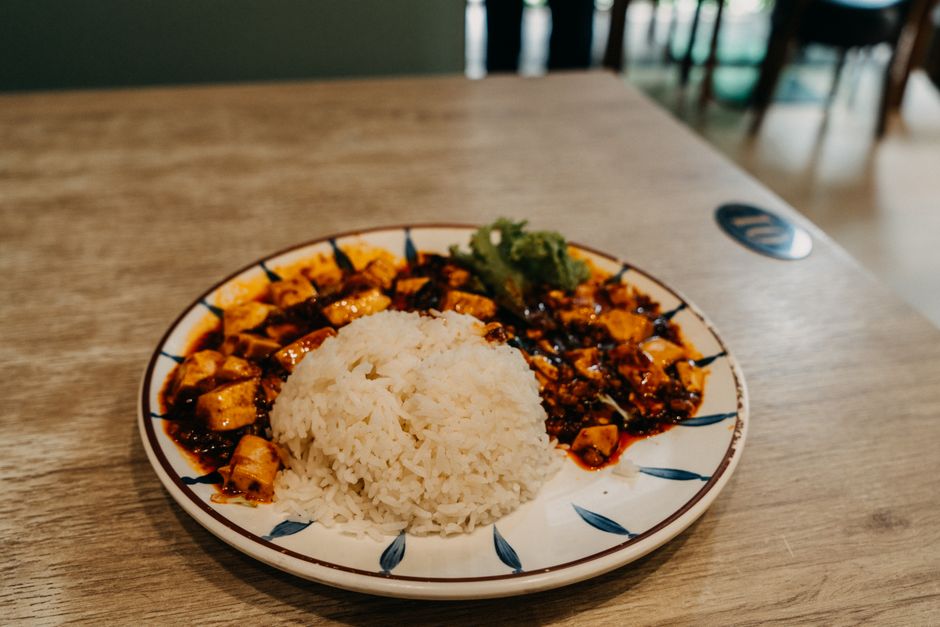
Mapo Tofu (麻婆豆腐)
The original Chen Mapo Tofu restaurant on Qingyang Road opened in 1862. The dish invented here bears almost no resemblance to its international imitators.
Silken tofu in fermented black bean and chili sauce, finished with a generous pour of Sichuan peppercorn oil — the numbing ma sensation is inseparable from the dish.
At the original Qingyang Road location, order the “original recipe” (原汁原味) version. The oil pool on top is not excess — it’s a heat conductor keeping the tofu at temperature. RMB 28–40 per portion, as of 2026.
Fu Qi Fei Pian (夫妻肺片) — Cold Beef Offal
The name translates roughly as “husband and wife offal slices.” It’s a cold dish: thin-sliced beef, tripe, and tendon in a sauce of chili oil, Sichuan peppercorn, sesame paste, and garlic. The texture contrast between the different cuts is the point.
This is one of Chengdu’s most misunderstood dishes internationally — the offal reputation puts visitors off, but the flavor is closer to a well-seasoned cold beef salad than anything challenging. RMB 25–35 per plate at local restaurants. Order it as a starter before your main.
Twice-Cooked Pork (回锅肉)
This is the lunch dish that defines Sichuan home cooking. Pork belly is simmered whole first, then sliced thin and wok-fried until slightly caramelized, with leeks and Pixian doubanjiang (broad bean paste from Pixian county, outside Chengdu).
Order it at any local canteen for RMB 18–25. It almost never appears on tourist menus — which is exactly why it tells you more about real Sichuan flavor than most specialty restaurant meals.
Mao Cai (冒菜) — Personal Hotpot
Mao cai is hotpot for one. You pick raw ingredients from a glass display case — tofu skins, beef slices, glass noodles, bok choy, lotus root, quail eggs — and they’re blanched in a mala broth and served in a bowl. No communal pot, no 90-minute minimum.
It’s faster and cheaper than hotpot, perfectly suited for solo meals. A full bowl costs RMB 15–25 depending on ingredients. I ate mao cai for lunch six days straight and didn’t get bored.
Cold Noodles (凉面)
Despite the name, these are served at room temperature. Wheat noodles tossed with chili oil, black vinegar, garlic paste, peanuts, and sesame — tangy, slightly sweet, quietly spicy. RMB 8–12 at any street stall.
The version at high-volume street stalls usually beats restaurant versions because the chili oil is fresher. If there’s a queue, join it. Queue length is the best quality indicator in Chengdu street food.
The Neighborhoods Worth Knowing
Chengdu’s best eating is spread across residential districts most visitors never reach. Here’s where the food actually is, with honest price ranges.
| Neighborhood | Best For | Avg. Meal Cost (2026) | Tourist Traffic |
|---|---|---|---|
| Yulin | Late-night hotpot, street BBQ, canteens | RMB 30–80/person | Very low |
| Hongpailou | Street food breakfast, cheap noodles | RMB 10–25/person | None |
| Tongzilin | Expat-area restaurants, craft beer, local lunch spots | RMB 35–80/person | Low |
| Shaocheng | Breakfast stalls, teahouses, mapo tofu | RMB 12–40/person | Moderate |
| Sichuan University area | Budget noodles, cold dishes, student canteens | RMB 10–20/person | Very low |
Yulin is the neighborhood most cited by long-term Chengdu residents as the city’s best eating district. It’s dense, residential, and permanently saturated with the smell of hotpot broth. By 7:30 PM on a weekday, every hotpot restaurant has a 20–40 minute wait.
That wait is not a bug. You take a number, find a plastic stool on the pavement outside, and drink cheap beer from the restaurant’s cooler while you queue. Joining that line at any Yulin hotpot restaurant is more genuinely Chengdu than anything inside Kuanzhai Alley.
Tongzilin, south of Yulin, is where Chengdu’s expat community concentrates. The local restaurants here have slightly more English signage but local pricing — a useful middle ground if you’re arriving jetlagged on day one and need to ease in.
Hotpot: What It Actually Costs and How to Order
Chengdu hotpot is not the same as Chongqing hotpot. Chengdu’s version is slightly less aggressively spiced and more likely to include a “mandarin duck” (鸳鸯) pot with a mild white broth on one side. This matters for groups with mixed spice tolerances.
At a mid-range local restaurant in Yulin, expect to spend RMB 80–150 per person all-in — broth base fee (usually RMB 20–40 per person), ingredients selected from the display, and drinks. A premium local chain like Huangcheng Laoma runs slightly higher at RMB 120–180 per person.
The key ordering mechanism: most Yulin hotpot restaurants have a laminated picture menu or display case. Point to what you want. For broth, show the cook “yuānyang” (one side each) or draw a line down the middle of the pot with your finger. Every cook understands.
“Chengdu cooking is built on the interaction of ma and la — the numbing quality of Sichuan peppercorn and the heat from dried chilies work together. Most international versions of these dishes only deliver the la. Without the ma, you’re missing half the architecture of the flavor.”
Understanding Sichuan Spice: Ma vs. La
Sichuan spice comes from two distinct sources that your palate processes differently. Dried chilies (辣椒) deliver heat — the la sensation you recognize from any spicy cuisine. Sichuan peppercorns (花椒) deliver ma — a mouth-numbing, almost electric tingle that affects your lips and tongue.
Your tolerance for la does not predict your tolerance for ma. Many visitors who handle Indian or Mexican spice well find Sichuan peppercorn disorienting on first encounter.
The numbing builds over a meal. By your third dish you may feel lightly anesthetized around the mouth. This is normal and passes quickly.
Most restaurants let you specify spice level when ordering:
- 不辣 (bù là) — No spice: Achievable. Expect mild residual heat from cooking oils, but no deliberate spice.
- 微辣 (wēi là) — Mild: This is Chengdu’s “mild.” Still genuinely spicy by most international standards. Start here.
- 中辣 (zhōng là) — Medium: What locals consider a gentle everyday level. Most international visitors would call this “hot.”
- 特辣 (tè là) — Extra hot: For people who grew up eating Sichuan food. Not a dare worth accepting on your first visit.
Milk and yogurt drinks (酸奶, suānnǎi) neutralize Sichuan spice far more effectively than water. Most local restaurants sell small bottled yogurt drinks at the counter for RMB 5–8. Buy one before your first dish arrives, not after the damage is done.
How to Order Without Speaking Mandarin
Chinese menus without pictures are the main friction point for non-Mandarin speakers. There are three practical solutions, in order of reliability.
WeChat Translate (camera mode) reads printed Chinese text and overlays translations in real time. Download the app before you leave home, enable the camera translation feature, and point it at any menu.
It handles restaurant menus better than Google Translate for Chinese food vocabulary. It’s free and works offline once the language pack is downloaded.
Picture menus are standard at most mid-range and above restaurants in Chengdu. Point to what you want. No language required. At mao cai stalls and breakfast counters, the display case is the menu — just point at ingredients.
Screenshot the Chinese characters for the dishes you want before you go. Show the screenshot to the server. This works 100% of the time and takes about five minutes of preparation per meal.
What Chengdu Food Actually Costs: Honest Budget Breakdown
These are local-tier price estimates for 2026. Tourist-zone pricing runs 3–4x higher for equivalent food.
| Dish / Meal Type | Local Price (RMB) | Tourist Zone Price (RMB) |
|---|---|---|
| Dan dan noodles | 8–12 | 35–55 |
| Mapo tofu (single portion) | 20–40 | 60–90 |
| Fu qi fei pian (cold offal plate) | 25–35 | 55–80 |
| Hotpot (per person, all-in) | 80–150 | 180–350 |
| Mao cai bowl | 15–25 | 35–55 |
| Street breakfast (full) | 8–15 | 30–50 |
| Full eating day (local-tier) | 80–200 | 300–600+ |
A realistic food day — street breakfast, local lunch, hotpot dinner with drinks — runs RMB 120–190 total per person. That’s roughly USD 17–26 at current exchange rates. You can eat extraordinarily well in Chengdu without touching tourist-tier pricing at all.
The cheapest viable eating strategy: RMB 80/day. Breakfast at a neighborhood stall (RMB 15), mao cai for lunch (RMB 20), chuanchuanxiang skewer BBQ for dinner (RMB 45). Genuinely good food, all three meals, no tourist markup anywhere.
Frequently Asked Questions
Is all Chengdu food extremely spicy?
No. Zhong dumplings, sweet water noodles, twice-cooked pork, and egg pancakes are genuinely mild. You can also request bù là (no spice) at most restaurants. The spice reputation is real, but it doesn’t apply to every dish on every menu.
Do I need to speak Mandarin to eat local food in Chengdu?
No. WeChat Translate camera mode handles printed menus well. Mao cai stalls use glass display cases — you point, the cook blanches. Saving screenshots of dish names in Chinese characters covers sit-down restaurants without picture menus.
What’s the best neighborhood for hotpot in Chengdu?
Yulin is the consistent answer from long-term residents. Avoid hotpot restaurants on Chunxi Road or near international hotels — those price for tourists. In Yulin, even mid-range spots deliver a genuinely local experience at RMB 80–150 per person all-in.
What is fu qi fei pian and should I try it?
It’s cold-dressed beef, tripe, and tendon slices in chili-sesame sauce — the name means “husband and wife offal slices.” It tastes closer to a bold cold beef salad than anything intimidating. RMB 25–35 per plate at local restaurants. Order it as a starter.
When do Chengdu breakfast stalls open and close?
Most open around 7 AM and close by 9:30–10 AM. The 7:30–8:30 AM window gets you fresh batches and full selection. Arriving after 9 AM means some stalls have sold out of their best items. Don’t oversleep breakfast in Chengdu.
Is there vegetarian food in Chengdu?
Yes. Buddhist vegetarian restaurants (素食 sùshí) operate throughout the city. The canteen at Wenshu Monastery in Qingyang District is well-regarded and affordable. Cold noodles, egg pancakes with sweet fillings, and vegetable-only mao cai are easy to request at street level.
What’s the difference between Chengdu hotpot and Chongqing hotpot?
Chongqing hotpot is more aggressively spiced and uses more Sichuan peppercorn. Chengdu hotpot is slightly milder and more commonly offered in the “mandarin duck” split-pot format (mild broth on one side). Both are excellent; Chengdu’s version is more beginner-friendly.
Last updated: June 2026. Prices and opening hours are subject to change — verify before travel.
More on China Destinations:
Planning a trip to China?
Check out our China Travel Hub for more guides, including China Digital Survival Guide.

Written by East Asia Explorer Editorial Team
Sam Konneh is an AI strategist and digital marketer based in Seoul, South Korea. With years spent living, working, and exploring across Korea, Japan, and China, he shares firsthand insights into East Asia's cultures, hidden gems, and everyday life. A graduate of Inha University and KDI Graduate School, Sam combines data-driven expertise with on-the-ground experience. His journey also includes studying in Malaysia and traveling through Southeast Asia. Through practical tips, local stories, and travel guides, he helps fellow explorers discover both the celebrated highlights and the lesser-known corners of East Asia.