Last Updated: September 12, 2026 | Originally Published: July 9, 2026
- Xi’an has 3,000 years of layered history — the Terracotta Army is just one day of a 3-day city
- Book the Shaanxi History Museum on WeChat at 17:00 sharp, five days in advance — free tickets vanish in minutes
- Walk past the first 200 meters of the Muslim Quarter; the real food is in the Xiyangshi and Dapiyuan back alleys
- The City Wall bike ride at golden hour is one of the best experiences in all of China — budget ¥45 and 2–3 hours
Every travel article about Xi’an reads the same. Terracotta Warriors, done. Muslim Quarter, done. City Wall, optional. Next destination.
That’s a shame, because Xi’an rewards the traveler who stays. The city was China’s capital for 13 dynasties. The streets run over Tang Dynasty ruins. The Great Mosque has been active for 1,200 years.
The problem isn’t a shortage of things to do. It’s that most visitors spend Day 1 at the warriors, feel vaguely overwhelmed by Day 2, and leave without ever finding the parts of Xi’an that stay with you.
This guide covers the practical decisions that make a Xi’an trip work — which museums to actually reserve, where the Muslim Quarter food gets good, and how to sequence your days so you’re not fighting tour buses at every stop.
Day 1: The Terracotta Army (Done Right)
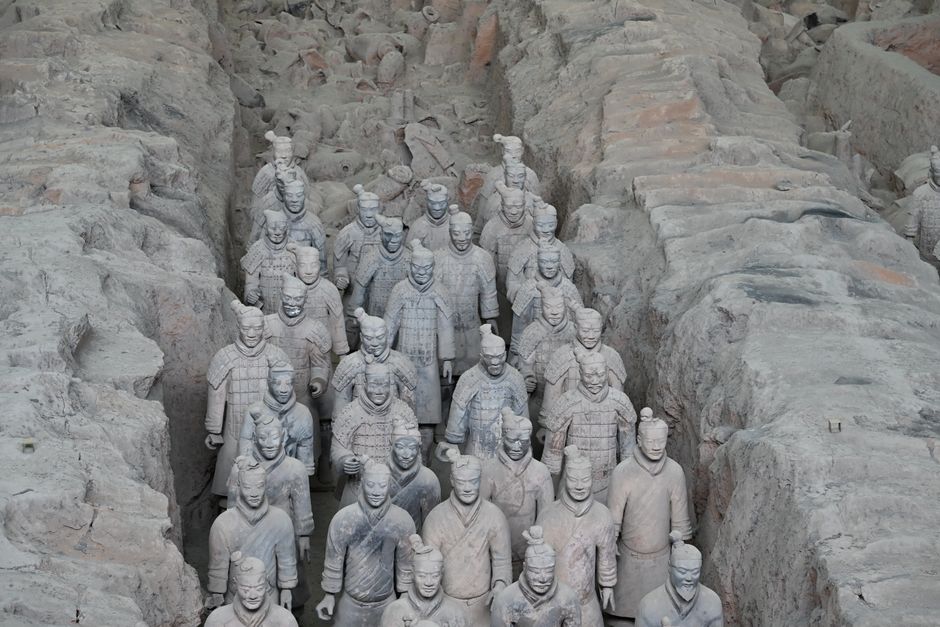
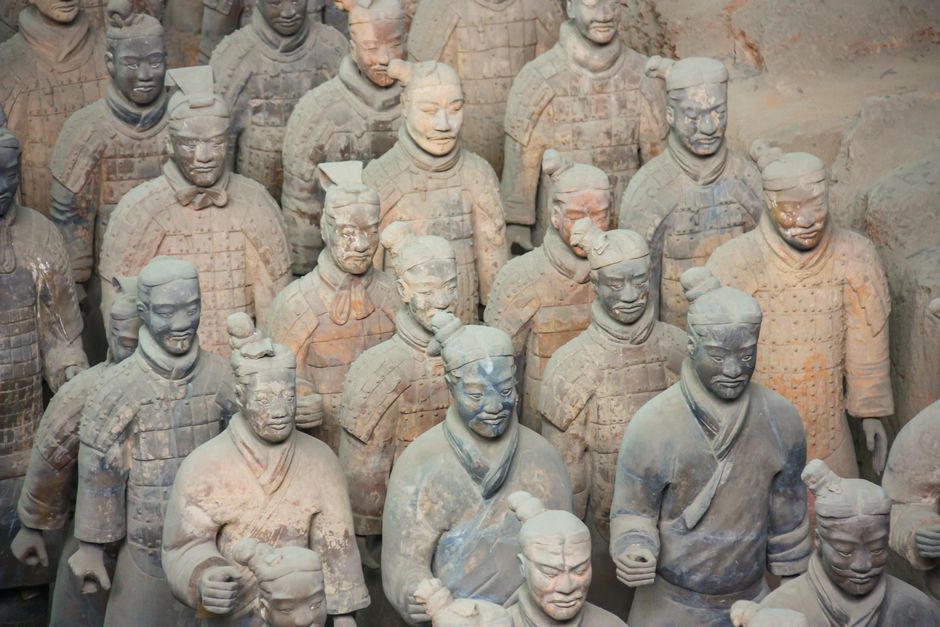
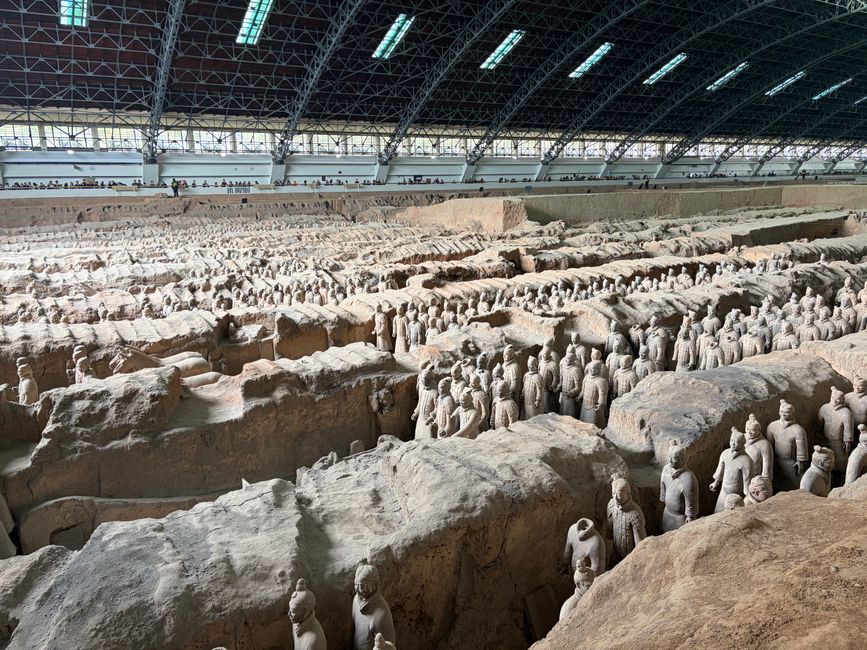
The Terracotta Warriors deserve their reputation. Seeing 8,000 unique clay soldiers standing in formation really does feel like something out of another world.
But the site gets crowded fast. Tour groups arrive around 10:00 AM and stay until mid-afternoon. If you arrive at 08:30 when gates open, you’ll have Pit 1 almost to yourself for about 45 minutes.
Almost every visitor follows the numbered order: Pit 1 → Pit 2 → Pit 3. Reverse it. Pit 3 is the command center — fewer warriors but genuine tactical significance, and it’s nearly empty first thing in the morning. By the time you reach Pit 1, you’ve built context that makes the scale land harder.
Entry tickets as of 2026 are ¥120 per person (March–November) and ¥90 (December–February). The site is about 40 km east of central Xi’an. Bus 914 or 915 from Xi’an Railway Station takes around 70 minutes and costs ¥7. A taxi runs ¥80–100.
Combine Day 1 with Huaqing Hot Springs, about 5 km before the warriors on the same road. The springs were the retreat of Tang Emperor Xuanzong and his concubine Yang Guifei — a genuine piece of living history that most visitors skip entirely because it’s not “the Terracotta Army.”
The Shaanxi History Museum: The Ticket Problem Nobody Warns You About
The Shaanxi History Museum is one of the best history museums in China, and entry is free. Both of those facts make it a logistical nightmare.
Daily ticket quota as of 2026: 10,000–12,000 free tickets, released at exactly 17:00 five days in advance via the museum’s official WeChat account (陕西历史博物馆). Tickets vanish within minutes.
If you’re traveling without Chinese mobile payment set up, this is one of the cases where a hotel concierge or travel agent earns their keep.
The Shaanxi History Museum requires your actual passport to match your reservation — a screenshot or photo won’t work. Foreign visitors need the physical document at the ticket desk. Don’t leave it at your hotel on museum day.
Inside the museum, most visitors stay on the ground floor with the bronze age artifacts and call it done. That’s a mistake.
The Tang Dynasty Mural Paintings gallery costs ¥300 extra and most visitors skip it entirely. It contains murals pulled directly from Tang imperial tombs — hunting scenes, polo players, court ladies — painted around 700 AD with colors still sharp enough to stop you mid-step.
According to museum documentation, these murals are among the best-preserved examples of Tang Dynasty figurative painting in existence.
Museum hours (March 15–November 14, 2026): 08:30–19:00, last admission 18:00.
Pair museum day with the Great Mosque and Muslim Quarter. Both are walkable from the museum via taxi (¥12–15). Start the museum at 08:30, spend 3–4 hours, then walk or ride to the Great Mosque before the afternoon crowds arrive.
The Muslim Quarter: Walk Past the Tourist Entrance
The Muslim Quarter (Huimin Jie) is genuinely one of the most interesting streets in China. It’s also one of the most tourist-saturated, and the first 200 meters from the Bell Tower end are almost entirely aimed at people who’ve never been there before.
Those stalls near the entrance sell acceptable food at inflated prices. You’ll find yangrou paomo and biang biang noodles, and they’ll taste fine. But you’ll pay three times what locals pay, and you’ll eat it standing next to fifty other foreign tourists.
Walk deeper. Turn left into Xiyangshi Alley or continue down into Dapiyuan — these narrow side streets are where the neighborhood’s Hui Muslim population actually eats. Prices drop by half. The yangrou paomo is better because the broth has been going since morning.
Go between 17:00 and 20:00. The morning crowd is tour groups. The late afternoon draws local families. When I visited on a Wednesday evening, the side alleys had a neighborhood-market quality — kids running around, old men playing cards, vendors who’d been at the same spot for decades. That’s the visit worth having.
What to Actually Eat
The five dishes that define this neighborhood, in order of priority:
| Dish | What It Is | Approx. Price (2026) |
|---|---|---|
| Yangrou Paomo | Hand-torn flatbread soaked in rich lamb broth | ¥28–45 |
| Biang Biang Noodles | Thick belt-width noodles with chili oil and vinegar | ¥15–25 |
| Rou Jia Mo | Braised beef in a baked bun — Xi’an’s “hamburger” | ¥12–18 |
| Jiasan Soup Dumplings | Paper-thin skin, rib meat and bone broth inside | ¥38–50 per basket |
| Luzhi Liangfen | Cold marinated bean jelly — the palate cleanser | ¥8–12 |
The Great Mosque (Qingzhen Da Si) is a two-minute walk from the Muslim Quarter’s main drag. Founded in 742 AD during the Tang Dynasty, it’s an extraordinary building — all Chinese temple architecture, no minarets, a functioning mosque that’s been in continuous use for 1,200 years.
Entry is ¥25 as of 2026. Spend an hour here before dinner. Most people rush past it.
“The Great Mosque of Xi’an is one of the oldest and most well-preserved mosques in China. Its Tang-style architecture reflects centuries of cultural exchange along the Silk Road.” — China Islamic Association historical documentation
Cycling the City Wall at Sunset
Xi’an’s ancient city wall is 13.7 km in circumference and in genuinely excellent condition. You can walk it or rent a bicycle and ride the full loop — most people choose the bike.
Rental prices as of 2026: ¥45 for a single bike (3 hours), ¥90 for a tandem. A ¥100 deposit is required. There are five rental points around the wall: South Gate has two, plus West Gate, North Gate, and East Gate.
The South Gate rental station is the most convenient and the most crowded.
The ride itself takes 90–120 minutes at a relaxed pace. Watching the city lights come on from 14 meters above street level as the sun sets is one of those moments that doesn’t translate into Instagram but stays with you for years.
Start from the West Gate instead of the South Gate if you want to avoid the initial crowd. Head south along the wall — you get the sunset on your right, and by the time you reach the South Gate area, the day-trip tourists have already left. The North Gate section is the quietest stretch of the whole loop.
Wall entry tickets: ¥54 (March–November), ¥40 (December–February). Opening hours vary seasonally — as of 2026, summer hours run until 22:00. Verify current hours before you go.
Day Trip: Mount Hua (If You Want to Earn the View)
Mount Hua (Huashan) is about 2 hours east of Xi’an by train — high-speed rail takes 30–40 minutes to Huashan Station (¥50–70 one way). From there, a tourist bus to the cable car base costs ¥10.
Most visitors take the north peak cable car (¥180 one way, ¥300 return) and do a 3–4 hour loop from the top.
This gets you above the clouds on a good day and involves one genuinely terrifying stretch — the Plank Road, a series of wooden planks bolted into a sheer granite cliff face over a 2,000m drop. Harnesses are required and provided.
The honest caveat: if you have any sensitivity to heights, the Plank Road is genuinely not fun. The views are spectacular but the experience is anxiety rather than exhilaration for most people. The main peaks without the Plank Road are still exceptional and much more manageable.
Day 1: Terracotta Warriors (early, start Pit 3) + Huaqing Hot Springs. Day 2: Shaanxi History Museum (morning, pre-booked) + Great Mosque + Muslim Quarter back alleys (evening). Day 3: City Wall cycling at sunset, or a full day at Mount Hua if you’re up for it. This sequence keeps you ahead of tour group timing at every stop.
Practical Xi’an Logistics
Getting there: Xi’an Xianyang International Airport connects to most Chinese cities. High-speed rail from Beijing takes 4.5–5 hours (¥500–800). From Chengdu: 3.5 hours by high-speed rail.
Getting around: Metro Lines 1, 2, 3, and 4 cover all the main city sites. The Bell Tower is the central hub. Taxis use meters reliably. For the Terracotta Warriors, Bus 914 from the railway station is the cheapest and most direct option (¥7, about 70 minutes).
Language: Less English signage than Beijing or Shanghai. Download Google Translate and set it to camera mode before you arrive — photographing menus and street signs is significantly easier than trying to ask.
Staying: The area between the Bell Tower and the South Gate of the city wall puts you within walking distance of the Muslim Quarter and easy Metro access to everything else. As of 2026, mid-range hotels here run ¥300–500/night.
Budget options drop to ¥150–200 in the newer districts outside the wall.
Best time to visit: April–May and September–October. Summers are hot and packed with domestic tourists. January–February is off-peak but cold (Xi’an sees occasional snow). Prices as of 2026 — verify before travel.
Last updated: April 2026. Prices, hours, and ticket quotas change — always verify with the official venue before your visit.
Frequently asked questions
How do I get tickets for the Shaanxi History Museum?
Free timed tickets release on the museum’s WeChat account at 17:00, five days in advance, and sell out within minutes. Book at exactly that time, or buy a paid special-exhibition ticket to skip the queue.
What time should I arrive at the Terracotta Army?
Arrive at 08:30 when the gates open. You will have Pit 1 almost to yourself for about 45 minutes before the tour groups arrive around 10:00.
How much does cycling the Xi’an City Wall cost?
Bike rental is about ¥45. The full 14km loop takes two to three hours, and golden hour is the best time to ride it.
Where is the best food in the Muslim Quarter?
Skip the crowded first 200 metres of the main street. The better food is in the Xiyangshi and Dapiyuan back alleys, away from the tourist strip.
How many days do you need in Xi’an?
Three days works well: one for the Terracotta Army, and two more for the City Wall, the museums, the Muslim Quarter and a possible Mount Hua day trip.
Is Mount Hua a good day trip from Xi’an?
Yes, if you want dramatic views and a real climb. It is reachable by high-speed train from Xi’an and takes a full day.
More on China Destinations:
Planning a trip to China?
Check out our China Travel Hub for more guides, including China Digital Survival Guide.

Written by East Asia Explorer Editorial Team
Sam Konneh is an AI strategist and digital marketer based in Seoul, South Korea. With years spent living, working, and exploring across Korea, Japan, and China, he shares firsthand insights into East Asia's cultures, hidden gems, and everyday life. A graduate of Inha University and KDI Graduate School, Sam combines data-driven expertise with on-the-ground experience. His journey also includes studying in Malaysia and traveling through Southeast Asia. Through practical tips, local stories, and travel guides, he helps fellow explorers discover both the celebrated highlights and the lesser-known corners of East Asia.