Last Updated: July 4, 2026 | Originally Published: July 8, 2026
- Gwangjang Market is Seoul’s oldest covered market (est. 1905) and the city’s undisputed street-food heavyweight—home to bindaetteok, mayak gimbap, yukhoe and live octopus served from roughly 200 food stalls in a single hall. Entry is free.
- Take Line 1, Jongno 5-ga Station, Exit 8—a 1-minute walk to the market entrance. Exit 7 also puts you within 2 minutes.
- Most food stalls open roughly 10:00–22:00. The fabric and vintage clothing sections upstairs close earlier (generally by 19:00). The market is closed on Mondays in many sections; food stalls mostly stay closed too.
- The bindaetteok (mung-bean pancake) section in the centre of the food hall is what brought Netflix here. Grab a seat at any counter, order one pancake (~5,000 KRW) and a bowl of makgeolli (~4,000 KRW), and watch the kitchen crew flip batter on a hot griddle the size of a car bonnet.
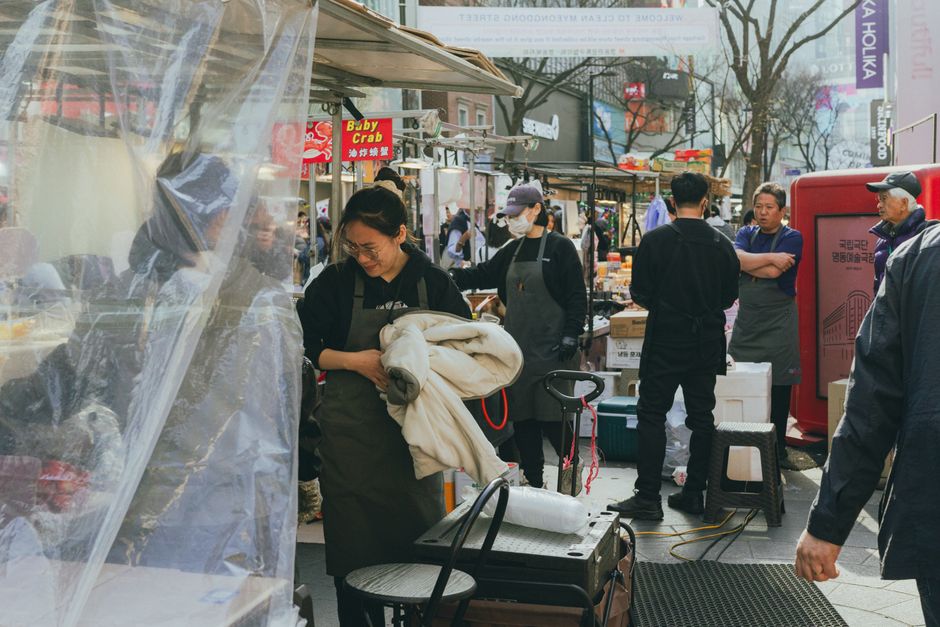
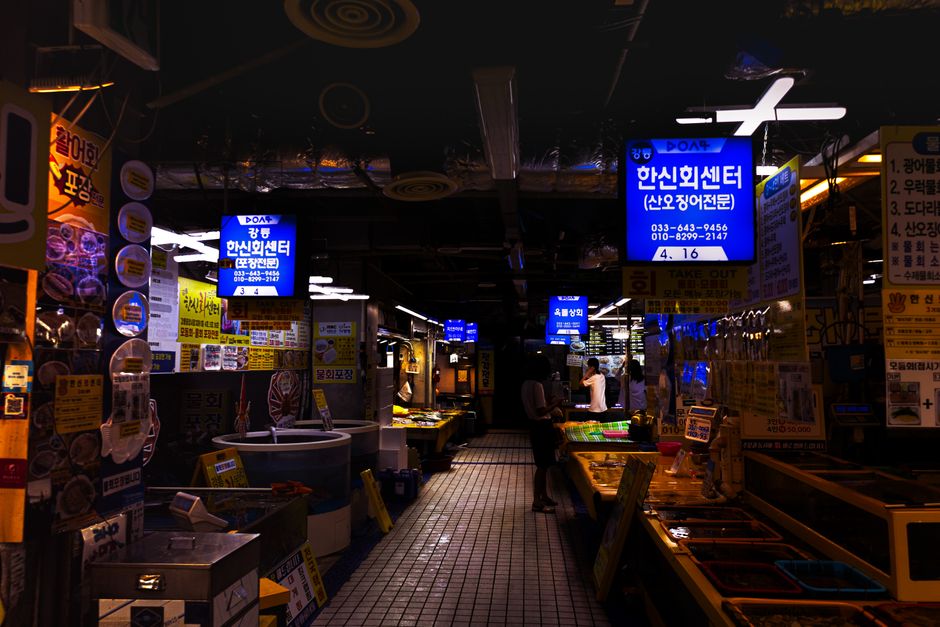
Gwangjang Market smells like hot oil, sesame and grilling mung bean before you even reach the door. Inside, the noise is a wall of sizzling griddles, shouted orders and the clatter of metal chopsticks on laminate tabletops. It is not a curated food hall.
It is a 120-year-old market that happens to serve some of the best street food in Asia.
My first visit I sat down at a bindaetteok stall and ordered one pancake. The woman next to me silently pushed her bowl of makgeolli toward me and nodded. I accepted. The pancake was crisp-edged and soft in the middle. The makgeolli was cold and slightly sweet.
It was 12:30 PM on a Tuesday and it remains one of the best lunches I have ever had.
A short history of Gwangjang Market
Gwangjang Market opened in 1905 as Korea’s first modern covered market, founded during the final years of the Korean Empire. Its original name was Dongdaemun Market (not to be confused with today’s Dongdaemun shopping district), and it sold primarily silk and textiles alongside food.
It survived Japanese occupation, the Korean War, and the wholesale redevelopment of Jongno in the 1970s–80s.
The textile and vintage-clothing trade still occupies the upper floors, while recognised by the Cultural Heritage Administration as a site of modern cultural significance, the ground-floor food hall evolved over decades into the street-food destination that came to global attention after appearing on Netflix’s “Street Food” series in 2019.
Today it is one of the few places in Seoul where grandmothers still work the griddles alongside their grandchildren, and where you can eat your way through six stalls in one hall and spend less than a sit-down lunch in Myeongdong.
What to eat at Gwangjang Market
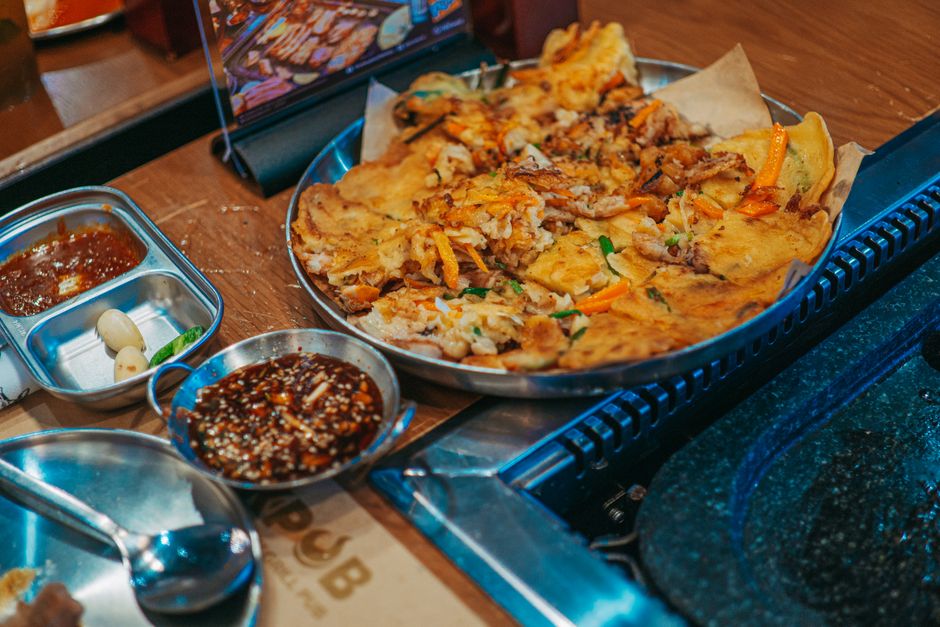
Bindaetteok (mung-bean pancake). The headliner. Seoul Metropolitan Government-recognised food hall. Ground mung beans mixed with pork, kimchi and bean sprouts, fried in oil on a massive round griddle until golden and crisp. Served with soy-vinegar dipping sauce and a side of pickled onion. About 5,000 KRW per pancake.
The stalls in the central food hall all do slight variations; the differences are marginal, the quality is uniformly high.
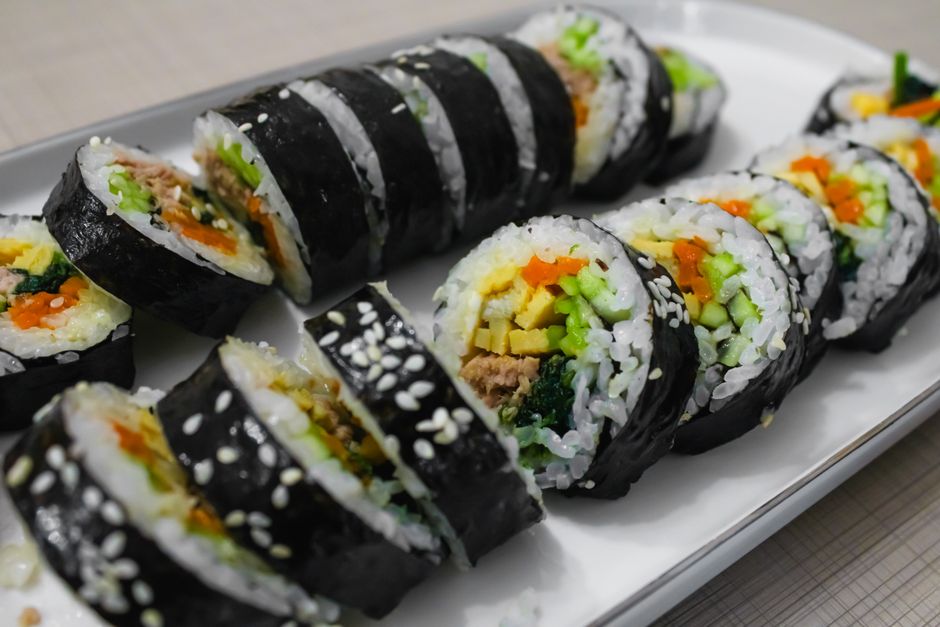
Mayak gimbap (mini seaweed rice rolls). “Mayak” means “drug” in Korean, and the name is not subtle: these small gimbap rolls are supposedly addictive. They are thinner than standard gimbap, stuffed with pickled radish, carrot and seasoned rice, and served with a sesame-oil mustard dipping sauce.
About 3,000–5,000 KRW for a plate of roughly 10–12 pieces.
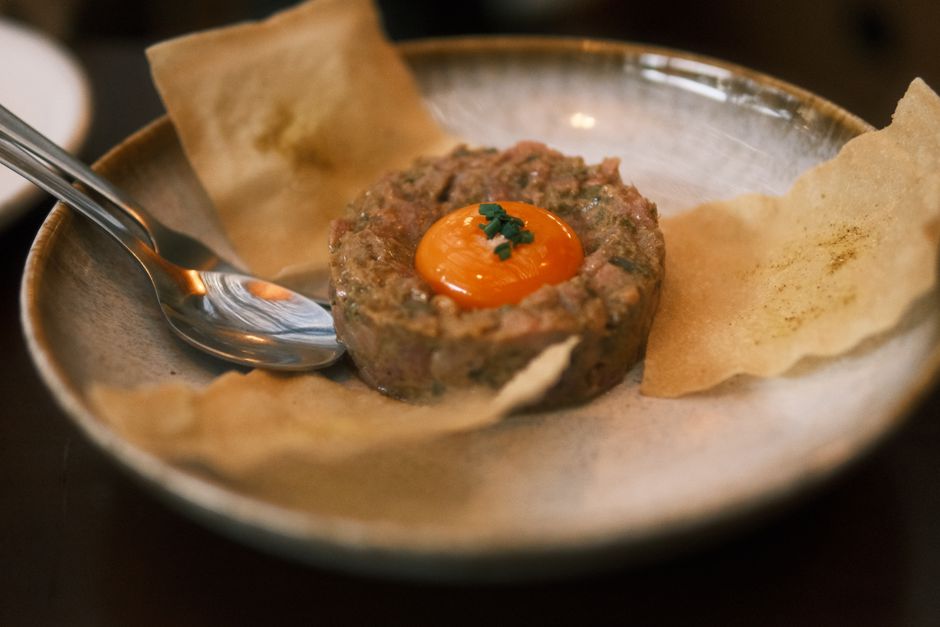
Yukhoe (Korean beef tartare). Hand-cut raw beef seasoned with sesame oil, soy, garlic and a raw egg yolk on top, served with sliced pear. The texture is tender, the pear adds sweetness against the savoury beef, and it is one of the best raw-beef dishes in East Asia.
About 12,000–19,000 KRW depending on portion size.
Live octopus (sannakji). Small octopus cut into pieces and served immediately, still wriggling, with sesame oil and salt. It is more texture than taste—the suction cups cling slightly to your tongue—and it is the dish that every food-travel show films. About 10,000–15,000 KRW.
Chew thoroughly; the suction-cup risk is real but overblown.
Tteokbokki, eomuk, sundae and more. The perimeter stalls and side alleys sell the full Seoul street-food roster: spicy rice cakes (tteokbokki), fish-cake skewers in broth (eomuk), blood sausage (sundae), and steamed mandu (dumplings). Budget about 2,000–5,000 KRW per snack.
Tickets & opening hours (2026)
| What | Hours | Price | Note |
|---|---|---|---|
| Food hall | ~10:00–22:00 | Free entry; food from ~3,000 KRW | Closed Mondays (most stalls) |
| Fabric + vintage section | ~09:00–19:00 | Free entry | Upper floor; closes earlier than food hall |
“Gwangjang Market was the first permanent market in Korea, established in 1905. Its ground-floor food alley is famous for traditional Korean street foods including bindaetteok, mayak gimbap, and yukhoe, drawing both local Seoul residents and international visitors.”
How to get there
| Method | Route | Walk from station |
|---|---|---|
| Subway (best) | Line 1 → Jongno 5-ga Station, Exit 8 | ~1 minute |
| Subway (alt) | Line 2 / Line 5 → Euljiro 4-ga Station, Exit 4 | ~5 minutes |
| Walk from Dongdaemun | From DDP / Dongdaemun, walk west along Cheonggyecheon stream path | ~7 minutes |
Exit 8 is the direct shot: you surface on the corner of the market building. The main food-hall entrance is roughly 45 seconds from the turnstile. Euljiro 4-ga Exit 4 is a backup route, useful if Line 1 is not on your route.
From Dongdaemun DDP, you can walk west along Cheonggyecheon Stream and emerge at Jongno 5-ga in about 7 minutes.
Best time to visit
Weekday lunch (Tuesday–Friday, 11:30 AM–13:00) is the golden window—the food stalls are in full swing, the office-worker lunch crowd adds energy without overwhelming, and you can get a seat at the bindaetteok counter without queueing.
Weekends (especially Saturday afternoons) are the busy window. The crowds are heavier, the noise is higher, and the bindaetteok lines can stretch 20 minutes. If Saturday is your only option, go early (11:00 AM) before the peak lunch wave.
Evenings (17:00–20:00) draw a mix of after-work crowds and tourists. The atmosphere is livelier, the makgeolli flows faster, and the market takes on a dinner-service energy that is different from the lunch rhythm. Both lunch and dinner are valid; the difference is volume, not quality.
Gwangjang Market at a glance
| Detail | Info |
|---|---|
| Best for | Street food, bindaetteok, yukhoe, mayak gimbap, market atmosphere |
| Time needed | 1–2 hours (eating); add 30 min for vintage browsing |
| Cost | Free entry; full meal ~10,000–25,000 KRW per person |
| Best day/time | Weekday lunch (11:30–13:00), Tuesday–Friday |
| Payment | Cash preferred; some stalls accept cards |
Where to eat nearby
Inside Gwangjang Market: Everything you need is inside the market. The strategy is to graze across 4–6 stalls: bindaetteok, mayak gimbap, tteokbokki, yukhoe, and a makgeolli finish. Budget about 20,000–30,000 KRW total per person for a full market meal.
Dongdaemun Grilled Fish Alley (7-minute walk east): If you prefer a sit-down meal outside the market, the grilled fish lane behind Doota Mall serves galchi jorim and grilled mackerel for roughly 8,000–12,000 KRW.
Jongno street-food strip (north of the market): The main roads around Jongno 5-ga have additional pojangmacha (tent bars) and casual Korean restaurants, open later than the market for post-dinner drinking and snacking.
Combine it into a Seoul day
Arrive at Gwangjang Market around 11:30 AM for lunch (Line 1 Jongno 5-ga, Exit 8). Spend about 90 minutes eating through the food hall. Browse the vintage-clothing upstairs if interested.
Walk 7 minutes east along Cheonggyecheon Stream to Dongdaemun DDP. Wander the architecture and rose garden.
From there, walk north to the Dongdaemun shopping malls (Doota, Migliore) for retail, or walk 10 minutes back west along the stream to Cheonggye Plaza for the starting point of the full evening stream walk.
Is Gwangjang Market worth visiting?
If you care about food at all, yes. It is the best single-building street-food experience in Seoul—more concentrated than Namdaemun, more food-focused than Dongdaemun, and more authentic than Myeongdong’s outdoor carts. The bindaetteok alone is worth the subway ride. Go on a Tuesday morning and eat like you mean it.
What’s nearby
- Korea Travel Guide—your hub for Seoul, Busan, and beyond
- Budget-Friendly Street Food in Seoul—eat through Seoul for under 10,000 KRW per meal
- Dongdaemun & DDP Guide—night shopping and design architecture, 5 minutes east
- Cheonggyecheon Stream Guide—the urban stream walk connecting Gwangjang and Dongdaemun
Frequently Asked Questions
What is Gwangjang Market famous for?
Gwangjang Market is most famous for its ground-floor food hall, where roughly 200 stalls serve traditional Korean street food including bindaetteok (mung-bean pancake), mayak gimbap, yukhoe (beef tartare) and sannakji (live octopus). It was featured on Netflix’s “Street Food” series.
How do I get to Gwangjang Market?
Line 1, Jongno 5-ga Station, Exit 8. The market entrance is literally 1 minute from the exit. Euljiro 4-ga Station (Line 2/5, Exit 4) is a 5-minute backup route.
Is Gwangjang Market open on Monday?
No, the market is effectively closed on Mondays. Most food stalls are shut, and finding anything open beyond a single corner stall is unlikely. Tuesday through Friday is the ideal window.
How much does food cost at Gwangjang Market?
Bindaetteok: about 5,000 KRW. Mayak gimbap: about 3,000–5,000 KRW. Yukhoe: about 12,000–19,000 KRW. Sannakji: about 10,000–15,000 KRW. A full meal grazing across 4–6 stalls costs roughly 20,000–30,000 KRW per person.
Do I need cash at Gwangjang Market?
Cash is preferred. Bring at least 20,000–30,000 KRW in small bills per person. Some stalls now accept cards, but many smaller vendors remain cash-only.
What is the best time to visit Gwangjang Market?
Weekday lunch (Tuesday–Friday, 11:30 AM–13:00) for full energy without heavy weekend crowds. Evenings (17:00–20:00) for a livelier dinner atmosphere with more makgeolli in rotation.
Is Gwangjang Market the same as Namdaemun Market?
No. Gwangjang is primarily a food-and-textile market in Jongno, while Namdaemun Market is a larger general-goods market (clothing, accessories, ginseng) near Seoul Station with its own food alleys. Gwangjang is food-first; Namdaemun is shopping-first.
Can vegetarians eat at Gwangjang Market?
Options are limited. Bindaetteok sometimes contains pork (ask), tteokbokki is usually vegetarian, and steamed mandu may have meat fillings. Korean temple-style vegetarian restaurants are scarce inside the market; Insadong, a 10-minute walk west, has better vegetarian options.
More on Seoul:

Written by East Asia Explorer Editorial Team
Sam Konneh is an AI strategist and digital marketer based in Seoul, South Korea. With years spent living, working, and exploring across Korea, Japan, and China, he shares firsthand insights into East Asia's cultures, hidden gems, and everyday life. A graduate of Inha University and KDI Graduate School, Sam combines data-driven expertise with on-the-ground experience. His journey also includes studying in Malaysia and traveling through Southeast Asia. Through practical tips, local stories, and travel guides, he helps fellow explorers discover both the celebrated highlights and the lesser-known corners of East Asia.