Published: September 1, 2026
- Located in the Zhangjiajie Grand Canyon Scenic Area — a separate attraction from the National Forest Park (Wulingyuan), about 15 km apart
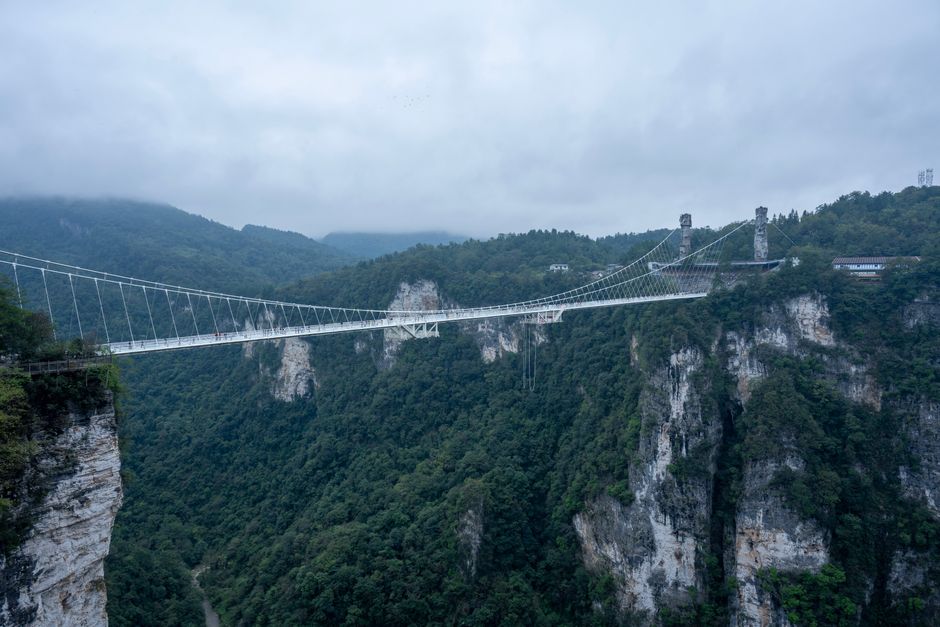
- Bridge specs: 430 m long, 6 m wide, 300 m above the canyon floor — designed by Israeli architect Haim Dotan
- Full scenic area adult ticket: ¥208; book timed-entry slots in advance via Trip.com or the official WeChat mini-program (slots sell out on weekends)
- Plan half a day for the Grand Canyon; add a full day if combining with Wulingyuan and the Bailong Elevator
What Is the Zhangjiajie Glass Bridge?
The Zhangjiajie Grand Canyon Glass Bridge opened in August 2016 as the world’s longest and highest glass bridge at the time. Israeli architect Haim Dotan designed the 430-metre span to float 300 metres above the canyon floor of the Zhangjiajie Grand Canyon Scenic Area (张家界大峡谷景区), in Cili County, Hunan Province.
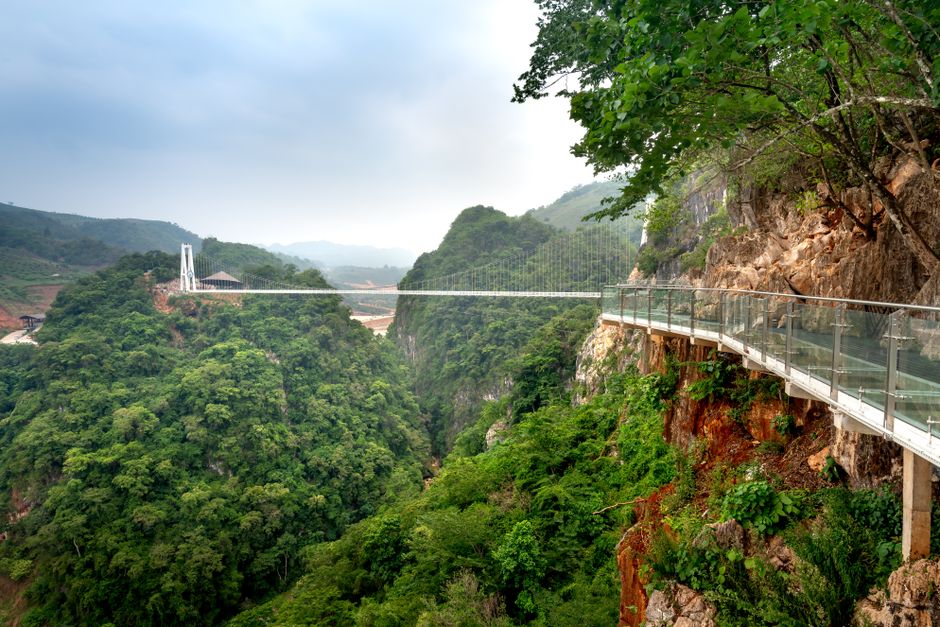
The bridge deck uses 99 glass panels, each 6 cm thick and rated to hold 10,000 people. Many visitors report standing on it feels genuinely alarming — the glass is transparent, the canyon is deep, and the wind comes in sideways off the valley walls.
The Grand Canyon itself is a limestone gorge carved by the Suoxi River. The glass bridge is the showpiece, but the full scenic area also includes a canyon trail, a raft section, and multiple viewpoint platforms — you get these with the same ¥208 ticket.
Ticket Prices and What’s Included in 2026
The adult ticket for the Zhangjiajie Grand Canyon Scenic Area is ¥208 per person as of 2026. This covers:
- Glass bridge crossing (timed slot — see booking section below)
- Full canyon trail (3–5 hours on foot)
- Rafting section on the Suoxi River (short, included)
- Return shuttle bus inside the park
Children under 1.2 m: free. Students with Chinese student ID: ¥104. Seniors 65+: free with ID. Foreign visitors pay the standard ¥208 — there is no foreigner surcharge.
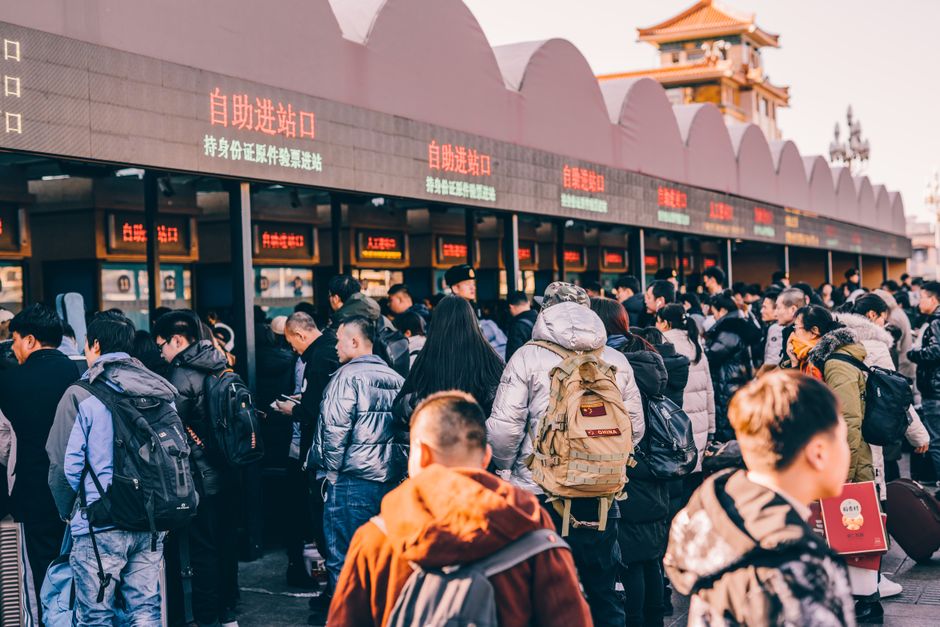
The scenic area allows a maximum of 8,000 visitors per day, with the glass bridge itself managed in batches of roughly 600 people at a time. On busy days the bridge is paused for 5–10 minutes between batches to prevent overcrowding on the glass deck.
“The Zhangjiajie Grand Canyon Scenic Area implements timed and capacity-limited entry to protect both the natural environment and visitor safety.” — China National Tourist Office (CNTO), visitor management guidelines
How to Book Timed Glass Bridge Tickets (Step by Step)
The glass bridge slot is embedded in your scenic area ticket — you don’t buy the bridge separately. Your timed entry window covers a 2-hour arrival block for the whole Grand Canyon, and the bridge operates within that window on a first-come, first-cross basis once you’re inside.
Three ways to book:
- Trip.com (recommended for foreign visitors) — English interface, accepts international cards (Visa/Mastercard), e-ticket on your phone. Book at least 2–3 days ahead on weekends, 1 day ahead on weekdays.
- Official WeChat mini-program (张家界大峡谷景区) — requires a WeChat account and Alipay or WeChat Pay. Cheapest because no booking fee, but Chinese-only interface.
- At the gate — possible on quiet weekdays, but slots routinely sell out by 9 am during school holidays and the Golden Week (1–7 October). Don’t risk it on those dates.
After booking, your e-ticket shows a QR code. Scan it at the main gate turnstile. No need to print anything.
Getting to the Glass Bridge from Zhangjiajie City
The Zhangjiajie Grand Canyon Scenic Area is in Cili County, about 45 km southwest of Zhangjiajie city centre and 55 km from Wulingyuan (the National Forest Park entrance town). The two areas are in opposite directions from the city — plan accordingly.
| Option | Journey Time | Cost (approx) | Notes |
|---|---|---|---|
| Taxi from Zhangjiajie city | ~45 min | ¥60–80 | Negotiate or use DiDi app; most drivers know the site |
| Tourist shuttle bus | ~50 min | ¥20–25 | Departs from Zhangjiajie South Railway Station area; schedules change seasonally |
| Tour package | Full day | ¥280–350 | Includes ticket + guide + return transfer; book via Trip.com |
| From Wulingyuan (National Forest Park) | ~35–40 min by taxi | ¥50–70 | Doable as a half-day add-on after Wulingyuan; book taxi back in advance |
Getting to Zhangjiajie itself: The closest HSR station is Zhangjiajie West Railway Station, served by high-speed trains from Changsha (~2 hrs, ¥130–160 second class) and Beijing (~7 hrs on the fastest service). Flying in via Zhangjiajie Hehua International Airport is faster from coastal cities.
What to Expect on the Day
Allow 3–5 hours for the full Grand Canyon experience. Here’s roughly how a visit flows:
You arrive at the main gate, scan your QR code, and board a shuttle bus into the canyon mouth. The glass bridge is the first major stop — follow the signs to the bridge entrance.
You’ll deposit your bag in a free locker at the bridge access point (mandatory — no bags on the bridge), and you receive blue non-slip fabric overshoes that go on over your own footwear. These are required, free, and disposed after use.
The crossing itself takes 5–10 minutes at a normal walking pace. Most people stop several times to look through the glass panels at the canyon floor 300 metres below.
I crossed it on a cloudy September morning — the mist rolling up from the gorge made the valley walls disappear, which was arguably more surreal than a clear-sky crossing.
After the bridge, the canyon trail continues for about 3 km before looping back via the shuttle. There are viewpoints, a short raft ride on a calm section of the Suoxi River, and several food stalls selling Tujia minority snacks (sticky rice, wild vegetable skewers).
Cash or Alipay — most stalls don’t take cards.
Combining the Glass Bridge with Zhangjiajie National Forest Park
Most visitors who fly in or take the train to Zhangjiajie want to see both the Avatar Mountains (the Hallelujah Mountain peaks in Wulingyuan’s Yuanjiajie area) and the glass bridge. These are legitimate world-class sights — but they are in different directions and need separate full or half days.
Suggested 2-day itinerary:
- Day 1 (full day) — Wulingyuan/National Forest Park: Enter at Zhangjiajie Forest Park Gate; take the Bailong Elevator (world’s highest outdoor lift, 326 m, ~¥72 return) up to the plateau; walk the Yuanjiajie loop to the Avatar Hallelujah Mountain viewpoint; return via the Index Finger Peak trail. Book the park entrance (¥248 for the 3-day pass, includes Bailong Elevator) in advance on Trip.com.
- Day 2 (half day) — Grand Canyon Glass Bridge: Take a taxi or shuttle to Cili County by 8:30 am to avoid peak crowds; cross the glass bridge; walk the canyon trail; return to Zhangjiajie city for afternoon departure.
If you only have one day, the glass bridge half-day is the faster, lower-exertion option. The National Forest Park demands more walking and is less doable in half a day without feeling rushed.
Best Time to Visit: Crowds, Weather, and Season Advice
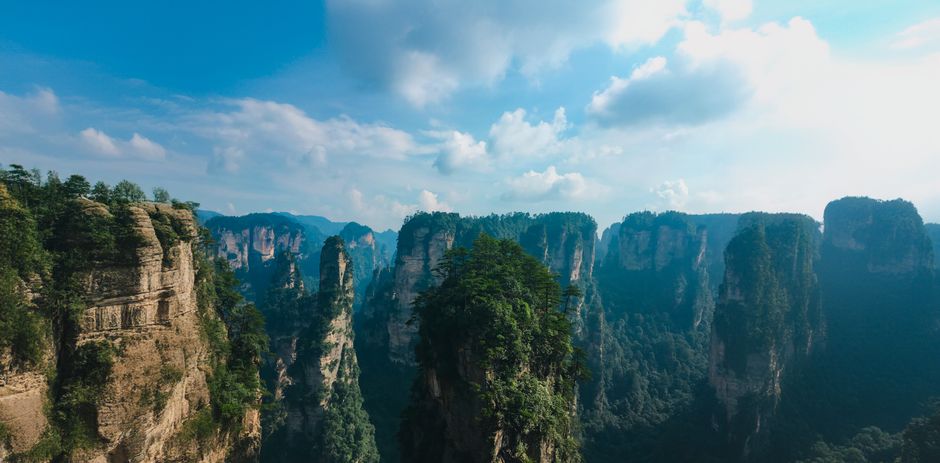
Zhangjiajie has four visitable seasons, but they vary significantly:
| Season | Conditions | Glass Bridge |
|---|---|---|
| Spring (Mar–May) | Mild, misty — canyon fog adds atmosphere | Good; April–May busy but manageable |
| Summer (Jun–Aug) | Hot (35°C+), high humidity, thunderstorms | Bridge closes in lightning/high-wind warnings |
| Autumn (Sep–Nov) | Ideal: clear skies, 18–25°C, fall foliage in Oct | Best season — but Golden Week is manic (book 4+ weeks ahead) |
| Winter (Dec–Feb) | Cold, occasional snow — ice on canyon paths | Quietest season; bridge may close in snow/ice conditions |
Avoid: the October Golden Week (1–7 October) and May Day (1–5 May) unless you’ve booked all tickets weeks in advance and accept the crowds. Chinese domestic tourism volumes spike to 3–5× normal during these weeks.
What to Wear and What Not to Bring
The park provides non-slip overshoes at the bridge entrance. You can wear any footwear — trainers, hiking boots, sandals — and the overshoes go on top. High heels are technically allowed but deeply inadvisable on canyon trails.
Don’t bring:
- Large backpacks (must go in lockers, lockers are small)
- Tripods or selfie sticks with built-in flashes (security may confiscate them at busy times)
- Drones — prohibited throughout the scenic area
- Glass bottles (prohibited on the bridge itself)
Do bring:
- A small shoulder bag or waist pack that fits in the bridge-access lockers
- Cash or Alipay for food stalls inside the canyon
- Sunscreen and a hat in summer — the canyon plateau above the bridge has little shade
- A rain layer in spring and summer; afternoon thunderstorms are common
Is the Zhangjiajie Glass Bridge Worth It?
The honest answer depends on your existing itinerary.
Worth it if: you’re already in Zhangjiajie for the National Forest Park and have a spare half day. The glass bridge is a genuinely striking piece of engineering, and the Grand Canyon scenery is legitimately beautiful — not a tourist-trap version of Zhangjiajie’s natural field.
Borderline if: you’d need to add an extra night in Zhangjiajie solely for the glass bridge. The canyon experience at ¥208 is good value, but it’s not in the same league as a full day in Wulingyuan for sheer field impact.
A one-day visit that skips the forest park in favour of the glass bridge is an unusual priority.
Skip it if: you’re visiting during a major holiday and haven’t pre-booked. Queuing for 2 hours to spend 8 minutes on a bridge in a crowd is not relaxing.
For visitors combining both sites over two days, the glass bridge rounds out a Zhangjiajie trip well. It offers a different kind of spectacle — engineered rather than natural — that makes for a satisfying contrast to the forest park’s ancient stone pillars.
- The glass bridge is inside the Grand Canyon Scenic Area — a separate ticket and location from Wulingyuan National Forest Park
- Book via Trip.com with your international card; tickets sell out on weekends and holidays
- Arrive by 9 am to avoid afternoon crowds and potential weather closures
- Budget ¥208 per adult and half a day for the full canyon experience
- Combine with Wulingyuan over two days for the full Zhangjiajie experience — they complement each other well
Frequently Asked Questions
How long is the Zhangjiajie Glass Bridge?
The bridge is 430 metres long and 6 metres wide, spanning 300 metres above the floor of the Zhangjiajie Grand Canyon in Hunan Province.
How much does the Zhangjiajie Glass Bridge ticket cost in 2026?
The glass bridge is included in the Zhangjiajie Grand Canyon Scenic Area ticket, currently ¥208 per adult. There is no separate glass bridge surcharge. Verify the current price when booking — the rate was revised upward in 2023 and may change again.
Do I need to book in advance?
Yes — especially on weekends, public holidays, and the September–October peak season. Book at least 2–3 days ahead via Trip.com (English, international cards) or the official WeChat mini-program. Gate tickets are available on quiet weekdays but are not guaranteed.
Is the Zhangjiajie Glass Bridge the same as the Zhangjiajie National Forest Park?
No. They are two different scenic areas, about 15 km apart, with separate tickets. The glass bridge is in the Grand Canyon Scenic Area (Cili County). The forest park with the Avatar Mountains is in Wulingyuan. Most visitors spend one day at each.
Can I visit the glass bridge and the National Forest Park on the same day?
It’s possible but rushed. The forest park alone needs a full day to see the highlights. The Grand Canyon takes 3–5 hours. Combining both means 10+ hours on your feet with 1–2 hours of transit between them. Most visitors split the two across separate days.
Is the glass bridge safe?
Yes. The 99-panel glass deck is engineered to hold 10,000 people simultaneously and has been in continuous operation since 2016 without a structural incident. The bridge closes automatically under lightning alerts or sustained high winds, which is a safety protocol, not a structural concern.
The US State Department rates China (including Hunan Province) at Travel Advisory Level 1 — “exercise normal precautions” — with no specific advisories related to glass bridge attractions.
What is the best time of day to visit?
Arrive at opening (typically 8:00–8:30 am) to beat tour groups, which typically arrive 9–10 am. Morning light is also best for glass-deck photography. Check the opening hours on your e-ticket confirmation, as the scenic area adjusts hours seasonally.
Last updated: August 2026. Ticket prices and opening hours are subject to change — verify current rates when booking. Internal links: China Travel Guide | Zhangjiajie Avatar Mountains Guide
More on China Destinations:

Written by East Asia Explorer Editorial Team
Sam Konneh is an AI strategist and digital marketer based in Seoul, South Korea. With years spent living, working, and exploring across Korea, Japan, and China, he shares firsthand insights into East Asia's cultures, hidden gems, and everyday life. A graduate of Inha University and KDI Graduate School, Sam combines data-driven expertise with on-the-ground experience. His journey also includes studying in Malaysia and traveling through Southeast Asia. Through practical tips, local stories, and travel guides, he helps fellow explorers discover both the celebrated highlights and the lesser-known corners of East Asia.