Last Updated: September 18, 2026 | Originally Published: September 2, 2026
- Getting there: High-speed rail from Chengdu East to Leshan takes just 41 minutes (¥30 second class, ¥47 first class); around 72 trains run the route daily
- Buddha tickets: ¥80 covers the Giant Buddha, Wuyou Temple, and the Mahao Cliff Tombs; the river boat view is a separate ¥70
- Golden Summit alert: From May 23, 2026, Mount Emei has capped Golden Summit entry at 8,000 tickets a day while the cableway and bus station are rebuilt through late 2027 — book ahead or you may not get up
- Cable car cost: The Jinding cable car to the Golden Summit runs ¥65 up / ¥55 down in peak season (¥120 round trip); Mount Emei’s own entrance fee is ¥110
Last updated: August 8, 2026
I’ve watched travelers try to squeeze the Leshan Giant Buddha and the Golden Summit of Mount Emei into one rushed day from Chengdu, and it almost never works the way the itinerary promised.
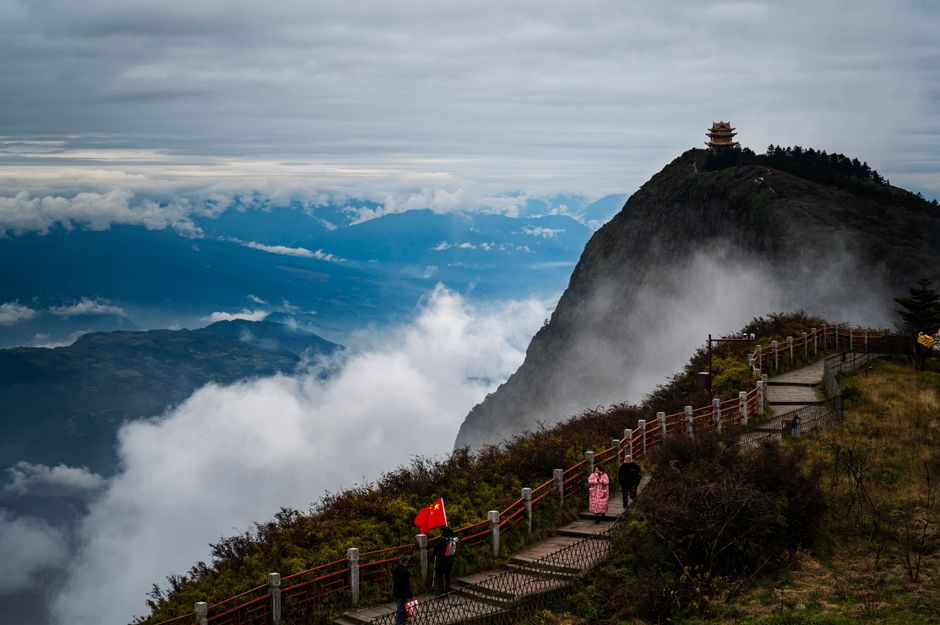
The two sites are only 45 kilometers apart, but the bus-then-cable-car queue to Emei’s 3,077-meter summit alone can eat four hours.
This guide splits the trip the way it actually runs on the ground: the high-speed rail numbers, the ticket combinations that save a second entry fee, and the 2026 ticket cap at the Golden Summit that catches people who didn’t check before they left Chengdu.
How Do You Get From Chengdu to the Leshan Giant Buddha?
The Chengdu–Leshan–Emeishan intercity high-speed line is the fastest option. Trains leave from Chengdu East Railway Station and reach Leshan Railway Station in as little as 41 minutes, running at up to 300 km/h.
Around 72 trains a day make the run, so you’re rarely waiting more than 20–30 minutes for the next departure. Second-class seats start around ¥30; first class starts around ¥47.
| Route | Journey Time | Fare (from) | Departures/Day |
|---|---|---|---|
| Chengdu East → Leshan | 41 min | ¥30 (2nd class) | ~72 |
| Chengdu → Emeishan | ~1 hr | ¥35–50 | Frequent |
| Leshan ↔ Emeishan | ~15 min (train) / 30–45 min (bus) | ¥8 (shuttle bus) | Every ~10 min |
From Leshan Railway Station, take a taxi or bus 3 (about 30 minutes) to the Leshan Giant Buddha Scenic Area’s north gate. There’s no direct rail line into the scenic area itself.
How Much Are Leshan Giant Buddha Tickets and What Do They Include?
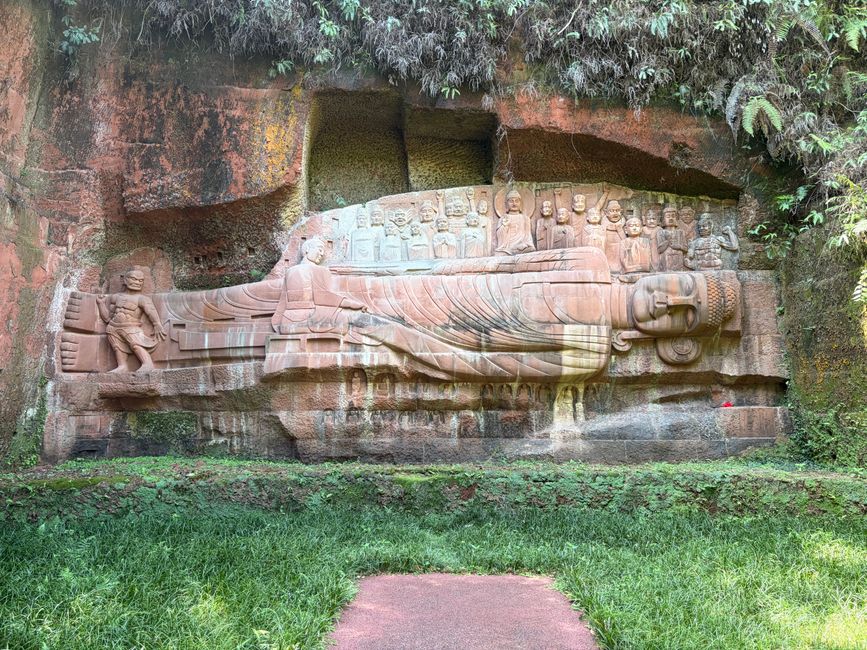
Standard admission is ¥80. That single ticket covers three sites: the Giant Buddha itself, Wuyou Temple, and the Mahao Cliff Tombs — a set of Han-dynasty rock tombs most visitors walk straight past.
The scenic area is open 07:30–18:30 from April 1 to October 7, and 08:00–17:30 from October 8 to March 31. Last entry is roughly 45 minutes before closing.
Seeing the Buddha from the water — the classic head-to-toe photo — costs an extra ¥70 for the river boat, sold separately at the dock. It is not included in the ¥80 gate ticket.
Should You Take the Boat or Walk the Cliff Stairs?
Most first-time visitors do both, in this order: boat first for the full-body view from the river, then the narrow cliff staircase for the close-up climb past the Buddha’s shoulder and down to its feet.
Why Is the Golden Summit Now Capped at 8,000 Tickets a Day?
Starting May 23, 2026, Mount Emei began capping daily entry to the Golden Summit at 8,000 tickets.
The cause is a rebuild of the Golden Summit Cableway and the Leidongping Bus Station, the two chokepoints every summit-bound visitor passes through — construction is expected to run through the end of 2027.
This is a real operational change, not routine caution: arrive without a pre-booked slot on a weekend in peak season and you can be turned back at Leidongping with no summit ticket left for the day.
How Do You Get From Leshan to Mount Emei?
The two sites sit about 45 kilometers apart, roughly a 40-minute drive. A dedicated shuttle bus runs from Leshan’s Central Bus Station and Xiaoba Bus Station to Emeishan City for ¥8, departing every 10 minutes, with a ride time near 30 minutes.
If you’d rather take the train, the Chengdu–Leshan–Emeishan high-speed line connects Leshan Railway Station to Emeishan Railway Station directly in about 15 minutes.
What Does the Jinding Cable Car to the Golden Summit Cost?
Mount Emei’s own entrance fee is ¥110 in the off-season. From the Baoguo Temple area, a sightseeing bus to Leidongping — the base station for the summit cable car — costs ¥90.
The Jinding cable car itself runs seasonal pricing:
| Season | One-way Up | One-way Down | Round Trip |
|---|---|---|---|
| Peak (Jan 16–Dec 14) | ¥65 | ¥55 | ¥120 |
| Low (Dec 15–Jan 15) | ¥30 | ¥20 | — |
Add it up and a full Emei summit run — entrance, sightseeing bus, and round-trip cable car — lands close to ¥320 per person before food.
Can You Really Do Leshan Buddha and Mount Emei’s Summit in One Day?
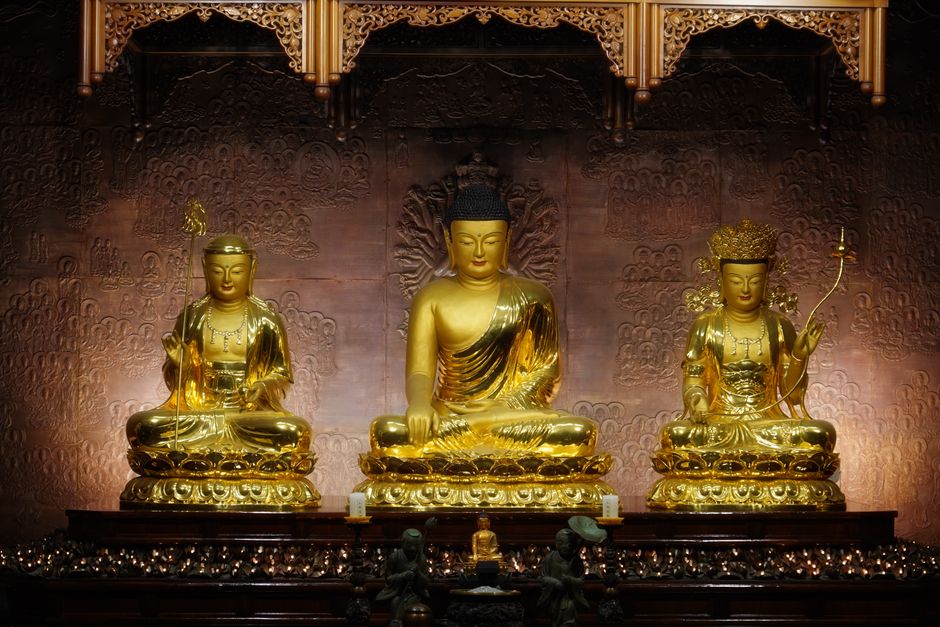
Distance-wise, yes — 45 kilometers and a 30-minute shuttle make it physically possible. In practice, most experienced visitors don’t recommend it if reaching the Golden Summit is the goal.
The Buddha alone takes 3–4 hours with the boat and cliff stairs. Add the bus-then-cable-car chain to Emei’s summit — now with the 2026 daily ticket cap — and a same-day combination becomes a race against closing times rather than a trip.
What’s the History Behind the UNESCO Listing?
The Leshan Giant Buddha stands 71 meters tall, carved directly into a cliff face during the Tang dynasty, overlooking the confluence of the Min, Qingyi, and Dadu rivers. It’s the largest stone-carved Buddha statue in the world.
In 1996, UNESCO inscribed the combined Mount Emei Scenic Area, including Leshan Giant Buddha Scenic Area as a mixed cultural and natural World Heritage Site — Sichuan’s first, and only China’s third dual-listed site at the time.
According to the UNESCO World Heritage Centre, the site was inscribed under criteria covering both its Buddhist cultural significance and Mount Emei’s exceptional biodiversity, which spans subtropical forest at the base to subalpine terrain near the 3,077-meter summit.
What Should You Eat Near Leshan?
Leshan is the birthplace of bobo chicken (钵钵鸡) — skewers of chicken and vegetables soaked in a numbing, spicy Sichuan chili-oil broth, a dish with over a century of history in the city.
Zhanggongqiao Food Street in Leshan’s Shizhong District is the concentrated version: Ming- and Qing-style architecture lined with stalls selling bobo chicken and other Leshan specialties, a short taxi ride from the scenic area’s north gate.
Frequently Asked Questions
Do I need to book Leshan Giant Buddha tickets in advance?
It’s not strictly required outside major holidays, but booking online ahead of a weekend visit avoids the gate queue. The ¥80 ticket covers the Buddha, Wuyou Temple, and the Mahao Cliff Tombs together.
Is the Golden Summit cable car running normally in 2026?
Yes, but with the daily 8,000-ticket cap in effect since May 23, 2026 while the cableway and Leidongping Bus Station are rebuilt. Booking ahead, especially on weekends, is the safest approach through the end of 2027.
How long does the Leshan Giant Buddha visit take?
Budget 3–4 hours if you do both the river boat and the cliff staircase. The site alone, without the boat, can be done in about 2 hours.
What’s the cheapest way to see Mount Emei’s summit?
Skipping the cable car and hiking instead avoids the ¥120 round-trip fare, but the summit trek from Leidongping is a full-day, steep climb best suited to experienced hikers with good weather.
Can I visit Leshan Buddha without going to Mount Emei?
Yes. The Leshan Giant Buddha is a standalone day trip from Chengdu on the 41-minute HSR — you don’t need to continue on to Emeishan unless you want the summit as well.
What’s the best season to visit both sites?
Spring (March–May) and autumn (September–November) bring milder temperatures and clearer summit views than summer’s haze or winter’s cold at 3,077 meters. Peak cable car pricing applies January 16 through December 14, which covers nearly the entire year.
More on China Destinations:
Planning a trip to China?
Check out our China Travel Hub for more guides, including China Digital Survival Guide.

Written by East Asia Explorer Editorial Team
Sam Konneh is an AI strategist and digital marketer based in Seoul, South Korea. With years spent living, working, and exploring across Korea, Japan, and China, he shares firsthand insights into East Asia's cultures, hidden gems, and everyday life. A graduate of Inha University and KDI Graduate School, Sam combines data-driven expertise with on-the-ground experience. His journey also includes studying in Malaysia and traveling through Southeast Asia. Through practical tips, local stories, and travel guides, he helps fellow explorers discover both the celebrated highlights and the lesser-known corners of East Asia.