Published: September 3, 2026
- Zhujiajiao is inside Shanghai city limits (Qingpu District) — Metro Line 17 to Zhujiajiao Station, then a 15-minute walk. Round trip from People’s Square takes about 2.5 hours total.
- Wuzhen is 140km from Shanghai in Zhejiang province — high-speed rail to Tongxiang, then a 20-minute shuttle bus, or a direct tourist coach from Shanghai (about 2 hours door to door).
- Wuzhen splits into two paid zones: Dongzha (East, day-trip, cheaper) and Xizha (West, the overnight resort zone with the night light show) — most travelers only need Xizha.
- Zhujiajiao’s old town is free to walk; individual sights (Kezhi Garden, the boat ride, Fangsheng Bridge viewing platform) are covered by an ¥80 combo ticket.
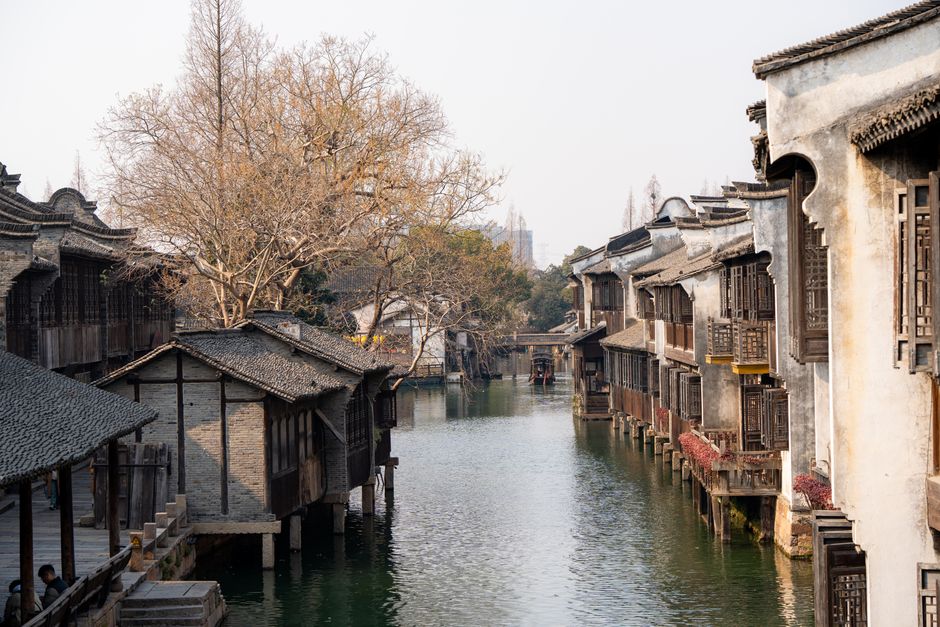
Most “Shanghai water town day trip” guides send you to Zhujiajiao and stop there. That’s the easy answer, not the complete one. Zhujiajiao is genuinely inside Shanghai — you can do it in an afternoon with a Metro card and no advance planning.
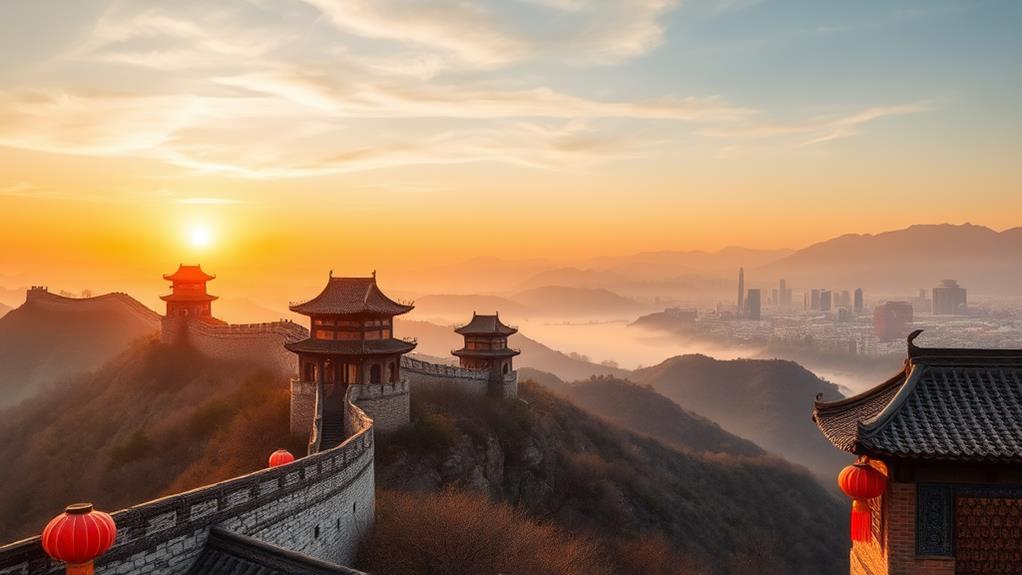
Wuzhen is a different trip entirely: a two-hour journey into Zhejiang province to a town that turns into a lit canal-scape after dark, the kind of place that hosts China’s World Internet Conference every year specifically because the government wants outsiders to see it.
This guide covers both, because the honest answer to “which water town should I visit” depends on how much time you have — and most people asking that question are trying to decide between a half-day add-on and a genuine overnight detour.
What’s the Real Difference Between Zhujiajiao and Wuzhen?
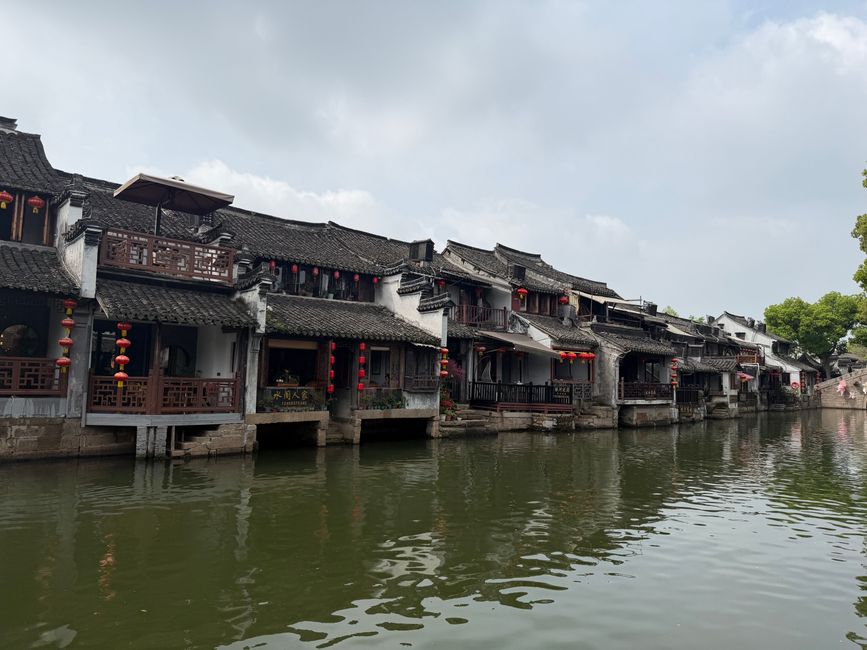
Zhujiajiao is a half-day, no-commitment side trip from Shanghai proper. Wuzhen is a planned overnight excursion into Zhejiang. That’s the entire decision in one sentence — everything else is detail.
| Feature | Zhujiajiao | Wuzhen |
|---|---|---|
| Location | Qingpu District, Shanghai | Tongxiang, Zhejiang (~140km from Shanghai) |
| Travel time from central Shanghai | 45–60 min (Metro Line 17) | 1.5–2 hours (HSR + shuttle, or direct coach) |
| Entry cost | Free to walk; ¥80 combo ticket for sights | Dongzha ~¥120; Xizha ~¥190 (day); higher for overnight/night-light combo |
| Best for | Half-day, low-commitment side trip | Overnight stay, night canal photography |
| Signature landmark | Fangsheng Bridge (five-arch stone bridge, Ming dynasty, c. 1571) | Xizha night canal lighting + Mulan Theater |
How Do I Get to Zhujiajiao from Shanghai?
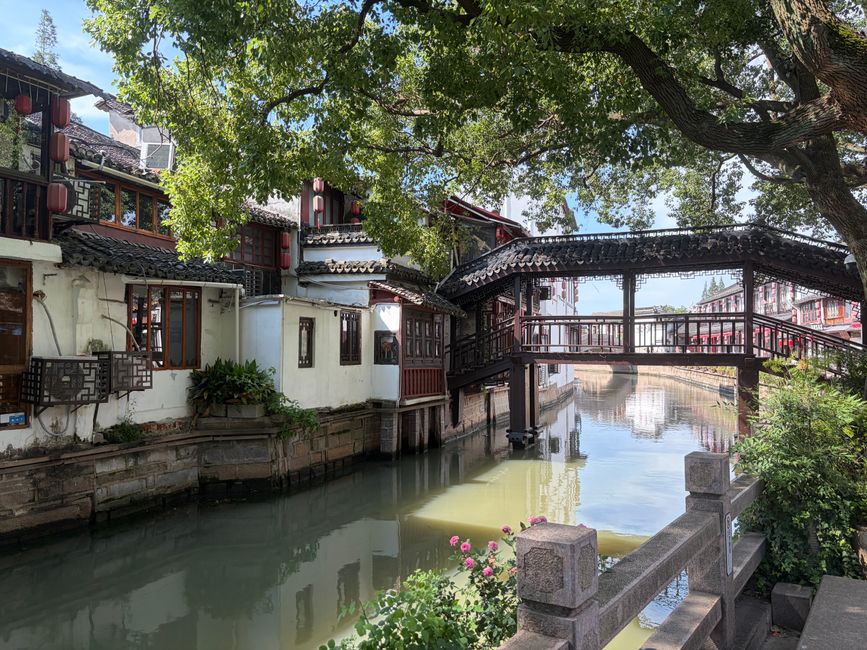
Take Metro Line 17 to Zhujiajiao Station — it’s the terminus-adjacent stop that opened specifically to serve the water town, and the ride from People’s Square takes roughly 45 minutes with one transfer at Hongqiao Railway Station.
From the Metro exit, it’s about a 15-minute walk to the old town’s north gate.
Alternatively, direct tourist buses run from the Shanghai Stadium bus hub and take about an hour without transfers, running roughly every 20–30 minutes on weekends.
What Do I See at Fangsheng Bridge and the Old Town?
Fangsheng Bridge is the five-arch stone bridge that anchors every photo of Zhujiajiao — built around 1571 during the Ming dynasty, it’s the largest stone bridge in the Shanghai area still in daily use.
Locals cross it on foot exactly as they have for four centuries; it’s not roped off or ceremonial.
The old town’s ¥80 combo ticket covers nine sights including Kezhi Garden (a Qing-dynasty classical garden with a working water wheel), the Ming/Qing Street shophouse row, and the Cheng Huang Miao temple.
You don’t need the combo ticket to walk the canal-side lanes themselves — those are free and where most people spend the bulk of their time anyway.
Is Zhujiajiao Worth It If I’ve Already Seen Other Water Towns?
If you’ve done Wuzhen, Zhujiajiao will feel smaller and more crowded on weekends — it’s a genuine Shanghai suburb rather than a curated resort town, so souvenir stalls and tour groups are denser per square meter.
What it has that Wuzhen doesn’t: it’s a genuine half-day trip with zero advance booking, reachable on the same Metro card you’re already using for the rest of Shanghai.
How Do I Get to Wuzhen from Shanghai?
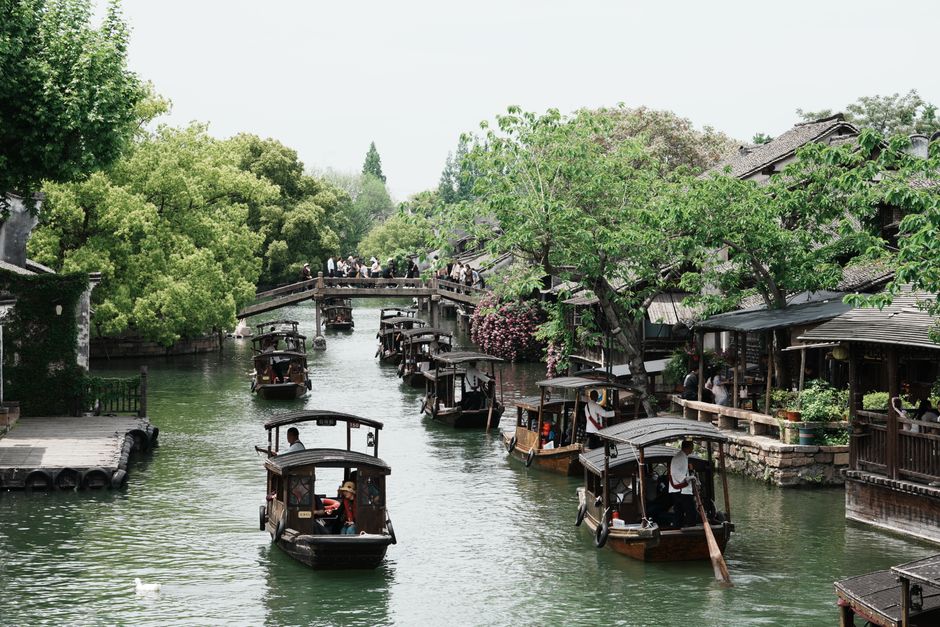
The fastest route is high-speed rail from Shanghai Hongqiao Station to Tongxiang South Station — about 30 minutes — followed by a shuttle bus or taxi to Wuzhen’s West Scenic Zone entrance, roughly 20 minutes further. Total door-to-door time from central Shanghai runs about 1.5–2 hours.
The alternative is a direct tourist coach from Shanghai South Long-Distance Bus Station or Shanghai Hongqiao, which drops you directly at Wuzhen’s gate in around 2 hours with no transfers — slower on paper but simpler if you’re not comfortable navigating a Chinese HSR station connection.
| Route | Method | Time |
|---|---|---|
| Shanghai Hongqiao → Tongxiang South (HSR) | High-speed rail | ~30 min |
| Tongxiang South → Wuzhen | Shuttle bus / taxi | ~20 min |
| Shanghai → Wuzhen direct | Tourist coach | ~2 hours, no transfer |
Should I Visit Dongzha (East) or Xizha (West) Zone?
Xizha is the zone almost everyone means when they picture Wuzhen — it’s the larger, more atmospheric resort zone where the town’s hotels sit, and it’s the only zone open at night with the canal-side lighting turned on.
Dongzha is the older, cheaper day-visit zone with the indigo-dye workshops and a more workaday feel.
If you’re only doing a day trip and skipping the overnight stay, Xizha alone justifies the trip. Dongzha is worth adding only if you have a full day and want the contrast between the two zones’ character.
Where Should I Stay If I Stay Overnight in Wuzhen?
Room rates inside Xizha run roughly ¥600–1,200 a night for the canal-front guesthouses and boutique hotels booked directly through the Wuzhen Tourism Company’s own reservation system — that in-zone booking is what gets you a gate pass for after-hours re-entry once the day-trip crowd has been cleared out.
The Wuzhen Yuyin Courtyard, a converted traditional courtyard house, is a commonly cited mid-range pick at around ¥900 a night.
Dongzha’s guesthouses run cheaper, roughly ¥300–600 a night, but they don’t carry the after-dark re-entry privilege that makes an Xizha stay worth the premium.
Staying just outside either scenic zone in Wuzhen Town proper — not inside the ticketed area at all — drops the price further, to roughly ¥200–400, at the cost of a short taxi or walk back to the gate each time you want to re-enter.
What Is the Wuzhen Indigo Dye Workshop?
The lanyin huabu (blue calico) dye workshops in Dongzha are working demonstrations of a centuries-old indigo-resist dyeing technique — you’ll see rows of fabric hung to dry between the buildings, a visual that’s become one of the most photographed sights in the town.
The dyeing process uses a natural indigo plant extract and a lime-bean paste resist, applied through carved wooden stencils, with roots in Zhejiang textile tradition that predate the town’s tourism-era restoration.
Why Does Wuzhen Host the World Internet Conference?
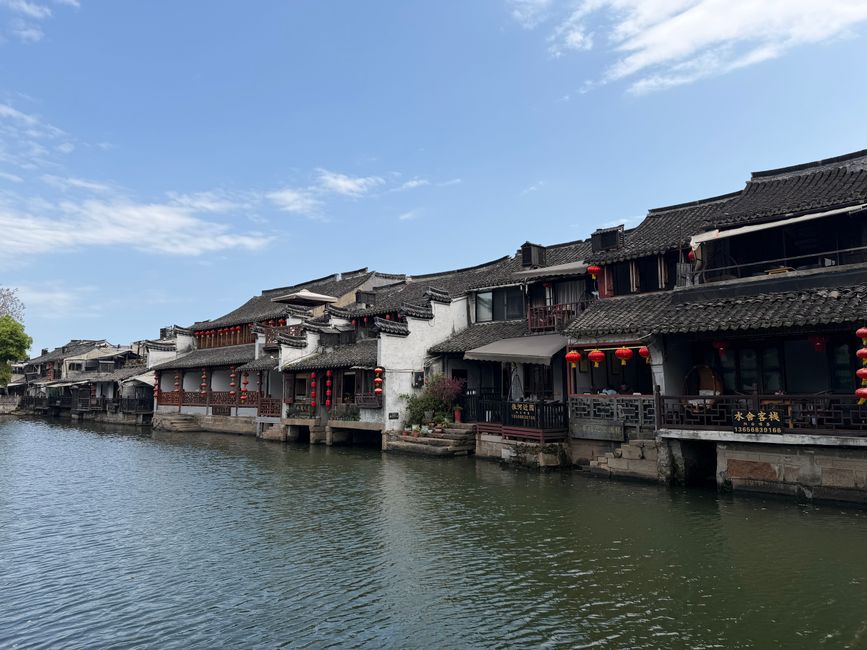
Wuzhen has hosted China’s annual World Internet Conference since 2014, a deliberate choice to pair a state-level tech summit with a traditional water-town backdrop.
The Mulan Theater and adjacent Internet International Conference Center in Xizha were purpose-built for the event and now double as a performance venue the rest of the year.
It’s a useful fact for context: Wuzhen isn’t a preserved-in-amber museum piece, it’s an actively maintained showcase town, and that partly explains why its infrastructure — hotel quality, lighting, walkway maintenance — is noticeably ahead of most other Yangtze water towns.
According to China’s National Cultural Heritage Administration, Wuzhen is among the water towns included on China’s UNESCO World Heritage Tentative List under the “Ancient Watertowns of the Yangtze” grouping, alongside Zhouzhuang and Tongli — a designation that reflects the region’s canal-town preservation efforts more broadly, Wuzhen included.
“The ancient watertowns of the Yangtze River delta represent a distinctive settlement pattern shaped by centuries of canal-based trade and daily life — their continued preservation depends on balancing tourism development with the character that made them worth preserving in the first place.”
What Should I Eat in Wuzhen and Zhujiajiao?
In Wuzhen, look for sanbai (three whites) dishes — whitebait, white shrimp, and white eel from the surrounding canals — plus jiangmi (rice-based) snacks sold from street-front steamers along Xizha’s main lane.
In Zhujiajiao, the local specialty is zongzi (sticky rice dumplings) from shops near Fangsheng Bridge, and stinky tofu stalls that draw a queue by early afternoon regardless of the weather.
What’s the Best Time of Year to Visit Wuzhen and Zhujiajiao?
Spring (March–May) and autumn (September–November) are the two windows locals and repeat visitors point to — mild temperatures, and in spring the plum and cherry trees along the canals are actually in bloom rather than just green backdrop.
What most guides leave out is the plum rain season (meiyu): mid-June through early July brings near-daily drizzle and heavy showers across the Yangtze delta, followed immediately by the hottest, most humid stretch of the year through mid-September — made worse by Chinese school summer holidays crowding both towns in July and August.
Winter is workable but damp-cold, with Zhejiang lows around 1°C (34°F) that feel colder than the number suggests given the region’s building stock rarely has central heating.
Can I Do Both Wuzhen and Zhujiajiao in the Same Trip?
Not comfortably in a single day. Zhujiajiao is a half-day; Wuzhen alone needs a full day or overnight given the travel time.
If you have three or more days in Shanghai, the workable combination is Zhujiajiao on a free half-day mid-trip, and Wuzhen as a dedicated overnight excursion — treating them as two separate outings rather than one combined itinerary.
Zhujiajiao is a free-to-walk, no-planning half-day trip inside Shanghai via Metro Line 17 — pick it if you have one spare afternoon. Wuzhen is a 1.5–2 hour journey into Zhejiang that rewards an overnight stay in Xizha for the night canal lighting; pick it if you can commit a full day or more. Don’t try to combine both into a single day — the travel time alone defeats the purpose.
Frequently Asked Questions
Is Zhujiajiao inside Shanghai city limits?
Yes. Zhujiajiao is in Qingpu District, part of greater Shanghai, reachable by Metro Line 17 — no inter-city travel required.
Do I need to stay overnight in Wuzhen to see the night lighting?
The night canal lighting in Xizha is generally only accessible to overnight guests staying in Wuzhen-run hotels within the zone; day-trip tickets typically don’t include after-dark re-entry. Check the official Wuzhen ticketing site before you go, since access policy has varied by season.
How much does it cost to enter Wuzhen?
Dongzha (East) day tickets run roughly ¥120; Xizha (West) day tickets run roughly ¥190; combined and overnight packages cost more. Prices are set by the Wuzhen Tourism Company and should be verified on the official site before booking, since rates are revised periodically.
Is Fangsheng Bridge free to visit?
Yes — Fangsheng Bridge itself and the old town lanes of Zhujiajiao are free to walk. The ¥80 combo ticket only covers specific enclosed sights like Kezhi Garden.
What’s the best time of day to visit Zhujiajiao?
Before 9am or after 4pm on weekdays avoids the heaviest tour-group crowds, which peak between 11am and 3pm, especially on weekends.
Can I take a boat ride in both towns?
Yes — both Zhujiajiao and Wuzhen offer short canal boat rides, typically ¥60–150 per person depending on route length and season. Negotiate or check posted rates at the dock rather than with touts near transit stops.
Is Wuzhen crowded like Zhujiajiao?
Xizha zone manages crowds better than Zhujiajiao because entry is ticketed and capacity-controlled; Dongzha, the cheaper day zone, can feel as crowded as Zhujiajiao on peak weekends.
Which water town is more photogenic for a wide-angle shot?
Wuzhen’s Xizha zone at night is the most consistently photogenic — the canal lighting and lower daytime crowd density make for cleaner compositions than Zhujiajiao’s busier daytime lanes.
Last updated: August 24, 2026
More on China Destinations:
Planning a trip to China?
Check out our China Travel Hub for more guides, including China Digital Survival Guide.

Written by East Asia Explorer Editorial Team
Sam Konneh is an AI strategist and digital marketer based in Seoul, South Korea. With years spent living, working, and exploring across Korea, Japan, and China, he shares firsthand insights into East Asia's cultures, hidden gems, and everyday life. A graduate of Inha University and KDI Graduate School, Sam combines data-driven expertise with on-the-ground experience. His journey also includes studying in Malaysia and traveling through Southeast Asia. Through practical tips, local stories, and travel guides, he helps fellow explorers discover both the celebrated highlights and the lesser-known corners of East Asia.