Last Updated: October 20, 2026 | Originally Published: October 31, 2024
Quick Answer
- Buy one rechargeable T-money card at a CU, GS25 or 7-Eleven; it works on Seoul and Busan subways and buses.
- Seoul’s base adult fare is about ₩1,550 and Busan’s is in the same range. Both rise with distance.
- Foreign contactless credit cards generally do not open the gates. Plan on a transit card.
- Gamcheon Culture Village is not on the subway. Take Busan Line 1 to Toseong Station, then a village bus.
Most “subway guide” pages describe Seoul and Busan as clean, punctual and high-tech. That is true, and it does not help you at Sindorim at 8:40 a.m. with a suitcase.
This guide covers the parts that cause problems: which card to buy, which exit to use, where the subway stops short, and what the fares are.
Fares and hours change. Check Seoul Metro and Busan Transportation Corporation before you travel.
How are the Seoul and Busan subway networks organised?
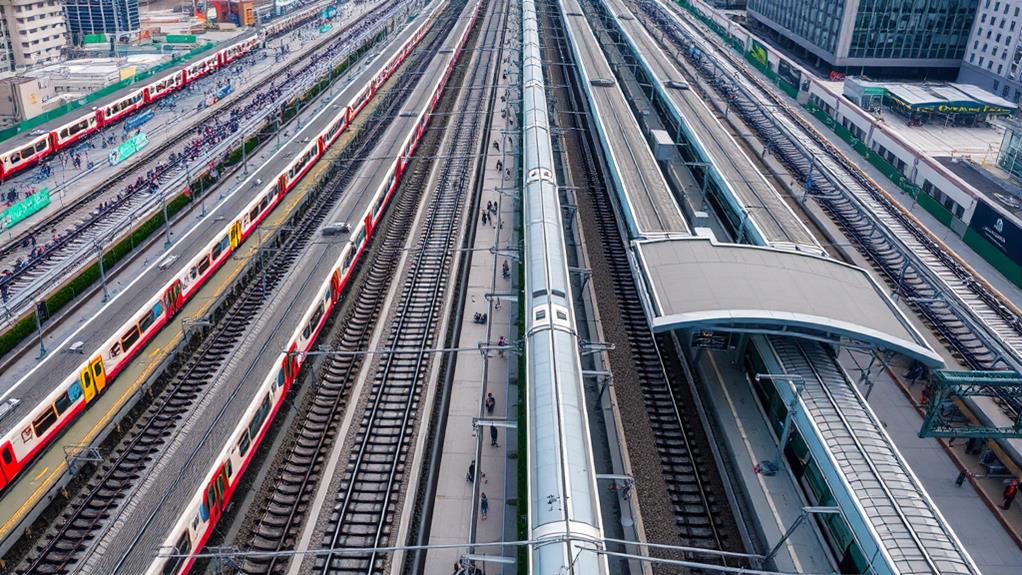
Seoul’s network is not one system. It is a patchwork of operators that share one fare structure.
Seoul Metro runs Lines 1 to 8, Line 9 has its own operator, and Korail runs the Gyeongui-Jungang and Gyeongchun lines. AREX connects Incheon Airport to the city.
Busan Transportation Corporation runs Lines 1 to 4. The Donghae Line and the Busan-Gimhae Light Rail Transit are separate lines on the same fare system.
| Item | Seoul | Busan |
|---|---|---|
| Core lines | Lines 1-9, Sinbundang, Gyeongui-Jungang, AREX | Lines 1-4, Donghae Line, Busan-Gimhae Light Rail |
| Orbital line | Line 2 loop, 48.8 km, 43 stations | None. Line 1 runs north-south, Line 2 east-west |
| Base adult fare (transit card) | About ₩1,550, late 2026 | Roughly the same, check humetro.busan.kr |
| Typical operating hours | About 5:30 a.m. to around midnight | About 5:30 a.m. to roughly 11:40 p.m. |
| Airport rail | AREX to Seoul Station | Line 2 to Sasang, then light rail to Gimhae |
Pro Tip: Last trains vary by line, direction and station. Search your exact station in Naver Map or KakaoMap before 11 p.m. to see the final departure.
Which card should you buy for the Seoul and Busan subways?
Buy a T-money card. It is sold at CU, GS25 and 7-Eleven convenience stores and at many station kiosks.
One card covers subways and buses in Seoul, Busan and most Korean cities. Load cash at any convenience store or station machine.
Foreign contactless Visa or Mastercard taps generally do not open the gates. Do not count on your bank card at the turnstile.
| Option | Best for | Watch out for |
|---|---|---|
| T-money card | Most visitors, 2+ days | Card price is not refunded in full; spend the balance before you leave |
| Single-journey ticket | One or two rides | ₩500 deposit, refunded at a deposit-refund machine at your arrival station |
| Seoul Climate Card for tourists | Heavy sightseeing in Seoul, 1-7 days | Unlimited rides only inside Seoul’s service area. Confirm current prices at purchase |
Warning: Single-journey tickets carry a ₩500 deposit. If you skip the refund machine at the end of the trip, you lose it. It is small, but it adds up over several rides.
Transfers between subway and bus within a set window are discounted when you tap in with a transit card. A single-journey paper ticket does not get that discount.
Which Seoul stations and exits matter most for sightseeing?
Exit numbers are where visitors lose time. Several landmarks sit at the wrong end of the station.
| Destination | Station and line | Exit |
|---|---|---|
| Gyeongbokgung Palace | Gyeongbokgung, Line 3 | 5 |
| Bukchon Hanok Village | Anguk, Line 3 | 2 |
| Insadong | Anguk, Line 3 | 6 |
| Hongdae nightlife | Hongik Univ., Line 2 and AREX | 9 |
| Gwanghwamun Square | Gwanghwamun, Line 5 | 2 |
Anguk Station is the useful one. Exit 2 puts you at Bukchon and exit 6 at Insadong (인사동), so a single stop covers two neighbourhoods.
Pro Tip: Line 2 is a loop. A train that says “inner circle” or “outer circle” goes the opposite way round, so check the direction before you board.
How do you reach Haeundae, Jagalchi and Gamcheon by Busan subway?
Busan’s network is smaller, and its two main lines cross at Seomyeon. Most visitors use only Lines 1 and 2.
Haeundae Beach is on Line 2 at Haeundae Station. Jagalchi Fish Market (자갈치시장) is on Line 1 at Jagalchi Station, exit 10.
Gwangalli Beach (광안리해수욕장) and the Gwangandaegyo Bridge views are near Gwangan Station on Line 2. Dongbaek Station, exit 1, is the stop for Dongbaek Island.
Gamcheon Culture Village (감천문화마을) is the exception. It has no subway station. Take Line 1 to Toseong Station and continue by the local village bus from exit 6.
Warning: Many online guides say the subway goes to Gamcheon. It does not. Walking from the nearest station is steep and long, so budget extra time for the bus.
What goes wrong at rush hour, and how do you avoid it?
Peak crowding falls roughly between 7:30 and 9:00 a.m. and 6:00 and 7:30 p.m. Line 2 around Gangnam and Sindorim, and Line 9 express trains, are the worst.
Avoid carrying large luggage on these lines during peak hours. Platform gaps are fine, but carriages fill past the doors.
Line 9 runs both express and local trains. An express train skips stops, so confirm that your station is served before you board.
Pink-coloured seats are reserved for pregnant passengers. Priority seats are marked for older passengers and anyone with a disability.
Can you get from the airport to the city by subway?
From Incheon Airport, AREX has two services. The direct express reaches Seoul Station in about 43 minutes at a higher fare than the all-stop train.
The all-stop service takes longer but stops at Hongik Univ. and Gongdeok, both of which connect to other subway lines.
In Busan, Gimhae Airport links to the subway through the light rail to Sasang. Transfer there to Line 2 for Seomyeon and Haeundae.
Pro Tip: Google Maps transit data is thin in Korea. Use Naver Map or KakaoMap for subway routes, platform numbers and exit numbers.
Key Takeaway: Buy a T-money card on day one, use exit numbers instead of station names, and treat Gamcheon as a bus trip. Everything else is easy.
Frequently Asked Questions
Can I use a foreign credit card at the subway gates?
Generally no. Fare gates read transit cards such as T-money. Ticket machines handle cash, and many accept cards for loading, but acceptance for foreign cards varies by machine.
What are the first and last train times?
First trains start around 5:30 a.m. Last trains run from about 11:40 p.m. to just after midnight, depending on line and station. Check your exact station in a map app.
Are pets allowed on the subway?
Small pets in a closed carrier are generally accepted. Loose animals are not. Rules differ by operator, so check Seoul Metro or Busan Transportation Corporation before travelling.
Is there luggage storage at stations?
Many large stations, including Seoul Station, have coin lockers. Sizes and fees differ, and busy stations fill up by midday, so go early.
Does my T-money card work in both cities?
Yes. T-money works on Seoul and Busan subways and buses, and in most other Korean cities. Keep the balance for the day you leave, and spend it at a convenience store.
How crowded are the trains?
Weekday peaks, roughly 7:30 to 9:00 a.m. and 6:00 to 7:30 p.m., are crowded on Seoul Lines 2 and 9. Busan is lighter, though Line 1 and Line 2 near Seomyeon fill up.
Last updated: October 2026. Written by the East Asia Explorer Editorial Team.
More on Transportation:

Written by East Asia Explorer Editorial Team
Sam Konneh is an AI strategist and digital marketer based in Seoul, South Korea. With years spent living, working, and exploring across Korea, Japan, and China, he shares firsthand insights into East Asia's cultures, hidden gems, and everyday life. A graduate of Inha University and KDI Graduate School, Sam combines data-driven expertise with on-the-ground experience. His journey also includes studying in Malaysia and traveling through Southeast Asia. Through practical tips, local stories, and travel guides, he helps fellow explorers discover both the celebrated highlights and the lesser-known corners of East Asia.