Last Updated: September 29, 2026 | Originally Published: July 4, 2026
- Gyeongbokgung is Seoul’s largest and grandest royal palace (built 1395). If you see one palace in Korea, see this one. Adult entry is 3,000 KRW; free in hanbok.
- Get there on Line 3, Gyeongbokgung Station, Exit 5 — it opens almost onto the ticket gate.
- Closed every Tuesday. Hours run 09:00–17:00 in winter, to 18:30 in summer; night viewing opens for a few weeks each spring and autumn.
- Catch the free Changing of the Guard at 10:00 or 14:00, and buy the 10,000 KRW Integrated Palace Ticket if you plan two or more palaces.
Gyeongbokgung is the front door to a thousand years of Korean royalty, set against Bugaksan Mountain in the middle of Seoul. Throne halls, a pavilion on a lotus pond, and two free museums fill the grounds.
I once timed my first visit for a Tuesday. The gates were shut, my rented hanbok clock was ticking, and I learned the single most useful fact about this palace the hard way.
A short history of Gyeongbokgung
The palace was founded in 1395, three years after the Joseon dynasty began. King Sejong the Great ruled from here and invented the Hangul alphabet within these walls in the 1440s.
In 1592 the palace burned to the ground during the Imjin War with Japan. The ruins then sat untouched for nearly 270 years.
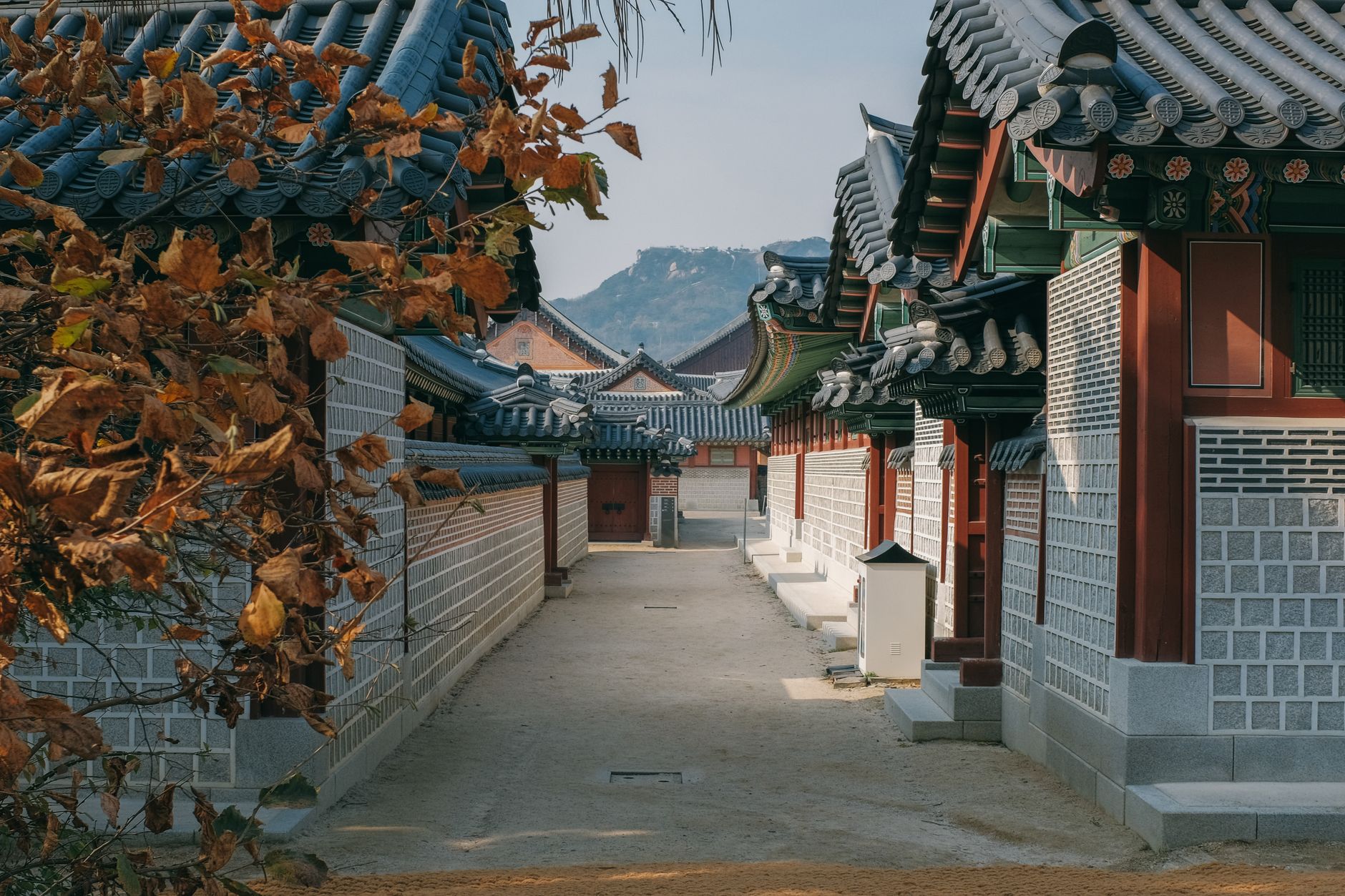
Reconstruction finally came in 1867 under Heungseon Daewongun, regent to the young King Gojong. Most of what you walk through today dates from that rebuild, with restoration still ongoing.
What to see inside
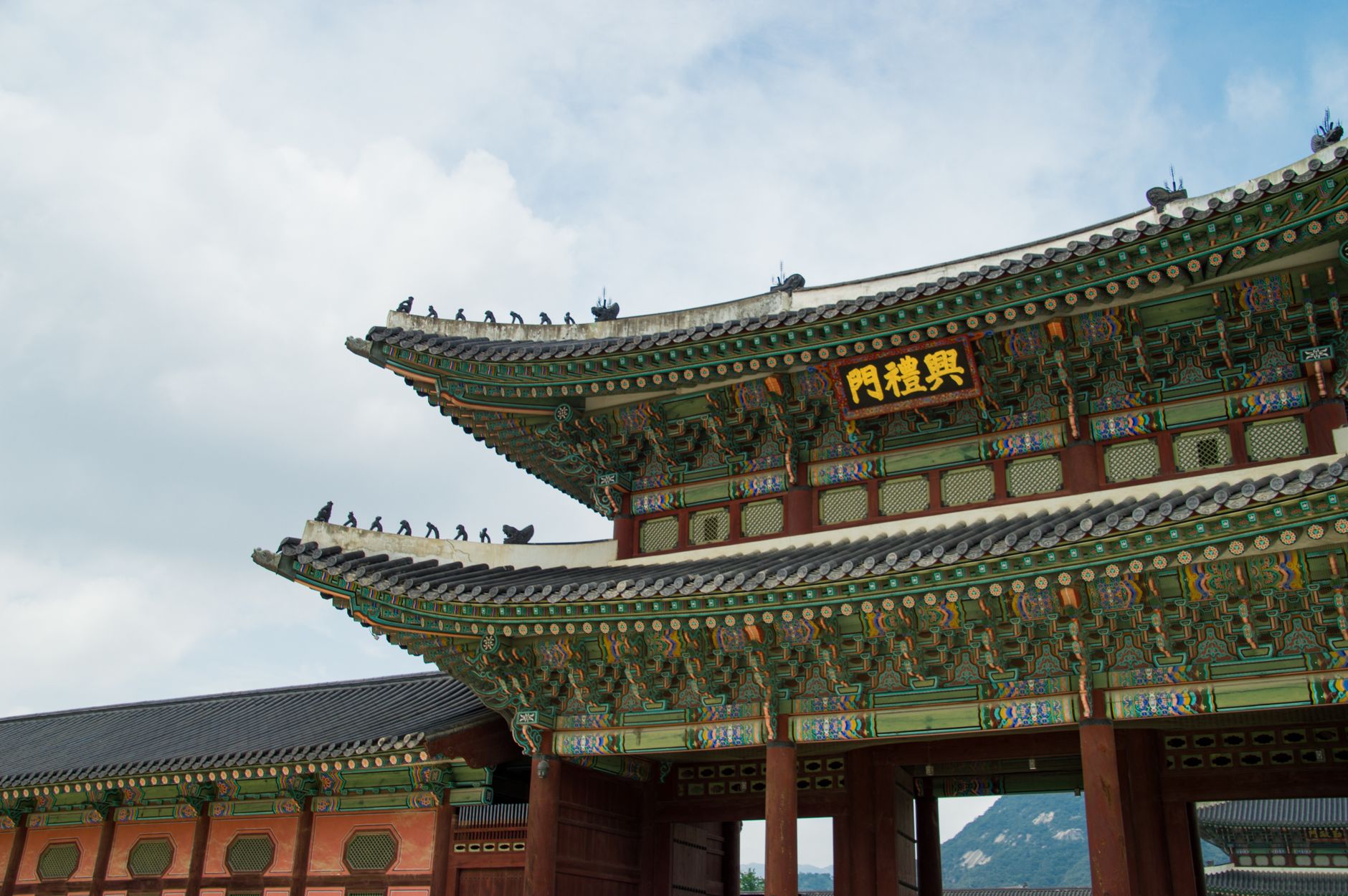
You enter through Gwanghwamun, the grand main gate, watched by a pair of haetae — mythical stone guardians meant to ward off fire and misfortune.
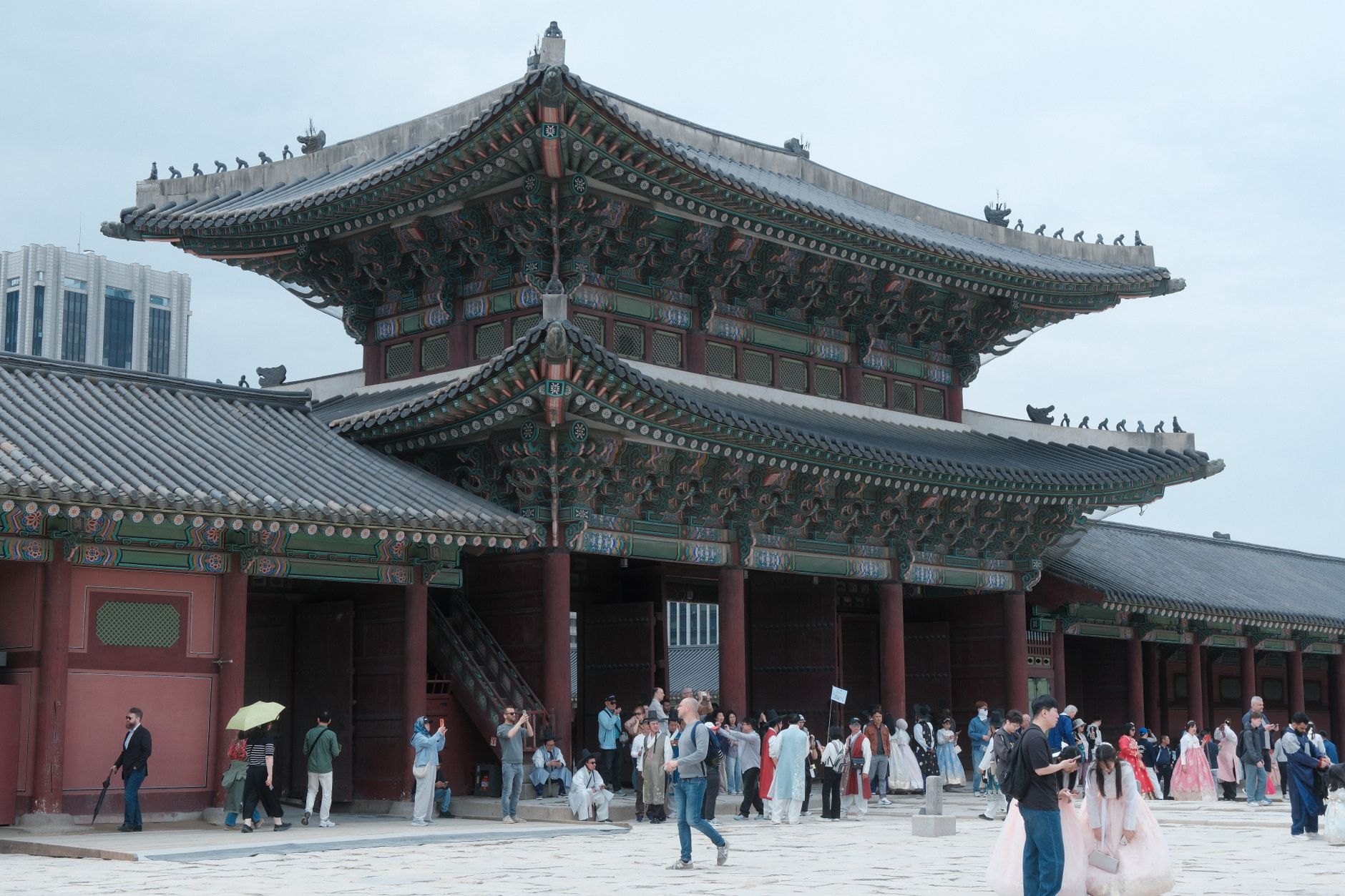
Inside, Geunjeongjeon is the throne hall where kings were crowned, ringed by stone rank-markers showing where officials once stood. It is the grandest single view in the palace.
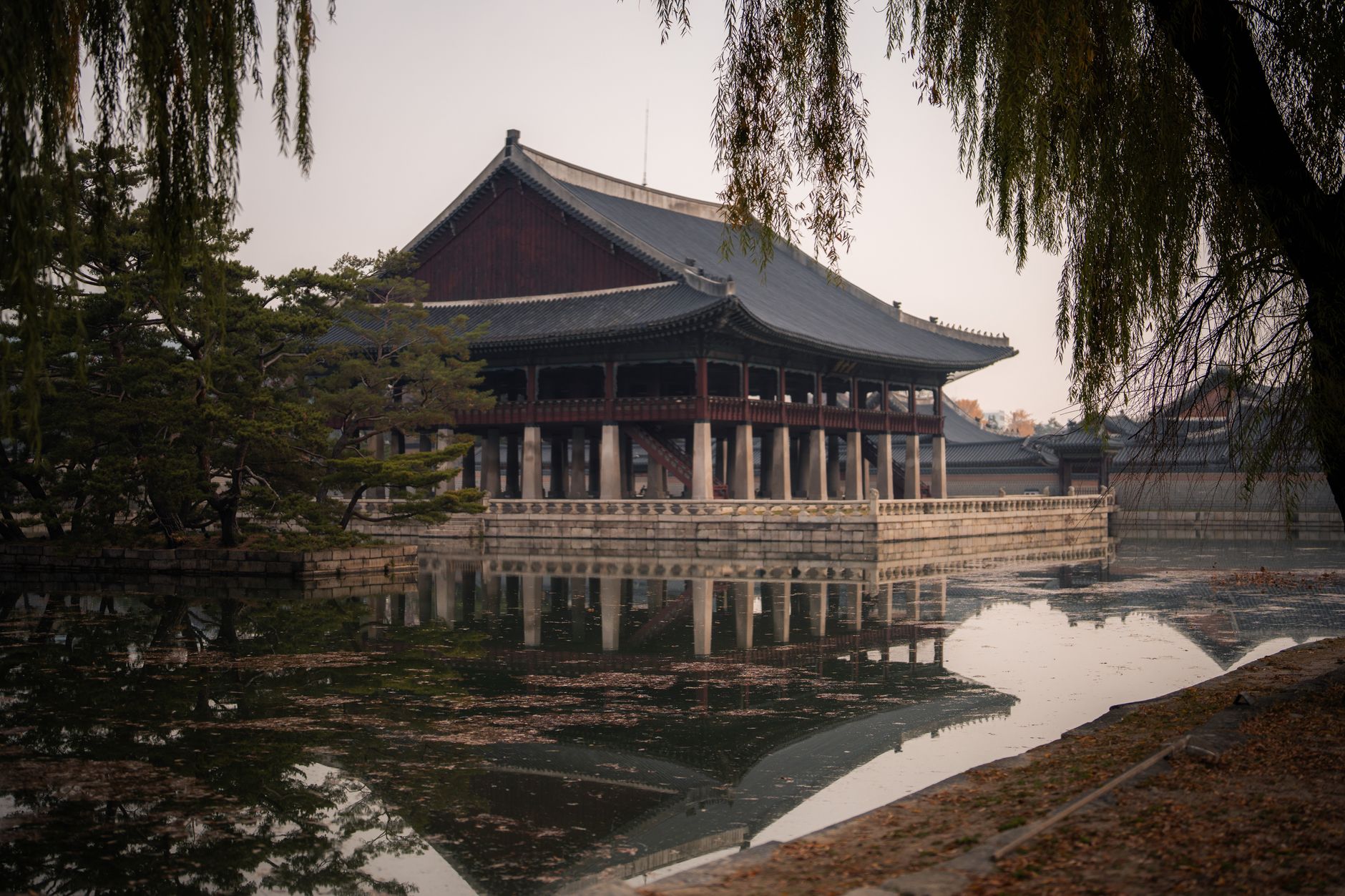
Behind it sits Gyeonghoeru, a two-storey banquet pavilion on 48 stone pillars over a lotus pond — the postcard shot. Deeper in, Hyangwonjeong is a smaller pavilion on its own island, reached by a wooden bridge that frames beautifully in blossom season and snow.
Further back are the living quarters: Gangnyeongjeon, the king’s private residence, and Gyotaejeon, the queen’s. Both are quieter than the throne hall and show how the royal family actually lived.
Two museums on the grounds are free: the National Folk Museum of Korea and the National Palace Museum. Both make a cool, quiet break on a hot afternoon.
Tickets & opening hours (2026)
| Detail | Info |
|---|---|
| Adult (19–64) | 3,000 KRW |
| Youth (7–18) | 1,500 KRW |
| Free entry | Under 7, 65+, and anyone in hanbok |
| Winter (Nov–Feb) | 09:00–17:00 (last entry 16:00) |
| Spring/Autumn | 09:00–18:00 (last entry 17:00) |
| Summer (Jun–Aug) | 09:00–18:30 (last entry 17:30) |
| Closed | Every Tuesday |
“Visitors wearing hanbok, children aged 6 and under, and visitors aged 65 and older are admitted free of charge to the royal palaces.”
The Integrated Palace Ticket
If you plan to see more than one palace, the Integrated Palace Ticket (10,000 KRW, valid 3 months) pays for itself. It covers five sites across central Seoul.
| Site | Known for |
|---|---|
| Gyeongbokgung | The largest palace; guard ceremony |
| Changdeokgung + Huwon | UNESCO-listed Secret Garden |
| Changgyeonggung | Intimate palace, greenhouse |
| Deoksugung | Palace with Western-style halls |
| Jongmyo Shrine | Royal ancestral shrine (UNESCO) |
Night viewing
A few weeks each year, Gyeongbokgung opens after dark, usually a stretch in spring (mid-May to June) and again in autumn (September to November). Entry runs roughly 19:00 to 21:30, last entry 20:30.
The lit courtyards and the reflection at Gyeonghoeru are the highlight. Tickets are limited and sell out fast, so book the moment the dates open.
Best photo spots
Three spots do the heavy lifting. Geunjeongjeon for scale and symmetry, Gyeonghoeru for the pond reflection, and the Hyangwonjeong bridge for a quieter, dreamier frame.
Free entry in hanbok
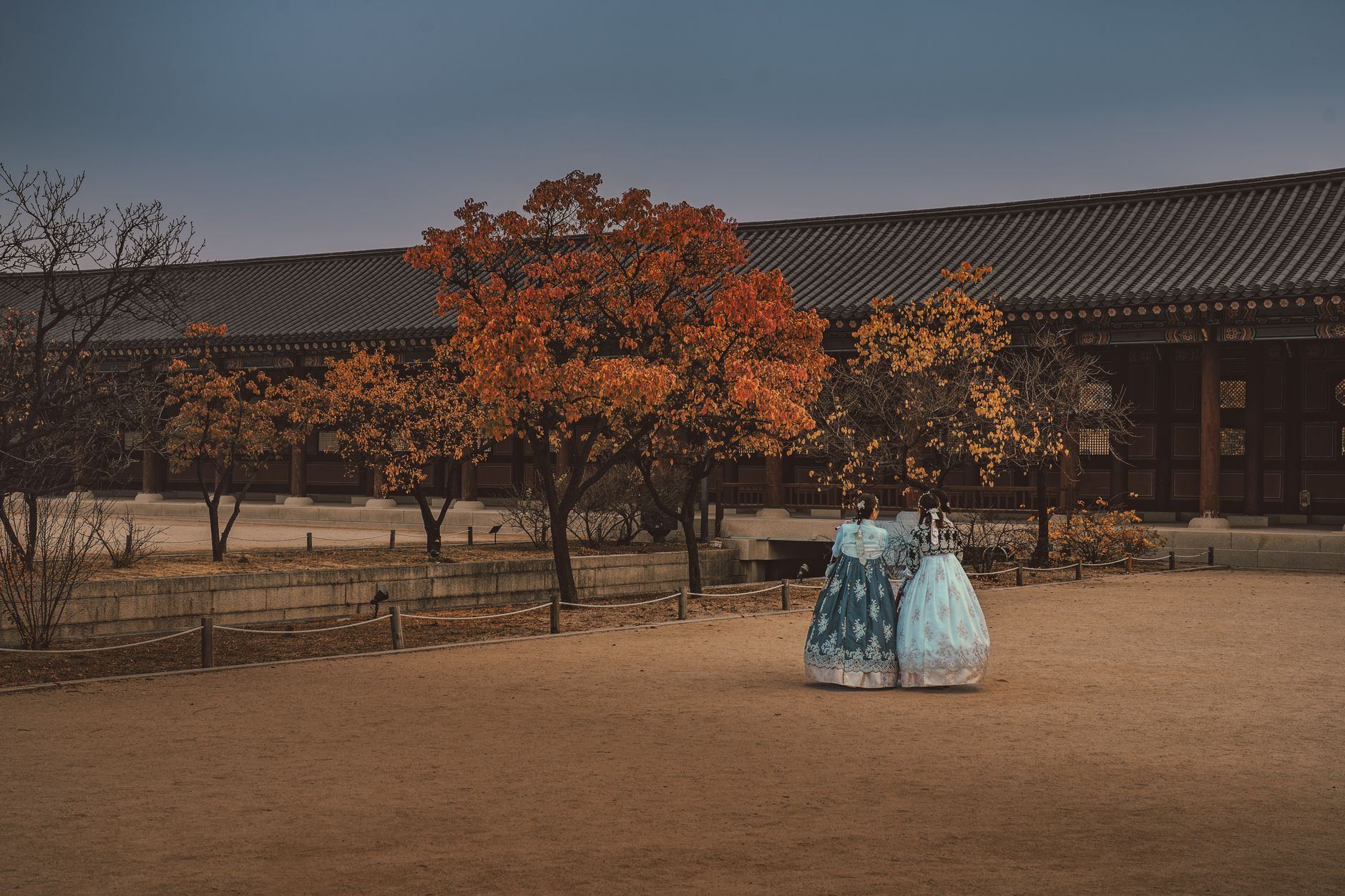
Rent a hanbok from one of the shops near Exit 3 (from about 15,000 KRW for a few hours) and you walk in free. It also turns an ordinary courtyard photo into the one people ask about later.
How to get there
- Line 3 → Gyeongbokgung Station, Exit 5 — opens almost onto the ticket gate. The easy option.
- Line 5 → Gwanghwamun Station, Exit 2 — about a 5-minute walk through Gwanghwamun Square.
From Incheon Airport, ride the AREX to Seoul Station, then Line 1 to City Hall and a short hop north (about 70 minutes total).
Changing of the Guard
The Royal Guard Changing Ceremony runs at the main Gwanghwamun gate at 10:00 and 14:00 daily except Tuesday, and lasts about 20 minutes. Costumed guards, drums and banners recreate a Joseon-era handover.
How long to spend & a simple plan
Most visitors need 1.5 to 2 hours, plus 30 minutes for a museum. A clean half-day: arrive by 09:30, catch the 10:00 guard ceremony, tour the grounds, then walk to Bukchon for lunch.
Where to eat nearby
The obvious choice is Tosokchon, a famous samgyetang (ginseng chicken soup) restaurant in a rambling hanok a few minutes west of the palace. Expect a queue at lunch; it moves quickly.
For lighter bites, the cafes of Samcheong-dong and the street food of nearby Insadong are both a short walk east.
Where to stay nearby
Basing yourself around Gwanghwamun, Insadong or Bukchon puts the palace, hanok villages and two subway lines within walking distance. It is the most convenient area in Seoul for first-time sightseeing.
What’s nearby
On foot you reach Gwanghwamun Square, the Bukchon Hanok Village, artsy Samcheong-dong, and the craft lanes of Insadong.
Make a full day of it with our journey through Korea’s royal palaces or a 7-day Seoul culture itinerary. New to the city? Start with our Korea travel guide.
Renting hanbok: what to know
Dozens of rental shops cluster near Exit 3 and around Bukchon. A basic package runs from about 15,000 KRW for two to four hours; silk sets and hair styling cost more.
Most shops store your own clothes and bag while you wear the hanbok. Anyone in hanbok enters Gyeongbokgung, Changdeokgung and the other palaces free, so one rental can cover a whole palace-hopping day.
When to visit: seasons at Gyeongbokgung
Spring frames the courtyards in cherry blossom, and the Hyangwonjeong bridge is at its best. Autumn turns the palace maples red and gold, the most popular season for photos.
Summer is hot and humid, so start early and use the shaded museums to cool off. Winter is cold and quiet, but light snow on the tiled roofs and the frozen pond at Hyangwonjeong is worth the chill.
Guided tours & practical tips
Free English-language guided tours run several times a day from the information center just inside the main gate; the schedule is posted at the entrance. Each lasts about an hour and adds the stories the buildings do not.
There are restrooms and lockers near the entrance, and the main paths are stroller- and wheelchair-friendly, though some halls have raised thresholds.
Combine Gyeongbokgung into a Seoul day
The palace works best as the anchor of a walking day. Start at Gyeongbokgung for the 10:00 guard ceremony, cross to Gwanghwamun Square, then wander north into Bukchon Hanok Village for lunch.
From Bukchon it is a short walk to Samcheong-dong’s cafes and Insadong’s craft shops, and you can finish along the Cheonggyecheon stream back toward the subway. That is a full, mostly-free day on foot.
Is Gyeongbokgung worth visiting?
Yes — it is the single best introduction to Korean history in Seoul, and at 3,000 KRW (or free in hanbok) it is a bargain. Go in the morning, add one neighbouring palace or Bukchon, and it earns a firm place on any first-timer’s list.
Frequently Asked Questions
How much is admission to Gyeongbokgung Palace in 2026?
Adult admission is 3,000 KRW and youth (7-18) is 1,500 KRW. Children under 7, visitors 65 and over, and anyone wearing hanbok enter free.
What day is Gyeongbokgung Palace closed?
Gyeongbokgung is closed every Tuesday. If a public holiday falls on a Tuesday, it opens that day and closes the next non-holiday instead.
Which subway station is Gyeongbokgung Palace?
Take Seoul Subway Line 3 to Gyeongbokgung Station and use Exit 5, which connects almost directly to the palace. Line 5 Gwanghwamun Station Exit 2 is a 5-minute walk.
What time is the Changing of the Guard at Gyeongbokgung?
The ceremony is held at 10:00 and 14:00 every day except Tuesday at the main Gwanghwamun gate, and lasts about 20 minutes.
Is the Integrated Palace Ticket worth it?
At 10,000 KRW for five sites (Gyeongbokgung, Changdeokgung and its Secret Garden, Changgyeonggung, Deoksugung and Jongmyo Shrine), it pays off if you visit two or more.
Can you visit Gyeongbokgung at night?
Yes, for a limited period each spring and autumn the palace opens for evening viewing, roughly 19:00 to 21:30. Tickets are limited and sell out quickly.
How do you get into Gyeongbokgung for free?
Wear hanbok. Rental shops near the palace charge from about 15,000 KRW for a few hours, and anyone in hanbok is admitted free. Under-7s and visitors 65+ are also free.
How long do you need at Gyeongbokgung Palace?
Most visitors spend 1.5 to 2 hours. Add 30 minutes for the free National Folk Museum, or longer if you rent hanbok for photos.
More on Seoul:

Written by East Asia Explorer Editorial Team
Sam Konneh is an AI strategist and digital marketer based in Seoul, South Korea. With years spent living, working, and exploring across Korea, Japan, and China, he shares firsthand insights into East Asia's cultures, hidden gems, and everyday life. A graduate of Inha University and KDI Graduate School, Sam combines data-driven expertise with on-the-ground experience. His journey also includes studying in Malaysia and traveling through Southeast Asia. Through practical tips, local stories, and travel guides, he helps fellow explorers discover both the celebrated highlights and the lesser-known corners of East Asia.