Last Updated: July 31, 2026 | Originally Published: October 9, 2024
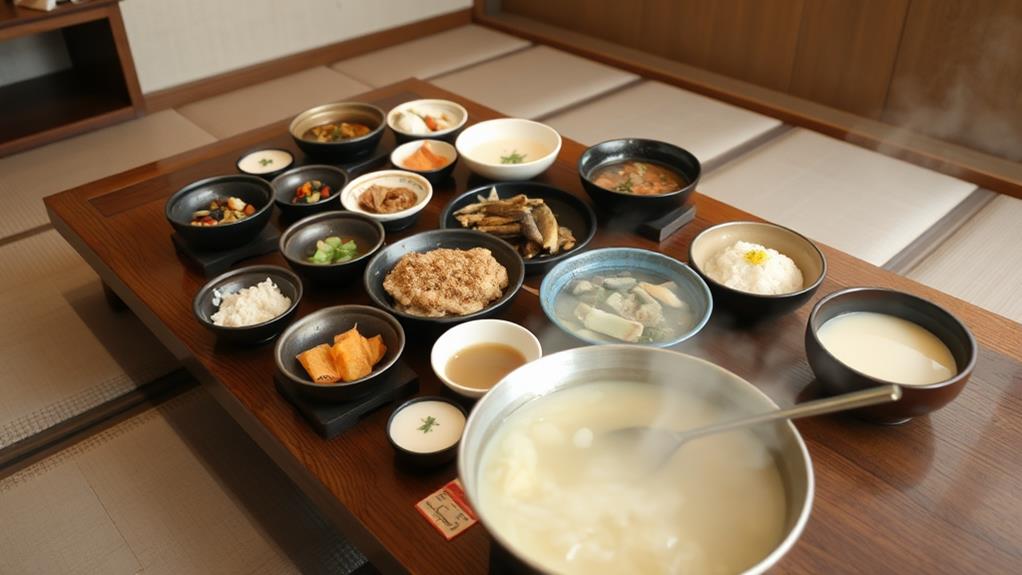
- A Korean full-course meal from the Joseon Dynasty (1392–1910) featuring 8–25 banchan side dishes around a central rice and soup
- Prices range from ₩18,000–₩25,000 (casual, Insadong-gil) to ₩55,000–₩90,000 (premium, e.g. Jihwaja in Jongno-gu)
- Book via Naver Reservation or KakaoMap — most restaurants do not appear on OpenTable or Google
- Expect 1–2 hours at the table; communal dining style, share all dishes from the center
Han-jeongsik offers you a unique glimpse into Korea’s rich culinary heritage, combining royal court traditions with modern adaptations. You’ll experience a feast of diverse banchan (side dishes) that showcase seasonal ingredients and balanced nutrition. The artful presentation and communal dining aspect reflect Korean cultural values, while the royal court influence adds a touch of elegance. Today’s han-jeongsik restaurants blend tradition with contemporary twists, catering to various dietary needs. You’ll enjoy carefully crafted flavors, vibrant colors, and textures that tell the story of Korea’s culinary evolution. This dining experience isn’t just a meal; it’s a journey through Korean history and culture. (Source: Korea Tourism Organization)
Explorer Insights
- Han-jeongsik showcases a wide variety of Korean flavors through numerous small side dishes called banchan, offering a diverse culinary experience.
- The meal structure reflects Confucian principles and Korean cultural values, emphasizing social bonding and respect for hierarchy.
- Seasonal ingredients and nutritional balance are central to han-jeongsik, adapting menus to showcase the best produce year-round.
- Artful presentation techniques create visually stunning displays, often mimicking nature scenes and using traditional serving materials.
- Han-jeongsik’s roots in royal court cuisine provide diners with a taste of Korea’s rich culinary heritage and centuries-old traditions.
Origins of Han-jeongsik
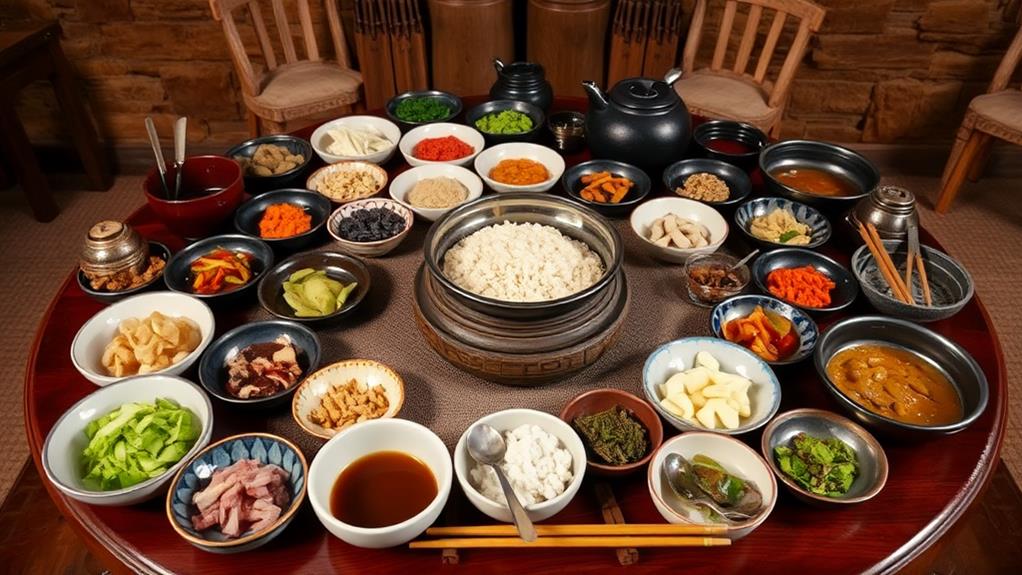
Almost every Korean culinary tradition has deep historical roots, and han-jeongsik is no exception. You’ll find that this elaborate dining style dates back to the Joseon Dynasty (1392-1910), when it was served to royalty and aristocrats. Han-jeongsik literally means “Korean table meal,” and it’s a feast fit for kings! (see Lonely Planet South Korea guide)
As you explore Korean cuisine, you’ll discover that han-jeongsik evolved from royal court cuisine. It’s a way to showcase the best of Korean flavors and ingredients in one sitting. You’ll be treated to a wide variety of dishes, typically including: (see Time Out Seoul)
- Rice and soup
- Various side dishes (banchan)
- Main dishes like grilled meats or fish
- Traditional drinks
When you sit down for a han-jeongsik meal, you’re not just eating; you’re experiencing centuries of culinary history. It’s a chance to taste the flavors that once graced royal tables. Today, you can enjoy this traditional dining experience in many restaurants across Korea. It’s a great way to immerse yourself in Korean culture and try a wide range of dishes in one meal. Don’t miss out on this unique culinary adventure during your visit to Korea! (see Korea Herald)
Variety of Banchan
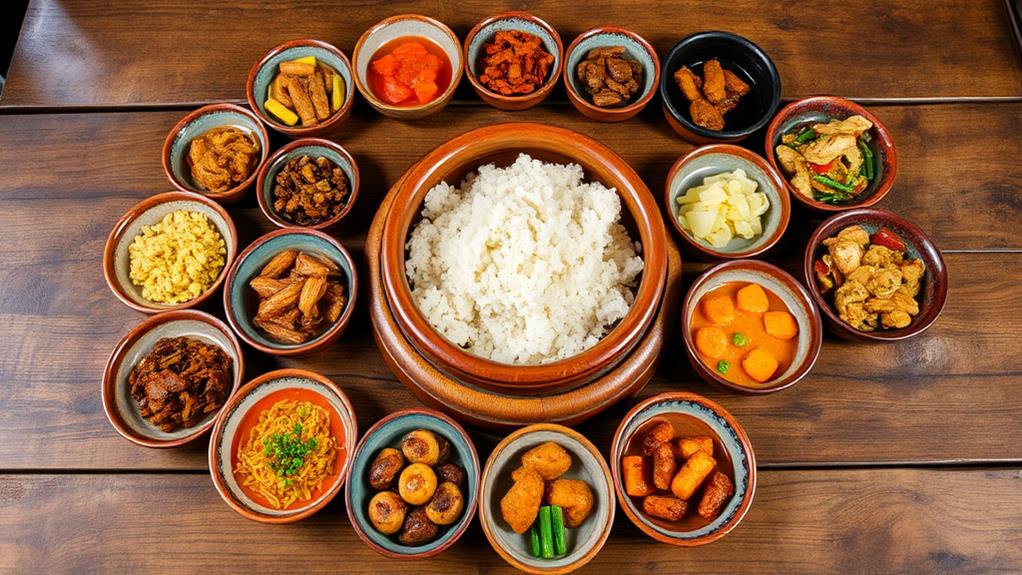
Banchan abundance is a hallmark of han-jeongsik dining. As you sit down to enjoy this traditional Korean meal, you’ll be amazed by the variety of small side dishes that fill your table. These colorful and flavorful banchan are an essential part of the han-jeongsik experience, offering a wide range of tastes and textures to complement your main course.
You’ll find an assortment of banchan that may include:
- Kimchi: Fermented vegetables, often cabbage or radish
- Namul: Seasoned vegetable dishes
- Jeon: Savory pancakes made with various ingredients
- Jorim: Braised dishes, such as fish or tofu
- Bokkeum: Stir-fried vegetables or meat
Each banchan is carefully prepared to balance flavors and provide nutritional value. You’re encouraged to try a bit of everything, mixing and matching flavors as you go. Don’t be surprised if your favorites are refilled throughout the meal – it’s part of the generous hospitality you’ll experience.
The variety of banchan allows you to customize each bite, creating a unique flavor combination with every mouthful. This diversity guarantees that your han-jeongsik meal is not only delicious but also a feast for the eyes and a celebration of Korean culinary traditions.
Seasonal Ingredients
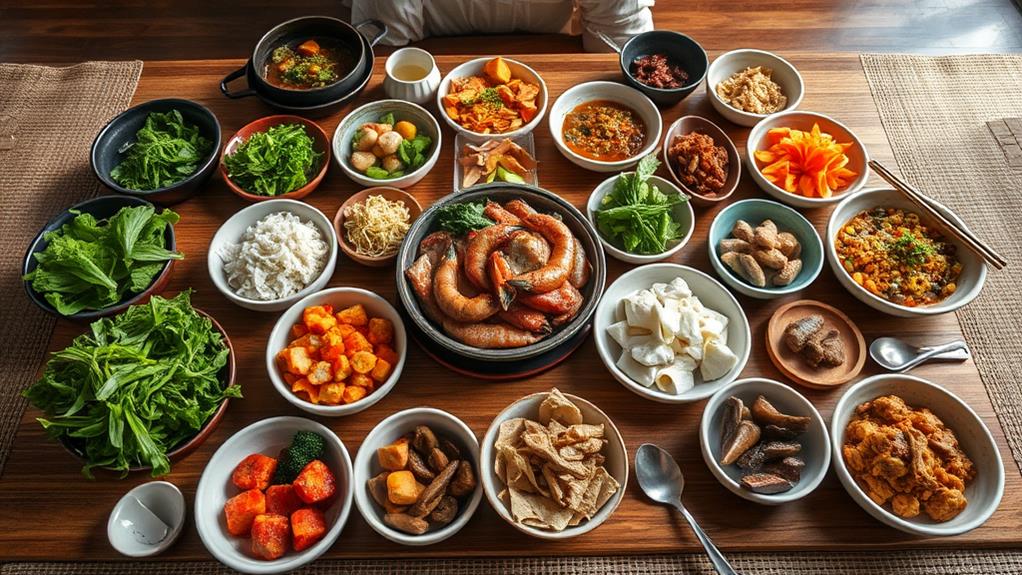
Throughout the year, han-jeongsik menus adapt to showcase the best ingredients each season has to offer. You’ll find that spring brings tender greens and delicate flavors, while summer offers invigorating dishes to beat the heat. As autumn arrives, you’ll savor hearty stews and roasted vegetables, and winter welcomes warm, comforting meals to ward off the chill.
This seasonal approach guarantees you’re always enjoying the freshest, most flavorful ingredients in your han-jeongsik experience. Here’s what you can expect:
- Spring: Yeolmu kimchi (열무김치, young radish kimchi), dureup namul (두릅나물, seasoned aralia shoots), and jindallae hwajeon (진달래화전, azalea flower rice pancake)
- Summer: Yeolmu mul-kimchi (열무물김치, chilled radish water kimchi), naengguk (냉국, cold cucumber soup), and hobak jeon (호박전, zucchini pancake)
- Autumn: Galbijjim (갈비찜, braised short ribs), doraji namul (도라지나물, bellflower root), and japchae (잡채, glass noodles with sautéed vegetables)
- Winter: Sundubu-jjigae (순두부찌개, soft tofu stew), kimchi-jjigae (김치찌개, kimchi hot pot), and eomuk tang (어묵탕, fishcake broth)
Balanced Nutritional Composition

Beyond the seasonal focus, han-jeongsik offers a well-rounded nutritional profile that’s central to Korean culinary philosophy. You’ll find a harmonious balance of nutrients in every meal, carefully crafted to nourish your body and mind.
In han-jeongsik, you’ll typically see a variety of colorful dishes that represent different food groups. There’s usually a mix of:
- Protein-rich foods like grilled meat, fish, or tofu
- Fiber-packed vegetables in various preparations
- Complex carbohydrates from rice or noodles
- Fermented foods like kimchi for gut health
This balanced approach guarantees you’re getting a wide range of vitamins, minerals, and other essential nutrients. The Korean belief in food as medicine is evident in han-jeongsik, where each ingredient is chosen not just for taste, but for its health benefits too.
You’ll also notice that han-jeongsik meals often include soup, which aids digestion and keeps you hydrated. The combination of hot and cold dishes, as well as different textures, creates a satisfying eating experience that’s good for your body and enjoyable for your palate.
Artful Presentation Techniques
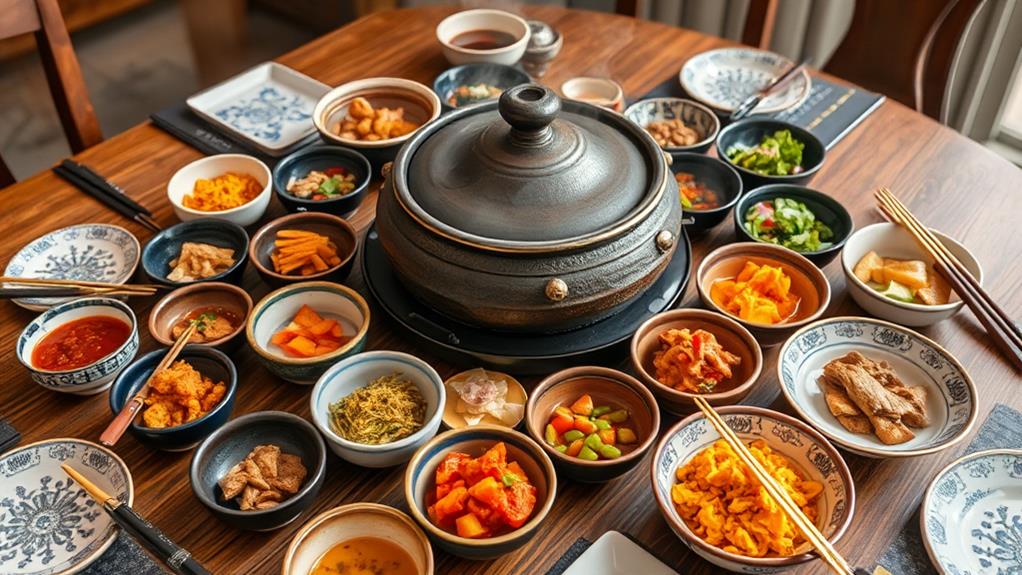
Han-jeongsik sets itself apart with its stunning visual presentation. When you sit down for this traditional Korean meal, you’ll be amazed by the artistry on display. Each dish is carefully arranged to create a feast for your eyes as well as your taste buds. The chefs pay close attention to color, texture, and balance, making sure every plate looks as good as it tastes.
You’ll notice several key elements that make Han-jeongsik presentation unique:
- Use of natural materials like wood and stone for serving dishes
- Seasonal ingredients arranged to mimic nature scenes
- Vibrant color contrasts between different foods
- Intricate garnishes and edible decorations
The presentation isn’t just about looks, though. It’s designed to enhance your dining experience. You’ll find that the arrangement of dishes encourages you to try a bit of everything, mixing flavors and textures with each bite. The careful placement also helps you pace your meal, allowing you to savor each dish fully. As you enjoy your Han-jeongsik, take a moment to appreciate the thought and skill that’s gone into making your meal a true work of art.
Communal Dining Aspect
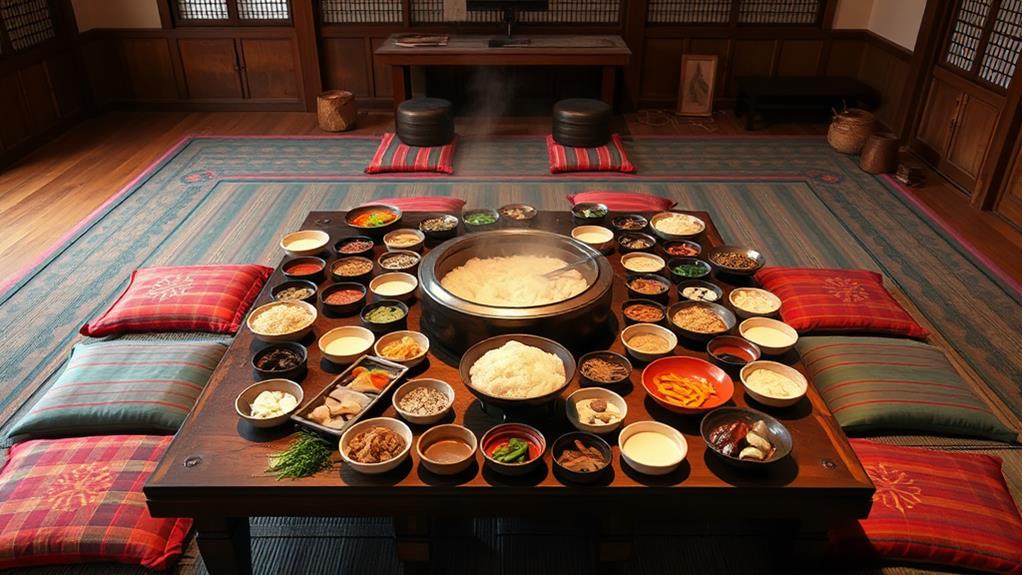
While the visual presentation of Han-jeongsik is striking, the communal aspect of this dining experience is equally enchanting. You’ll find yourself seated with family, friends, or even new acquaintances around a large, low table. This setup encourages conversation and shared enjoyment of the meal.
As you gather around the table, you’ll notice an array of dishes placed in the center. These are meant to be shared by everyone, fostering a sense of togetherness. You’ll pass plates, offer food to others, and engage in lively discussions about the flavors and textures you’re experiencing.
The communal nature of Han-jeongsik reflects Korean cultural values of harmony and respect. You’ll learn to navigate the unspoken rules of Korean table etiquette, such as waiting for elders to begin eating and using communal serving utensils. This shared experience creates a warm, inclusive atmosphere that’s central to Korean dining culture. (see Korea Todo travel guide)
Royal Court Influence
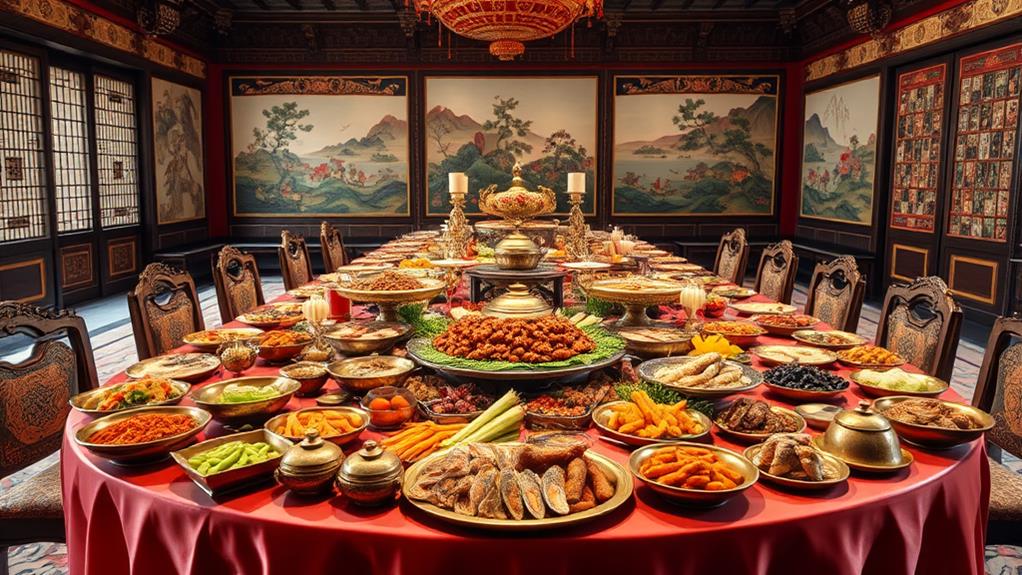
The roots of Han-jeongsik can be traced back to the royal courts of Korea’s dynastic periods. When you experience this traditional dining style, you’re actually getting a taste of what Korean royalty once enjoyed. The elaborate presentation and wide variety of dishes reflect the opulence of royal banquets. (see Visit Seoul official guide)
You’ll find that Han-jeongsik incorporates many elements from court cuisine:
- Diverse array of side dishes (banchan)
- Use of premium, seasonal ingredients
- Carefully balanced flavors and textures
- Artistic food presentation
As you savor each dish, you’re participating in a centuries-old tradition. The royal influence is evident in the meticulous preparation and arrangement of the food. You’ll notice how each item is carefully placed to create a visually stunning spread.
The emphasis on harmony in flavors, colors, and textures comes directly from royal court practices. You’ll taste how sweet, sour, salty, bitter, and umami flavors are balanced in each meal. This attention to detail guarantees that every bite is a delight for your senses.
Modern Adaptations
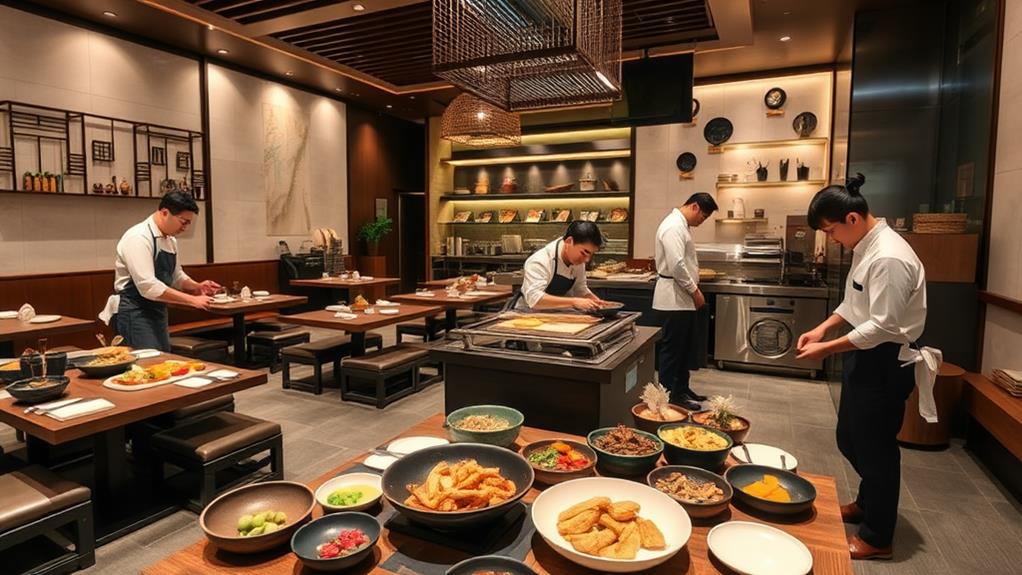
Today’s Han-jeongsik experiences have evolved to meet modern tastes and lifestyles. You’ll find that many restaurants now offer simplified versions of this traditional feast, making it more accessible and affordable. Instead of the overwhelming 30 to 50 dishes, you might encounter a streamlined selection of 12 to 20 carefully curated items.
As you explore modern Han-jeongsik, you’ll notice that chefs are incorporating contemporary cooking techniques and presentation styles. They’re putting creative twists on classic recipes, using local and seasonal ingredients to appeal to health-conscious diners. You’ll also see fusion elements, blending Korean flavors with international cuisines.
Many establishments now cater to dietary restrictions, offering vegetarian, vegan, and gluten-free options. This allows more travelers to experience Han-jeongsik without compromising their dietary needs. Some restaurants even provide English menus and staff who can explain the dishes, making it easier for you to navigate the dining experience.
When planning your trip to Korea, look for Han-jeongsik restaurants that balance tradition with modernity. These places offer an authentic taste of Korean culture while adapting to contemporary preferences, ensuring you have a memorable and enjoyable dining adventure.
Han-jeongsik vs Korean BBQ vs Dolsot Bibimbap: Which Should You Book?
Travelers often ask which Korean dining format to prioritize on a short trip. Here’s how the three most-booked experiences compare.
| Format | Price / Person | Time Required | Solo-Friendly | Vegetarian | Best For |
|---|---|---|---|---|---|
| Han-jeongsik (한정식) | ₩18,000–₩90,000 | 1.5–2 hours | Budget tier OK; premium requires 2+ | Yes, with advance notice | Cultural deep-dive; special occasion |
| Korean BBQ (삼겹살 / 갈비) | ₩15,000–₩40,000 | 1–1.5 hours | Most places accept solo diners | No (meat-centred) | Casual evening; social groups |
| Dolsot Bibimbap (돌솥 비빔밥) | ₩10,000–₩18,000 | 30–45 minutes | Very solo-friendly | Easily adapted (omit beef) | Quick lunch; first-time Korean food |
Cultural Significance
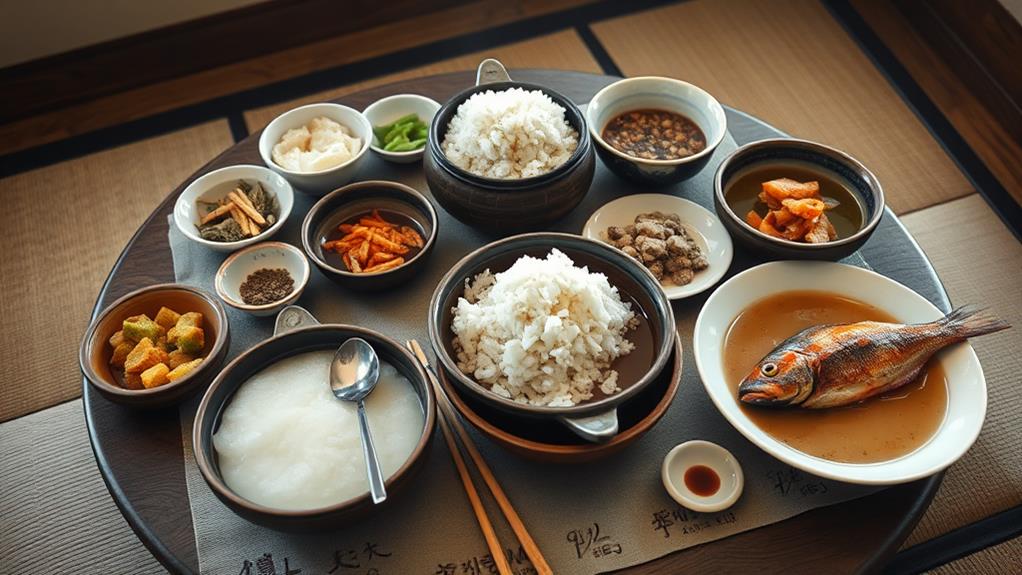
Understanding Han-jeongsik’s cultural significance goes beyond appreciating its flavors. When you partake in this traditional Korean dining experience, you’re immersing yourself in centuries of history and customs. Han-jeongsik represents the pinnacle of Korean culinary artistry, reflecting the nation’s respect for harmony and balance in all aspects of life.
You’ll find that Han-jeongsik isn’t just about eating; it’s a celebration of Korean culture. Here’s what makes it culturally significant:
- It showcases Korea’s agricultural heritage and seasonal ingredients
- The meal structure reflects Confucian principles of social hierarchy
- The presentation embodies the Korean concept of ‘jeong’ (warmth and caring)
- It serves as a way to honor guests and strengthen social bonds
As you enjoy your Han-jeongsik meal, you’re participating in a tradition that’s been passed down through generations. You’ll notice how the arrangement of dishes, the serving order, and even the tableware all carry deep cultural meaning. This dining experience offers you a unique window into Korean values, history, and social customs. It’s a delicious way to connect with Korea’s rich cultural heritage and gain a deeper understanding of the country’s traditions.
The Joseon royal court cuisine tradition (궁중음식) that underpins han-jeongsik was designated Korean National Intangible Cultural Heritage No. 38 by the Ministry of Culture, Sports and Tourism in 1971 — one of the first food traditions to receive this formal protection. The Institute of Korean Royal Cuisine (한국전통음식연구소) in Seoul continues to document and preserve this culinary lineage. Premium han-jeongsik restaurants in Jongno-gu, particularly those near Changdeokgung Palace, draw directly on this documented court tradition. (Source: Korean Ministry of Culture, Sports and Tourism)
Where to Eat Han-jeongsik in Seoul: Restaurants & 2026 Prices
After sitting down at han-jeongsik restaurants across Jongno-gu and Insadong-gil, the difference between tiers comes down to banchan count and lacquerware quality — not the cooking itself.
| Tier | Price per Person | Banchan Count | Reservation |
|---|---|---|---|
| Budget — Insadong-gil cluster | ₩18,000–₩28,000 | 8–12 dishes | Walk-in OK |
| Mid-range — e.g. Haniljung (한일정) | ₩30,000–₩50,000 | 12–18 dishes | Recommended 1–2 days ahead |
| Premium — e.g. Jihwaja (지화자) | ₩55,000–₩90,000 | 18–25 dishes | Required 2–3 days ahead |
Jihwaja (지화자) in Jongno-gu near Changdeokgung Palace is the most-cited premium option. Lunch sets run ₩55,000–₩70,000 and include 18–22 banchan dishes arranged in the Joseon court-dining style. At lunch on a weekday, I counted 14 banchan bowls on the table before the stone-pot rice even arrived — the private rooms are worth the premium.
Haniljung (한일정) near Gyeongbokgung Palace Station (Line 3, Exit 5) is the best mid-range entry point. Their standard set costs ₩38,000 at lunch and covers 14 banchan. Staff speak functional English and can walk you through the menu — ideal for first-timers.
The Insadong-gil cluster (a 5-minute walk from Anguk Station, Line 3) has 8–10 casual restaurants charging ₩18,000–₩25,000 for a simplified 8–12 dish version. Lower banchan count but genuinely traditional cooking, and no reservation needed. (Source: Visit Seoul official tourism guide)
How to Book a Han-jeongsik Restaurant in Seoul (Practical 2026 Guide)
Most traditional han-jeongsik restaurants are not on OpenTable or Google Reservations. The two platforms that actually work are Naver Reservation (네이버 예약) and KakaoMap.
- Naver Map / Naver Reservation: Search the restaurant name in Korean, tap the reservation (예약) button, and complete the booking in-app. No Korean phone number required for most listings.
- KakaoMap: Slightly simpler booking UI, useful if you already have KakaoTalk installed. Same restaurants, same availability windows.
For weekday lunch, walk-in is usually fine at mid-range spots. For weekend dinner at premium restaurants like Jihwaja, book at least 3 days ahead — private dining rooms sell out by Wednesday for Saturday service.
Dress code: smart casual. Traditional restaurants use low lacquerware tables on floor cushions — trousers or a dress are more comfortable than shorts or a skirt. Shoes must come off at the entrance; wear clean socks.
According to the Korea Tourism Organization, Jongno-gu’s traditional food district — including the Insadong-gil cluster — is one of the organization’s top recommended dining experiences for international visitors seeking Korean cultural heritage food.
Last updated: July 2026
Frequently Asked Questions
How Long Does a Typical Han-Jeongsik Meal Last?
You’ll want to set aside plenty of time for a han-jeongsik meal. Typically, this traditional Korean dining experience lasts about 1 to 2 hours. It’s not just about eating; it’s a chance to savor multiple dishes and enjoy the company of your fellow diners. The meal unfolds at a leisurely pace, with various courses being served one after another. Remember, it’s all about taking your time and appreciating the flavors and presentation of each dish.
Are There Vegetarian or Vegan Options Available in Han-Jeongsik?
You’ll be pleased to know that han-jeongsik often includes vegetarian and vegan options. Many side dishes, like kimchi, namul (seasoned vegetables), and tofu dishes, are naturally plant-based. However, it’s best to inform the restaurant in advance about your dietary needs. They can then prepare more vegetable-based dishes and modify others to suit you. Keep in mind that some traditionally vegetarian dishes might use fish sauce, so it’s always good to double-check with your server.
What’s the Average Cost of a Han-Jeongsik Meal?
You’ll find that the cost of a han-jeongsik meal can vary quite a bit. On average, you might expect to pay between 20,000 to 50,000 Korean won per person. That’s about $15 to $40 USD. Prices can go higher for more upscale restaurants or those in tourist areas. Remember, you’re getting a full spread of dishes, so it’s often a good value. Keep in mind that some places might have set menus at different price points.
Is Han-Jeongsik Suitable for People With Food Allergies?
Like a chameleon adapting to its surroundings, han-jeongsik can be tailored to your dietary needs. You’ll find it’s often suitable for those with food allergies. Most restaurants are happy to accommodate your requirements if you let them know in advance. They can adjust dishes or provide alternatives. However, it’s always best to communicate your allergies clearly. Remember, some ingredients might be hidden in sauces or seasonings, so don’t hesitate to ask for details about each dish.
Are There Specific Etiquette Rules to Follow During a Han-Jeongsik Meal?
When you’re enjoying a han-jeongsik meal, there are a few etiquette rules to keep in mind. You’ll want to wait for the eldest person to start eating before you begin. It’s polite to use your chopsticks and spoon properly, and avoid sticking them upright in your rice. Remember to pace yourself, as there are many dishes to try. Don’t forget to show appreciation for the food and the effort put into preparing it.
More on Food & Dining:
Planning a trip to Korea?
Check out our Korea Travel Hub for more guides, including Korean BBQ Guide.

Written by East Asia Explorer Editorial Team
Sam Konneh is an AI strategist and digital marketer based in Seoul, South Korea. With years spent living, working, and exploring across Korea, Japan, and China, he shares firsthand insights into East Asia's cultures, hidden gems, and everyday life. A graduate of Inha University and KDI Graduate School, Sam combines data-driven expertise with on-the-ground experience. His journey also includes studying in Malaysia and traveling through Southeast Asia. Through practical tips, local stories, and travel guides, he helps fellow explorers discover both the celebrated highlights and the lesser-known corners of East Asia.