Last Updated: October 6, 2026 | Originally Published: July 15, 2026
Suica vs JR Pass: Which One Do You Actually Need in 2026? (Most Travelers Need Both)
- Suica is a rechargeable IC card — taps you onto subways, buses, and convenience stores across Japan. Every visitor needs one.
- JR Pass is a flat-rate national rail ticket — covers most JR trains including the shinkansen for 7, 14, or 21 days. Most short-haul visitors don’t need it.
- They are not alternatives. Most first-time travelers in 2026 need a Suica from day one, and only add the JR Pass if their route covers serious long-distance ground.
- Break-even rule: The 7-day JR Pass costs 50,000 yen. You need roughly Tokyo to Hiroshima and back — plus other JR legs — to make it pay off.
- PASMO note: PASMO and Suica are fully interchangeable since 2013. If one is out of stock, take the other without hesitation.
When I landed at Haneda last spring, my plan was simple: skip the Suica, use my JR Pass for everything. Three days in, I was buying single-ride tickets for the Tokyo Metro at a coin machine and feeling foolish.
The JR Pass and Suica solve different problems. Once you see how they overlap — and where they don’t — the choice becomes clear.
What each card actually does
A Suica is an electronic stored-value card issued by JR East. You load it with yen, then tap it on a reader to ride trains, buses, and to pay at most convenience stores nationwide.
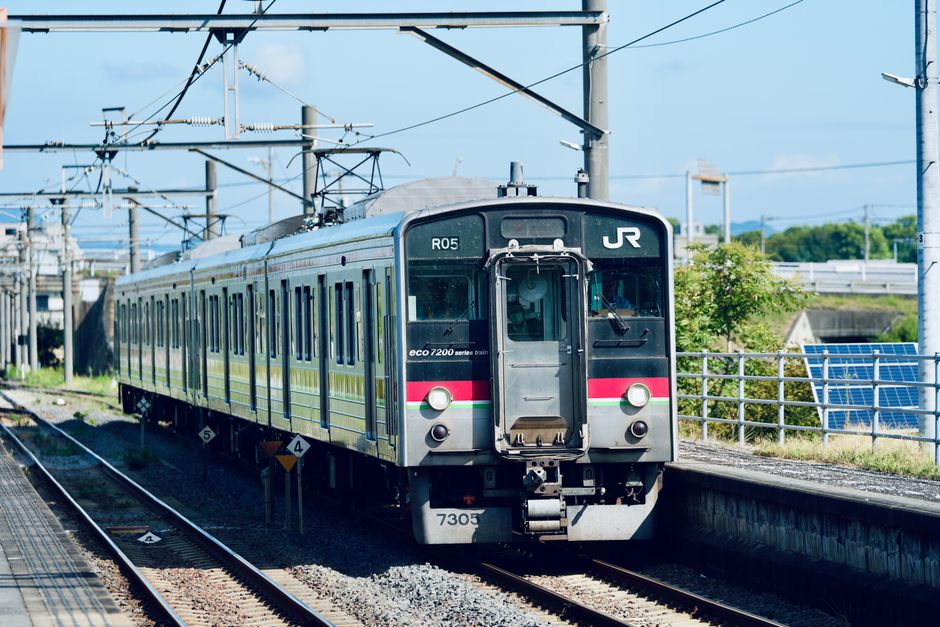
The JR Pass is a paper or QR-code ticket sold only to foreign tourists. It buys you unlimited rides on Japan Railways (JR) trains for a fixed window, including most shinkansen routes.
The trap: the JR Pass does not cover Tokyo Metro, Toei Subway, Osaka Metro, Kyoto City Bus, or private rail lines like Keisei, Hankyu, or Kintetsu. Those make up most of your daily city travel.
Suica covers all of those (except lines that don’t accept IC cards, which are now rare). It also works at 7-Eleven, FamilyMart, Lawson, and most vending machines — so it doubles as a contactless wallet.
The 2026 JR Pass price reality
JR raised the Pass price by roughly 70% in October 2023. Those “always buy the JR Pass” guides from 2019 are now actively misleading.
Current prices through September 30, 2026:
| JR Pass Type | Price (2026) | Break-Even Route Needed |
|---|---|---|
| 7-day Ordinary | 50,000 yen | Tokyo → Hiroshima → Tokyo (~56,000 yen) |
| 14-day Ordinary | 80,000 yen | Tokyo + Kyoto + Hiroshima + extra JR legs |
| 21-day Ordinary | 100,000 yen | Multi-region: Tokyo + Kyoto + Hiroshima + Sapporo or Fukuoka |
| 7-day Green Car | 70,000 yen | Same as Ordinary + business-class seating |
| 14-day Green Car | 110,000 yen | Heavy multi-region itinerary with premium seating |
| 21-day Green Car | 140,000 yen | Full-country loop with premium seating throughout |
For context: a one-way Hikari shinkansen from Tokyo to Kyoto runs about 14,170 yen. A round trip is roughly 28,340 yen — only 57% of a 7-day Pass.
A Tokyo to Hiroshima Hikari one-way is about 19,440 yen. Round trip: 38,880 yen. Still short of the 50,000 yen threshold on its own.
The Nozomi problem most guides bury
Standard JR Passes do not cover Nozomi or Mizuho shinkansen services on the Tokaido and Sanyo lines. Those are the fastest trains between Tokyo, Nagoya, Osaka, and Hiroshima.
You can still ride them — but you pay a supplement out of pocket:
- Tokyo → Nagoya supplement: 4,180 yen
- Tokyo → Kyoto supplement: 4,960 yen
- Tokyo → Hakata (Fukuoka): 8,140 yen
- Shin-Osaka → Kagoshima-Chuo: 9,460 yen
The included service is the Hikari or Sakura, which run every 20–30 minutes. Budget an extra 20–30 minutes per long route if you avoid supplements.
When you need only Suica
Short trips inside one or two cities almost never justify the JR Pass anymore.
A 5-day Tokyo-only itinerary — Asakusa, Shibuya, Shinjuku, Akihabara, a day-trip to Kamakura — runs maybe 3,000–5,000 yen on a Suica. The Yamanote loop and most Metro lines accept Suica.
Same logic for Kyoto + Osaka only. The shinkansen between them is 15 minutes at about 1,450 yen one-way. That’s under 3,000 yen round-trip — less than a single day’s JR Pass equivalent cost.
If your entire long-distance bill adds up to less than 35,000 yen, skip the Pass entirely.
When you need both
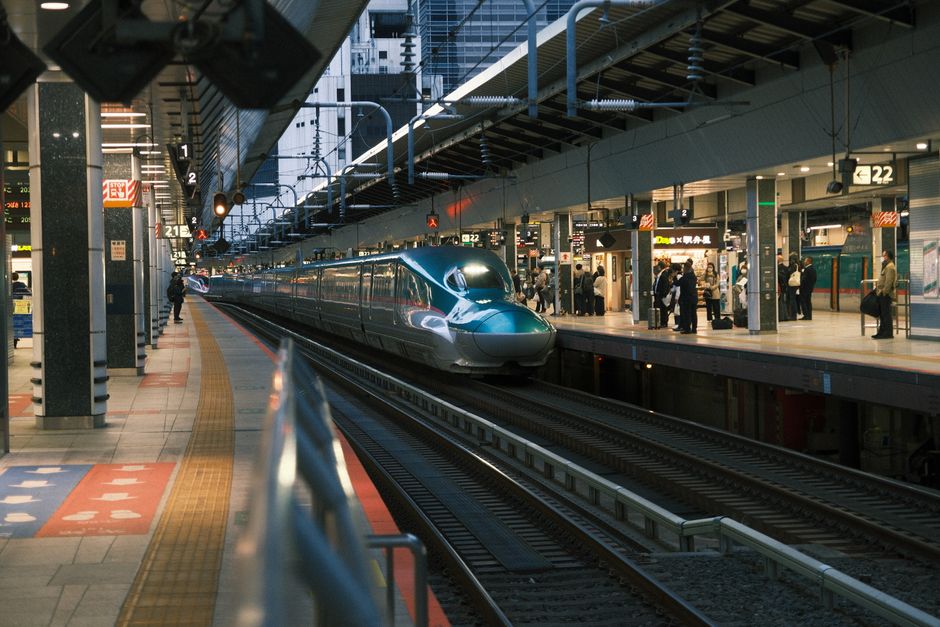
This is the case for most first-timers doing Tokyo + Kyoto + Hiroshima in 10–14 days.
The JR Pass carries you between the big stops. The Suica handles the Tokyo Metro, the Kyoto City Bus, the konbini coffee at 6am, and the airport return on the Keisei Skyliner (which is Keisei Railway, not JR).
I’ve never met a traveler doing more than two cities who got by on just one card.
When the JR Pass is still clearly worth it
The Pass still wins on long, looping routes that reach deeper regions. Three concrete examples where the math favors it in 2026:
Route 1 — Classic golden route, extended: Tokyo → Kyoto → Hiroshima → Tokyo in 7 days.
Individual Hikari fares: 14,170 yen (Tokyo-Kyoto) + 5,720 yen (Kyoto-Hiroshima) + 19,440 yen (Hiroshima-Tokyo) = roughly 39,330 yen one-way, or 56,000+ yen for the full loop. The 7-day Pass at 50,000 yen saves around 6,000 yen.
Route 2 — Tohoku loop: Tokyo → Sendai → Aomori → Tokyo on the Hayabusa shinkansen. Roughly 53,000 yen in total fares. Pass wins by about 3,000 yen, plus covers all JR local trains in between.
Route 3 — Hokkaido + Honshu: Flying into Tokyo, riding the Hokkaido Shinkansen up through Aomori to Sapporo, then using JR Hokkaido locals across the island before flying home.
The Shinkansen leg alone is substantial. Add several JR Hokkaido local segments — Sapporo to Asahikawa, Hakodate detours — and a 14-day Pass pays off with room to spare.
“After the 2023 price increase, the break-even benchmark for first-timers shifted to Tokyo–Hiroshima-and-back as the minimum viable route. For Tokyo-only or Tokyo-Kyoto trips, individual tickets plus a Suica consistently undercut the Pass price.”
Regional passes: the overlooked third option
If your trip stays in one geographic zone, a regional pass often beats both options.
| Regional Pass | Price | Coverage | Best For |
|---|---|---|---|
| JR West Kansai-Hiroshima Area Pass | 17,000 yen (5 days) | Osaka, Kyoto, Kobe, Hiroshima, Miyajima | West Japan loop without Tokyo |
| JR Hokkaido Pass | from 12,000 yen (3 days) | All JR Hokkaido lines (Sapporo, Asahikawa, Hakodate) | Hokkaido-only trips |
| JR East Tohoku Area Pass | from 20,000 yen (5 days) | Tokyo to Sendai, Aomori, Akita | Tohoku-focused itineraries |
| JR Kyushu Rail Pass (All Kyushu) | from 21,000 yen (5 days) | Fukuoka, Nagasaki, Kumamoto, Kagoshima | Kyushu island loop |
If you’re doing Osaka + Kyoto + Hiroshima only, the Kansai-Hiroshima pass at 17,000 yen is about one-third the price of a 7-day national JR Pass. Hard to argue with that math.
Suica options in 2026 (and the PASMO question)
Three ways to get a Suica today, ranked by convenience.
Mobile Suica (best for most travelers): Add it to Apple Wallet or Google Pay before you fly. On iPhone, open Wallet, tap +, choose “Transit Card,” then select Suica, and load 3,000 yen with your home credit card. It activates the moment you land.
Android users need Felica NFC hardware — most non-Japanese Android phones don’t have it. Pixel 7 and above and some Samsung Galaxy models do. Check your spec sheet before relying on this option.
Welcome Suica (physical, tourist-only): No 500-yen deposit required, valid for 28 days from purchase, balance non-refundable. Sold at Narita and Haneda JR East Travel Service Centers.
Standard Suica (physical, permanent): Costs 2,000 yen up front — 500 is a refundable deposit, 1,500 is your starting balance. No expiration as long as you use it once every 10 years. Sold at JR ticket machines when stock is available (chip shortages caused intermittent out-of-stocks in 2023–2026).
PASMO — the question everyone asks: PASMO is issued by Tokyo’s private rail operators — Tokyo Metro, Toei, Odakyu, and others. It does exactly what a Suica does.
The two became interoperable in 2013 under a national IC alliance now covering 10 regional cards: Suica, PASMO, Manaca, ICOCA, PiTaPa, Kitaca, TOICA, nimoca, Hayakaken, and Sugoca.
If the counter is out of Suica, take a PASMO and forget about it. The only practical difference is the card design.
How to actually buy the JR Pass
Two paths. Order online before departure through an authorized seller — JRPass.com, Klook, JTB, or the official JR Pass site — or buy in person at a JR ticket office inside Japan. Prices are identical either way since 2023.
The online route still has one edge: you skip the exchange queue at JR East Travel Service Centers. On a Sunday afternoon at Tokyo Station, that queue can run 45 minutes. On a Monday morning, five.
You’ll need your physical passport at the exchange desk. The Pass is tied to your foreign-visitor visa status — it cannot be issued remotely or sent to a hotel.
Common mistakes I’ve watched travelers make
Loading too much yen on a Suica. I once met a couple with 14,000 yen left on departure day. You can refund the balance at a JR counter, but a 220-yen handling fee applies and the line can be long. Load in smaller increments: 2,000–3,000 yen at a time.
Buying a 21-day Pass for a 16-day trip mostly spent in Tokyo. They paid 100,000 yen and used about 32,000 yen worth of JR travel. The remaining four days and 68,000 yen gap is a painful lesson.
Assuming the JR Pass covers all subway lines in Tokyo. The Yamanote, Chuo, and Sobu lines are JR. The Marunouchi, Ginza, and Hibiya lines are Tokyo Metro — they need Suica yen.
Buying a JR Pass for Miyajima in Hiroshima, then discovering the Miyajima ferry from Miyajimaguchi is covered by the Pass. That’s a minor win, but the ferry alone is only about 360 yen each way — not a reason to buy the Pass.
The honest downside of carrying both
Carrying two cards adds a small admin layer. You’ll occasionally tap the wrong gate and have to back out.
The JR Pass also needs your physical passport for the initial exchange. You can’t do it at a kiosk or remotely.
And if your trip is one city plus one short shinkansen, you’re paying for flexibility you won’t use. Point-to-point shinkansen tickets from a vending machine handle that more efficiently.
Frequently asked questions
Can I use my Suica on the shinkansen?
Not on long-distance bullet train routes. Suica covers some Tokaido shinkansen on a reserved EX-IC registration, but most tourists buy separate shinkansen tickets and use Suica for all other rail and bus travel.
Does the JR Pass cover Narita Express (N’EX)?
Yes. The N’EX from Narita Airport to Tokyo, Shibuya, Shinjuku, and Yokohama is a JR service. A one-way ticket runs about 3,250 yen. Two airport transfers alone recover 6,500 yen of your Pass value.
What about Kansai-Hiroshima or other regional passes?
Regional passes can be significantly cheaper for one-zone trips. The JR West Kansai-Hiroshima Area Pass at 17,000 yen for 5 days covers Osaka, Kyoto, Hiroshima, and Miyajima. Compare on the official JR West site before committing to a national pass.
Can children use the JR Pass and Suica?
Yes to both. Children aged 6–11 pay half the JR Pass fare. Children under 6 ride free on most trains. Suica has a child version with reduced fares on JR lines — request it at the ticket counter.
Will my Suica work in Kyoto and Osaka?
Yes. Suica works on virtually all major train and subway systems in Tokyo, Osaka, Kyoto, Hiroshima, Sapporo, Fukuoka, and most secondary cities, through the 10-card national IC alliance. The only exceptions are a handful of small private rural lines.
Is the JR Pass worth it for Hokkaido travel?
Often yes, especially for a 14-day trip combining Honshu and Hokkaido. JR Hokkaido local lines — Sapporo to Asahikawa, Hakodate to Sapporo, Obihiro routes — add up quickly. The Hokkaido Shinkansen extension to Sapporo is under construction; check current status before booking.
What if I lose my Suica card?
Physical Suica cards can be reported lost at any JR station. Registered cards — those linked to a Suica account — can have their balance transferred to a new card after a 10-day waiting period.
Mobile Suica on iPhone is protected by Face ID. The balance ties to your Apple ID, not the hardware, so it survives a phone replacement.
Can I use JR Pass for the airport train from Kansai Airport?
Partially. The Haruka limited express from Kansai Airport to Osaka and Kyoto is a JR West service — covered by the national JR Pass. The Nankai Rapi:t express to Namba is a private Nankai Railway service — not covered. Check which airport train you’re on before tapping through.
Last updated: June 2026. Prices and policies sourced from JapanRailPass.net, JR East, and Japan-Guide.com. Verify current pricing on official sites before purchasing.
More on Japan Destinations:
Planning a trip to Japan?
Check out our Japan Travel Hub for more guides, including JR Pass Guide 2026.

Written by East Asia Explorer Editorial Team
Sam Konneh is an AI strategist and digital marketer based in Seoul, South Korea. With years spent living, working, and exploring across Korea, Japan, and China, he shares firsthand insights into East Asia's cultures, hidden gems, and everyday life. A graduate of Inha University and KDI Graduate School, Sam combines data-driven expertise with on-the-ground experience. His journey also includes studying in Malaysia and traveling through Southeast Asia. Through practical tips, local stories, and travel guides, he helps fellow explorers discover both the celebrated highlights and the lesser-known corners of East Asia.