Last Updated: September 29, 2026 | Originally Published: August 31, 2026
- Take Bus 306 (游5) from Xi’an Railway Station East Plaza — ¥7, ~70 minutes, no transfer
- Adult ticket is ¥150 and covers all three pits plus the Bronze Chariot exhibition hall
- Visit Pit 2 and Pit 3 first — they’re quieter in the morning; the tour-bus crowds fill Pit 1 by 10am
- Huaqing Palace is 12km away on the same road — combine it as an afternoon stop on the return
Most visitors walk into the Terracotta Army the same way. They buy a ticket at the gate, follow the path to Pit 1, take a photo of the warriors, and leave feeling like they’ve checked a box.
That’s a waste of one of the most extraordinary archaeological sites on earth.
The Qin Shi Huang Mausoleum site covers 56 square kilometers. The three excavated pits hold 8,000+ warriors, 130 chariots, and 670 horses. Pit 3 is the command center — a completely different experience from Pit 1.
And Huaqing Palace, 12km away, is almost always skipped despite being among the most historically layered sites in China.
This guide covers every logistical decision you’ll need to make: which bus to take, when to book, which order to visit the pits, and how to extend the day without doubling back.
Getting to the Terracotta Army from Xi’an: Bus 306 vs Taxi vs Tour
Bus 306 (also signed as 游5 at some stops) departs from the East Plaza of Xi’an Railway Station. The fare is ¥7 and the journey takes approximately 65–75 minutes depending on traffic on the G5 expressway service road.
The bus runs roughly every 20–30 minutes from 7:00am to 6:30pm. Get off at the last stop — it deposits you at the parking lot 400 meters from the ticket hall. Don’t panic when the bus empties at the tourist cluster before the final stop; stay on.
A DiDi ride from central Xi’an (Bell Tower area) costs ¥80–120 and takes 45–55 minutes. It’s worth it if you’re splitting the cost with others or have early morning timing to nail.
Guided tour buses from major hotels charge ¥80–130 per person and include a Chinese guide. Most guides speak Mandarin only; English audio guides are available for rent at the museum for ¥40 plus a deposit.
| Option | Departs From | Journey Time | Cost |
|---|---|---|---|
| Bus 306 / 游5 | Xi’an Railway Station East Plaza | 65–75 min | ¥7 |
| DiDi (rideshare) | Xi’an city center | 45–55 min | ¥80–120 |
| Hotel tour bus | Hotel pickup | 60 min (incl. pickup) | ¥80–130 (guide included) |
| Private car hire | Hotel/apartment | 45–55 min | ¥300–450/day (with driver) |
Tickets & Hours in 2026: What the ¥150 Combination Ticket Covers
The adult ticket for the Emperor Qin Shi Huang’s Mausoleum Site Museum is ¥150. This is a combination ticket — it covers entry to Pit 1 (the main exhibition hall), Pit 2, Pit 3, and the Bronze Chariot exhibition.
There is no separate ticket for individual pits. The ¥150 is the only admission option for foreign tourists.
Children under 1.2 meters tall enter free. Full-time students with a Chinese university student card pay ¥75. International student cards (ISIC) are not consistently accepted — don’t rely on it.
The museum opens daily at 8:30am. Last entry is at 5:00pm in the low season (November–February), 5:30pm in peak season (March–October). The site closes at 6:00pm.
Per guidance from the China Tourism Administration, the site operates every day including national holidays — but expect peak-season crowds of 30,000+ visitors on Golden Week days.
Pit 1 — The Main Exhibition Hall: What You’re Actually Looking At
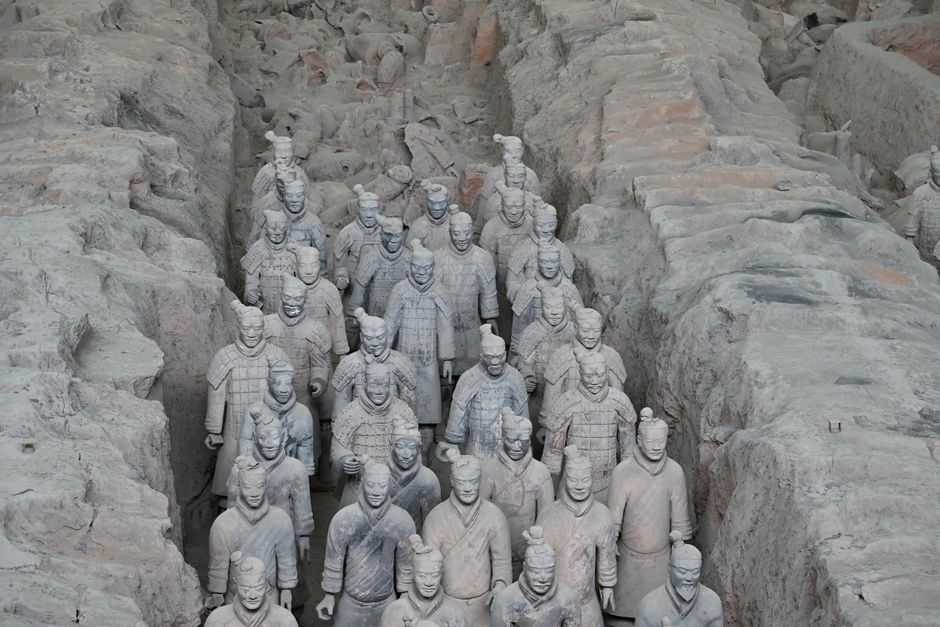
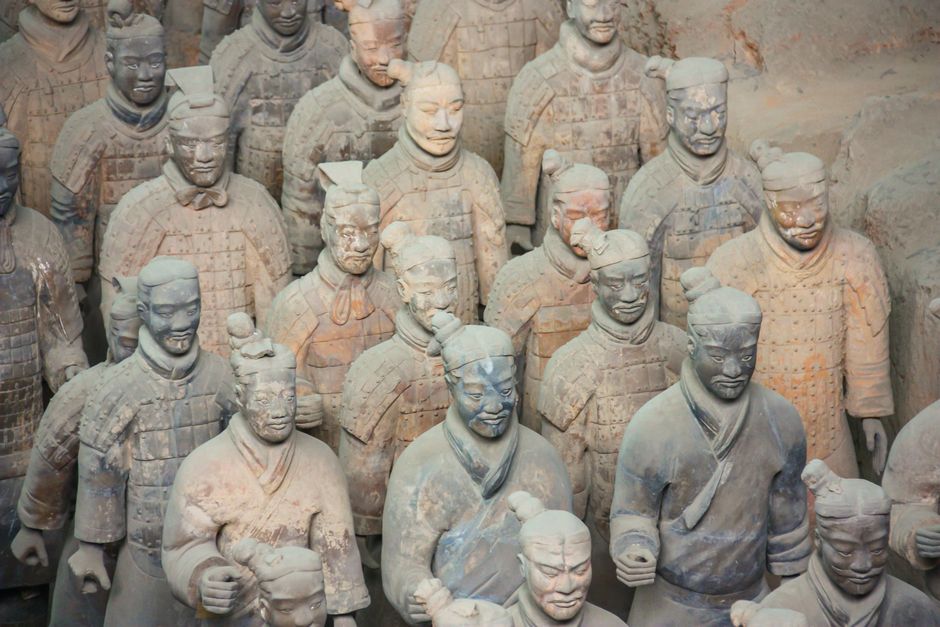
Pit 1 is the largest excavated pit — 230 meters long, 62 meters wide, housing an estimated 6,000 warriors in battle formation. The scale only registers when you’re standing above it.
The warriors are arranged in 11 columns. The front rows are vanguard infantry. Behind them: war chariots, archers, and cavalry units fanning into a 60-meter-wide main formation. The flanks and rear guard have their own ranks.
Every warrior’s face is different. Tang-dynasty art historians attribute this to individual molds for each head, combined with hand-sculpted features. No two warriors in Pit 1 are identical — not because of artistic ambition, but because the Qin workshop system assigned individual craftsmen who signed their work.
The excavation is ongoing — you’ll see archaeologists working in the far corners of the pit. The warriors are still fragile. Some still carry traces of the original paint that covered them (red, green, black) before 2,200 years underground faded it to terra cotta.
A small display case near the east entrance shows a warrior fragment with surviving pigment.
Pit 2 & Pit 3 — Why Most Visitors Rush Past the Interesting Parts
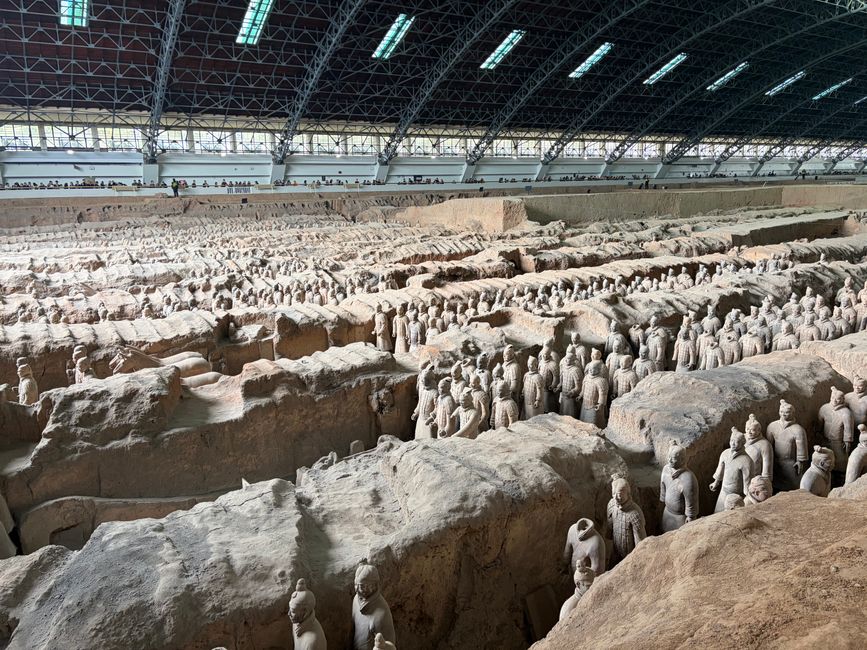
Pit 2 is the tactically complex pit. It contains four distinct army units in interlocking positions: a right-flank unit of kneeling archers, a cavalry formation, war chariots, and a combined infantry-chariot center. Archaeologists believe it represents the army’s active combat wing.
The close-up displays in Pit 2 are worth extra time. A number of warriors have been moved to glass cases at eye level — you can see the painted eyebrows, the molded knuckles, the individual lace holes on the armor.
This is the best place in the museum to study what the warriors actually looked like before weathering.
Pit 3 is the smallest — just 520 square meters — and holds 68 warriors. These aren’t infantry. The chariot here is a command vehicle; the warriors are bodyguards in a protective formation around what would have been the general’s headquarters.
According to archaeologists at the museum, Pit 3 represents the army’s command center and planning room.
The Qin Shi Huang Mausoleum Itself: The Part No One Visits
The Terracotta Army pits are the outer guard for the actual tomb mound of Qin Shi Huang — buried 1.5km to the west of Pit 1. The tomb mound is visible from the site: a flat-topped artificial hill about 47 meters high, now covered with pomegranate trees.
The tomb itself has never been excavated. Chinese archaeologists have been studying it with ground-penetrating radar and soil probes since the 1990s.
Remote sensing surveys have detected walls, a central palace structure, and evidence of mercury — consistent with the historical account that Qin Shi Huang had rivers of mercury installed in the burial chamber to represent China’s rivers. The mercury concentration in the soil above the mound is measurably elevated.
The walk to the mound from Pit 1 takes about 20 minutes each way. Most visitors skip it. If you have time and are not rushing to Huaqing Palace, the mound gives the whole site a different scale — the warriors are a guardian detail for something far larger.
“The archaeological work at the Qin Mausoleum will take at least a century to complete — the site is one of the most complex ever excavated, and we proceed cautiously to avoid the mistakes of early 20th-century digs.”
— Shaanxi Cultural Heritage Bureau, official site documentation
Huaqing Palace: Adding a Tang Dynasty Imperial Stop to Your Day
Huaqing Palace (华清宫) is 12km from the Terracotta Army museum, on the same road back to Xi’an.
The site is where Emperor Xuanzong spent winters with consort Yang Guifei — and where the Xi’an Incident of 1936 occurred, when Chiang Kai-shek was held captive and forced to join the anti-Japanese coalition.
The admission price is ¥150 for the daytime pavilions and hot spring baths (the bathhouses where the Tang emperor and his consort bathed are still visible, steam-worn stone and all).
Getting there from the Terracotta Army is straightforward: Bus 306/游5 passes Huaqing Palace on the way back to Xi’an. Tell the driver “Huaqing Chi” (华清池) or look for the stop — it’s about 15 minutes before the terminus at Xi’an Station.
Best Time to Visit: Crowds, Light & the 90-Minute Rule
Arrive at 8:30am when the museum opens. The first 90 minutes are the least crowded the site will be all day. Tour buses from Xi’an and nearby cities typically arrive between 9:30am and 11:30am.
The shoulder seasons (March–May and September–October) offer the best combination of weather and manageable crowds. July and August are hot — Lintong District, where the museum sits, regularly hits 38°C — and Golden Week in early October brings the site’s peak visitor volumes.
Avoiding weekends cuts crowds noticeably. If your schedule is flexible, Tuesday through Thursday are consistently quieter than Saturday and Sunday.
Food at the Terracotta Army: What to Skip and What to Do Instead
The restaurants at the museum entrance are overpriced and mediocre. A bowl of biangbiang noodles there costs ¥35–50; the same bowl on a back street in Xi’an costs ¥12–18.
The practical options: eat a real breakfast in Xi’an before you leave (the Muslim Quarter’s morning stalls are open from 7am), or bring your own snacks.
There’s a reasonable cafeteria inside the museum grounds (not at the entrance cluster) that’s acceptable for a quick lunch — look for the canteen signs past the Bronze Chariot building.
If you’re combining with Huaqing Palace and returning via Bus 306/游5, you can eat dinner in Xi’an proper. The 20-minute window at Huaqing before catching the bus doesn’t leave time for a sit-down meal.
Booking in Advance: Trip.com vs On-Site vs WeChat Mini-Program
On-site tickets are available at the gate every day. The queue is manageable most of the year but can be 30–45 minutes during peak season weekends.
Trip.com sells the ¥150 adult ticket with date selection and QR code delivery — straightforward for international visitors with a Visa or Mastercard. The QR code is scanned at a fast-lane gate that skips the box-office queue.
The museum’s official WeChat mini-program also sells tickets (search “秦始皇帝陵博物院” in WeChat). This requires a WeChat Pay account linked to a Chinese phone number, which most foreign visitors don’t have. Trip.com is the practical route for most international travelers.
How to Sequence a Xi’an Day Trip Around the Terracotta Army
For a one-day excursion from Xi’an:
7:00am — Breakfast in Xi’an (Muslim Quarter street stalls or hotel). 8:00am — Board Bus 306/游5 from Xi’an Railway Station East Plaza. 9:10am — Arrive at museum. Start with Bronze Chariot exhibition, then Pit 3, Pit 2, Pit 1 in that order. 1:00pm — Lunch at the museum canteen.
2:00pm — Walk to the tomb mound if time allows. 2:30pm — Catch Bus 306/游5 back toward Xi’an; disembark at Huaqing Palace (Huaqing Chi stop). 2:45pm — Huaqing Palace visit (2 hours). 5:00pm — Continue on next Bus 306/游5 back to Xi’an Station.
6:00pm — Arrive Xi’an; dinner in the Muslim Quarter or at the Bell Tower area.
This schedule is full but not rushed. If you want to spend more time at the mound or Pit 1, drop Huaqing Palace and visit it on a separate half-day trip.
Frequently Asked Questions
How do I get from Xi’an North Station to the Terracotta Army?
Take Metro Line 4 from Xi’an North Station (高铁站) south to Xi’an Railway Station (火车站), then walk to the East Plaza and board Bus 306/游5. The metro leg takes about 30 minutes; total transfer is 35–45 minutes.
Alternatively, take a DiDi directly from Xi’an North Station — about 50 minutes and ¥90–110.
Can I visit the Terracotta Army without a guided tour?
Yes. English signage is thorough throughout the museum. English audio guides rent for ¥40 plus a ¥100 deposit at the equipment booth near the main entrance. These are the better-value option compared to English-speaking private guides (typically ¥300–500 for a 3-hour session).
How long does the Terracotta Army take to visit properly?
Budget 3.5–5 hours: ~25 minutes at the Bronze Chariot exhibition, 45–60 minutes each at Pits 1, 2, and 3, and 30 minutes for the walk to the tomb mound. Two hours is not enough if you want to read the exhibits and take in Pit 1 without rushing.
Is the ¥150 ticket combinable with other Xi’an sites?
No. The ¥150 admission covers only the Emperor Qin Shi Huang’s Mausoleum Site Museum. Huaqing Palace is a separate ¥150 ticket. The Shaanxi History Museum in Xi’an city charges ¥72 (advance reservation required; free tickets release via WeChat at 5pm five days in advance and vanish within minutes).
Can I book Terracotta Army tickets online from outside China?
Trip.com is the most accessible option — English interface, international cards accepted, e-ticket delivered by QR code. The official museum mini-program on WeChat requires WeChat Pay, which needs a Chinese bank account. Trip.com is the practical route for international visitors.
What’s the difference between Bus 306 and Bus 游5?
They are the same bus service, referred to differently in different signage systems. Some maps and apps show it as Bus 306; the destination boards on the buses and some stop signs use 游5 (Tourist Line 5).
Depart from Xi’an Railway Station East Plaza — both refer to the same bay and vehicle.
Is there a night show at the Terracotta Army?
No night show exists at the Terracotta Army museum itself. The Tang Dynasty night performance takes place at Huaqing Palace (12km away), not at the museum. Huaqing’s evening show tickets cost ¥180–280 and should be booked through Trip.com in advance.
How physically demanding is a Terracotta Army visit?
The museum grounds involve moderate walking — approximately 3–4km round-trip if you visit all three pits plus the tomb mound. The pits themselves are covered exhibition halls with level floors. The path to the tomb mound is an unpaved earthen trail.
Comfortable walking shoes are sufficient; no significant climbing is involved.
More on China Destinations:
Planning a trip to China?
Check out our China Travel Hub for more guides, including China Digital Survival Guide.

Written by East Asia Explorer Editorial Team
Sam Konneh is an AI strategist and digital marketer based in Seoul, South Korea. With years spent living, working, and exploring across Korea, Japan, and China, he shares firsthand insights into East Asia's cultures, hidden gems, and everyday life. A graduate of Inha University and KDI Graduate School, Sam combines data-driven expertise with on-the-ground experience. His journey also includes studying in Malaysia and traveling through Southeast Asia. Through practical tips, local stories, and travel guides, he helps fellow explorers discover both the celebrated highlights and the lesser-known corners of East Asia.