Last Updated: October 9, 2026 | Originally Published: July 17, 2026
Complete Guide to Visiting Osaka in 2026: Namba vs Umeda, the ¥820 Metro Pass, and Amazing Pass Math
Quick Answer
- From Kansai International Airport, the Nankai Rapi:t reaches Namba in 38 minutes for ¥1,490 — the regular Nankai airport express does the same run for ¥970.
- Stay in Namba/Shinsaibashi for food and nightlife, Umeda for train connections, or Tennoji for cheaper rooms.
- The Osaka Metro Enjoy Eco Card (¥820 weekdays, ¥620 weekends) beats the Osaka Amazing Pass unless you hit three or more paid attractions in one day.
- Budget about ¥15,000 (~US$100) per day mid-range: business hotel, metro pass, two restaurant meals, and one paid attraction.
Osaka is the city where Japan loosens its tie. People jaywalk, strangers talk to you at standing bars, and dinner costs two-thirds of what it does in Tokyo.
This guide covers the decisions that actually shape a trip: the airport train choice, which neighborhood to sleep in, whether the Osaka Amazing Pass is worth it, and what a realistic day costs. Prices are current as of 2026 — always confirm fares on official sites before you fly.
Is Osaka worth visiting in 2026?
Yes — Osaka is Japan’s best-value big city and its undisputed food capital. The city of roughly 2.7 million people anchors the Kansai region, with Kyoto, Nara, and Kobe all under an hour away by train.
Merchants nicknamed Osaka tenka no daidokoro — “the nation’s kitchen” — back when it was Japan’s rice-trading hub in the Edo period. The food obsession never left.
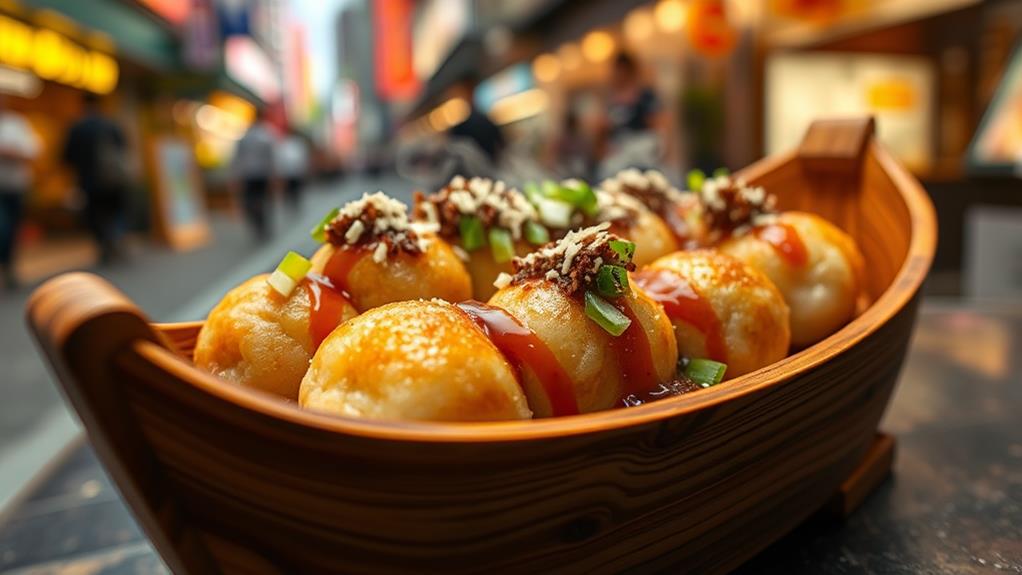
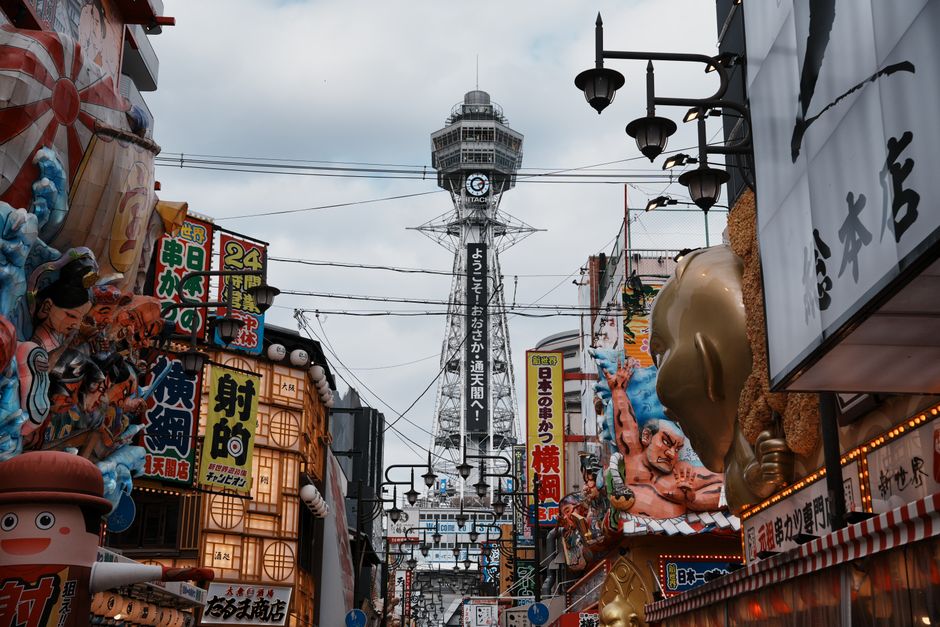
According to the Japan National Tourism Organization, Osaka remains the gateway most international visitors use to explore Kansai — and the city it introduces first through its street-food culture, from takoyaki stalls to the neon canyons of Dotonbori.
There is also a post-Expo bonus. World Expo 2026 wrapped up on Yumeshima island in October 2026, and the infrastructure built for it — including the new Osaka Metro Chuo Line extension to Yumeshima — now serves regular travelers.
How do you get from Kansai International Airport to central Osaka?
Take the Nankai Rapi:t to Namba if you are staying in the south, or the JR Haruka if you are staying near Tennoji or Shin-Osaka. Both leave directly from the KIX terminal.
The blue retro-futurist Rapi:t costs ¥1,490 and takes 38 minutes to Namba. The ordinary Nankai airport express covers the same track in about 45 minutes for ¥970 — the best deal at the airport.
The JR Haruka limited express runs to Tennoji in about 35 minutes and Shin-Osaka in about 50, for roughly ¥2,400 unreserved. It is the right call if you hold a Japan Rail Pass, which covers it fully.
Pro Tip: Skip the Rapi:t ticket-machine queue. Buy the regular Nankai express for ¥970 with an ICOCA or any IC card tap — you lose seven minutes and save ¥520, and off-peak trains usually have seats.
Kansai International Airport handled about 32 million passengers in 2019, its record year, per Kansai Airports — and traffic has been climbing back toward that mark since Japan fully reopened. Translation: arrive at immigration early in the morning or expect 45–90 minute queues.
Which Osaka neighborhood should you stay in?
Stay in Namba or Shinsaibashi if this is your first visit — you can walk to Dotonbori, Kuromon Market, and Amerikamura. Umeda suits travelers planning daily side trips, and Tennoji is the budget pick.
| Area | Best for | Typical double (2026) | Trade-off |
|---|---|---|---|
| Namba / Shinsaibashi | First-timers, food, nightlife | ¥14,000–22,000 | Noisy near Dotonbori |
| Umeda / Osaka Station | Day-trippers, rail connections | ¥16,000–26,000 | Corporate feel after 10pm |
| Tennoji / Shin-Imamiya | Budget, Haruka access | ¥8,000–14,000 | Gritty pockets around Shin-Imamiya |
| Shin-Osaka | Shinkansen-heavy itineraries | ¥11,000–17,000 | Dull at night, 15 min from the action |
Warning: Osaka hotel rates spike 30–60% on Friday and Saturday nights and during Golden Week (late April to early May). Book weekends 6–8 weeks out on Booking.com or Trip.com, and check rates midweek — shifting your Osaka nights to Sunday–Thursday can fund an extra day trip.
Is the Osaka Amazing Pass worth it in 2026?
Only if you visit three or more paid attractions in a single day. The one-day Osaka Amazing Pass costs ¥3,300 as of this writing and bundles unlimited Osaka Metro rides with free entry to 40+ sights.
Run the math before buying. Osaka Castle’s main tower is ¥600, the Umeda Sky Building observatory runs about ¥2,000, Tsutenkaku tower is ¥900, and the Tombori River Cruise is around ¥1,500.
Castle plus Umeda Sky plus the river cruise already tops ¥4,100 before transit — the pass wins. But if your day is markets, shrines, and street food, almost everything is free anyway.
For slow days, the Osaka Metro Enjoy Eco Card is the better buy: ¥820 on weekdays, ¥620 on weekends and holidays, with unlimited metro and city bus rides plus small discounts at about 30 facilities. Single metro rides start at ¥190, so the weekend version pays off by ride four.
Pro Tip: The Amazing Pass does NOT cover JR lines — including the Osaka Loop Line that tourists ride to Osaka Castle Park station. Take the Metro Chuo or Tanimachi lines to the castle instead, or your “free transit day” quietly leaks ¥160–180 per JR hop.
What should you eat in Osaka — and where do locals actually eat it?
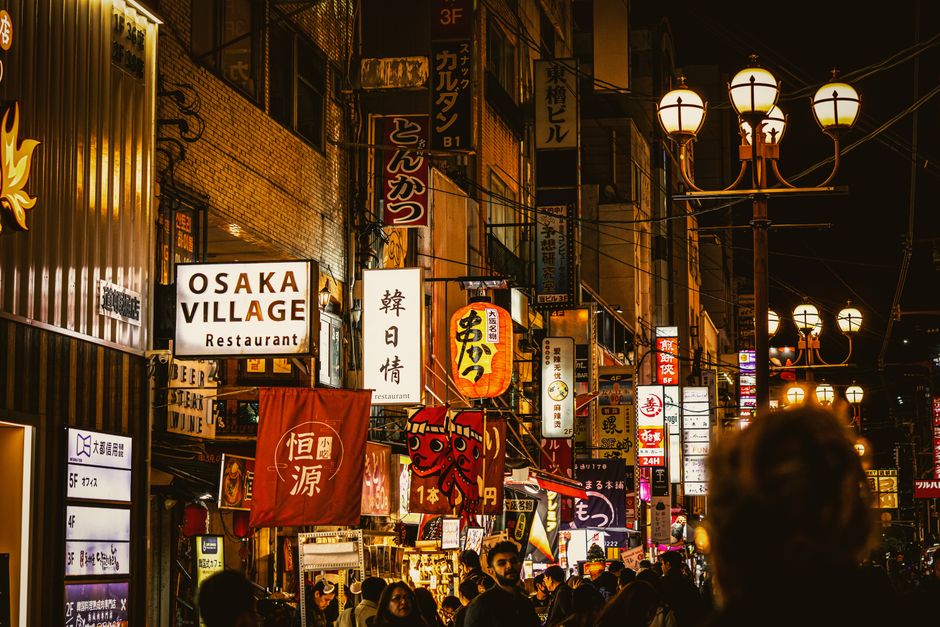
Eat takoyaki, okonomiyaki, kushikatsu, and kitsune udon — but eat most of them outside Dotonbori. The famous strip is fine for one neon-soaked evening; its prices run 20–40% above neighborhood shops.
Tenma, one stop from Umeda on the JR Loop Line, is where office workers drink and eat under the train tracks. Takoyaki that costs ¥750 for eight pieces on Dotonbori sells for ¥450–550 here, and standing bars pour highballs for ¥300–400.
Fukushima, one stop west of Osaka Station, does the same trick with a slightly dressier crowd. For okonomiyaki, queue at a counter spot where the cook works the griddle in front of you — the batter-to-cabbage ratio is the whole game.
Kuromon Ichiba Market is worth a morning walk, with one caveat: it has priced itself for tourists. A5 wagyu skewers at ¥1,500–3,000 are an experience, not a bargain.
Pro Tip: Many Tenma standing bars and small kushikatsu counters remain cash-only in 2026. Carry ¥5,000–10,000 in cash for eating nights; 7-Eleven ATMs accept foreign cards 24/7 when you run dry. And remember the one kushikatsu commandment: no double-dipping in the shared sauce.
Two cheap institutions deserve a spot on any list. 551 Horai’s pork buns (¥420 for two) are the souvenir every returning Osakan carries, and a bowl of kitsune udon — invented in Osaka — still costs under ¥700 at neighborhood noodle shops.
If you want a deeper food itinerary, build one around the Michelin Bib Gourmand list for Osaka — it skews heavily toward sub-¥5,000 meals, which tells you everything about how this city eats.
What are the best things to do in Osaka?
Spend your days split between one big-ticket sight and one neighborhood. Osaka rewards wandering more than checklist sightseeing.
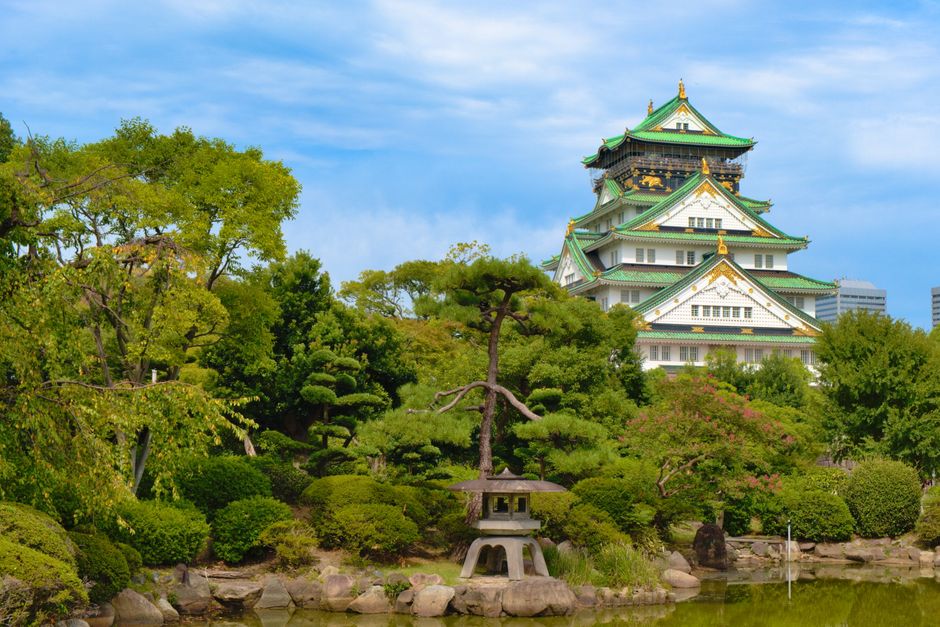
Osaka Castle is the headline: the 1931 reconstruction houses a solid museum, and the surrounding park is free and spectacular during cherry blossom season. Go at opening (9am) to beat tour groups.
The Umeda Sky Building’s open-air Floating Garden Observatory gives the best sunset view of the city — the escalator ride across the void between towers is half the attraction. Shinsekai, beneath the 1912-vintage Tsutenkaku tower, is retro Osaka: kushikatsu joints, pachinko clatter, and zero pretension.
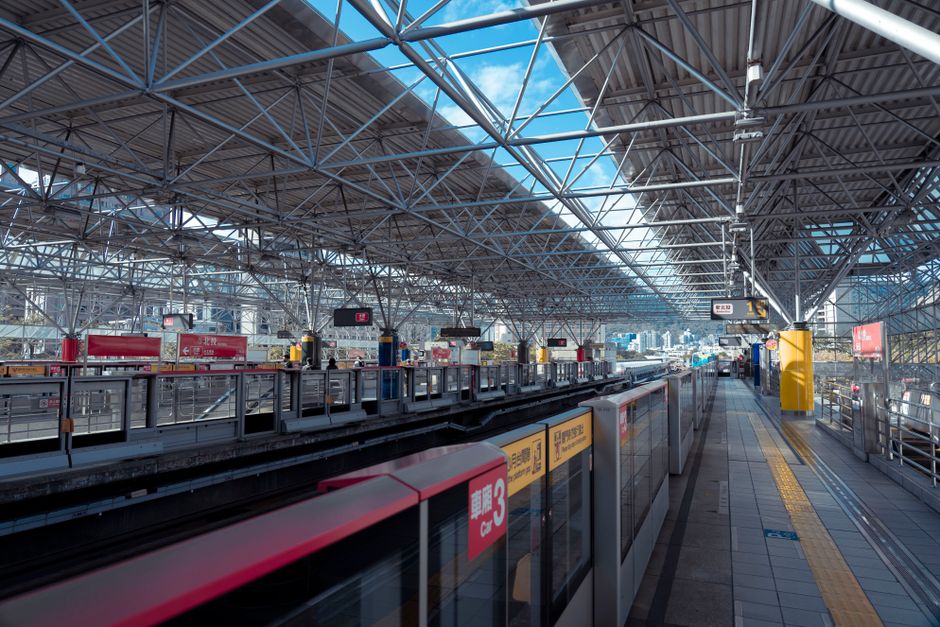
Sumiyoshi Taisha, one of Japan’s oldest Shinto shrines — founded, by tradition, in the year 211 — sits 10 minutes south of Namba by tram and sees a fraction of the crowds at Kyoto’s shrines. Its arched Sorihashi bridge alone justifies the trip.
For rainy days: the Nakanoshima Museum of Art, the National Museum of Art’s underground galleries, and teamLab Botanical Garden Nagai after dark.
Should you plan a day at Universal Studios Japan?
Yes if Super Nintendo World or the Harry Potter area is on your list — but treat USJ as a military operation, not a stroll.
The park drew roughly 16 million visitors in 2023, per the Themed Entertainment Association’s global attendance report. That makes it one of the busiest theme parks on Earth.
One-day Studio Passes use dynamic pricing, roughly ¥8,600–10,900 depending on the date. Buy on the official USJ site or at partner outlets like Klook — never from resellers.
Warning: Super Nintendo World requires a timed-entry ticket on crowded days, issued through the official app from park opening — and they can run out by mid-morning.
If Nintendo is the reason you are going, buy an Express Pass (¥10,000–30,000, sells out weeks ahead for peak dates) or be at the gates 45 minutes before opening.
Getting there is easy: the JR Yumesaki (Sakurajima) Line runs from Nishikujo to Universal City station. From Namba, budget about 30 minutes door to gate.
What day trips work best from Osaka?
Nara, Kyoto, and Kobe are the easy three — all under an hour and all cheap on private railways. Himeji and Hiroshima work as longer Shinkansen days.
| Destination | Best route | Time | One-way fare |
|---|---|---|---|
| Nara | Kintetsu from Osaka-Namba | ~40 min | ¥680 |
| Kyoto | Hankyu from Osaka-Umeda | ~45 min | ¥410 |
| Kyoto (fast) | Shinkansen from Shin-Osaka | ~15 min | ~¥1,450 unreserved |
| Kobe | Hanshin from Osaka-Umeda | ~33 min | ¥330 |
| Himeji Castle | JR Special Rapid from Osaka Station | ~65 min | ~¥1,520 |
| Hiroshima | Sanyo Shinkansen from Shin-Osaka | ~85 min | ~¥10,000 |
Note what the table implies about the Japan Rail Pass. Kansai’s cheap private railways — Kintetsu, Hankyu, Hanshin, Nankai — are not covered by it, and they beat JR on price for every short hop.
If your whole trip is Osaka plus Kansai day trips, skip the national pass and pay as you go with an ICOCA card. The pass only earns its cost with long-distance Shinkansen legs like Tokyo–Osaka–Hiroshima.
How many days do you need in Osaka?
Two full days cover Osaka itself; four days make it a Kansai base. The city’s sights are compact — its food and nightlife are what stretch a stay.
A working four-day plan: Day 1, Namba, Kuromon Market, Amerikamura, and Dotonbori after dark. Day 2, Osaka Castle at opening, Nakanoshima, then sunset at Umeda Sky Building and dinner in Tenma.
Day 3, Nara in the morning (deer, Todai-ji’s Great Buddha) and Shinsekai kushikatsu at night. Day 4, USJ — or Kyoto if theme parks are not your thing.
How much does Osaka cost per day in 2026?
A realistic mid-range budget is about ¥15,000 (~US$100) per person per day, excluding flights. Osaka consistently undercuts Tokyo on hotels and meals — cost-of-living trackers like Numbeo regularly score the city’s everyday prices noticeably below Tokyo’s. [unverified]
Backpackers can run ¥7,000–9,000 on hostel dorms (¥3,000–4,500), konbini breakfasts, street food, and the ¥620 weekend metro pass. Comfort travelers should plan ¥25,000–35,000 with a 4-star hotel and one splurge meal.
Street food keeps the floor low: takoyaki at ¥500, a standing-bar beer at ¥350, kitsune udon at ¥650. You can eat memorably here for ¥3,000 a day — something I would never claim about Tokyo.
When is the best time to visit Osaka?
Late March to early April for cherry blossoms, or October to November for clear skies and autumn color. Both shoulder seasons bring mild 15–22°C days.
For sakura, locals favor Kema Sakuranomiya Park’s riverside promenade of nearly 5,000 trees and the Osaka Castle Park moats. Expect peak bloom around the very end of March in a typical year — the Japan Meteorological Corporation publishes forecasts from January.
Summer is a sweatbox — 33–36°C with heavy humidity — but late July compensates with Tenjin Matsuri (July 24–25), one of Japan’s three great festivals, ending in fireworks and a 100-boat river procession. Winter is mild (rarely below 2°C) and brings illumination season along the Midosuji boulevard.
Avoid Golden Week (April 29–May 5) and Obon (mid-August) unless you enjoy paying double for hotels and queuing with all of Japan.
How do you pay for things in Osaka in 2026?
Get an ICOCA card — Kansai’s IC card — and tap it on every train, metro, bus, and konbini till. Suica and Pasmo from Tokyo work identically here; there is no need to buy a second card.
Credit card acceptance is strong in hotels, department stores, and chains, and Osaka Metro has rolled out contactless credit-card tap-to-ride at gates on its lines. Small izakaya, market stalls, and old-school noodle shops still want cash.
Mobile wallets like Alipay and WeChat Pay are widely accepted in tourist-facing shops. For cash, 7-Eleven and Japan Post ATMs take foreign cards with fair rates — airport exchange counters do not.
Key Takeaway
Base yourself in Namba, land on the ¥970 Nankai express, and run transit on an ICOCA plus the ¥820/¥620 Enjoy Eco Card. Save the ¥3,300 Amazing Pass for one deliberate three-attraction day.
Eat one night on Dotonbori for the spectacle, then defect to Tenma and Fukushima where the same dishes cost 30% less. For day trips, private railways (¥410 Hankyu to Kyoto, ¥680 Kintetsu to Nara) beat a Japan Rail Pass.
Frequently Asked Questions
Is Osaka cheaper than Tokyo?
Yes, noticeably. Comparable hotels and restaurant meals generally cost meaningfully less than their Tokyo equivalents. Cost trackers like Numbeo regularly place Osaka’s everyday prices below Tokyo’s, and hotel rates show the widest gap.
Is Dotonbori a tourist trap?
Partly. The spectacle — the Glico runner sign, the giant mechanical crab — is free and worth one evening. The restaurants under the signs charge a premium; eat your repeat meals in Tenma, Fukushima, or Shinsekai instead.
Do people speak English in Osaka?
Enough to get by in hotels, stations, and tourist areas, and signage is bilingual on all transit. At small eateries, pointing at the plastic food models or a phone translation app does the job — Osakans are famously patient with both.
Is Osaka safe at night?
Yes — violent crime is rare and solo walking at midnight is normal, including for women. Use standard city sense around Shin-Imamiya and the hostess-bar blocks of Kita-Shinchi, where touts can be pushy.
Can I use a Suica card from Tokyo in Osaka?
Yes. Japan’s ten major IC cards are fully interoperable, so a Suica or Pasmo taps onto the Osaka Metro, JR West, Hankyu, Hanshin, Kintetsu, and Nankai without any setup.
Does the Japan Rail Pass cover the Osaka Metro?
No. The pass covers JR lines only — in Osaka that means the Loop Line, the Yumesaki Line to USJ, and Shinkansen from Shin-Osaka. The metro, plus the Hankyu, Hanshin, Kintetsu, and Nankai railways, all charge separately.
Is two days enough for Osaka?
Two full days cover the castle, Dotonbori, Shinsekai, Umeda, and a market morning comfortably. Add one day per side trip — Nara, Kyoto, or Kobe — and a full day if USJ is on the list.
Was anything left behind by Expo 2026 worth seeing?
The Yumeshima waterfront district, now reachable on the extended Osaka Metro Chuo Line, is being redeveloped after the Expo closed in October 2026. Check what is open before trekking out — the island is a 25–30 minute ride from central Osaka.
Last updated: 2026-06-04. Fares, pass prices, and opening hours change — confirm on official operator sites before you travel. Planning a longer route? See our Japan travel hub for itineraries that pair Osaka with Tokyo, Hiroshima, and beyond.
More on Japan Destinations:

Written by East Asia Explorer Editorial Team
Sam Konneh is an AI strategist and digital marketer based in Seoul, South Korea. With years spent living, working, and exploring across Korea, Japan, and China, he shares firsthand insights into East Asia's cultures, hidden gems, and everyday life. A graduate of Inha University and KDI Graduate School, Sam combines data-driven expertise with on-the-ground experience. His journey also includes studying in Malaysia and traveling through Southeast Asia. Through practical tips, local stories, and travel guides, he helps fellow explorers discover both the celebrated highlights and the lesser-known corners of East Asia.