Last Updated: September 12, 2026 | Originally Published: July 16, 2026
Quick Answer
- The fastest way from Tokyo is the Odakyu Romancecar from Shinjuku to Hakone-Yumoto, about 80 minutes (as of 2026).
- The Hakone Free Pass from Shinjuku costs about ¥7,100 for 2 days and ¥7,500 for 3 days (as of 2026 — verify before travel).
- The Free Pass does not include the Romancecar limited-express surcharge — you pay that on top.
- Do the loop counter-clockwise: train to Gora, cable car, ropeway, pirate ship, then bus back.
Hakone is the easiest mountain escape from Tokyo, and also the easiest place to overpay or run out of daylight.
I went in thinking I’d “just take a train.” I came out with a much clearer rule about which ticket to buy and which direction to ride.
This guide is the logistics most blog posts skip: real times, real 2026 prices, and the one surcharge that trips everyone up.
How do you get to Hakone from Tokyo?
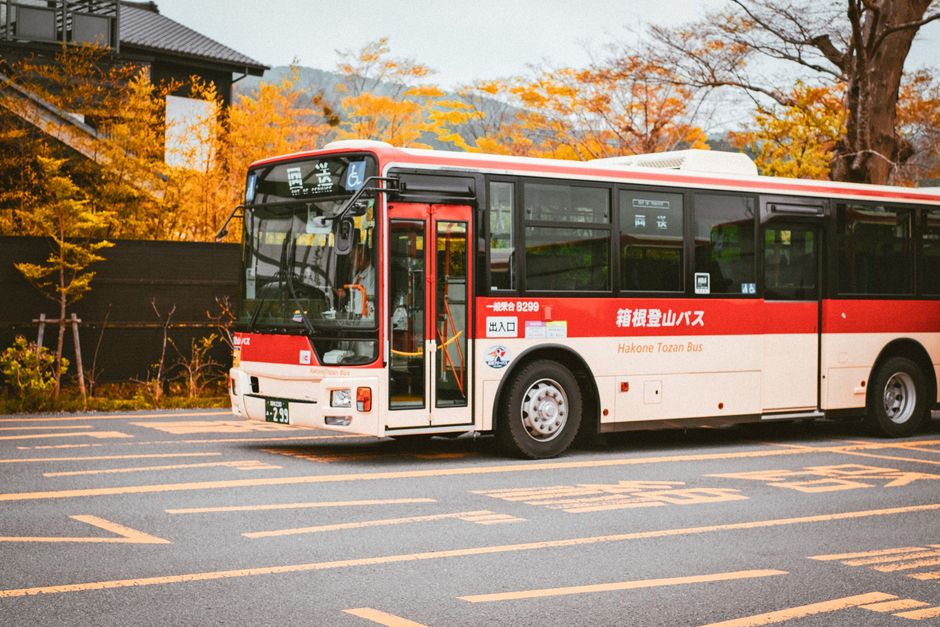
You start at Shinjuku Station, not Tokyo Station, for the most direct route.
The Odakyu Line runs straight to Hakone-Yumoto, the gateway town at the foot of the mountain.
You have two main choices on that line: the reserved-seat Romancecar, or the regular express that anyone can board.
Romancecar vs the regular express
The Romancecar is a limited-express train with assigned seats and big forward-facing windows.
It reaches Hakone-Yumoto in roughly 80 minutes and needs a surcharge on top of the base fare.
The regular express is slower and usually involves a transfer at Odawara, but it costs less and the Free Pass already covers it.
| Route from Shinjuku | Time | Extra cost | Best for |
|---|---|---|---|
| Romancecar (limited express) | ~80 min, direct | Surcharge on top of fare/pass | Comfort, views, no transfer |
| Regular express + transfer | ~95–110 min | None beyond fare/pass | Saving money, flexible timing |
Times and fares as of 2026. Confirm current schedules on the official Odakyu site before you travel.
JR Pass holders, take note: the JR Pass does not cover the Odakyu Line.
You can reach Odawara by JR, then ride the short Hakone Tozan stretch into Yumoto, but the smooth one-seat ride from Shinjuku is an Odakyu product.
Is the Hakone Free Pass worth it?
For most visitors doing the full loop, yes — the Free Pass pays for itself in a single day.
It bundles the round trip from Shinjuku plus unlimited rides on the trains, cable car, ropeway, pirate ship, and most buses inside Hakone.
Buying each leg separately adds up fast once you ride four or five different vehicles.
| Hakone Free Pass (2026) | 2-day | 3-day |
|---|---|---|
| From Shinjuku (round trip included) | ~¥7,100 | ~¥7,500 |
| Hakone area only (no Tokyo leg) | ~¥6,000 | ~¥6,400 |
Prices as of 2026 and subject to revision — confirm on the Odakyu or Hakone Navi site before buying.
Warning: The Free Pass does not include the Romancecar surcharge. If you want that train, you buy a separate limited-express ticket on top of the pass. Plenty of travelers board it assuming the pass covers everything, then get asked for the surcharge onboard.
Pro Tip: If you are only doing a half-day visit to one spot like the Open-Air Museum, skip the Free Pass and pay per leg. The pass wins when you ride the full loop; it loses when you only ride two segments.
What is the Hakone Loop, and which direction should you ride it?
The Hakone Loop is a circular sightseeing route that strings together six different types of transport around the mountain and Lake Ashi.
You ride a mountain train, a cable car, a ropeway, a boat, and a bus, all on one ticket.
Ride it counter-clockwise. It flows better and you finish near the lake instead of stranded at a bus stop.
The order that actually works
Here is the sequence I’d follow from Hakone-Yumoto, going counter-clockwise.
- Hakone Tozan Railway — a switchback mountain train from Hakone-Yumoto up to Gora, climbing more than 300 meters through forest.
- Cable car (funicular) — the short steep climb from Gora to Sounzan.
- Hakone Ropeway — about 4 km of gondola over the Owakudani valley toward Togendai.
- Owakudani — get off mid-ropeway to see the sulfur vents and grab a black egg.
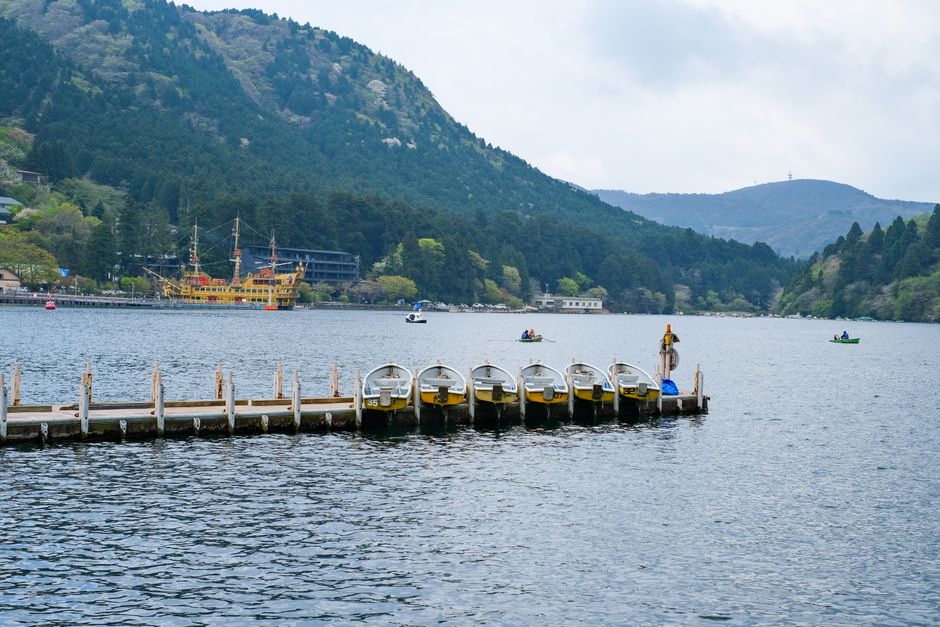
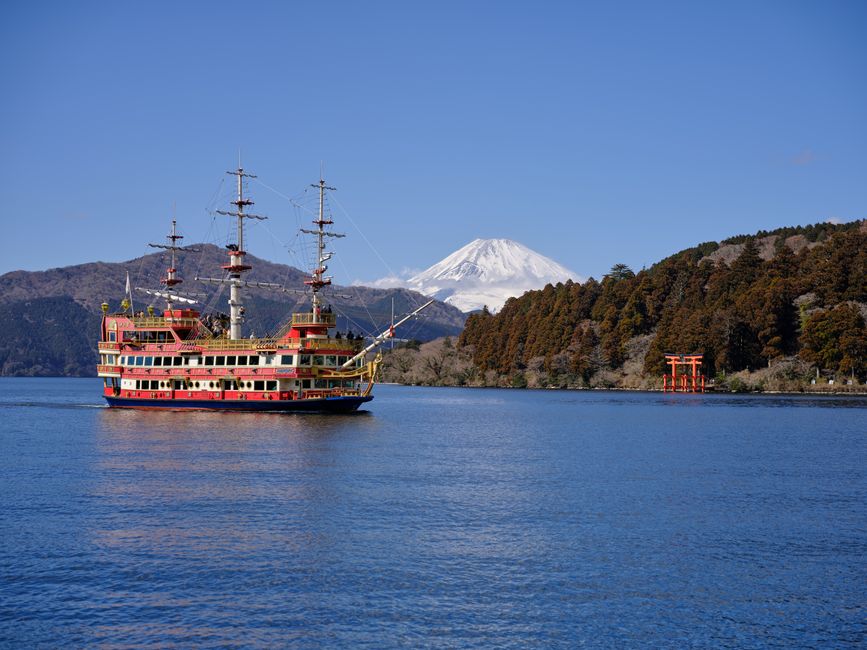
- Pirate ship cruise — across Lake Ashi from Togendai to Moto-Hakone or Hakone-machi.
- Bus — back down to Hakone-Yumoto to close the loop.
Done without long stops, the moving parts take a few hours; with photo breaks and lunch, it fills a full day.
Key Takeaway: Counter-clockwise from Hakone-Yumoto — train, cable car, ropeway, boat, bus — is the standard loop. Start before 10 a.m. so you’re not racing the last ropeway and boat departures.
One day or two days in Hakone?
One day is enough to ride the whole loop and see the headline sights.
Two days is better if you want an onsen ryokan, the Hakone Open-Air Museum, and a slower pace without watching the clock.
If you’re staying overnight, the 2-day Free Pass and a Romancecar seat for the trip out is the combination I’d pick.
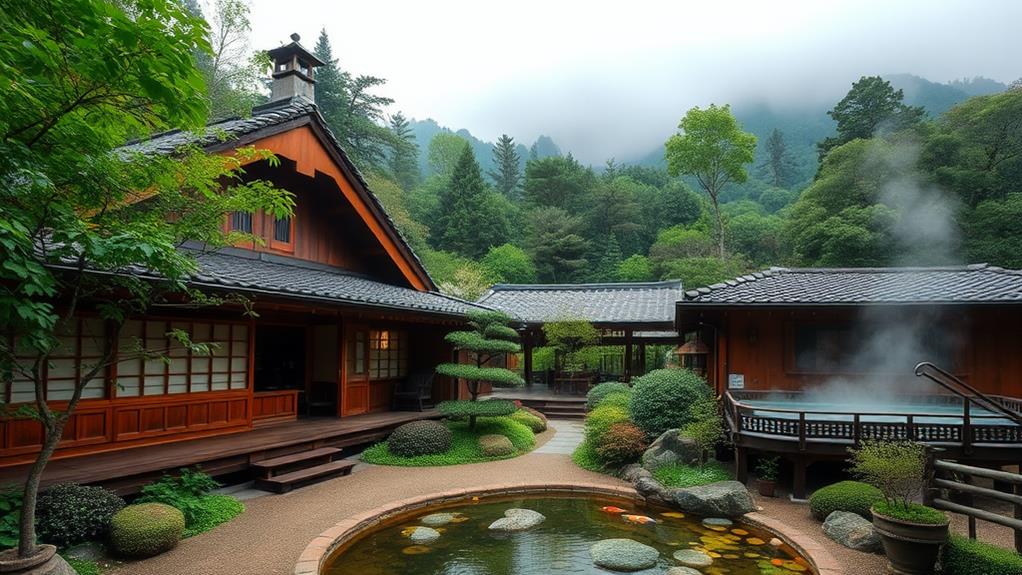
Pro Tip: Book your onsen ryokan with a private bath if you have tattoos. Many public onsen still refuse tattooed guests, and a private in-room bath sidesteps the issue entirely.
Where should you stay if you go for two days?
Base yourself by the water or near the train, depending on what you want.
Hakone-Yumoto is the most convenient. It’s the transport hub, full of ryokan and day-bath onsen, and easy for a late arrival or early exit.
Gora sits higher up the mountain, quieter, and close to the museums and the cable car.
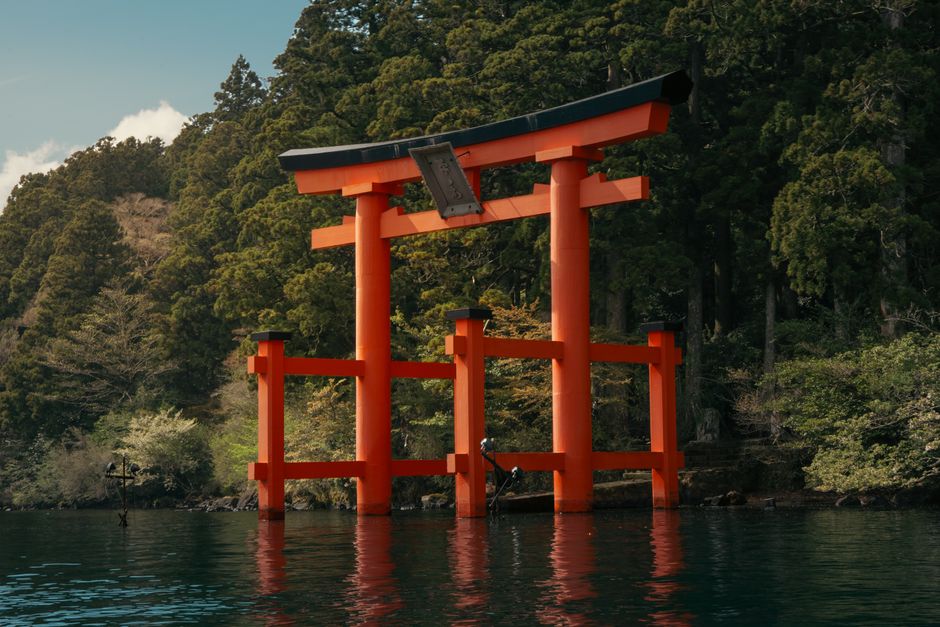
Moto-Hakone and Lake Ashi give you the postcard views and the torii gate, but you’re further from the train when it’s time to leave.
For a first visit, I’d stay in Hakone-Yumoto or Gora and save the lake for daytime.
What does a sample one-day Hakone timeline look like?
Here is the schedule I’d aim for on a single-day visit, starting from Shinjuku.
The goal is to hit the ropeway and the last boat with margin, not a sprint.
| Time | Step |
|---|---|
| 8:00 a.m. | Depart Shinjuku on the Romancecar |
| 9:20 a.m. | Arrive Hakone-Yumoto, switch to Tozan train |
| 10:30 a.m. | Open-Air Museum stop (optional, ~2 hrs) |
| 1:00 p.m. | Cable car + ropeway to Owakudani |
| 2:30 p.m. | Pirate ship across Lake Ashi |
| 4:00 p.m. | Moto-Hakone: shrine torii gate, then bus down |
| 6:30 p.m. | Back at Hakone-Yumoto, train to Tokyo |
Indicative timings as of 2026. Skip the museum if you want a relaxed loop with no rushing.
What should you actually stop for?
The loop is the attraction, but a few stops earn the pause.
The Hakone Open-Air Museum sits right on the Tozan line and mixes sculpture with mountain views. It’s the most-loved stop on the route for a reason.
At Owakudani, the black eggs are the gimmick worth doing once. Local lore says each one adds years to your life.
At Moto-Hakone, the red torii gate of Hakone Shrine stands in the lake. Expect a line for the photo; it moves slowly on weekends.
Pro Tip: If Mount Fuji is your priority, check a webcam or the morning forecast before you leave Tokyo. The clearest views are usually early morning in autumn and winter, when the air is dry and the cloud sits lower.
What does a day in Hakone cost?
Budget roughly the pass plus a Romancecar seat plus food and a stop or two.
With the 2-day Free Pass from Shinjuku at about ¥7,100 and a Romancecar surcharge each way, transport lands in the ¥9,000–¥12,000 range per person (as of 2026).
Add the Open-Air Museum entry, lunch by the lake, and a few black eggs, and a comfortable day sits near ¥14,000–¥16,000 before any souvenirs.
Going pass-free and per-leg only makes sense for a quick half-day to one site — otherwise the loop fares overtake the pass quickly.
What most guides get wrong about Hakone
Three things surprised me, and they rarely make the highlight reels.
First, the weather. Owakudani and Lake Ashi are often socked in with cloud, and the famous Mount Fuji view is a coin flip, not a guarantee.
Second, the crowds. Weekends and Japanese holidays turn the ropeway and pirate ship into long queues — go on a weekday if you can.
Third, the maintenance closures. The ropeway runs scheduled shutdowns, and replacement buses cover the gap on a slower timetable.
Warning: In early 2026 the ropeway scheduled maintenance closures: roughly Sounzan–Owakudani from 13–30 January, and Owakudani–Togendai from 31 January–20 February, with replacement buses running. Always check the official ropeway status page for your dates before you commit to a loop direction.
One more honest note: Hakone is not a hidden gem. It’s one of the most popular escapes from Tokyo, so you’re sharing it with a lot of people.
That’s fine if you set expectations. Go for the variety of transport, the onsen, and the lake, not for solitude.
“The single most common mistake travelers make is assuming the Hakone Free Pass covers the Romancecar. It doesn’t — that limited-express seat is always a separate ticket.” — guidance echoed across Odakyu’s official Hakone travel pages.
So, is Hakone worth the trip from Tokyo?
For most travelers, yes — especially over two days with an onsen night.
You get mountain scenery, a soak, a lake, and that string of quirky transport, all within two hours of the city.
Buy the right pass, ride counter-clockwise, start early, and check the ropeway status, and Hakone is one of the smoothest day or overnight trips in Japan.
Frequently asked questions
Does the JR Pass cover Hakone?
No, not the core loop. The JR Pass gets you to Odawara, but the Odakyu Line, Tozan train, ropeway, cable car, and pirate ship are private operators outside the JR network.
Can you do Hakone as a day trip from Tokyo?
Yes. With an early start from Shinjuku you can ride the full loop and return the same evening. It’s a long but doable day.
How much does the Romancecar surcharge cost?
As of 2026 the limited-express surcharge from Shinjuku to Hakone-Yumoto is in the low thousands of yen, with digital tickets slightly cheaper than paper. Confirm the exact figure on the Odakyu site, since fares were revised recently.
Do you need to reserve Romancecar seats?
Yes. The Romancecar is all-reserved, so you book a specific train and seat in advance. On weekends and holidays the morning departures sell out, so reserve online a day or two ahead.
Should you ride the loop clockwise or counter-clockwise?
Counter-clockwise is the smoother default — train up first, boat and bus on the way down. Reverse it only if a maintenance closure forces replacement buses on one side.
What is the cheapest way to visit Hakone from Tokyo?
Take the regular Odakyu express instead of the Romancecar, and buy the Hakone Free Pass only if you plan to ride the full loop. For a single sight, pay per leg and skip the pass entirely.
Last updated: May 2026. Prices and schedules change — verify current fares and ropeway status on official operator sites before traveling. Official references: Odakyu Hakone Free Pass, Hakone Navi (official tourism), and Japan-Guide: Hakone Loop.
More on Japan Destinations:
Planning a trip to Japan?
Check out our Japan Travel Hub for more guides, including JR Pass Guide 2026.

Written by East Asia Explorer Editorial Team
Sam Konneh is an AI strategist and digital marketer based in Seoul, South Korea. With years spent living, working, and exploring across Korea, Japan, and China, he shares firsthand insights into East Asia's cultures, hidden gems, and everyday life. A graduate of Inha University and KDI Graduate School, Sam combines data-driven expertise with on-the-ground experience. His journey also includes studying in Malaysia and traveling through Southeast Asia. Through practical tips, local stories, and travel guides, he helps fellow explorers discover both the celebrated highlights and the lesser-known corners of East Asia.