Last Updated: July 13, 2026 | Originally Published: November 12, 2023
- Best budget experience: Heming Tea House in Chengdu’s People’s Park — ¥20–30 per person, bamboo chairs, all-day refills, and no tourist pressure
- Best for learning Gongfu: Longjing Village workshops in Hangzhou — ¥80–150 for a 90-minute session with fresh-harvest Dragon Well tea
- Best tea shopping: Beijing‘s Maliandao Street (马连道) — 1,000+ vendors, Wuyutai Tea House (est. 1887) is the anchor, Line 7 to Caishikou
- Tourist trap warning: West Lake waterfront tea houses in Hangzhou charge ¥150–200 per person before you’ve ordered; walk two blocks inland and pay half
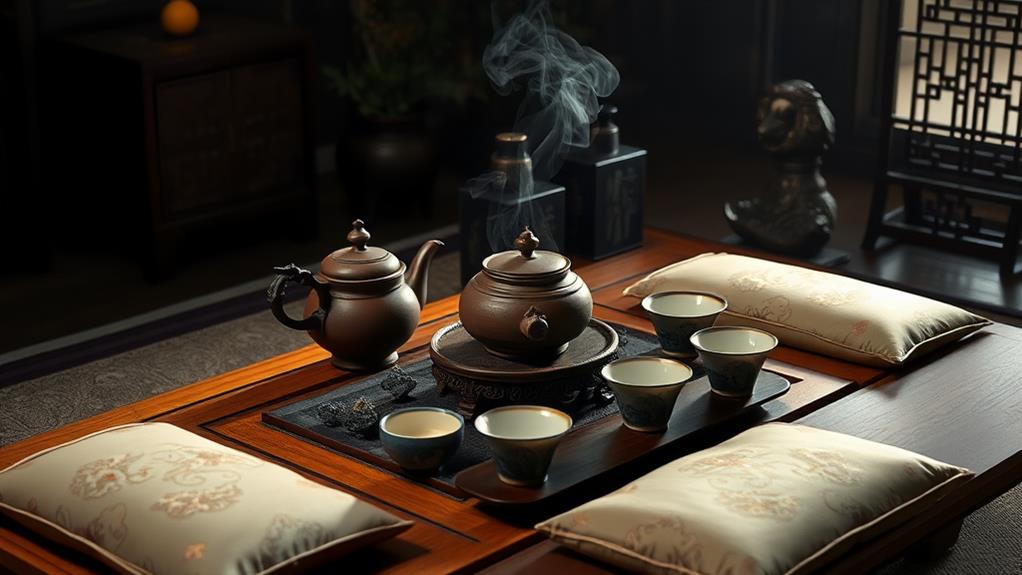
The first tea ceremony I attended in China felt nothing like I expected. A woman in a People’s Park in Chengdu poured Biluochun into a thumb-sized cup, gestured for me to smell it before drinking, and charged me ¥25 for two hours of refills. No performance, no scripted ritual — just a bamboo chair, a clay pot, and the sound of mahjong tiles in the background.
That experience is hard to find if you rely on tourist itineraries. This guide gives you the specific venues, exact prices, transit routes, and red flags that separate authentic Chinese tea ceremonies from the overpriced tourist versions.
Last updated: June 2026
Where Can You Experience an Authentic Chinese Tea Ceremony in 2026?
The three best cities for tea ceremony experiences — Chengdu, Hangzhou, and Beijing — each offer a completely different style.
Chengdu’s tea culture is the most relaxed and cheapest to access. Hangzhou is the epicenter of green tea cultivation, where you can visit working tea farms. Beijing gives you access to China’s largest dedicated tea market, Maliandao Street, and historic teahouse brands dating to the Qing Dynasty.
Per the China National Tourism Administration, China produces approximately 3.28 million metric tons of tea annually, and Zhejiang Province (Hangzhou) leads in green tea output. That agricultural base means visitors in Hangzhou can attend ceremonies where the tea leaves were picked within the past week.
Origins: How the Tang Dynasty Turned Tea-Drinking Into a Social Art
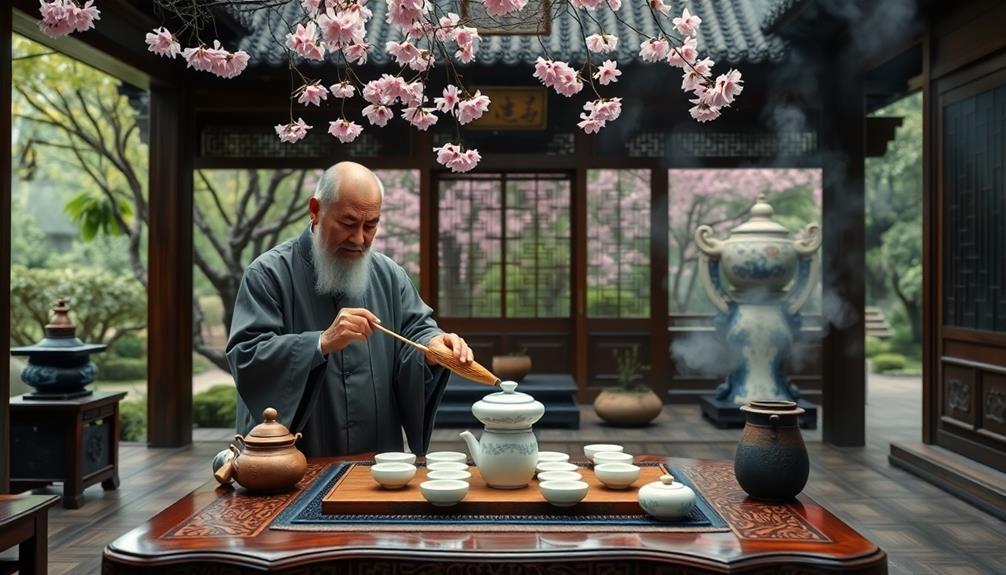
Tea ceremonies in China trace to the Tang Dynasty (618–907 CE), but the formalization comes from one book: Chajing (茶经), the “Classic of Tea,” written by scholar Lu Yu around 760 CE.
Lu Yu documented 28 items of tea equipment, graded water quality by source (mountain spring highest, river water acceptable, well water lowest), and described exactly how to grind, brew, and serve compressed tea cakes. His system wasn’t just about taste — it was about social rank and the communication of respect through precision.
By the Song Dynasty (960–1279 CE), the practice evolved again with Diancha — whisking powdered tea into a froth, similar to Japanese matcha today. This version was later adopted and refined by Japanese Buddhist monks, which is why Japanese and Chinese tea ceremony traditions share some visual similarities despite diverging for a thousand years.
The Gongfu style that most visitors experience today — multiple short infusions from the same leaves, using small clay teapots — became dominant during the Ming Dynasty (1368–1644 CE), when loose-leaf tea replaced compressed cakes as the standard format.
The Gongfu Tea Ceremony: Wuyi Mountain Oolong and the Fujian Tradition
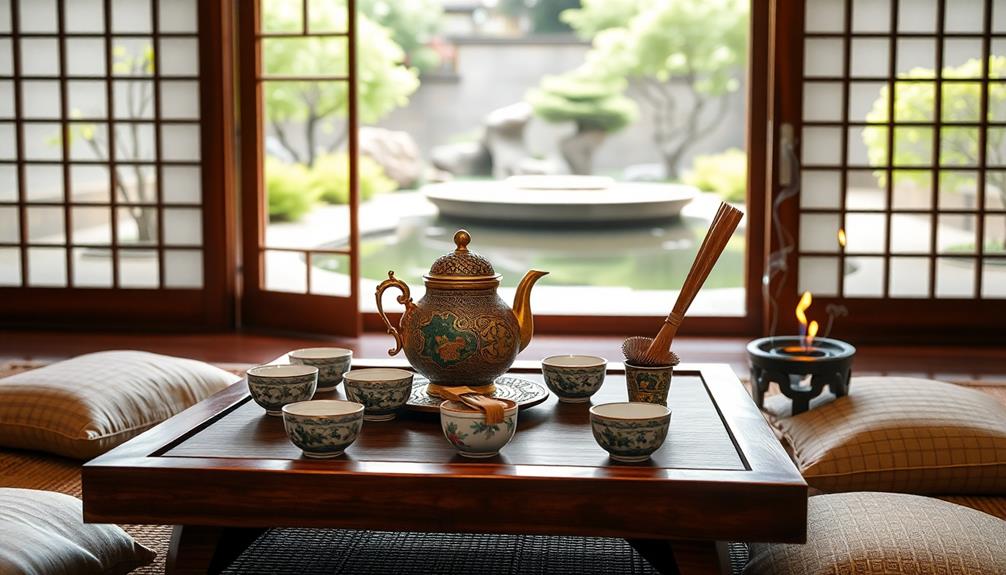
The Gongfu ceremony (功夫茶 — literally “tea with effort”) is the most widely practiced formal ceremony in southern China, and the one most likely offered at tea houses across the country.
The key variables that separate a good Gongfu session from a mediocre one are the tea leaves and the teapot. Authentic Gongfu uses Wuyi Rock Oolong from Fujian Province — particularly Da Hong Pao (大红袍), a partially oxidized oolong grown in Wuyi Mountain’s red-clay soil at elevations above 600 meters.
| Tea Type | Origin | Water Temp | Infusions |
|---|---|---|---|
| Da Hong Pao Oolong | Wuyi Mountain, Fujian | 95°C | 5–7 infusions |
| Longjing Green | Hangzhou, Zhejiang | 75–80°C | 2–3 infusions |
| Tieguanyin Oolong | Anxi County, Fujian | 90–95°C | 5–8 infusions |
| Yunnan Pu-erh | Yunnan Province | 99–100°C | 8–12 infusions |
| Biluochun Green | Jiangsu Province | 70–75°C | 2–3 infusions |
The Gongfu ritual involves 5–7 short steeps from the same leaves, with each steep lasting 15–30 seconds. The first rinse (洗茶) is discarded — it opens the leaves and removes any dust, not a quality concern but a traditional courtesy signal to guests.
Chengdu’s People’s Park: The Most Accessible Tea Ceremony in China
Chengdu’s People’s Park (人民公园) contains what may be the most democratically authentic tea experience in China. Heming Tea House (鹤鸣茶社), operating since the 1920s, fills the park with bamboo chairs and low tables every morning from 8am.
Cost: ¥20–30 per person, which includes the seat, a clay teapot, and unlimited hot water refills throughout the day. You choose the tea leaves when you arrive. Green and oolong options are ¥20–40 extra for premium grades.
Transit: Take Chengdu Metro Line 2 to Tianfu Square, then transfer to Line 4 toward Zhongshan Park station. The park entrance is a 3-minute walk from Exit B.
What you’re likely to find: older Chengdu residents playing mahjong, men getting ear-cleaning services at adjacent stalls, and locals working through newspapers over multiple cups. Tourists are present but don’t dominate the space. Staff circulate with thermoses and top up your water when you knock the lid sideways on the teapot — the accepted signal.
Hangzhou’s Longjing Village and West Lake Tea Culture
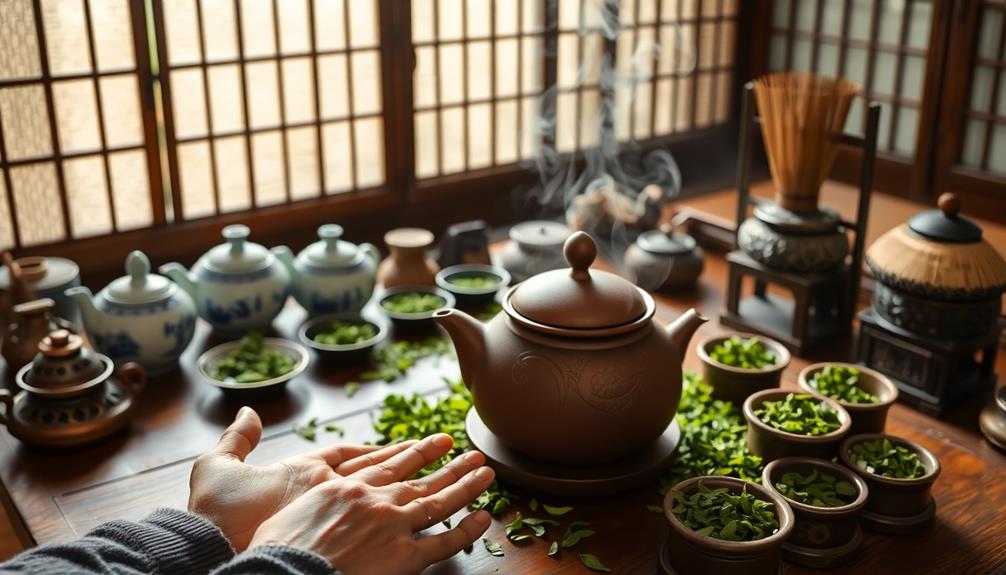
Hangzhou produces Longjing (龙井, Dragon Well) tea — China’s most celebrated green tea — in villages less than 10 kilometers from West Lake. The top-grade Longjing comes from a specific microclimate zone: Lion Peak (狮峰), Longjing Village, Wujiashan, and Meijiawu.
Meijiawu Tea Village (梅家坞) is the easiest to visit independently. The village contains approximately 200 tea-farming families, many of whom offer walk-in ceremony sessions from their home-based tea rooms. A standard session — 90 minutes, instruction on pan-firing (the process that gives Longjing its flat shape), tasting four grades of the same tea, and 50 grams of mid-grade leaves to take away — runs ¥80–150 depending on whether you’re buying additional tea.
Transit from Hangzhou city center: Bus 103 from the Hubin Road stop near West Lake runs directly to Meijiawu (approximately 40 minutes, ¥2).
West Lake itself is surrounded by tea houses, and that’s where the tourist trap problem concentrates. Waterfront tea houses — identifiable by hanging red lanterns, bilingual laminated menus, and staff who speak English before Chinese — charge ¥120–200 per person as a minimum spend before you’ve ordered a single cup. The tea is invariably mid-grade. Walk two blocks inland toward Nanshan Road or Beishan Street and that minimum drops to ¥40–60.
Beijing’s Maliandao Tea Street: China’s Largest Tea Market
Maliandao Tea Street (马连道茶叶街) in Beijing’s Xuanwu District contains over 1,000 tea vendors concentrated in a 200-meter commercial strip. This is not a tourist attraction — it’s a wholesale and retail market where tea shops, tea equipment vendors, and packaging suppliers operate side by side.
The anchor store is Wuyutai Tea House (吴裕泰, est. 1887), one of China’s oldest surviving tea brands. Their Maliandao branch is larger than the flagship and stocks over 200 varieties from every tea-producing province.
Transit: Beijing Metro Line 7, Caishikou station, Exit A. The market begins approximately 500 meters west of the station.
What to buy: Compressed pu-erh cakes from Yunnan are the best Maliandao purchase — they range from ¥30 (young raw sheng) to ¥300+ for aged shou from recognized Yunnan estates. Avoid anything claiming to be aged 20+ years unless you’re willing to verify provenance; faked aging is common across the market.
Types of Chinese Tea Ceremonies: From Wu-Wo to Tibetan Butter Tea
Beyond Gongfu, four other ceremony types are worth knowing before you visit.
The Wu-Wo (無我) ceremony originated in Taiwan and is meditative rather than social. Each participant brews their own tea, pours for the person beside them (not themselves), and receives tea from the person to their other side. The point is to dissolve ego — hence “without self.” This ceremony is practiced at specific tea festivals and meditation centers, not at commercial tea houses.
The Perennial ceremony (or wedding tea ceremony) appears at formal family occasions: weddings, Spring Festival gatherings, and filial observances. Younger family members serve tea to elders while kneeling, and the elders respond with red envelopes (hongbao). This is a private ceremony; you’d only attend if invited by a Chinese family, not at a tourist venue.
The Tibetan butter tea ceremony is found at dedicated Tibetan tea houses in Chengdu’s Tibetan Quarter or in Lhasa. The drink itself — Pu-erh combined with yak butter and salt — tastes nothing like any other tea preparation and is deeply acquired. The Chengdu Tibetan Quarter on Wangpan Road has several family-run tea houses where ¥30–40 covers a full butter tea experience.
According to the China National Tourism Administration, tea ceremony tourism (茶旅游) grew 23% year-on-year in 2026, with Hangzhou, Wuyi Mountain, and Yunnan’s Xishuangbanna receiving the highest visitor volumes for tea-focused travel.
Essential Utensils: Yixing Clay, Gaiwan, and the Cha Hai
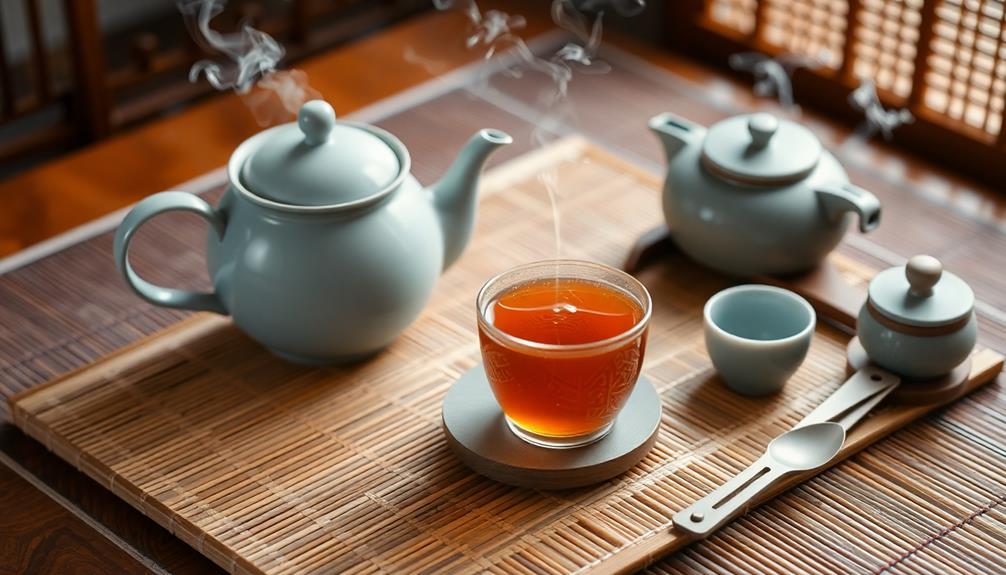
According to local government tourism boards, you don’t need to own Gongfu equipment to appreciate it, but knowing the names helps you understand what you’re watching.
- Yixing Clay Teapot (紫砂壶): The gold standard for oolong and pu-erh. Porous zisha clay absorbs oils with each brew. A genuine undecorated pot from Yixing City, Jiangsu starts at ¥200; master-crafted signed pieces run ¥2,000–20,000.
- Gaiwan (盖碗): A lidded bowl used for brewing and drinking directly. More forgiving than a teapot (it doesn’t absorb flavors) and standard for green and white teas. A good porcelain gaiwan runs ¥30–100.
- Cha Hai / Gongdao Bei (公道杯): The fairness pitcher — brewed tea pours from the teapot into this vessel first, which ensures every cup poured gets identical strength. Without it, the first cup is always weak and the last is always bitter.
- Wenxiang Bei (闻香杯): The “smelling cup” — tall and narrow, designed for inhaling the tea’s aroma rather than drinking. You pour the tea into the drinking cup, then hold the now-empty wenxiang bei under your nose. Used primarily for high-aroma oolongs like Tieguanyin.
How to Avoid Tourist Trap Tea Ceremonies in China
The most common tourist trap in Chinese tea tourism involves a setup, not a scam outright. You’re approached near a major attraction (Temple of Heaven in Beijing, West Lake in Hangzhou, The Bund in Shanghai) by friendly English-speaking locals who invite you to a “traditional tea ceremony” at a nearby tea house.
The ceremony itself is real — Gongfu preparation, multiple infusions, knowledgeable host. The bill at the end is not: ¥500–2,000 per person for what was presented as a cultural exchange. The tea house is legitimate; the pricing is not disclosed in advance.
Signs of an authentic, fairly-priced tea house:
- Price list visible at entrance (by tea variety, by gram weight)
- Menu written in Chinese first, English second — or Chinese only
- Staff do not approach you on the street
- Locals are actually sitting and drinking, not just employees and tourists
- Minimum spend disclosed before you sit, not after
Step-by-Step: How a Gongfu Tea Ceremony Actually Works
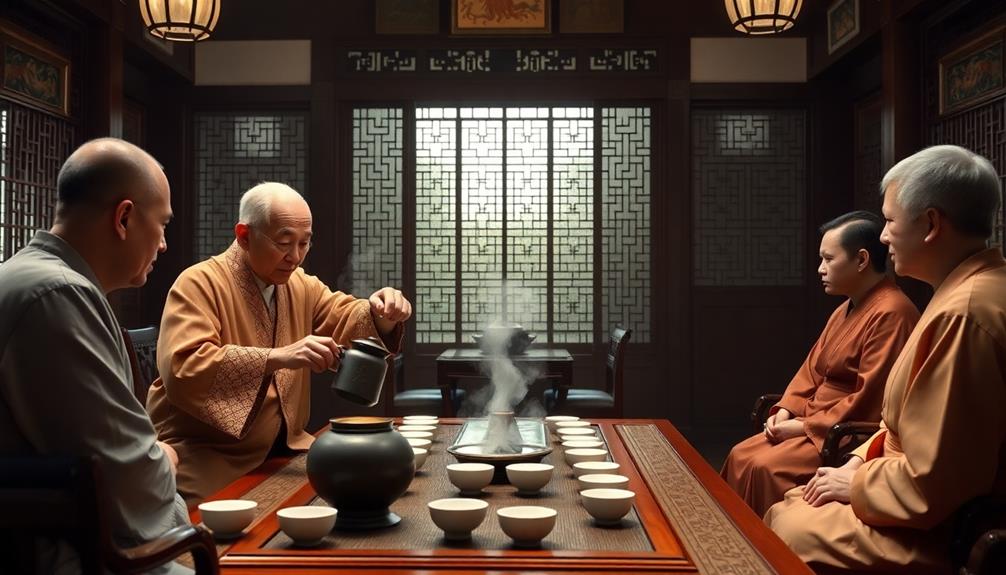
Here is what happens during a proper Gongfu session so you know what to expect:
| Step | Action | Why It Matters |
|---|---|---|
| 1. Warming (温壶) | Pour boiling water into pot and cups, discard | Stabilizes temperature, removes residual odors |
| 2. Loading (置茶) | Add 5–7g of leaves per 100ml pot capacity | Higher ratio than Western brewing — short steeps extract intensity |
| 3. Rinsing (洗茶) | 5-second pour over leaves, discard the liquid | Removes surface dust; “wakes” leaves; not a quality indication |
| 4. First Infusion (头泡) | Pour water at correct temperature, steep 15–20s | Often weakest — leaves are still opening |
| 5. Pouring (出汤) | Decant to Cha Hai, then to cups simultaneously | Ensures equal flavor concentration for every guest |
| 6. Repeat (续泡) | Each subsequent steep adds 5–10s | Oolong and pu-erh peak at 3rd–5th infusion |
The finger-tap etiquette (叩手礼): when someone pours tea for you, tap two fingers lightly on the table surface as a thank-you. This gesture derives from a legend about a Qing Dynasty emperor who traveled incognito — servants couldn’t bow without revealing his identity, so they tapped their fingers instead. You’ll see this constantly in Cantonese and Fujian-style tea houses.
Authentic Chinese tea ceremonies exist on a spectrum from ¥20 bamboo-chair sessions at Chengdu’s People’s Park (Heming Tea House) to private 90-minute Gongfu tutorials at Meijiawu Village in Hangzhou for ¥150. The differences are instruction level and tea grade — not authenticity. Tourist-facing ceremonies near major attractions charge 3–10x more for the same experience. Know where to go, check prices at the door, and look for Chinese-first menus. The tea itself is secondary to reading the room correctly.
Frequently Asked Questions
What is the difference between a Gongfu and a Wu-Wo tea ceremony?
Gongfu is a social ceremony focused on skilled preparation and multiple short infusions — typically one host prepares tea for guests. Wu-Wo is a meditative ceremony where each participant brews their own tea but pours for others, never themselves. Gongfu is widely available at commercial tea houses; Wu-Wo is practiced at cultural events and meditation centers, not tourist venues.
How much does a tea ceremony cost in China in 2026?
Budget range: ¥20–30 at local tea houses like Heming Tea House in Chengdu’s People’s Park. Mid-range: ¥80–150 for guided sessions at Meijiawu Village in Hangzhou or Kuanzhai Alley in Chengdu. Tourist venues near major attractions: ¥120–250+ per person. Avoid any venue without a posted price list at the entrance.
What is the best Chinese tea for a Gongfu ceremony?
Wuyi Rock Oolong — particularly Da Hong Pao (大红袍) from Fujian’s Wuyi Mountain — is the traditional choice because it sustains 5–7 infusions from the same leaves without bitterness. Tieguanyin (Iron Goddess) from Anxi County, Fujian, is the second most common. Green teas like Longjing are used in less formal settings and only yield 2–3 infusions.
How do I get from Hangzhou city center to Longjing Village?
Take Bus 103 from Hubin Road (near West Lake’s eastern shore) to Meijiawu Tea Village — approximately 40 minutes, ¥2. Alternatively, a taxi from West Lake area to Longjing Village runs ¥30–45. The Meijiawu stop is deeper into the tea-farming area and less touristy than the Longjing Village main street.
Is the Maliandao Tea Street in Beijing safe for buying tea?
Yes, for general purchases — but be aware that sellers will offer extensive free tastings as a sales technique. Compressed pu-erh cakes are the most reliable buy since age and origin are verifiable by taste and appearance. Avoid any vendor claiming aged pu-erh over 20 years without provenance paperwork; faked aging is common. Wuyutai Tea House (吴裕泰, est. 1887) is the most trustworthy anchor store for first-time buyers.
What should I wear to a Chinese tea ceremony?
Comfortable, modest clothing in subdued colors. Avoid strong perfume or cologne — it interferes with the tea’s aroma, and experienced hosts will notice. Some traditional tea houses request that you remove shoes; bring clean socks. At informal locations like People’s Park, casual clothing is standard and appropriate.
Can I book a tea ceremony in China online before I arrive?
Yes — the most reliable options are Dianping (大众点评, China’s Yelp equivalent) for local tea house reviews and bookings, and Meituan for package sessions with upfront pricing. Many Meijiawu Village families in Hangzhou have Taobao or WeChat storefronts where you can pre-book a morning session. For Wuyi Mountain tea tourism (including farm visits and Gongfu sessions with masters), the Wuyi Mountain Tourism Bureau website lists accredited tour providers.
More on Food & Dining:
Planning a trip to China?
Check out our China Travel Hub for more guides, including China Digital Survival Guide.

Written by East Asia Explorer Editorial Team
Sam Konneh is an AI strategist and digital marketer based in Seoul, South Korea. With years spent living, working, and exploring across Korea, Japan, and China, he shares firsthand insights into East Asia's cultures, hidden gems, and everyday life. A graduate of Inha University and KDI Graduate School, Sam combines data-driven expertise with on-the-ground experience. His journey also includes studying in Malaysia and traveling through Southeast Asia. Through practical tips, local stories, and travel guides, he helps fellow explorers discover both the celebrated highlights and the lesser-known corners of East Asia.