Last Updated: June 1, 2026 | Originally Published: May 31, 2026
Japan IC Cards in 2026: Suica vs Pasmo vs ICOCA (and the Welcome Suica Workaround)
Quick Answer
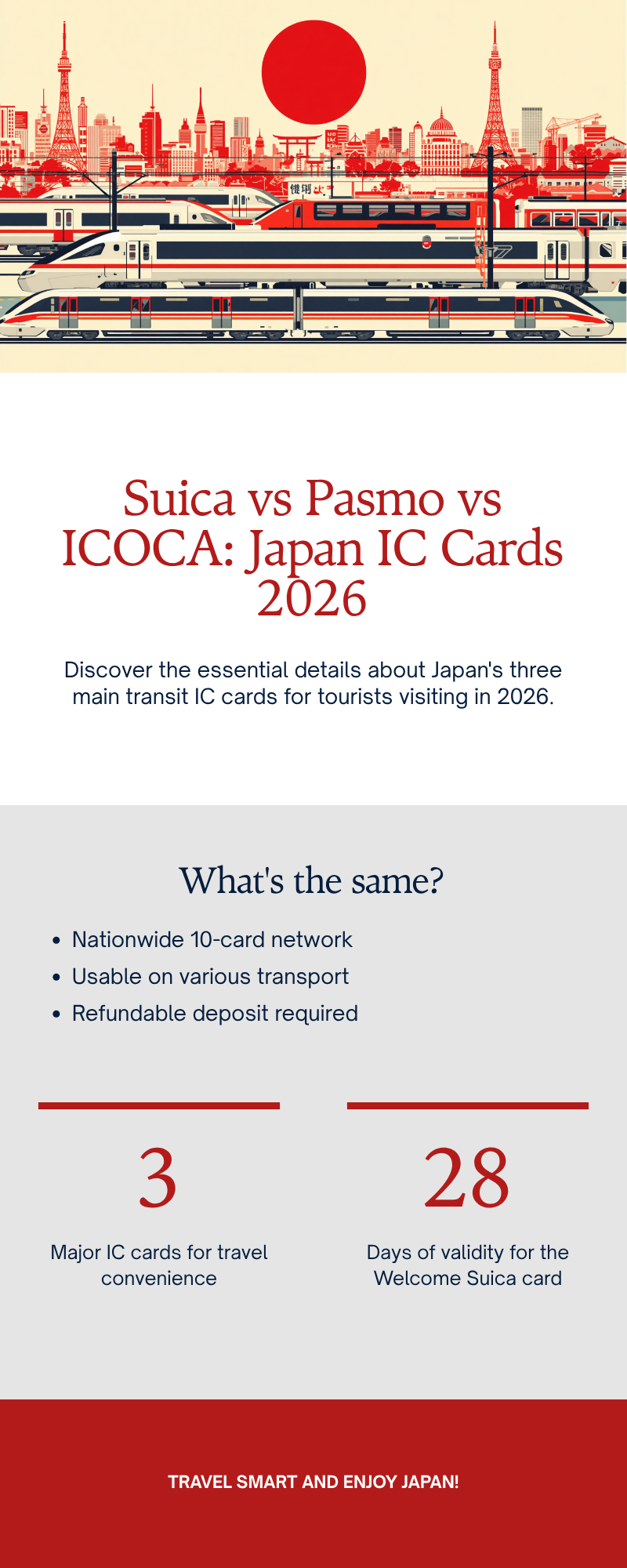
- Suica (JR East, Tokyo), Pasmo (Tokyo private rail and subways), and ICOCA (JR West, Osaka and the Kansai region) all do the same job and all work nationwide — pick by where you land, not by feature.
- Physical Suica and Pasmo sales were suspended during a 2023 chip shortage, but unregistered cards resumed full sale on March 1, 2026; as of 2026 you can buy them again at airports and major stations.
- The simplest 2026 route is still a digital card in Apple Wallet or Google Wallet — no ¥500 deposit and credit-card top-ups — but foreign Android phones often can’t add one.
- Tourists who want a physical card can buy the red Welcome Suica at Narita or Haneda: no deposit, valid 28 days from first tap, but any leftover balance is non-refundable.
- An IC card is not a Japan Rail Pass — it pays per ride on local trains, buses, and convenience stores, not unlimited Shinkansen travel.
One rechargeable card gets you through almost every ticket gate in Japan. Tap in, tap out, and the fare is deducted automatically — no working out the price on a fare chart above the machine.
The confusing part is the three big names — Suica, Pasmo, and ICOCA — plus a chip shortage that briefly made the first two impossible to buy.
This guide sorts out which to get in 2026, the digital workaround most travelers should use, and the Android gotcha nobody warns you about.
I source product in Japan a few times a year. I tap the same Mobile Suica from a Tokyo airport train to an Osaka subway to a FamilyMart coffee without thinking about it. That single-card simplicity is the whole point — and easier to get wrong than it should be.
What’s the difference between Suica, Pasmo, and ICOCA?
Functionally, almost nothing. The difference is the company that issues each card and the city where you’ll find it.
Suica is issued by JR East and is the default in greater Tokyo. Pasmo comes from the Tokyo-area private railways and subway operators. ICOCA is JR West’s card, sold across Osaka, Kyoto, and the wider Kansai region.
Here’s the key fact that removes the worry: all three belong to Japan’s nationwide mutual-use system. A Suica bought in Tokyo taps through gates in Osaka, and an ICOCA from Kyoto works fine on the Tokyo subway.
That system links ten interoperable cards in total. Since the networks were unified in March 2013, a single one of them rides almost any urban transit nationwide.
All three also work far beyond trains. Tap them at 7-Eleven, Lawson, and FamilyMart, on most city buses, at vending machines, and on station coin lockers.
Pro Tip: Don’t buy a second card when you change cities. The one you started with covers the whole trip. Carrying a Suica and an ICOCA just splits your balance across two cards you’ll both want to refund later.
The 10 nationwide cards: where each one comes from
You’ll only ever need one of these, but knowing the family helps when a machine in a smaller city offers a name you don’t recognize. They’re mutually usable on most transit nationwide.
Most are issued by a regional railway. A card sold by JR Kyushu still taps through a Tokyo gate, so a SUGOCA picked up in Fukuoka is as good as a Suica for the rest of your trip.
The one asterisk is PiTaPa, a Kansai postpay card tied to a Japanese bank account — not a practical buy for visitors. You can still tap a Suica or ICOCA wherever PiTaPa is accepted.
| Card | Issuer | Home region |
|---|---|---|
| Kitaca | JR Hokkaido | Sapporo area |
| Suica | JR East | Greater Tokyo |
| PASMO | Tokyo private rail / subways | Greater Tokyo |
| TOICA | JR Central | Nagoya / Shizuoka |
| manaca | Nagoya rail / bus operators | Nagoya area |
| ICOCA | JR West | Osaka / Kansai |
| PiTaPa | Surutto Kansai (postpay) | Kansai |
| SUGOCA | JR Kyushu | Fukuoka / Kyushu |
| nimoca | Nishitetsu | Fukuoka / Kyushu |
| hayakaken | Fukuoka City Subway | Fukuoka |
The lesson from the table: if you land somewhere other than Tokyo or Osaka, buy whatever card the local machine sells. It will still carry you everywhere else.
Were Suica and Pasmo really hard to buy?
For a stretch, yes. A global semiconductor shortage forced JR East to suspend sales of unregistered (anonymous) Suica cards in June 2023, and personalized “My Suica” sales paused that August.
Pasmo operators followed with the same suspension on unregistered cards. The chips that go inside each card simply weren’t available in the volumes needed.
Availability returned in stages. Personalized My Suica came back in September 2026, and unregistered Suica and Pasmo resumed full sale on March 1, 2026.
So in 2026 you can buy a standard Suica or Pasmo again at airports and major stations. The shortage is over, but it left two marks.
First, a lot of pre-2026 advice still tells you the cards are unavailable. Second, the squeeze pushed JR East to build out the digital and tourist options that are now the easier route anyway.
Watch out: Old blog posts swing both ways — some still claim Suica is sold out, others claim it’s effortless. Stock at any single machine can run dry during rush hour. Have a digital card or Welcome Suica as a backup so a sold-out machine doesn’t strand you.
What is the Welcome Suica, and who should use it?
The Welcome Suica is JR East’s tourist-only card — the red one — and it sidesteps the deposit problem entirely. It’s the cleanest physical option for short-trip visitors.
Unlike a standard Suica, it carries no ¥500 deposit. You pay only for the travel value you load. It’s sold at Narita and Haneda airport stations, plus JR East Travel Service Centers in Tokyo, Shinjuku, and others.
The catch is built into the design. A Welcome Suica is valid for 28 days from the first time you tap it, and any unused balance is non-refundable — both before and after it expires.
So it suits a one-to-four-week trip where you’ll spend down most of the balance. Load it in smaller top-ups near the end so you don’t leave money on a card you can’t cash out.
There’s also a Mobile Welcome Suica, set up inside an app on iPhone, that skips the airport plastic entirely. The digital version is valid for 180 days from issuance rather than 28, which is a real edge if you make repeat trips.
According to JR East, the Welcome Suica is intended for overseas visitors and is issued without the standard deposit, with a validity period of 28 days, and no refund of any remaining balance.
Physical card or Mobile Suica — which should you pick?
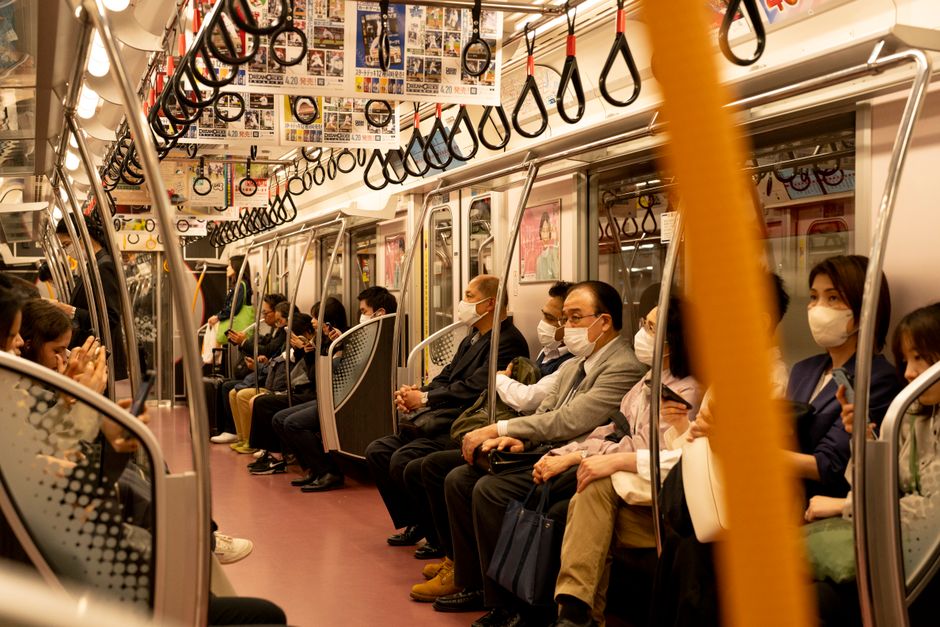
For most iPhone travelers in 2026, digital wins. Adding a card to your phone skips the deposit and recharges in seconds, on the train, with a credit card already in your wallet.
On iPhone, you can add Suica, Pasmo, or ICOCA directly through Apple Wallet, with no physical card and no ¥500 deposit required. Mobile ICOCA has been on Apple Pay since 2023, so the Kansai card works the same way the Tokyo ones do.
Android is where it gets sharp. Mobile Suica needs Japan’s “Osaifu-Keitai” FeliCa system — and that’s not just a hardware question.
Even Android phones that physically contain a FeliCa chip are usually software-locked to the Japanese market. Most globally sold models, including international Pixel and Galaxy units, simply can’t add a Suica in Google Wallet.
If you’re a foreign Android user, assume you’ll need a physical card or Welcome Suica unless you’ve confirmed otherwise. Better to learn that at home than at a Narita ticket machine after a long flight.
The payoff for the phone route is the top-up. You recharge from the device by credit card; physical-card holders are stuck feeding cash into a machine, since most konbini and station chargers won’t take a card.
Pro Tip: Set up Mobile Suica in Apple Wallet before you fly, while you still have home Wi-Fi and time to troubleshoot. Walking off a 12-hour flight is the worst moment to debug a wallet that won’t add the card.
What can an IC card actually pay for?
More than trains. The same tap that opens a ticket gate also works as everyday small-cash for most of a trip.
Yes, it works for: local and metro trains, most city buses, convenience stores, vending machines, station coin lockers, many supermarkets and drugstores, and a growing number of taxis. Tax-free counters aside, you can spend the balance like cash at any reader showing the IC logo.
No, it won’t cover: Shinkansen reserved seats as a plain tap-and-go, and some long inter-regional rides that cross network boundaries mid-journey. The card is built for getting around a city, not for an unbroken cross-country haul.
The bullet train is the big asterisk, so it’s worth its own paragraph below.
Can an IC card get you on the Shinkansen?
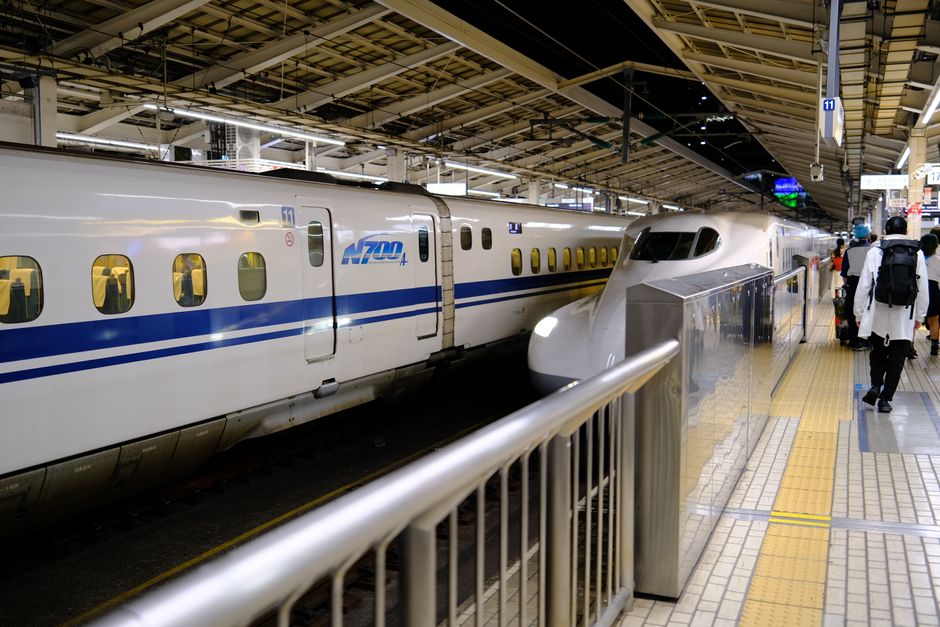
Not by default, but increasingly yes if you set it up first. A raw Suica won’t open a Shinkansen reserved-seat gate the way it opens a metro gate.
On the Tokaido, Sanyo, and Kyushu Shinkansen, the route is Smart EX or EX-IC: you book online, link your Suica or Mobile Suica, and the card itself becomes your boarding pass at the gate. The fare is charged to the linked credit card, not your IC balance.
JR East runs a separate “Touch de Go! Shinkansen” service. Once your Suica is registered, you tap straight onto a non-reserved car on participating lines and the fare comes off the IC balance — no ticket, no reservation.
The honest summary: an IC card can ride the Shinkansen, but only through a registered service, and reserved seats almost always mean booking online first.
How do you recharge, and where?
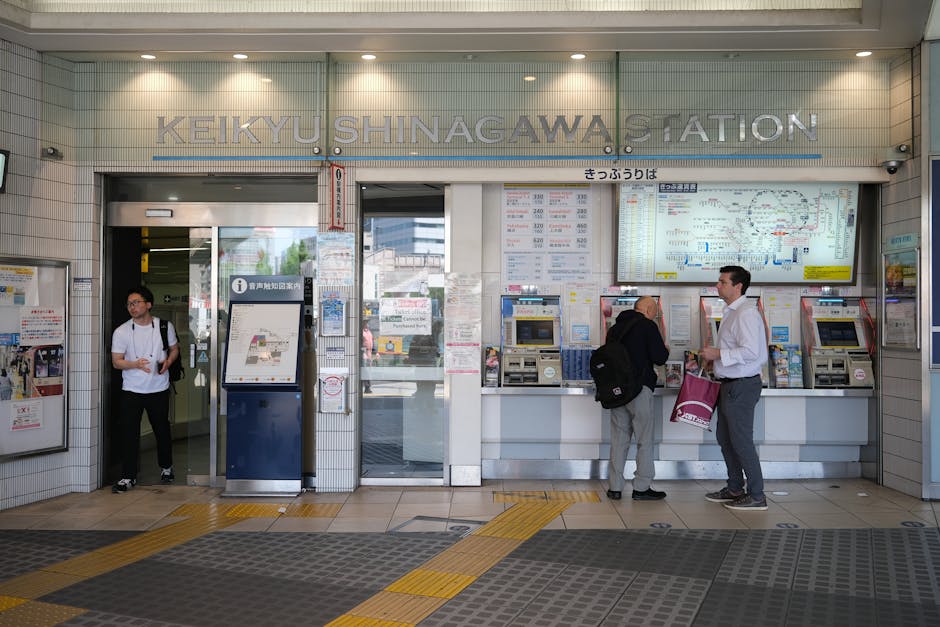
Physical cards are a cash story. You top up at green station machines, at konbini counters, and at Seven Bank ATMs inside 7-Eleven, and nearly all of these take cash only.
Station machines and konbini registers take ¥1,000 notes, so loading ¥1,000 or ¥2,000 at a time is the natural rhythm. Keep a few thousand-yen notes on you for it.
Mobile cards skip the cash. You recharge from the phone in ¥1,000 increments against a credit card in your wallet, so you never break stride at a cash-only machine.
That single difference — card top-up on mobile versus cash-only on plastic — is the strongest practical argument for going digital if your phone supports it.
Suica vs Pasmo vs ICOCA: the side-by-side
The table below is the fast version. The honest summary is that the rows are nearly identical — the issuer and home region are the only meaningful differences for a visitor.
| Feature | Suica | Pasmo | ICOCA |
|---|---|---|---|
| Issuer | JR East | Tokyo private rail / subways | JR West |
| Home region | Greater Tokyo | Greater Tokyo | Osaka / Kansai |
| Deposit (physical) | ¥500 (¥0 for Welcome Suica) | ¥500 | ¥500 |
| Works nationwide? | Yes | Yes | Yes |
| Apple Wallet | Yes | Yes | Yes (since 2023) |
| Android (Osaifu-Keitai) | JP-market phones only | JP-market phones only | JP-market phones only |
| Use at konbini | Yes | Yes | Yes |
Which card and format should you choose?
The card brand barely matters; the format does. This table maps the common traveler types to the route that gives the least friction.
| If you are… | Best pick |
|---|---|
| An iPhone user | Mobile Suica (or ICOCA) in Apple Wallet — no deposit, card top-ups |
| A foreign Android user | Physical card or Welcome Suica — most global Androids can’t add one |
| On a short trip (under 4 weeks) | Welcome Suica — no deposit; just spend it down before you fly |
| A family with kids | A physical card each (children’s fare cards exist); adults can go mobile |
| A JR Pass holder | An IC card for non-JR metros, buses, and konbini the pass doesn’t cover |
How much should you load on the card?
Top up in modest amounts and recharge as you go. A short Tokyo metro hop runs roughly ¥180 to ¥210, and most single rides across the city stay under ¥320.
For a typical sightseeing day of four to six rides plus a konbini coffee, ¥1,500 to ¥2,000 is a comfortable float. That keeps the card useful without stranding a big balance on it.
Recharge machines and konbini counters take ¥1,000 notes, so loading ¥1,000 or ¥2,000 at a time is the easy rhythm. Mobile Suica users skip the machine and top up from the phone instead.
The reason to avoid over-loading is the refund math below. Money parked on a physical card is money you’ll partly pay a fee to retrieve, or lose entirely on a Welcome Suica.
How do deposits and refunds actually work?
A standard physical card costs you a ¥500 refundable deposit on top of whatever travel value you load. That ¥500 comes back when you return the card.
Refunds happen at the issuing network’s stations: a Suica at JR East offices, an ICOCA at JR West. You generally can’t refund a Suica at an Osaka JR West counter, so settle up before leaving that region.
If money is still on the card, expect a handling fee deducted from the balance at refund. Spend it to zero first and you typically get the full ¥500 deposit back with no fee.
This is exactly why the digital and Welcome Suica routes are attractive. A Mobile Suica has no physical deposit to chase, and the Welcome Suica skips the deposit step from the start.
Key Takeaway
Stop agonizing over Suica vs Pasmo vs ICOCA — they’re interchangeable nationwide. In 2026, add a Mobile Suica to Apple Wallet if you have an iPhone; foreign Android users and short-trip visitors should grab a Welcome Suica at the airport and spend it down before flying home.
Frequently asked questions
Can I use one IC card across Tokyo, Kyoto, and Osaka?
Yes. Suica, Pasmo, and ICOCA all run on the nationwide mutual-use network, so a single card taps through gates in all three cities. You never need a second card just because you changed regions.
Are Suica and Pasmo still sold out in 2026?
No. The 2023 chip shortage that paused sales ended — unregistered Suica and Pasmo resumed full sale on March 1, 2026, and as of 2026 they’re available again at airports and major stations. A single machine can still run dry at peak times, so keep a backup option.
Does an IC card cover the Shinkansen?
Not as a plain tap-and-go. Reserved seats need a registered service like Smart EX or EX-IC, where your linked card acts as the boarding pass. JR East’s “Touch de Go! Shinkansen” lets a registered Suica tap onto non-reserved cars on some lines, with the fare taken from your balance.
Can I add Suica to an Android phone bought outside Japan?
Usually not. Mobile Suica relies on Japan’s Osaifu-Keitai FeliCa system, which is software-locked to Japanese-market handsets. Most international Pixel and Galaxy phones can’t add a card even though the chip is physically present, so foreign Android users should plan on a physical card.
Can I use my IC card to buy things, not just ride trains?
Yes. The balance works like cash at convenience stores, vending machines, coin lockers, many shops and drugstores, and a growing number of taxis — anywhere you see the IC reader logo.
Should I get Suica or Pasmo if I’m flying into Tokyo?
It genuinely does not matter. Both are sold in greater Tokyo, both work nationwide, and both add to Apple Wallet. Take whichever the machine in front of you is selling, or set up a Mobile Suica before you leave home and skip the choice entirely.
Do I still need an IC card if I have a Japan Rail Pass?
Often yes. A JR Pass covers JR lines, but not Tokyo Metro, most private railways, city buses, or konbini. A small IC balance fills those gaps without you buying single tickets each time.
Last updated: May 2026
More on Transportation:
Planning a trip to Japan?
Check out our Japan Travel Hub for more guides, including JR Pass Guide 2026.

Written by East Asia Explorer Editorial Team
Sam Konneh is an AI strategist and digital marketer based in Seoul, South Korea. With years spent living, working, and exploring across Korea, Japan, and China, he shares firsthand insights into East Asia's cultures, hidden gems, and everyday life. A graduate of Inha University and KDI Graduate School, Sam combines data-driven expertise with on-the-ground experience. His journey also includes studying in Malaysia and traveling through Southeast Asia. Through practical tips, local stories, and travel guides, he helps fellow explorers discover both the celebrated highlights and the lesser-known corners of East Asia.