Last Updated: October 6, 2026 | Originally Published: July 15, 2026
Tokyo to Kyoto by Train: Real Costs, Train Types, and Whether the JR Pass Pays Off (2026)
- Nozomi shinkansen — 2h 15m, 14,370 yen reserved seat (2026 regular season).
- Hikari shinkansen — 2h 40m, 13,920 yen; fully covered by the JR Pass.
- JR Pass 7-day: 50,000 yen — needs at least 3–4 long-distance legs to break even; one round trip does not cover it.
- Luggage forwarding (takuhaibin via Yamato or Sagawa) — 1,500–2,500 yen per bag, delivered next day to your Kyoto hotel.
- Night bus (Willer Express) — 3,000–5,000 yen, ~8 hours; cheapest option if you can sleep upright.
The Tokyo–Kyoto shinkansen ticket costs 14,370 yen for a reserved Nozomi seat in 2026, and the Hikari — which takes 25 minutes longer — is 450 yen cheaper and fully covered by the Japan Rail Pass.
I have made this run both ways: once paying full price for the Nozomi, once riding the Hikari on a Pass. The time difference was one podcast episode. The cost difference was enough for two nights of budget accommodation.
Here is the full breakdown — train types, real prices, the Smart EX booking app, when to forward your bags ahead, and whether the JR Pass math actually works for your trip.
The three shinkansen options: Nozomi, Hikari, Kodama
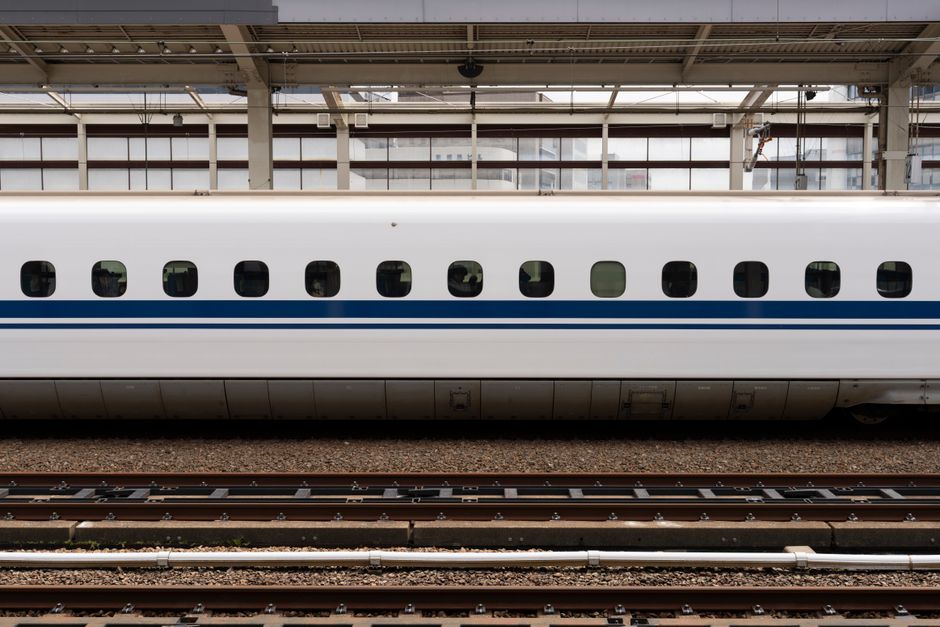
All three run on the Tokaido Shinkansen line, which links Tokyo Station to Kyoto Station directly. The differences are speed, stops, and JR Pass eligibility.
Nozomi is the fastest. It departs Tokyo several times an hour, reaches Kyoto in about 2 hours 15 minutes, and skips most intermediate cities. It costs 14,370 yen for a reserved seat in regular season (2026).
The catch: the JR Pass does not cover the Nozomi. Pass holders who board one anyway get charged a full surcharge on the spot.
Hikari makes a handful of extra stops — Nagoya, Shin-Osaka — and arrives in Kyoto in roughly 2 hours 40 minutes. Fare is 13,920 yen reserved. It is fully covered by the JR Pass, including the reservation.
Kodama stops at all 29 stations on the line. Travel time from Tokyo to Kyoto stretches to about 3 hours 40 minutes. Fare matches the Hikari at 13,920 yen. Also JR Pass valid.
You would only choose the Kodama if you need to reach a mid-route city like Shizuoka or Hamamatsu. For a direct Tokyo–Kyoto run, there is no practical reason to take it over the Hikari.
| Train | Time (Tokyo→Kyoto) | Reserved fare (2026) | JR Pass valid? |
|---|---|---|---|
| Nozomi | ~2h 15m | 14,370 yen | No |
| Hikari | ~2h 40m | 13,920 yen | Yes (fully covered) |
| Kodama | ~3h 40m | 13,920 yen | Yes (fully covered) |
| Highway bus (night) | ~8h | 3,000–5,000 yen | No |
Fares are regular-season reserved seats as of 2026. Verify current prices at the official operator site before booking — peak-season surcharges apply.
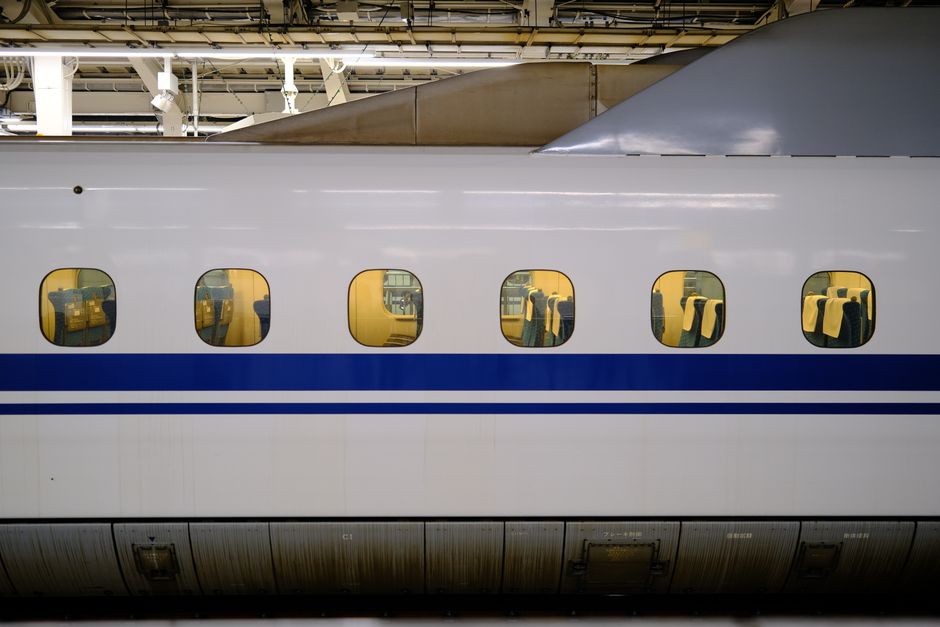
Reserved vs unreserved seats: the 530-yen decision
A reserved seat on the Nozomi costs 530 yen more than an unreserved seat on the same train (the seat reservation surcharge is separate from the base fare).
In low season — late autumn, January, February — unreserved cars are usually half-empty. You can walk on, pick your spot, and save the 530 yen without thinking twice.
In peak season the calculation changes. During cherry blossom season, Golden Week, and Obon, unreserved cars fill from the first stop. If you board at Tokyo you might get a seat.
If you are joining from Shin-Yokohama or Nagoya, you will almost certainly stand the whole way. Two-plus hours on your feet in a train aisle is a real possibility.
Standing in a shinkansen aisle is less dramatic than it sounds — the trains are smooth — but it is still standing. During those three crunch windows, the 530 yen is not a decision worth agonizing over.
How to book: SmartEX, EkiNet, and ticket windows
The SmartEX app (operated by JR Central) is the most convenient option for foreign visitors booking Tokaido Shinkansen seats. You register a non-Japanese credit card, pick your train and seat, and either scan a QR code at the gate or collect a physical ticket from a machine.
SmartEX opens reservations up to one year in advance for most departures. For regular-season travel that is plenty of lead time. For cherry blossom season, the one-year window gets used by repeat visitors who plan that far out — so booking early genuinely matters.
SmartEX also offers small EX discounts on some fares when you book in advance. The savings are not dramatic — a few hundred yen — but if you are booking anyway, there is no reason not to use the app over a ticket window.
The alternative is the Midori-no-madoguchi (green ticket window) inside any major JR station. Staff can book reserved seats on the spot and print the ticket immediately. Counter lines can be long during busy periods but the staff at Tokyo Station are well-practiced with foreign visitors.
Multilingual ticket machines at Tokyo Station also handle reserved seat bookings in English. They are faster than the counter during off-peak hours and cover all Tokaido Shinkansen services.
Does the JR Pass pay off for this trip?
The 7-day ordinary JR Pass costs 50,000 yen in 2026. A Tokyo–Kyoto–Tokyo round trip on the Hikari is about 27,840 yen (2 × 13,920 yen). The Pass loses nearly 22,000 yen on that trip alone.
To break even on a 7-day Pass you need to stack more long-distance JR rides on top. The clearest winning combinations include Kyoto to Hiroshima and back (roughly 19,400 yen round trip), or adding a leg to Kanazawa via the Thunderbird from Osaka.
A rough breakeven calculation for common itineraries:
| Itinerary (Hikari fares) | Individual tickets | 7-day Pass saves? |
|---|---|---|
| Tokyo → Kyoto → Tokyo only | ~27,840 yen | No (lose ~22,000 yen) |
| + Kyoto → Hiroshima → Tokyo | ~47,500 yen | Borderline (saves ~2,500 yen) |
| + Add Osaka or Kanazawa legs | ~55,000+ yen | Yes (saves 5,000+ yen) |
There is also a 2026 timing note. The 7-day ordinary Pass is 50,000 yen now and is scheduled to rise to 53,000 yen from October 1, 2026. If your trip straddles that date, check current pricing at the official Japan Rail Pass site before purchasing.
Luggage forwarding: how takuhaibin works
Most first-time visitors to Japan do not know about takuhaibin — the luggage-forwarding service that lets you ship bags from your Tokyo hotel to your Kyoto hotel the day before you travel.
Yamato Transport (the “black cat” logo) and Sagawa Express both operate this service from convenience stores across Tokyo. You fill out a slip, pay at the counter, and your bag arrives at your Kyoto accommodation the next day.
Cost is typically 1,500–2,500 yen per bag depending on size and weight. For a standard 20-inch rolling suitcase, expect to pay around 1,700–1,900 yen.
The shinkansen has strict rules about oversized bags. Any bag with total dimensions (height + width + depth) over 160 cm requires a reserved seat with a designated oversized-luggage space. Show up without that reservation and you face a 1,000 yen on-board fee.
Forwarding your bags removes all of that. You travel light, board any car you want, and find your bags waiting at the hotel when you arrive in Kyoto that evening.
The main limitation is timing. The forwarding services need the bag by around 12 noon for next-day delivery. If you are checking out of your Tokyo hotel early and catching a morning shinkansen, you may need to drop the bag the evening before at the hotel desk for pickup.
“Takuhaibin is one of those Japan logistics systems that sounds too convenient to be real — and then works exactly as advertised. Shipping two bags to Kyoto cost less than one extra checked bag on a domestic flight.”
The night bus: Willer Express and JR Dream Bus
The cheapest Tokyo–Kyoto option is an overnight bus. Prices start around 3,000 yen on a basic Willer Express seat and can reach 5,000–8,000 yen for larger “premium” seats with more recline.
Willer Express is generally considered the most foreigner-friendly of the night bus operators. Their booking site has an English interface, and the seat configurations are clearly labeled with diagrams showing recline angle and leg space.
JR Dream Bus is another well-known option. It runs overnight from Tokyo Station’s Yaesu bus terminal and arrives near Kyoto Station. Slightly higher fares than Willer on some routes, but reliable schedules.
The trip takes roughly 8 hours. Departures are typically late evening (10 PM–midnight) with Kyoto arrivals in the early morning (6–8 AM). You save a night of accommodation costs, which on a tight budget makes the bus a genuine calculation — not just a hardship option.
The honest downside: I took the night bus once. I arrived in Kyoto at 6:30 AM, found a convenience store, and sat on a step in Gion for an hour waiting for anything to open.
I then napped for three hours once check-in was available. The money I saved went to coffee and a regret tax.
Budget accordingly. If you are traveling with a partner or on a fixed schedule, the time cost of recovery often outweighs the fare savings.
How far ahead should I book?
For a normal weekday in low season, same-day booking is fine. Unreserved cars on the Hikari and Kodama almost always have open seats, and even Nozomi reserved cars rarely sell out midweek in winter or autumn.
The three crunch windows change everything:
- Cherry blossom season — late March to early April. Both reserved and unreserved trains fill quickly on weekends. Book reserved seats as soon as SmartEX opens the one-month window.
- Golden Week — late April to early May. The busiest travel period in Japan. Trains on certain days can sell out within hours of the reservation window opening.
- Obon — mid-August. Same level of demand as Golden Week. Friday departures from Tokyo and Sunday return trains from Kyoto/Osaka are the most pressured.
Outside those three windows, one to two weeks advance booking is comfortable. SmartEX lets you set up an account and book at any time — no reason to wait until you are standing at the station.
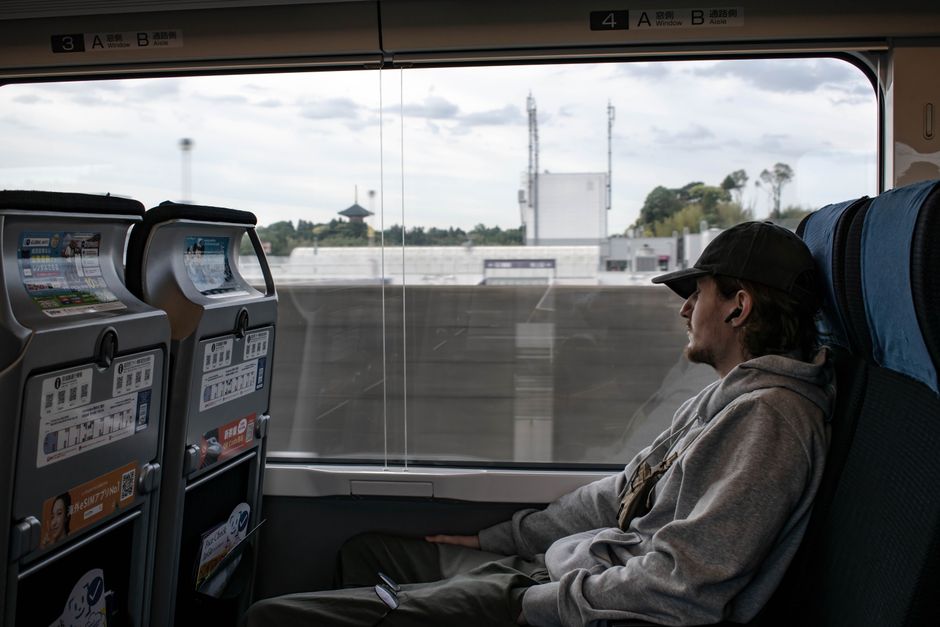
The luggage rule most guides skip
On the Tokaido Shinkansen, bags with total dimensions over 160 cm need a specific reserved seat. That is the seat in the last row of a car, which has a dedicated oversized-baggage shelf behind it.
The shelf space is included with your ticket — no extra fee — but you must reserve that specific seat in advance. Show up with a large case and no such reservation, and the conductor can charge a 1,000 yen handling fee on board.
This mainly affects travelers carrying 28-inch or larger rolling suitcases, or large backpacker packs. If your bag is a standard carry-on size, the overhead luggage rack handles it without any special booking.
Is flying cheaper than the train?
Technically yes, on deep discount fares — but the comparison is misleading. Kyoto has no airport. Flying means landing at Kansai International (KIX) or Itami (ITM) and then taking a train or bus to central Kyoto, which adds at least 60–90 minutes and another 1,000–2,000 yen in ground transport.
Itami connects to Kyoto via the Haruka express from Shin-Osaka or a Limousine Bus direct to Kyoto Station. Kansai International is farther — the Haruka from KIX to Kyoto Station takes about 75 minutes and costs around 3,370 yen.
When you add airport transfers on both ends, check-in time, and the unpredictability of budget carrier scheduling, the shinkansen almost always wins on total journey time for Tokyo to Kyoto. The train wins on convenience by a wider margin.
If you are still deciding between the JR Pass and individual tickets, our JR Pass worth-it guide and the Suica vs JR Pass breakdown cover the full math in detail.
Frequently asked questions
Can I use the JR Pass on the Nozomi?
No. The Nozomi is excluded from all JR Pass types. JR Pass holders must ride the Hikari or Kodama, both of which are fully covered including seat reservations.
How much is a reserved seat reservation surcharge?
530 yen in regular season. Surcharges shift slightly by date — 330 yen off-peak, 730 yen on peak dates. This is on top of the base fare, not instead of it.
What is Smart EX and do I need it?
SmartEX is JR Central’s online booking platform for Tokaido/Sanyo Shinkansen tickets. You register a credit card, book seats up to one year ahead, and gate-scan or collect tickets. It is the easiest advance booking method for foreign visitors — not required, but convenient.
How does luggage forwarding (takuhaibin) work?
Drop your bag at a convenience store (FamilyMart, Lawson, or 7-Eleven) using a Yamato or Sagawa forwarding slip. Pay 1,500–2,500 yen per bag. Bag arrives at your Kyoto hotel the next day. Drop-off deadline is usually around noon for next-day delivery.
How long is the train from Tokyo to Kyoto?
About 2 hours 15 minutes on the Nozomi, 2 hours 40 minutes on the Hikari, and 3 hours 40 minutes on the all-stops Kodama. All depart from Tokyo Station on the Tokaido Shinkansen line.
Is the overnight bus worth it?
If you are on a tight budget and can sleep on buses, yes — 3,000–5,000 yen on Willer Express vs 13,920 yen for a Hikari reserved seat is a real saving. If you need to be functional the day you arrive, factor in recovery time.
How much is a round trip Tokyo to Kyoto in 2026?
Roughly 27,840 yen on the Hikari (2 × 13,920 yen reserved) or about 28,740 yen on the Nozomi (2 × 14,370 yen reserved), in regular season as of 2026.
When is the cheapest time to travel?
Off-peak fares are about 400 yen less than regular season per leg. That means January–February and late November are slightly cheaper, and carry the practical benefit of far less crowded trains.
Last updated: June 2026. Train fares and JR Pass prices change — confirm current prices with the official operator before booking.
More on Japan Destinations:
Planning a trip to Japan?
Check out our Japan Travel Hub for more guides, including JR Pass Guide 2026.

Written by East Asia Explorer Editorial Team
Sam Konneh is an AI strategist and digital marketer based in Seoul, South Korea. With years spent living, working, and exploring across Korea, Japan, and China, he shares firsthand insights into East Asia's cultures, hidden gems, and everyday life. A graduate of Inha University and KDI Graduate School, Sam combines data-driven expertise with on-the-ground experience. His journey also includes studying in Malaysia and traveling through Southeast Asia. Through practical tips, local stories, and travel guides, he helps fellow explorers discover both the celebrated highlights and the lesser-known corners of East Asia.