Last Updated: July 4, 2026 | Originally Published: July 9, 2026
- Cheong Wa Dae (Blue House) is the former presidential residence of South Korea, a sprawling hillside compound of blue-tiled pavilions, gardens and reception halls, opened to the public for the first time in 2022. Entry is free but requires an online reservation.
- Take Line 3, Gyeongbokgung Station, Exit 4 and walk north past the palace’s rear wall for about 12 minutes. Alternatively, Exit 5 and the walk around the west side of Gyeongbokgung takes roughly 15 minutes.
- Open daily 09:00–18:00 (last entry 17:00). Closed Tuesdays. Reservations via the official Cheong Wa Dae reservation website, released roughly two weeks in advance.
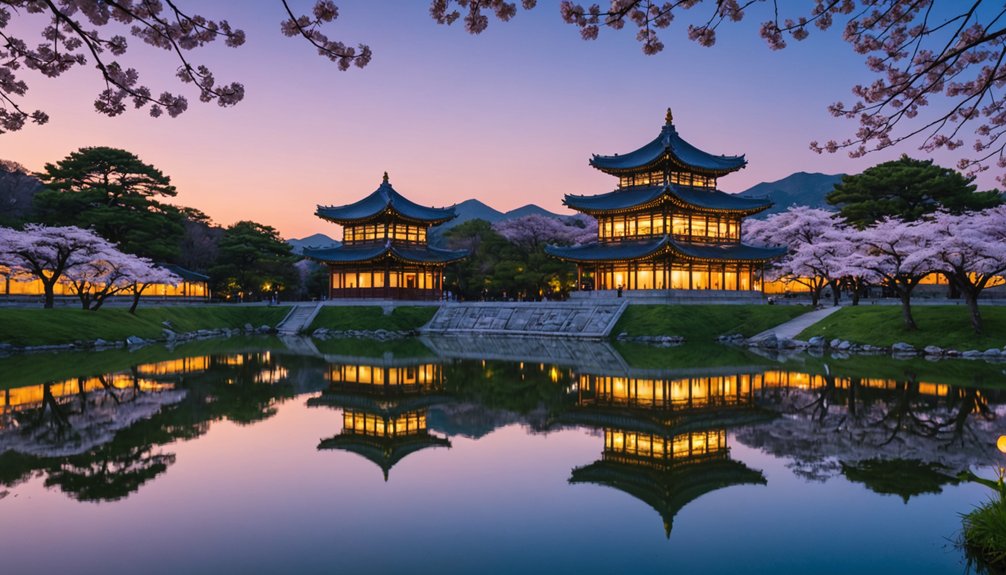
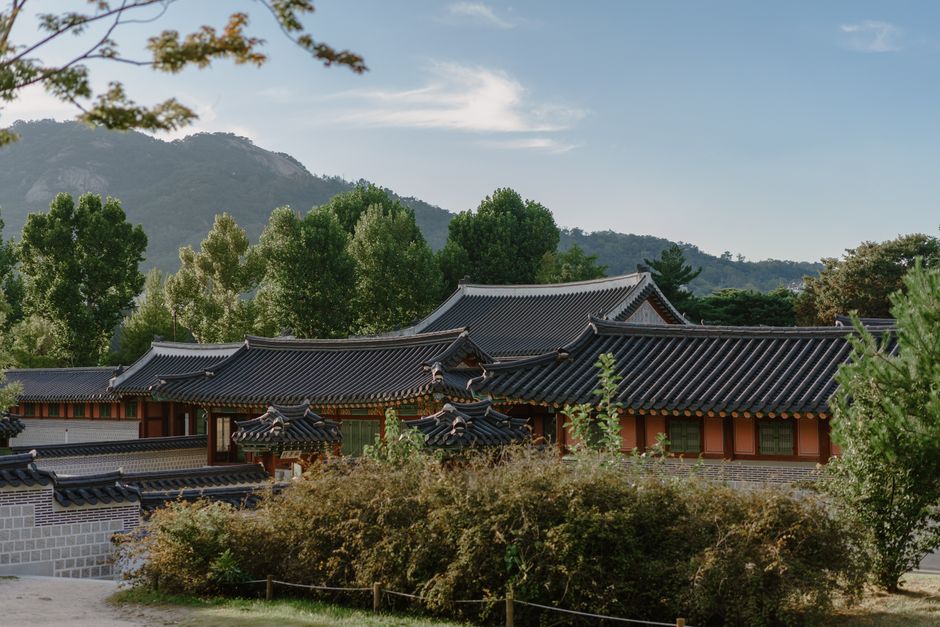
- The main building’s blue-tiled roof (150,000 hand-fired tiles) and the rear garden with Bugaksan Mountain as a backdrop are the headliners. Do not skip the Yeongbingwan (State Guest House)—the largest single wooden pillar structure in Korea.
Cheong Wa Dae spent most of its existence as a building you could only photograph from a carefully distanced police checkpoint. In May 2022, the new administration moved the presidential office to Yongsan and handed the keys to the public.
Now you can walk through the same reception hall where visiting heads of state drank tea, and stand on the lawn where helicopter Marine One used to land.
I booked a morning slot in late September. The queue at the main gate moved fast. Inside, a group of Korean retirees were taking selfies at the press briefing room podium as if they had just been elected.
The garden at the rear, with Bugaksan granite rising directly behind the blue-tiled roof, was so quiet I could hear the wind in the pine trees. A decade ago that view was classified.
A short history of Cheong Wa Dae
The site has a long history as government ground. During the Joseon dynasty, it was part of the rear garden of Gyeongbokgung Palace, used as a civil-exam venue and a royal retreat. The Japanese colonial government built the Governor-General’s residence there in 1939, which was demolished after liberation.
The Republic of Korea built the current Cheong Wa Dae compound in 1991, replacing an earlier presidential residence that had stood since 1948.
The name means “Pavilion of Blue Tiles,” and the 150,000 hand-fired blue tiles on the main building’s roof are its signature: they were designed to evoke the blue-tiled roofs of traditional Korean palaces while signalling a modern democratic head-of-state residence.
Presidents from Syngman Rhee through Moon Jae-in lived and governed here.
The compound survived a 1968 North Korean commando raid that reached within 100 metres of the grounds—the bullet holes on the pine trees near the rear fence were long ago smoothed over, but the history sits close to the surface.
When President Yoon Suk-yeol relocated the office to Yongsan in 2022, the compound became a public park, museum, and—in the words of the Korea Tourism Organization—symbol of a political U-turn in real time.
What to see at Cheong Wa Dae
The Main Building (Bon-gwan). The blue-tiled centrepiece. You walk through the ground-floor reception rooms and the cabinet meeting room, and then out onto the rear lawn where the backdrop—Bugaksan granite rising behind a curved blue roof—is the single best photo on the compound.
The building’s design merges traditional Korean palace-roof aesthetics with mid-century modern official architecture.
Yeongbingwan (State Guest House). A separate building on the compound used for state banquets and visiting-head-of-state dinners. Its structure is built around 18-metre-tall wooden pillars—the largest single-pillar wooden construction in Korea.
The interior is not always open depending on the day, but the exterior and the pillar-built entrance hall are worth the 3-minute walk from the main building.
Nokjiwon (Presidential Garden). The lawn and pine grove behind the main building. This was the presidents’ private garden, home to a 700-year-old pine tree and a series of landscaped ponds.
The lawn slopes gently up toward the face of Bugaksan, and the contrast between the manicured grass and the raw granite cliff 100 metres behind it is the compound’s most dramatic sight.
Presidential Museum (Chunchugwan area). A small museum near the entrance documenting the site’s history, the presidents who lived here and the 2022 transition. Includes the guest books signed by visiting leaders and a timeline of the compound’s architectural evolution.
The rear fence and Bugaksan trail. At the far rear of the compound, the fence line marks the start of Bugaksan Mountain’s hiking trail, which runs along the old presidential security perimeter.
You need a separate reservation for the mountain trail, but the view of the fence against the granite slope is part of the compound walk.
Tickets & opening hours (2026)
| Detail | Info |
|---|---|
| Admission | Free |
| Reservation | Online reservation required; released ~2 weeks in advance |
| Hours | 09:00–18:00 (last entry 17:00) |
| Closed day | Tuesdays (and select public holidays) |
| Daily visitor cap | ~2,000–5,000 (varies by season and policy) |
| Duration | ~1.5–2.5 hours |
“Cheong Wa Dae opened to the public in May 2022 for the first time in 74 years, transforming a site that had been the seat of presidential power into a public park and cultural space. Over three million visitors entered the grounds in the first year alone.”
How to get there
| Method | Route | Walk from station |
|---|---|---|
| Subway (best) | Line 3 → Gyeongbokgung Station, Exit 4 | ~12 minutes (north past palace rear wall) |
| Subway (alt) | Line 3 → Gyeongbokgung Station, Exit 5 | ~15 minutes (west side of palace) |
| Bus | Green Jongno 09, Jongno 11; get off at Cheong Wa Dae or Hyoja-dong | ~1–3 minutes |
The walk from Exit 4 is clear but uphill. You pass the rear wall of Gyeongbokgung Palace on your left, then cross a road and reach the Cheong Wa Dae main gate. The incline is gentle but noticeable—wear walking shoes, not heels.
The green village buses (Jongno 09, Jongno 11) spare your legs if you prefer to ride up and walk back down.
Best time to visit
Spring (April–May) and autumn (September–October) offer the most comfortable walking temperatures and the best garden light. Spring brings cherry blossoms along the approach road. Autumn colours the compound’s pine groves and the Bugaksan slope behind the main building.
Summer (June–August) is hot and the walk up from Gyeongbokgung Station can feel long—book the earliest slot (09:00 AM) to beat the midday heat. The rear garden has limited shade, so a hat and water are essential.
Winter (December–February) means cold walk-ups but dramatically fewer visitors. The blue tiles against snow and the bare granite of Bugaksan are a specific kind of Seoul winter photograph. The compound grounds can be icy; watch your footing on the garden paths.
Cheong Wa Dae at a glance
| Detail | Info |
|---|---|
| Best for | Modern Korean history, architecture, garden walks, political history |
| Time needed | 1.5–2.5 hours |
| Cost | Free (reservation required) |
| Closed | Tuesdays |
| Rules | No drones, no tripods, passport/ARC required for entry |
Where to eat nearby
Seochon village (5–10 minutes west): The neighbourhood west of Gyeongbokgung Palace is a quieter, more local dining zone. Kalguksu shops, makgeolli bars, small Korean-Italian fusion spots and independent cafés line the alleys. Budget about 10,000–20,000 KRW for lunch.
Samcheongdong (10–15 minutes east): The gallery-and-café street east of the palace offers sit-down cafés with Bugaksan views and light brunch menus. Coffee runs about 6,000–9,000 KRW, and a café lunch is roughly 15,000–25,000 KRW.
Gyeongbokgung area (south of the compound): Tosokchon Samgyetang is the famous ginseng-chicken-soup institution roughly 12 minutes on foot from the Cheong Wa Dae gate (via the west side of the palace). Expect a queue at lunch. Budget about 18,000 KRW for a bowl.
Combine it into a Seoul day
Book a 09:00 AM slot at Cheong Wa Dae and spend about 2 hours on the compound. Walk back down past the rear wall of Gyeongbokgung Palace and enter through the rear gate if open, or circle to the main south gate (Gwanghwamun). Spend 2 hours exploring the palace grounds.
Exit the palace’s east gate onto Samcheong-ro and walk up Samcheongdong for a café lunch. Spend the afternoon gallery-hopping and browsing boutiques. Alternatively, head west instead into Seochon village for a quieter, more local lunch and a stroll through the alleys.
Is Cheong Wa Dae worth visiting?
For the history-curious, yes, without question.
Walking through the same halls where South Korean presidents governed for seven decades, standing on the lawn that was off-limits to the public since 1948, and seeing the blue-tiled roof up close rather than through a television screen is a unique Seoul experience that did not exist before 2022.
It pairs perfectly with Gyeongbokgung Palace next door—600 years of Korean governance in two neighbouring compounds.
What’s nearby
- Korea Travel Guide—your hub for Seoul, Busan, and beyond
- Gyeongbokgung Palace Guide—Seoul’s main royal palace, literally next door
- 7-Day Seoul Itinerary for Culture Lovers—fit Cheong Wa Dae into a deep Seoul cultural week
- Samcheongdong Guide—the gallery-and-café street 10 minutes east of the compound
Frequently Asked Questions
What is Cheong Wa Dae (Blue House)?
Cheong Wa Dae is the former presidential residence and office of South Korea, used from 1948 to 2022. The compound consists of a main building with a distinctive blue-tiled roof, a state guest house, gardens, and a museum.
It opened to the public in May 2022 after the presidential office moved to Yongsan.
How do I get tickets to Cheong Wa Dae?
Admission is free, but an online reservation is required. Book via the official Cheong Wa Dae reservation website (reserve.opencheongwadae.kr). Slots are released roughly two weeks in advance and can fill days ahead during peak seasons.
How do I get to Cheong Wa Dae?
Line 3, Gyeongbokgung Station, Exit 4. Walk north past the rear wall of Gyeongbokgung Palace for about 12 minutes. Exit 5 is a 15-minute alternative. Green village buses (Jongno 09, Jongno 11) drop off closer to the gate.
Is Cheong Wa Dae free?
Yes, admission is free for all visitors. You only need an online reservation for your time slot. Bring your passport or ARC for ID verification at the entrance.
Why did Cheong Wa Dae open to the public?
President Yoon Suk-yeol moved the presidential office to Yongsan in central Seoul in May 2022, fulfilling a campaign promise to leave the Cheong Wa Dae compound. The government opened the site to the public immediately, transforming it into a park and museum.
Can I take photos at Cheong Wa Dae?
Yes, photography is allowed in most outdoor areas and in designated interior spaces. Drones and tripods are prohibited. Flash photography may be restricted inside the main building and museum.
How long does a visit to Cheong Wa Dae take?
Allow 1.5 to 2.5 hours. The main building tour takes about 30–45 minutes, the garden walk another 20–30 minutes, and the museum roughly 20 minutes. Add time for walking between buildings and waiting at popular photo spots.
What is nearby Cheong Wa Dae?
Gyeongbokgung Palace is literally adjacent. Samcheongdong (gallery-and-café street) is 10 minutes east. Seochon village (quiet dining neighbourhood) is 5–10 minutes west. Insadong is 20 minutes south. All are walkable.
More on Seoul:

Written by East Asia Explorer Editorial Team
Sam Konneh is an AI strategist and digital marketer based in Seoul, South Korea. With years spent living, working, and exploring across Korea, Japan, and China, he shares firsthand insights into East Asia's cultures, hidden gems, and everyday life. A graduate of Inha University and KDI Graduate School, Sam combines data-driven expertise with on-the-ground experience. His journey also includes studying in Malaysia and traveling through Southeast Asia. Through practical tips, local stories, and travel guides, he helps fellow explorers discover both the celebrated highlights and the lesser-known corners of East Asia.