Last Updated: July 4, 2026 | Originally Published: July 8, 2026
- Samcheongdong is Seoul’s most elegant neighbourhood—a sloping strip of art galleries, designer boutiques, independent cafés and hanok-roofed restaurants, tucked between Gyeongbokgung Palace and Bukchon. It is free to walk, open 24/7 as a neighbourhood.
- Take Line 3, Anguk Station, Exit 1 and walk north for about 8–10 minutes along Samcheong-ro. The walk itself passes through the southern edge of Bukchon and is part of the experience.
- Shops and cafés generally open 10:00–20:00; galleries follow similar hours and often close Mondays. The street itself is walkable any time.
- Combine with Gyeongbokgung Palace (5-minute walk) for the natural Seoul cultural double-header—palace in the morning, gallery-lined café street in the afternoon.
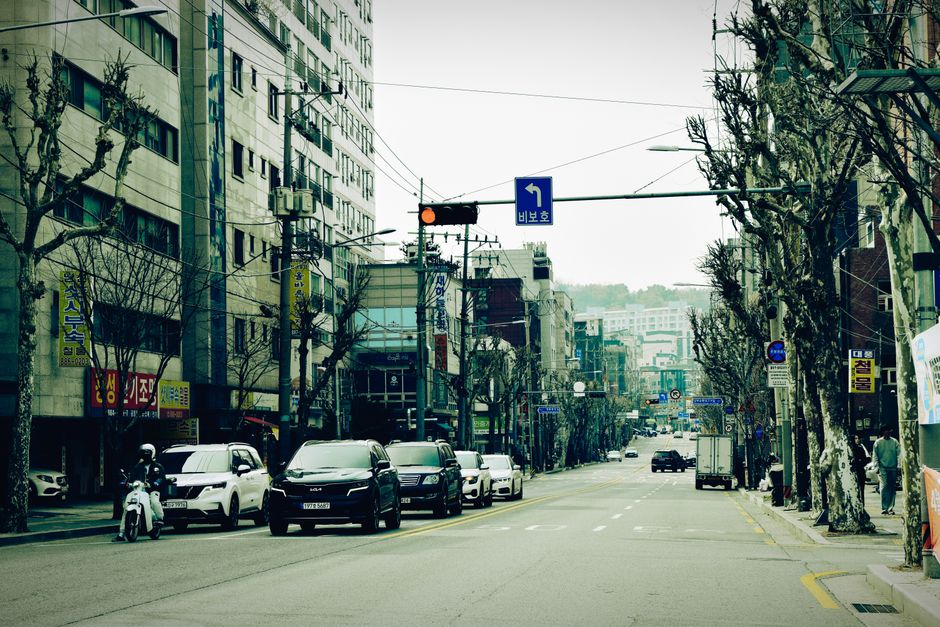
Samcheongdong is what happens when a hillside neighbourhood between the royal palace and the hanok village gets taken over by art dealers, ceramicists and espresso obsessives.
It is less “interesting alley grid” than Ikseondong and more “beautifully manicured street”—a single main strip with tree cover, gallery windows and the occasional hanok roof cutting across the view of Bugaksan Mountain.
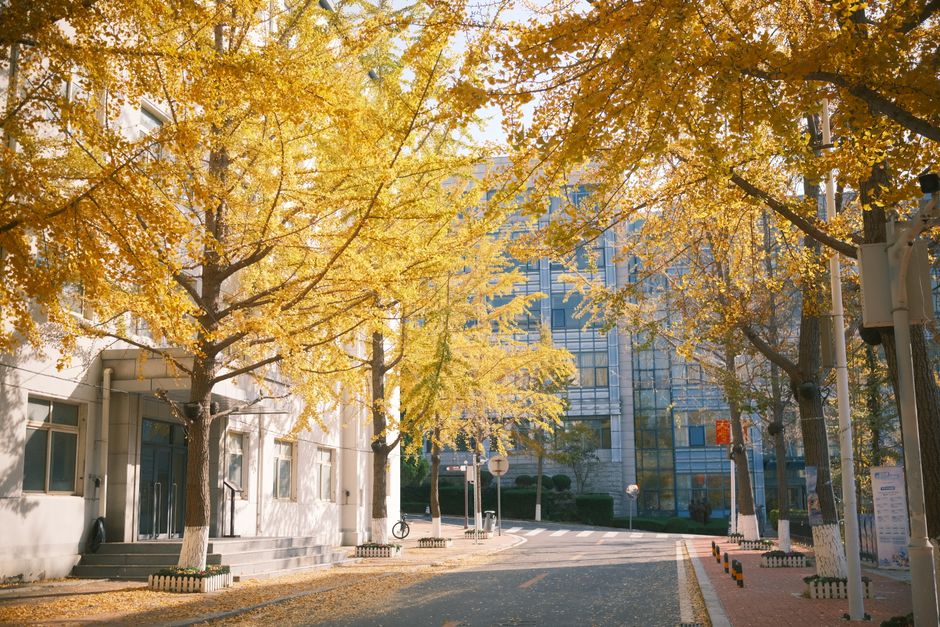
I walked up Samcheong-ro on a Wednesday in late October. The ginkgo trees were halfway to yellow, every third doorway was a gallery I had not planned to enter, and I spent 15,000 KRW on a ceramic cup that I am still using.
The street rewards people who have no fixed schedule.
A short history of Samcheongdong
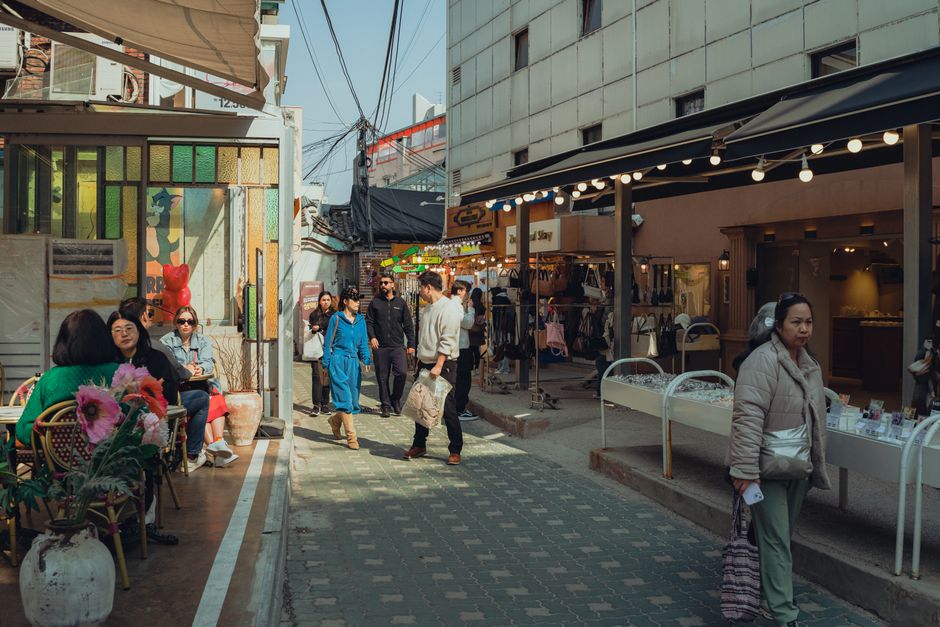
Samcheongdong gets its name from the “three cleans”: the area’s water, its mountains and its people, according to local lore.
During the Joseon dynasty, the neighbourhood sat just outside the main palace compound and housed scholars, artists and government officials who needed proximity to the royal court without the formality of living inside it.
In the 1970s and 80s, the area gentrified slowly, attracting art galleries and framing shops.
The opening of the National Museum of Modern and Contemporary Art (MMCA) nearby in 2013, the designation of Bukchon Hanok Village as a preservation zone, and the restoration of Gyeongbokgung turned the neighbourhood into Seoul’s quietest luxury strip.
Today it is the calmest upmarket neighbourhood in central Seoul—where a gallery-owner will pour you tea before showing a price list, and the loudest sound on a Tuesday morning is someone steaming milk.
What to see & do in Samcheongdong
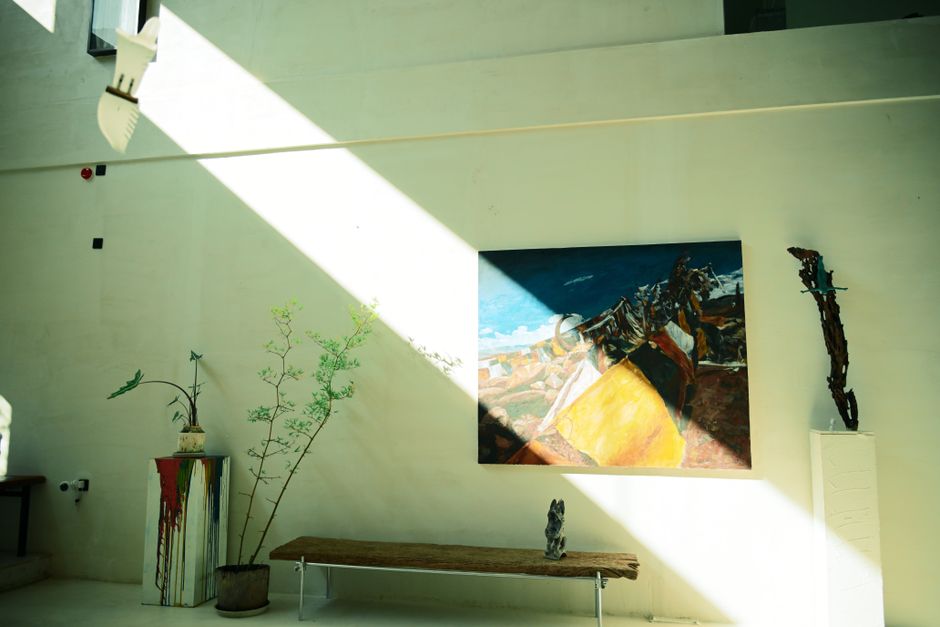
Art galleries. The street has one of Seoul’s highest concentrations of commercial galleries, roughly 20–30 along the main strip and side lanes. They run from major names (Kukje Gallery, Hyundai Gallery) to one-room spaces showing graduate work.
Entry to most galleries is free, and no one expects you to buy—just walk in, look, and walk out.
Designer boutiques and lifestyle shops. Samcheongdong is where Seoul’s smaller fashion designers, ceramicists and lifestyle brands set up flagship shops. Expect hanbok-inspired modern wear, handmade pottery, and the kind of stationery that costs more than lunch.
Prices are boutique-tier (20,000 KRW and up), but the browsing is free and the curation is higher than any mall.
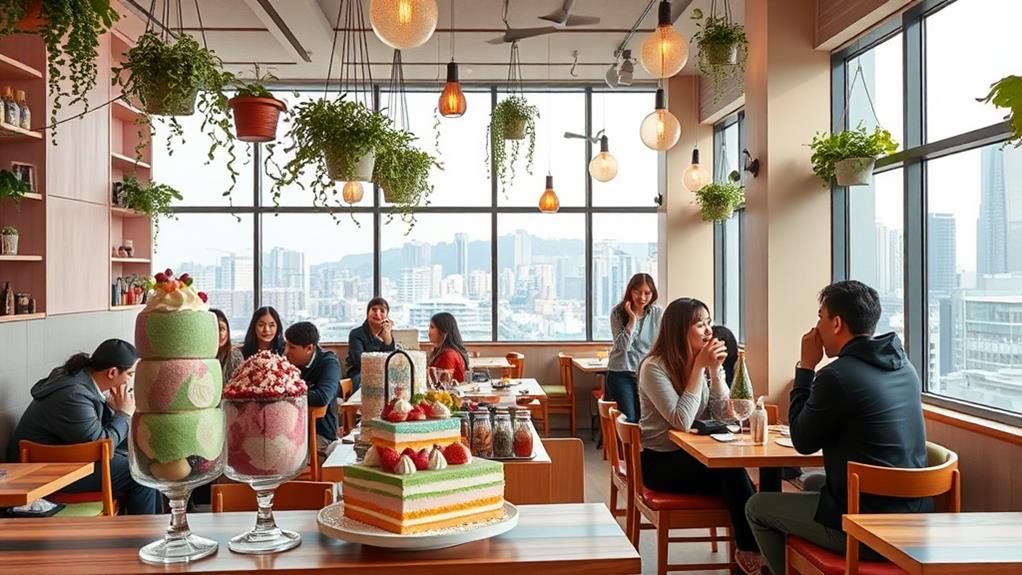
Independent cafés. This is not the volume-café density of Ikseondong or Hongdae—Samcheongdong’s cafés are spaced out, planted into hanok structures or glass-walled modern builds, and designed for lingering. A hand-drip coffee runs about 6,000–9,000 KRW. Many have rooftop terraces with Gyeongbokgung or Bugaksan views.
Samcheong Park and the Bukchon edge. At the top of Samcheong-ro the street feeds into Samcheong Park, a quiet hillside green space with walking trails and a small forest.
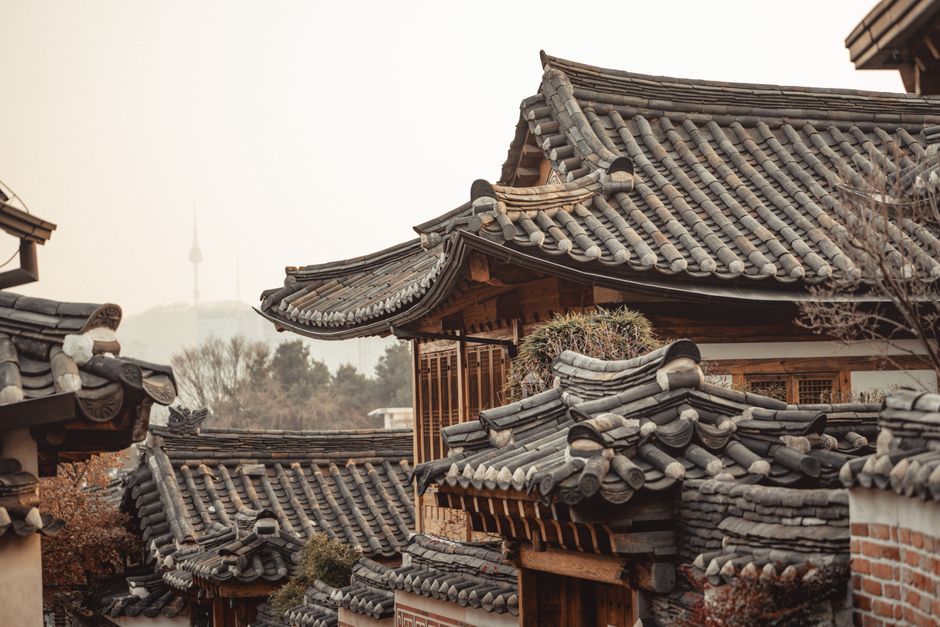
The western side streets run into Bukchon Hanok Village—the residential hanok zone where the famous photo spots of tiled roofs against Namsan Tower sit.
Tickets & opening hours (2026)
| What | Hours | Price | Note |
|---|---|---|---|
| Street + neighbourhood | 24/7 | Free | Quiet residential section to the east |
| Art galleries | ~10:00–18:00 | Free (most) | Many close Mondays; hours vary |
| Cafés | ~10:00–21:00 | ~6,000–9,000 KRW per drink | Some open 09:00 |
| Boutiques & shops | ~10:30–19:30 | Free entry | Weekend hours extend |
“Samcheongdong-gil is one of Seoul’s most charming streets, lined with art galleries, boutique shops, and cafés in renovated hanok and modern buildings. It connects the Bukchon Hanok Village to Gyeongbokgung Palace and offers a quieter alternative to Insadong.”
How to get there
| Method | Route | Walk from station |
|---|---|---|
| Subway (best) | Line 3 → Anguk Station, Exit 1 | ~8–10 minutes north on Samcheong-ro |
| From Gyeongbokgung | Exit Gyeongbokgung east gate, cross Samcheong-ro | ~5 minutes from palace exit |
| Bus | Green Jongno 02, Jongno 11; get off at Samcheongdong Community Centre | ~1 minute |
The walk from Anguk Exit 1 is roughly 600 metres along a gentle incline. You pass the MMCA (National Museum of Modern and Contemporary Art) on your left at about the 5-minute mark and then enter Samcheongdong proper. The walk is part of the experience—the street itself is the attraction.
Best time to visit
Samcheongdong is a walking street, so the weather matters. Spring (late March–May) brings cherry blossoms along the side streets and comfortable temperatures for gallery-hopping. Autumn (October–November) is the photogenic peak—the ginkgo trees lining Samcheong-ro turn gold, and the hanok rooftops against yellow foliage are a genuine Seoul postcard.
Summer (June–August) makes the uphill walk sweaty, but the cafés and galleries are air-conditioned refuges. Winter (December–February) means cold hands and fewer tourists, but the street with a dusting of snow and a hot latte from a hanok café is a specific kind of Seoul magic.
Weekday afternoons (Tuesday–Thursday, 14:00–17:00) are the quietest window. Weekends pull a mix of couples on dates, gallery crowds and Bukchon tourists, and the cafés fill up by 15:00. Go on a weekday for the full gallery-to-empty-café experience.
Samcheongdong at a glance
| Detail | Info |
|---|---|
| Best for | Art galleries, design boutiques, café culture, street photography |
| Time needed | 2–3 hours (longer if you gallery extensively) |
| Cost | Free to walk; coffee ~6,000–9,000 KRW; gallery entry usually free |
| Best day | Tuesday–Thursday afternoon |
| Language | Korean; English common in galleries and cafés |
Where to eat nearby
Samcheongdong cafés (on the main street): The street has roughly 10–15 cafés in hanok and modern builds. Many serve light food alongside coffee. Budget about 15,000–25,000 KRW for a coffee-and-brunch combination.
Gyeongbokgung area (5-minute walk south): The blocks around the palace’s east gate hold samgyeopsal houses, traditional bibimbap restaurants, and samgyetang (ginseng chicken soup) spots. Tosokchon Samgyetang, a Seoul institution, is a 10-minute walk southwest and worth the queue for a 18,000 KRW bowl of ginseng chicken soup.
Seochon village (10-minute walk west of Gyeongbokgung): A quieter, local version of the café-and-restaurant scene with less gallery pretension and more casual dining options. Try the kalguksu shops and makgeolli bars.
Where to stay nearby
Hanok guesthouses (Bukchon area): A cluster of traditional hanok stays within a 5–10 minute walk east of Samcheongdong. Private rooms from about 70,000–150,000 KRW per night. Book well in advance—they fill months ahead for spring and autumn.
Anguk / Insadong hotels: Mid-range hotels near Anguk Station, roughly 80,000–150,000 KRW per night, putting you within walking distance of Samcheongdong, Insadong, Bukchon and both palaces.
Combine it into a Seoul day
This is the cleanest Seoul culture day available. Start at Gyeongbokgung Palace (Line 3 Gyeongbokgung, Exit 5) at opening (9:00 AM) and spend about 2 hours exploring the palace grounds. Exit through the east gate directly onto Samcheong-ro around 11:00 AM.
Walk north up Samcheongdong, gallery-hopping and window-shopping, with a café stop around the halfway point. At the top, either continue into Samcheong Park for a short forest walk, or cut east into Bukchon Hanok Village for tile-roof views.
Walk back down the west side of Samcheong-ro around 15:00, then duck into Insadong (7-minute walk back toward Anguk) for tea and antiques.
Is Samcheongdong worth visiting?
If the words “gallery-hopping” and “quiet café street” appeal to you, Samcheongdong is a top-tier Seoul afternoon. If you prefer crowds, neon and noise, you will find it slow.
For the culture traveller who has already done the palace and the hanok village, this is the natural third act—and in autumn, it might be the best-looking street in the city.
What’s nearby
- Korea Travel Guide—your hub for Seoul, Busan, and beyond
- Gyeongbokgung Palace Guide—Seoul’s main royal palace, 5 minutes away
- Insadong Guide—traditional culture street, downhill 7-minute walk
- MMCA Seoul—the national modern art museum at the southern entrance to Samcheongdong
Frequently Asked Questions
What is Samcheongdong?
Samcheongdong is an upscale neighbourhood street in central Seoul lined with art galleries, designer boutiques, independent cafés and hanok-style restaurants. It sits between Gyeongbokgung Palace and Bukchon Hanok Village.
How do you get to Samcheongdong?
Line 3, Anguk Station, Exit 1. Walk north on Samcheong-ro for 8–10 minutes. The street itself is the attraction, and the walk up from Anguk is part of the experience.
Is Samcheongdong free?
Yes, the street and neighbourhood are free to walk. Most art galleries have free entry. Cafés charge 6,000–9,000 KRW for coffee, and boutiques are priced at designer tiers.
What is the best season to visit Samcheongdong?
Autumn (October–November) when the ginkgo trees lining the street turn gold against the hanok rooftops. Spring (April–May) for cherry blossoms and comfortable walking temperatures. Winter for snow-dusted hanok café scenes with dramatically fewer tourists.
How long do you need for Samcheongdong?
2–3 hours for the full experience: walk the street, visit 3–5 galleries, browse a few boutiques, stop for coffee. Add an extra hour if you plan to eat lunch on the street.
Can you combine Samcheongdong with a palace visit?
Yes—Gyeongbokgung Palace is a 5-minute walk away. Exit through the palace’s east gate directly onto Samcheong-ro. This is the most natural Seoul culture pairing: palace in the morning, gallery street in the afternoon.
Is Samcheongdong wheelchair accessible?
The street is paved and has sidewalks, but it is uphill (gentle incline). Cafés with hanok-level entryways may have steps. Galleries in modern buildings are generally accessible.
What is nearby Samcheongdong?
Gyeongbokgung Palace (5 minutes south), Bukchon Hanok Village (adjacent east), Insadong (7 minutes south), MMCA national art museum (at the southern entrance), and Changdeokgung Palace (12 minutes east).
More on Seoul:

Written by East Asia Explorer Editorial Team
Sam Konneh is an AI strategist and digital marketer based in Seoul, South Korea. With years spent living, working, and exploring across Korea, Japan, and China, he shares firsthand insights into East Asia's cultures, hidden gems, and everyday life. A graduate of Inha University and KDI Graduate School, Sam combines data-driven expertise with on-the-ground experience. His journey also includes studying in Malaysia and traveling through Southeast Asia. Through practical tips, local stories, and travel guides, he helps fellow explorers discover both the celebrated highlights and the lesser-known corners of East Asia.