Last Updated: October 18, 2026 | Originally Published: July 18, 2026
- Getting there: Tokyo to Hiroshima on the Hikari Shinkansen takes ~4 hours (¥18,040 non-reserved); the JR Pass covers Hikari/Sakura but NOT the Nozomi.
- Getting around: Hiroshima Streetcar 1-day pass is ¥700 — covers Peace Memorial Park, Hiroshima Station, and the Miyajimaguchi ferry connection.
- Miyajima timing: Check JMA tide tables at jma.go.jp to time your Itsukushima Shrine visit for either the floating torii (high tide) or the walkable gate (low tide).
- Food anchor: Okonomimura on Shintenchi Street has 24 stalls across 4 floors — go Tuesday through Thursday to avoid weekend queues.
Why Is Hiroshima Worth More Than a Day Trip From Osaka?
Most travelers squeeze Hiroshima into 8 hours from Osaka or Kyoto. That gets you the Peace Memorial Museum and one okonomiyaki lunch — and misses almost everything.
Two nights gives you Miyajima Island at two tide windows, Hiroshima Castle and Shukkeien Garden on day two, and time to eat at more than one restaurant.
According to the Japan National Tourism Organization (JNTO), Hiroshima Prefecture received 12.2 million overnight visitors in 2023, with the average stay at 1.8 nights — still short by most accounts.
The city rebuilt itself into a genuinely livable, food-forward destination. The atomic bomb history is essential context, but it is not the only reason to come.
How Do You Get to Hiroshima From Tokyo, Osaka, and Kyoto?
From Tokyo Station, the Hikari Shinkansen takes about 4 hours and costs ¥18,040 non-reserved. The 7-day JR Pass (¥50,000) covers this in full. The Nozomi cuts the journey to ~3h40min but costs the same and is not JR Pass-eligible.
From Shin-Osaka Station, the Hikari takes ~1h30min and costs ¥5,720 non-reserved. From Kyoto Station, the Sakura Shinkansen to Hiroshima takes ~1h50min at the same price. Both are JR Pass-eligible.
| Origin | Train | Duration | Cost (non-reserved) | JR Pass valid? |
|---|---|---|---|---|
| Tokyo | Hikari/Sakura | ~4h | ¥18,040 | Yes |
| Tokyo | Nozomi | ~3h40min | ¥18,040 | No |
| Shin-Osaka | Hikari/Sakura | ~1h30min | ¥5,720 | Yes |
| Kyoto | Sakura | ~1h50min | ¥5,720 | Yes |
Hiroshima Station is compact and walkable. The streetcar stop is directly outside the south exit, a 2-minute walk.
How Do You Get Around Hiroshima Without Getting Lost?
The Hiroshima Electric Railway (streetcar system) covers every major attraction. A 1-day pass costs ¥700 and pays for itself after four single rides (each ¥180–¥240 depending on zone).
Line 2 and Line 6 both run from Hiroshima Station to the Genbaku Dome-mae stop (A-Bomb Dome, Peace Memorial Park). Line 2 continues toward Miyajimaguchi, where you board the ferry to Miyajima Island. You can load the day pass onto most IC cards at the station.
The Hiroshima Sightseeing Loop Bus (Meipuru-pu) is slower but stops at Hiroshima Castle and Shukkeien Garden — sites the streetcar does not reach. A loop bus 1-day pass costs ¥400 and buses run every 15–20 minutes on the orange and green loops.
What Is Peace Memorial Park and How Long Does It Take?
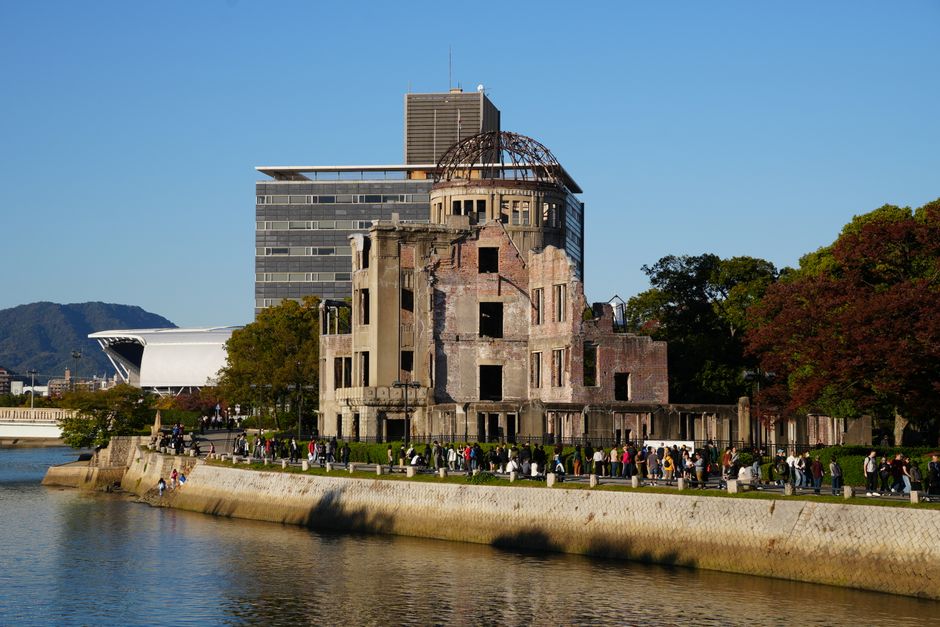
Peace Memorial Park sits on the Ota River delta, about 20 minutes west of Hiroshima Station by streetcar. The park itself is free to enter. It contains the A-Bomb Dome, the Peace Memorial Museum, the Children’s Peace Monument, and the Cenotaph for the A-Bomb Victims.
The Hiroshima Peace Memorial Museum charges ¥200 for adults and ¥50 for elementary through high school students. Budget 90 minutes minimum. The East Building traces the city’s history before August 6, 1945; the West Building documents the aftermath in graphic, necessary detail. Open 8:30am–6pm (until 7pm July–August).
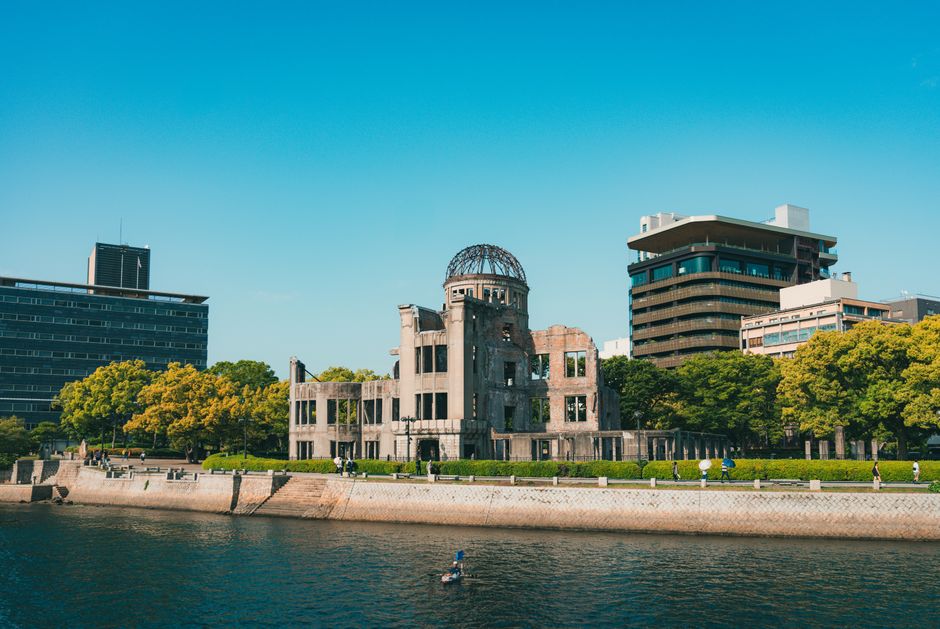
The A-Bomb Dome (Genbaku Dome) is a UNESCO World Heritage Site inscribed in 1996 — one of the only structures near the hypocenter left partially standing after the blast. Visible from outside the fence at all hours. Do not climb the surrounding embankment.
The park is quiet on weekday mornings and significantly more crowded on weekends and Japanese public holidays. August 6 — the Peace Memorial Ceremony — draws tens of thousands; arrive by 7am or the area around the Cenotaph will be inaccessible.
How Do You Visit Miyajima Island and Time the Itsukushima Shrine Torii Gate?
Miyajima Island (officially Itsukushima) is Hiroshima’s most iconic excursion. Getting there takes about 40 minutes from Hiroshima Station: take the JR Sanyo Line to Miyajimaguchi Station, then walk 5 minutes to the JR Ferry terminal for the 10-minute crossing. Adult fare: ¥180.
The JR Ferry is covered by the JR Pass.
The famous floating torii gate of Itsukushima Shrine — a UNESCO World Heritage Site since 1996 — only appears to float at high tide. At low tide the base is exposed and you can walk out to it. Both experiences are worth having.
Check the Japan Meteorological Agency’s free tide tables (jma.go.jp) before you go.
| Tide State | Torii Gate Appearance | Best For |
|---|---|---|
| High tide | Floats on water, full reflection | Iconic photography, boat tours |
| Low tide | Walkable base, full structure visible | Close-up inspection, scale photos |
| Sunset (either) | Orange-pink light on torii and water | Best light regardless of tide state |
Itsukushima Shrine entry costs ¥300 per adult. Open 6:30am–6pm in most seasons (hours vary by month). After the shrine, the 300-meter Omotesando shopping street sells momiji manju (maple leaf cakes with red bean filling) from over a dozen stalls. Prices start at ¥100 per piece.
Are Hiroshima Castle and Shukkeien Garden Worth the Time?
Hiroshima Castle (Hiroshima-jo) is a five-story reconstructed keep — the original was destroyed in 1945. The interior museum covers samurai-era castle life and the history of Hiroshima as a castle town. Entry is ¥370 for adults. The top floor has good panoramic views of the city and surrounding delta.
A combination ticket covering both Hiroshima Castle and Shukkeien Garden costs ¥530. Shukkeien (¥260 separately) is a 400-year-old daimyo garden with a central pond, stone lanterns, and wisteria trellises. The garden is a 15-minute walk from the castle or one stop on the Sightseeing Loop Bus.
Both sites close by 6pm.
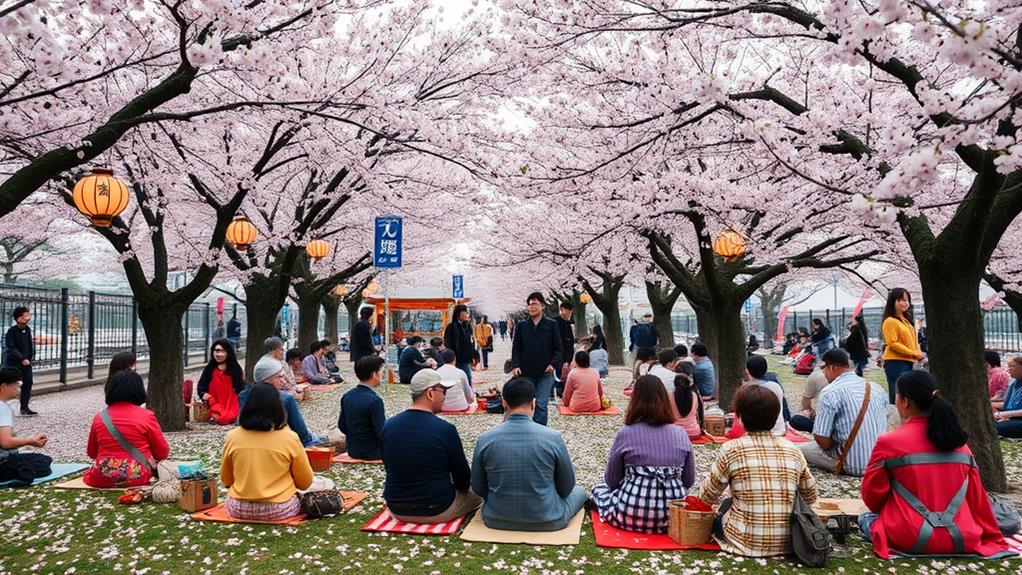
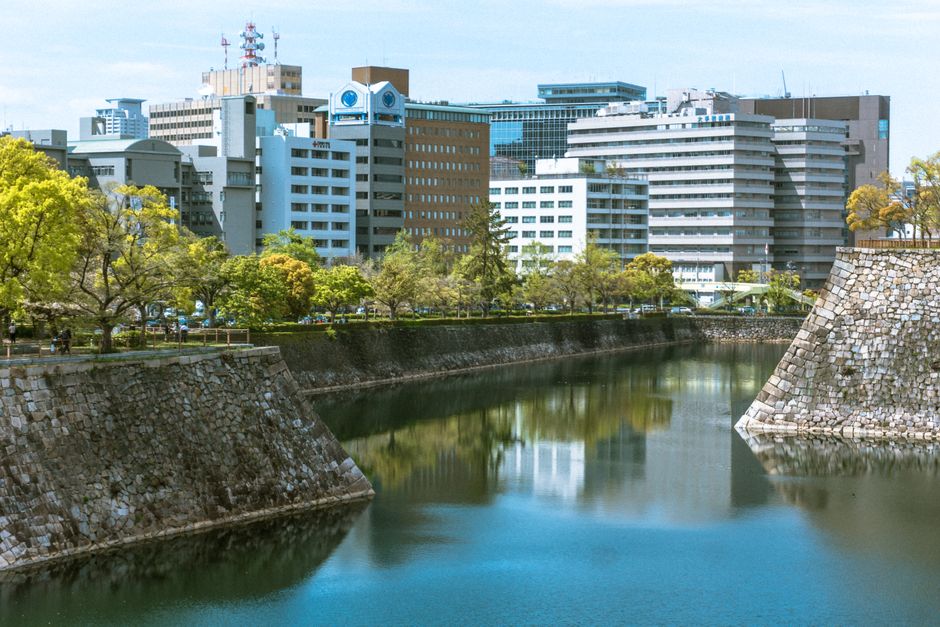
The Hiroshima Castle grounds (not the keep itself) are free and popular for hanami (cherry blossom viewing) in late March. The moat lined with sakura trees is one of the better blossom spots in western Japan.
What Is Hiroshima Okonomiyaki and Where Should You Eat It?
Hiroshima-style okonomiyaki is layered, not mixed. A thin crepe base is topped with cabbage, bean sprouts, noodles (yakisoba or udon), protein, and a fried egg — each component added in sequence on the teppan griddle and flipped as a stack. Osaka-style mixes everything into the batter at once.
Okonomimura on Shintenchi Street (a 5-minute walk from Genbaku Dome-mae streetcar stop) is a 4-floor building with roughly 24 individual teppan stalls. Each seats 6–10 at the counter. Prices run ¥800–¥1,200. Open approximately 11am–10pm daily.
Three stalls consistently draw shorter waits on weekday mornings:
- Hassei (3F, Okonomimura): generous yakisoba noodle layer, longest-running stall in the building.
- Okonomi-yaki Kiji: old-school, not in Okonomimura — the main shop is near Shin-Ootemachi Station. Slower service, fewer tourists.
- Micchan: Hiroshima’s most famous okonomiyaki chain, multiple city locations, reliable for first-timers.
What Else Should You Eat in Hiroshima?
Hiroshima sits at the mouth of the Seto Inland Sea, which means exceptional oysters year-round. The city produces approximately 60% of Japan’s farmed oyster output, according to the Hiroshima Prefectural Federation of Fisheries Cooperative Associations.
For oysters, Kanawa is a floating oyster boat-restaurant moored on the Motoyasu River near Peace Memorial Park. Operating since 1976, it serves grilled oyster sets from ¥1,500–¥2,500 and is one of the most distinctive dining experiences in western Japan. Peak oyster season runs October through April.
Other local specialties:
- Anago (conger eel) rice: Miyajima Island is the benchmark — anago-meshi lunch boxes on the island start at ¥1,800 and are sold at stalls along Omotesando Street.
- Momiji manju: Maple leaf cakes filled with red bean paste, cream cheese, or chocolate. The original Yamazaki shop on Miyajima has been making them since 1903.
- Tsukemen (dipping ramen): A small but serious tsukemen scene exists in Hiroshima’s Nagarekawa entertainment district.
Where Should You Stay in Hiroshima?
Two areas suit most visitors. The Peace Memorial Park area (Naka-ku, near Motomachi and Kamiya-cho streetcar stops) puts you within walking distance of the museum and A-Bomb Dome. Budget guesthouses in this area run ¥4,000–¥8,000 per night. Mid-range options near the waterfront run ¥12,000–¥20,000.
The Hiroshima Station area offers faster access to the shinkansen and more convenience stores within walking distance. APA Hotel Hiroshima Ekimae is a reliable ¥6,000–¥10,000 per night option with shinkansen platform views from upper floors. The Granvia Hotel connects directly to the station concourse.
Day Trip vs. Two Nights: Which Makes More Sense for Your Itinerary?
A day trip from Osaka or Kyoto (7–8 hours in Hiroshima) covers Peace Memorial Park and one meal. It does not give you Miyajima with any flexibility, and it skips Hiroshima Castle and the food scene almost entirely.
Two nights covers everything properly: Peace Memorial Park and Kanawa oysters on arrival afternoon; Miyajima at two tide windows plus a Shinkansen arrival on day two morning; castle and garden in the afternoon; Okonomimura two evenings in a row to try different stalls.
The JNTO’s Hiroshima destination feature (japan.travel) recommends a minimum of two nights for travelers pairing Hiroshima with the broader Chugoku region. For Kyushu-bound travelers, Hiroshima makes a natural overnight stop on the way from Osaka to Fukuoka or Nagasaki.
When Is the Best Time to Visit Hiroshima?
Hiroshima’s four seasons each offer something distinct:
- Late March–early April: Cherry blossom season. Hiroshima Castle moat and Shukkeien Garden are among the best hanami spots in western Japan. Crowds are high and accommodation books 6–8 weeks out.
- August 6: Peace Memorial Ceremony at 8:15am in Peace Memorial Park. Solemn, moving, very crowded. Book accommodation months in advance.
- November: Autumn foliage peaks at Miyajima and Shukkeien around November 15–25. Weather is mild (14–18°C), ideal for walking.
- December–February: Quietest and cheapest period. Occasional snow on Miyajima. Oyster season is at its peak. Accommodation prices are noticeably lower than spring cherry blossom and August peak rates.
Hiroshima rewards staying. Peace Memorial Park takes 2 hours. Miyajima Island needs half a day minimum. Add one night and the trip shifts from “I saw the A-Bomb Dome” to a genuine understanding of what this city has rebuilt — and why it keeps drawing back the people who visit it once.
What Are the Practical Tips for Hiroshima in 2026?
IC cards: The Hiroshima Electric Railway accepts ICOCA, Suica, and Pasmo at all gates. Top-up machines at Hiroshima Station accept cash and most international Visa/Mastercard. The city also supports Hiroshima Pay (QR) at many smaller restaurants.
eSIM / SIM: Hiroshima Airport (HIJ) has Softbank and au SIM counters in the arrivals hall. Bic Camera near the south exit of Hiroshima Station carries IIJmio, Rakuten, and NTT Docomo SIMs.
Airalo sells Japan eSIMs in several data sizes; they install by QR code and work on most unlocked, eSIM-capable phones.
We earn a commission if you book through links on this page, at no extra cost to you. See our affiliate disclosure.
Get an Airalo eSIMSafety: Japan holds a US State Department Level 1 travel advisory (Exercise Normal Precautions) as of 2026. Hiroshima has no specific advisories. The city is considered one of Japan’s safer destinations.
Radiation: There is no elevated radiation at any tourist site in Hiroshima. The US Embassy in Japan, IAEA, and the Hiroshima City government have all confirmed that background radiation at Peace Memorial Park is equivalent to any other Japanese city.
This question comes up often — the answer is always the same.
“Hiroshima combines world-class historical significance, outstanding natural surroundings at Miyajima, and a local food culture unlike anywhere else in Japan. It consistently ranks as one of the top recommended destinations for international visitors to western Japan.”
— Japan National Tourism Organization (JNTO), Hiroshima Destination Feature, 2026
Frequently Asked Questions About Visiting Hiroshima
Is Hiroshima safe to visit in 2026?
Yes. Hiroshima is extremely safe. Japan holds a US State Department Level 1 advisory (Exercise Normal Precautions). There is no elevated radiation at any tourist site in the city.
How many days do you need in Hiroshima?
A minimum of 2 nights (allowing 3 days of activity) lets you cover Peace Memorial Park, Miyajima Island, and Hiroshima Castle properly. A day trip is technically possible but misses most of the food culture and Miyajima flexibility.
Does the JR Pass cover Hiroshima?
Yes — the Hikari and Sakura Shinkansen are JR Pass-eligible. The Nozomi is not. The JR Ferry from Miyajimaguchi to Miyajima Island is also covered by the standard JR Pass.
What is Hiroshima famous for besides the atomic bomb history?
Hiroshima is famous for its layered okonomiyaki style, Miyajima Island and Itsukushima Shrine, fresh Seto Inland Sea oysters, conger eel rice, and the Hiroshima Carp baseball team (Mazda Zoom-Zoom Stadium, also worth a visit during the NPB season).
Can you do Hiroshima and Miyajima in one day?
Technically yes, with an early start. Arriving in Hiroshima by 9am, spending 2 hours at Peace Memorial Park, then 3 hours on Miyajima, is doable — but leaves no time for Hiroshima Castle, the food scene, or any flexibility if the ferry is delayed.
How expensive is Hiroshima compared to Tokyo?
Hiroshima runs about 15–20% cheaper than Tokyo for accommodation and meals. A budget traveler can manage on ¥6,000–¥9,000 per day. Mid-range (nicer hotel + restaurant meals + attraction entry) runs ¥18,000–¥30,000 per day.
What language is spoken in Hiroshima?
Japanese. Hiroshima-ben (the local dialect) has distinct vocabulary and intonation, but Peace Memorial Museum has excellent English translations throughout, and most tourist-facing services at Miyajima have English signage.
How far is Hiroshima from Tokyo by train?
About 4 hours on the Hikari Shinkansen (¥18,040 non-reserved, JR Pass-eligible) or 3h40min on the Nozomi (same price, not JR Pass-eligible). Flying to Hiroshima Airport (HIJ) is rarely faster once you factor in check-in and airport transit time.
Last updated: 2026-06-17. Prices and hours are current as of publication date; verify at official sources before travel.
More on Japan Destinations:

Written by East Asia Explorer Editorial Team
Sam Konneh is an AI strategist and digital marketer based in Seoul, South Korea. With years spent living, working, and exploring across Korea, Japan, and China, he shares firsthand insights into East Asia's cultures, hidden gems, and everyday life. A graduate of Inha University and KDI Graduate School, Sam combines data-driven expertise with on-the-ground experience. His journey also includes studying in Malaysia and traveling through Southeast Asia. Through practical tips, local stories, and travel guides, he helps fellow explorers discover both the celebrated highlights and the lesser-known corners of East Asia.