Last Updated: September 12, 2026 | Originally Published: July 13, 2026
- KTX from Busan takes 28–35 minutes (~₩14,600); from Seoul, ~2h 30min (₩35,000–70,000)
- Bulguksa Temple and Seokguram Grotto are both free admission as of 2026
- Rent a bike for the downtown cluster; take city bus 10 or 11 to reach Bulguksa
- Visit Donggung Palace & Wolji Pond at night — the light show makes it the city’s best photo spot
Every guide calls Gyeongju “Korea’s open-air museum.” That’s true — and almost useless for planning an actual trip.
What they don’t tell you: the sites split into two zones that require completely different transport. Getting that wrong means spending your afternoon on the wrong bus or walking distances that look short on a map but aren’t.
I spent two days here in spring and made most of those mistakes so you don’t have to. Here’s how to plan Gyeongju properly — and what’s worth going out of your way for. All prices as of 2026 — verify before travel.
Getting to Gyeongju
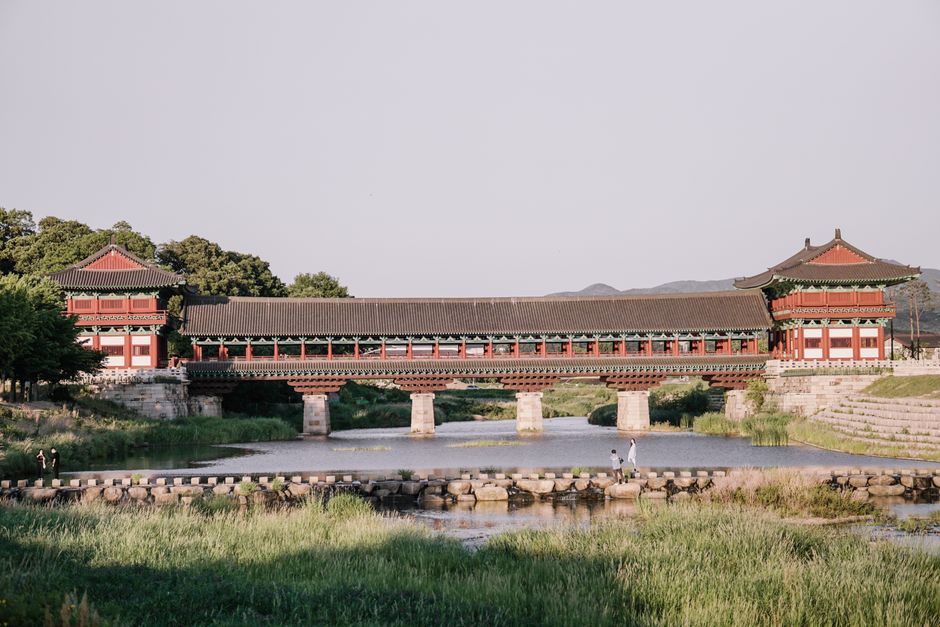
Coming from Busan, the KTX is the obvious call. It runs from Busan Station to Singyeongju Station in 28–35 minutes for around ₩14,600 (~$11). Trains run frequently throughout the day.
If you’re on a tighter budget, the intercity bus from Busan’s Nopo Bus Terminal takes about 50 minutes and costs ₩5,000–9,000. Slower, but it drops you closer to the downtown attraction cluster.
If you take the KTX, note that Singyeongju Station sits about 8km west of downtown. Budget ₩10,000–12,000 for a taxi into the center, or take local bus 60 or 61. Don’t confuse it with the older Gyeongju Station on the Donghae Line — that one actually is downtown.
From Seoul, the KTX takes roughly 2 hours 30 minutes and costs ₩35,000–70,000 depending on seat class and timing. The express bus is cheaper but adds an hour and deposits you downtown, which is convenient for the tomb cluster.
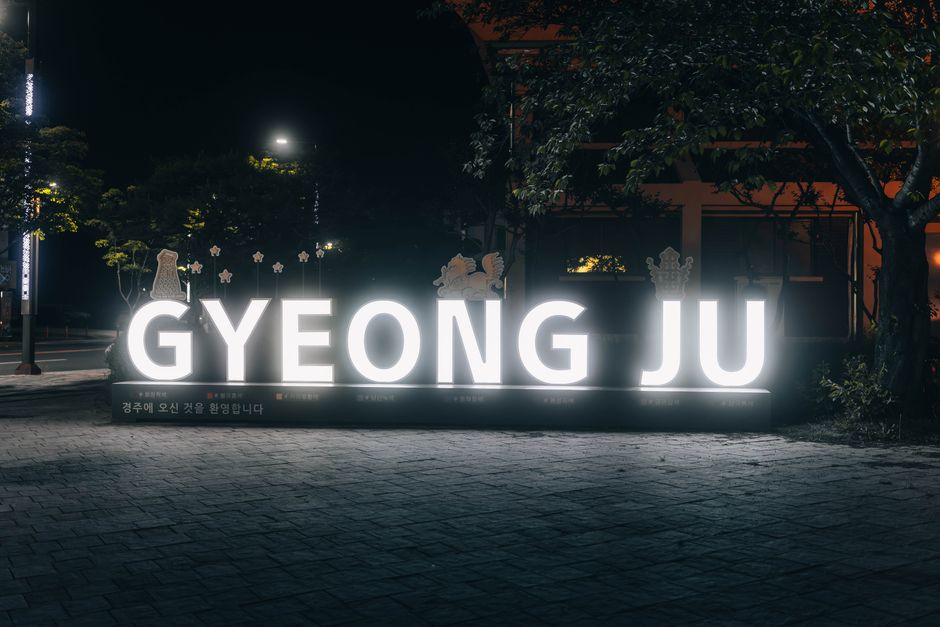
The Two-Zone Problem (And How to Solve It)
Gyeongju’s main attractions divide into two distinct zones, and most first-timers don’t realize this until they’re standing in the wrong place.
Zone 1 — Downtown: Tumuli Park (burial mounds), Cheomseongdae Observatory, Donggung Palace & Wolji Pond. All within a 15-minute bike ride of each other.
Zone 2 — Tohamsan Mountain: Bulguksa Temple and Seokguram Grotto. These sit 15km southeast of downtown. You cannot realistically bike there.
Rent a bike for Zone 1. Take city bus 10 or 11 (from Gyeongju Intercity Bus Terminal) for Zone 2. City buses run every 15–20 minutes and cost ₩1,500. A taxi from downtown to Bulguksa costs roughly ₩15,000–18,000 one-way.
Bike rental clusters near Gyeongju Station (the old downtown station) and around Tumuli Park. Expect ₩3,000–5,000 per hour or ₩10,000–15,000 for a full day. Electric bikes cost more but are worth it if you’re doing the full downtown loop.
Tumuli Park: Don’t Just Walk Around the Outside
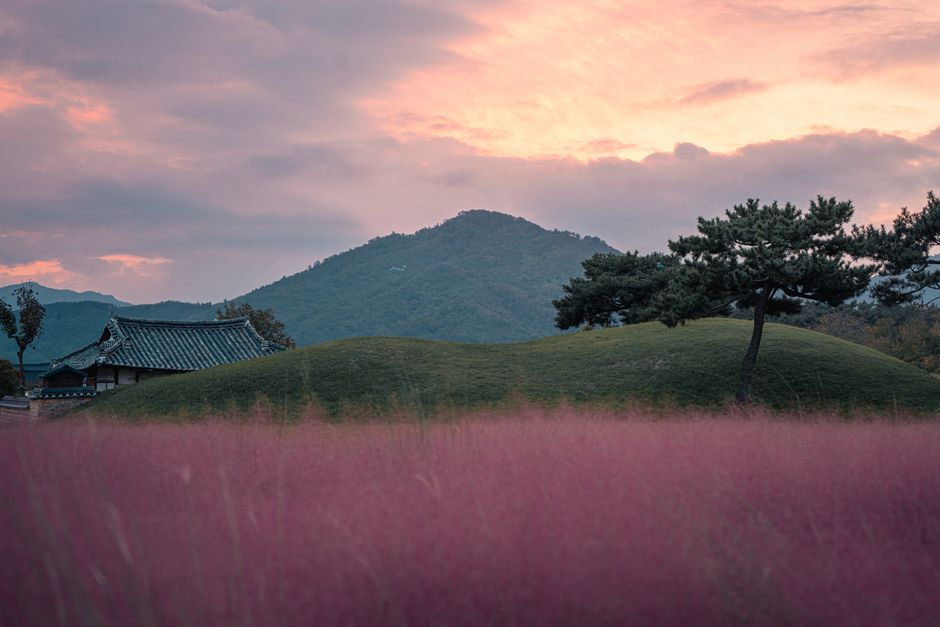
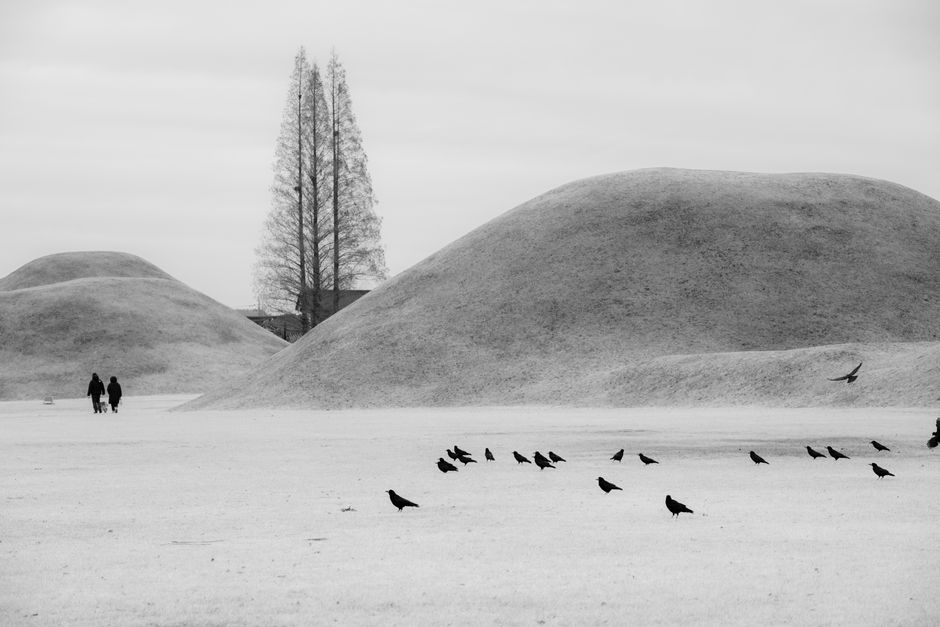
The Daereungwon Tomb Complex inside Tumuli Park is where most visitors make their biggest mistake. They walk the perimeter of the burial mounds, take photos, and leave.
One tomb — Cheonmachong — has been fully excavated and opened to the public.
You can walk inside and see the burial chamber structure, the 11,500 artifacts recovered from the site, and the famous “Cheonmado” painting: a flying horse depicted on a birch-bark mudguard, the only Silla painting of its kind ever found.
That interior experience takes 20 minutes and completely reframes the mounds outside. It’s the difference between seeing a shape on the field and understanding what’s actually buried here. According to the Gyeongju National Museum, the tomb dates to around the 5th–6th century AD.
Entry to the Daereungwon area: Adults ₩3,000, Teens ₩2,000, Children ₩1,000 (as of 2026). The wider park grounds are free to walk.
Weekend crowds at Tumuli Park can be heavy, especially during cherry blossom season (late March to early April) and autumn foliage (mid-October to early November). Arrive before 10am or after 3pm if visiting on a weekend during those periods.

Cheomseongdae: Worth Five Minutes, Not an Hour
Cheomseongdae is the oldest surviving astronomical observatory in Asia, built in the 7th century during the reign of Queen Seondeok of Silla. It’s a 9-meter granite cylinder of 362 stones, reportedly representing the 362 days of the lunar calendar.
Entry is free. The honest assessment: you can see everything in 5–10 minutes. It’s small, you can’t go inside, and the surrounding park is pleasant but not a destination on its own.
What makes it worth visiting is positioning. Cheomseongdae is a 5-minute walk from Donggung Palace and pairs naturally with the tomb cluster on the same afternoon. Treat it as a waypoint, not an anchor.
The structure is lit up at night. If you’re heading to Wolji Pond after dark, swing by — it photographs well against a dark sky with minimal extra effort.
The downtown cluster is best done in this order: arrive at Tumuli Park by 2pm, see the Cheonmachong excavated tomb, bike to Cheomseongdae, then reach Donggung Palace at sunset and stay for the evening light show. The whole loop takes about 4 hours.
Donggung Palace & Wolji Pond at Night
This is the most underrated stop in Gyeongju. Most guidebooks bury it at the bottom of a list.
Donggung Palace — also called Anapji Pond — was built in 674 AD as a royal pleasure garden. Three reconstructed pavilions stand along the edge of a large artificial pond.
When the complex illuminates after dark, the reflections in still water create one of the most photogenic scenes in South Korea.
Opening hours: 09:00–21:30 (exit by 22:00). Admission: Adults ₩3,000, Teens ₩2,000, Children ₩1,000. Seniors 65+ free with valid ID.
Get there at dusk — around 7:30–8pm in spring and summer, earlier in autumn. That 20-minute transition window from natural to artificial light is what produces the reflection shots you’ve seen on Instagram.
“Wolji Pond rewards patience. Arrive when there’s still a little daylight left in the sky and stay until the pavilion lights are fully reflected in the water. The sweet spot is a 30-minute window — don’t rush it.”
— Korea Tourism Organization travel tip, official Visit Korea guidance
Bulguksa Temple (Zone 2)
Bulguksa is a UNESCO World Heritage site and the architectural landmark of the Silla Dynasty. Built in 528 AD and restored repeatedly after the Imjin War (1592–1598), it houses seven National Treasures — including Dabotap Pagoda and Seokgatap Pagoda, two distinct stone towers standing in the main courtyard.
Admission: Free as of 2026. Budget 60–90 minutes for the full complex.
One thing most guides skip: the ceremonial staircase approach — Cheongungyo and Baegungyo bridges — is a National Treasure in itself. It was designed to represent the boundary between the mortal world and the Buddhist area. Photography from the courtyard looking down is excellent.
| Feature | Detail |
|---|---|
| Admission | Free (as of 2026) |
| Opening hours | 07:00–18:00 (summer), 07:30–17:30 (winter) |
| Getting there | City bus 10 or 11 from Gyeongju Bus Terminal (~40 min, ₩1,500) |
| Time needed | 60–90 minutes |
| Photography | Yes, throughout grounds; no flash inside the main hall |
Seokguram Grotto
Seokguram sits 4km above Bulguksa on Tohamsan Mountain. Completed in 774 AD, it houses a 3.45-meter granite Buddha statue positioned to face east toward the sea. The engineering is remarkable: 360 granite blocks fitted without mortar or binding agent, achieving a dome structure that survived over 1,200 years.
Admission: Free as of 2026. Photography inside is not permitted — moisture from flash photography was accelerating deterioration of the stonework.
From Bulguksa, you can take a shuttle bus (₩1,000, runs from the parking area) or hike the forest trail in 45–55 minutes. The hike is shaded and not steep — worth doing if you have the energy for the views and the quiet.
Visit Seokguram before 9am on a weekday. The grotto chamber is small and groups are led through in batches. An uncrowded 10-minute visit is far more meaningful than a rushed one shared with 20 people. From the grotto, hike down to Bulguksa rather than taking the shuttle up — you see more and avoid the morning tour bus crowd.
What to Eat in Gyeongju
Gyeongju has its own regional food identity and it’s worth planning around.
Gyeongju Bbang (경주뱵): The city’s most famous export. Small bun-shaped pastries filled with red bean paste, stamped with a replica of the Silla-era flying horse. Every bakery near Tumuli Park sells them. A box of 10 costs around ₩8,000–10,000.
Ssambap: A Gyeongju specialty — a full set meal of rice, grilled meats, fermented vegetables, and multiple small side dishes, eaten wrapped in lettuce. Restaurants along the main street east of Tumuli Park serve this for ₩15,000–20,000 per person.
Gyeongju is doable as a day trip from Busan (35-minute KTX). For Seoul visitors, one overnight works well — Zone 1 downtown in the afternoon, Wolji Pond at night, then Zone 2 (Bulguksa + Seokguram) the next morning before the return train.
Frequently Asked Questions
Is Gyeongju worth visiting from Seoul?
Yes, if you have two days. The KTX makes it accessible, and Gyeongju holds four UNESCO-listed heritage sites in a single city: Bulguksa Temple, Seokguram Grotto, Tumuli Park, and Cheomseongdae — all part of the “Historic Areas of Gyeongju” World Heritage designation since 2000.
How much does a day in Gyeongju cost?
With free entry to Bulguksa and Seokguram, your main costs are transport and food. A comfortable day from Busan — return KTX (₩29,200), bike rental (₩10,000), Daereungwon entry (₩3,000), Wolji Pond (₩3,000), lunch and dinner (₩30,000) — runs roughly ₩75,000–90,000 ($55–70) total.
Is one day enough for Gyeongju?
Enough to see the highlights — yes. Comfortable without feeling rushed — borderline. From Busan, one day works well. From Seoul, two days is the better choice unless you’re willing to move quickly and skip Zone 2 or Zone 1.
When is the best time to visit Gyeongju?
April (cherry blossoms at Tumuli Park) and October–November (autumn foliage) offer the best scenery. Book accommodation well in advance for those windows. Avoid Chuseok holiday (usually late September or early October) when domestic tourism surges sharply.
Last updated: May 2026. Prices and hours change — verify with official sources before travel. Korea Tourism Organization: english.visitkorea.or.kr
More on Korea Destinations:
Planning a trip to Korea?
Check out our Korea Travel Hub for more guides, including Korean BBQ Guide.

Written by East Asia Explorer Editorial Team
Sam Konneh is an AI strategist and digital marketer based in Seoul, South Korea. With years spent living, working, and exploring across Korea, Japan, and China, he shares firsthand insights into East Asia's cultures, hidden gems, and everyday life. A graduate of Inha University and KDI Graduate School, Sam combines data-driven expertise with on-the-ground experience. His journey also includes studying in Malaysia and traveling through Southeast Asia. Through practical tips, local stories, and travel guides, he helps fellow explorers discover both the celebrated highlights and the lesser-known corners of East Asia.