Last Updated: July 14, 2026 | Originally Published: July 13, 2026
Complete Guide to Visiting Seoul in 2026: Neighborhoods, the AREX Train, and What ₩120,000 a Day Buys
Quick Answer
- Most travelers from the US, UK, EU, Canada, and Australia need a K-ETA (₩10,000, valid 3 years) before flying — though Korea waived it for 22 nationalities through December 2026.
- The AREX Express Train runs Incheon Airport to Seoul Station in 51 minutes for ₩11,000; the cheaper All-Stop train is ₩4,750.
- Buy a T-money card (₩4,000 shell) at any convenience store — one subway ride is about ₩1,500.
- Budget roughly ₩120,000 (~US$88) per day for a mid-range trip covering a guesthouse bed, transit, two restaurant meals, and one paid attraction.
Seoul rewards travelers who plan the first 48 hours and improvise the rest. The transit is world-class, the food is cheap and excellent, and the city is safe enough to walk at 2am.
This guide covers the decisions that actually shape a trip: visa paperwork, the airport train, which neighborhood to sleep in, and what a realistic day costs. The prices below are current as of 2026.
Do you need a visa or K-ETA to visit Seoul in 2026?
Seoul runs on great skincare. Keep your routine going after the trip: Shop authentic K-beauty at K-Beauty Content, shipped direct from Korea.
Most Western tourists do not need a visa, but many need a K-ETA travel authorization first. The Korea Electronic Travel Authorization costs ₩10,000 and stays valid for three years across multiple visits.
There is a wrinkle worth knowing. The Korea Tourism Organization confirmed a temporary K-ETA waiver for 22 nationalities — including the US, UK, Canada, Australia, Japan, and most of the EU — running through December 31, 2026.
That means many readers can currently fly in with just a passport and a printed onward ticket. I still recommend applying for the K-ETA anyway if you want certainty, because waiver policies shift with little notice.
Pro Tip: Apply for the K-ETA on the official k-eta.go.kr site at least 72 hours before departure. Dozens of look-alike sites charge a US$40–90 “service fee” for the same ₩10,000 application.
The US State Department lists South Korea as a Level 1 advisory — “exercise normal precautions,” its lowest risk tier. That is the same rating as Japan and most of Western Europe.
Whether you use a K-ETA or a waiver, immigration may still ask for proof of onward travel and an address for your stay. Have your return flight and first hotel booking saved offline, since airport Wi-Fi can be slow at the e-gates.
How do you get from Incheon Airport to central Seoul?
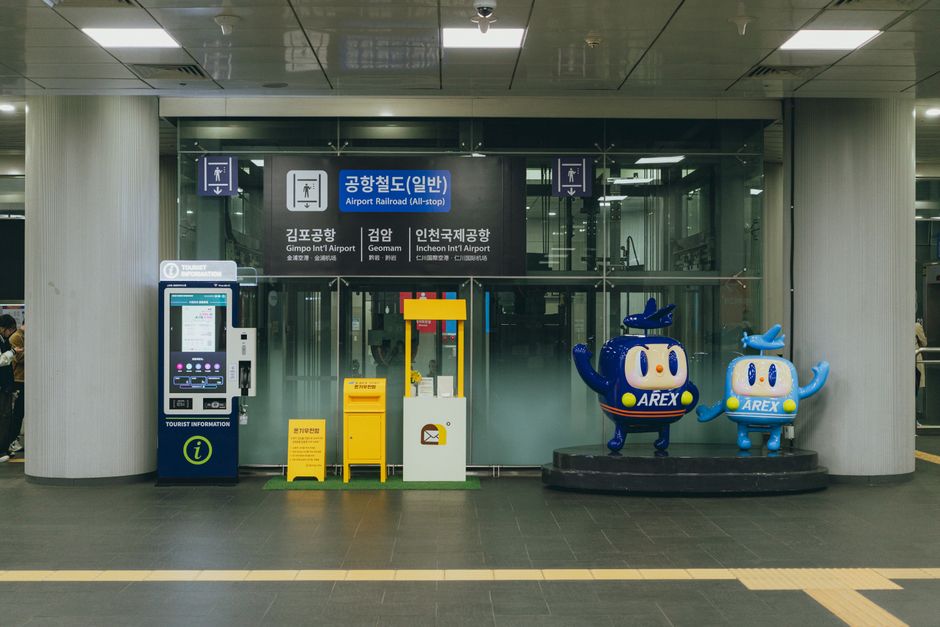
The fastest reliable option is the AREX Express Train from Incheon International Airport (ICN) to Seoul Station. It runs 51 minutes nonstop with assigned seats and luggage racks.
Most budget travelers take the AREX All-Stop train instead. It costs less than half the express fare, accepts a tapped T-money card, and reaches central Seoul in about 66 minutes.
If you land after midnight, both AREX lines stop running. Your options become the 6001/6015 KAL Limousine buses or a Kakao T taxi, which runs roughly ₩65,000–90,000 to Hongdae or Myeongdong with the late-night surcharge.
| Option | Time to central Seoul | Cost (KRW) | Best for |
|---|---|---|---|
| AREX Express (nonstop) | 51 min | ₩11,000 | First arrival, jet-lagged, heavy bags |
| AREX All-Stop | ~66 min | ₩4,750 | Budget travelers with a T-money card |
| KAL Limousine bus | 70–90 min | ₩18,000 | Hotels with a direct bus stop |
| Kakao T taxi | 60–75 min | ₩55,000–90,000 | Late-night arrivals, groups of 3–4 |
Which Seoul neighborhood should you stay in?
The right base depends on whether you want nightlife, palaces, or shopping at your doorstep. Seoul is huge, but the subway makes almost any central neighborhood workable.
For first-timers, I steer people toward Myeongdong or Hongdae. Myeongdong puts you between the palace district and the shopping streets; Hongdae trades quiet for energy, cafes, and live music near Hongik University.
Insadong and Bukchon suit travelers who want hanok streets and tea houses. Gangnam, south of the Han River, is polished and business-oriented but a longer ride from the historic core.
Itaewon is the most international quarter, with global restaurants and a visible expat scene near the old US garrison. It pairs well with the nearby Leeum Museum and the cafes of Hannam-dong if you want a less touristy base.
| Neighborhood | Vibe | Dorm bed / mid-range (KRW) |
|---|---|---|
| Myeongdong | Central, shopping, easy transit | ₩28,000 / ₩130,000 |
| Hongdae | Nightlife, cafes, students | ₩25,000 / ₩110,000 |
| Insadong / Bukchon | Hanok streets, tea houses, palaces | ₩30,000 / ₩140,000 |
| Gangnam | Upscale, modern, business | ₩32,000 / ₩160,000 |
How does Seoul’s subway and T-money card work?
Seoul’s subway is the backbone of any visit, and a T-money card is how you pay for it. Buy the card shell for ₩4,000 at any GS25, CU, or 7-Eleven, then load cash value at the same counter or a station kiosk.
A single subway ride starts around ₩1,500 and rises slightly with distance. The same card works on city buses, most taxis, and convenience-store purchases, and transfers between subway and bus are free within 30 minutes.
There is one operator-grade annoyance. T-money top-up machines and many convenience-store counters are cash-only for reloads, so keep ₩10,000 notes on hand even though Seoul is otherwise a tap-to-pay city.
Pro Tip: Download the Naver Map or Kakao Map app before you arrive. Google Maps gives walking directions in Korea but cannot route public transit reliably, since Korea restricts mapping-data exports.
For taxis, use the Kakao T app rather than hailing on the street. It shows the fare estimate, pins your pickup in English, and pays through the app, which removes the language friction late at night.
Mind the clock at night. Most subway lines run until around midnight, with last trains near 12:30am on weekdays, so check your route before a late dinner or budget for a Kakao T taxi home.
What are the must-see sights in Seoul?
Seoul’s headline sights cluster in the historic north, which makes a tight walking circuit possible. Start at Gyeongbokgung, the largest of the five Joseon palaces, and time your visit for the 10:00 or 14:00 changing-of-the-guard ceremony.
From there, Bukchon Hanok Village is a 10-minute walk uphill. It is a living residential quarter of restored hanok houses, so keep your voice down — signs and wardens enforce quiet hours because people actually live there.
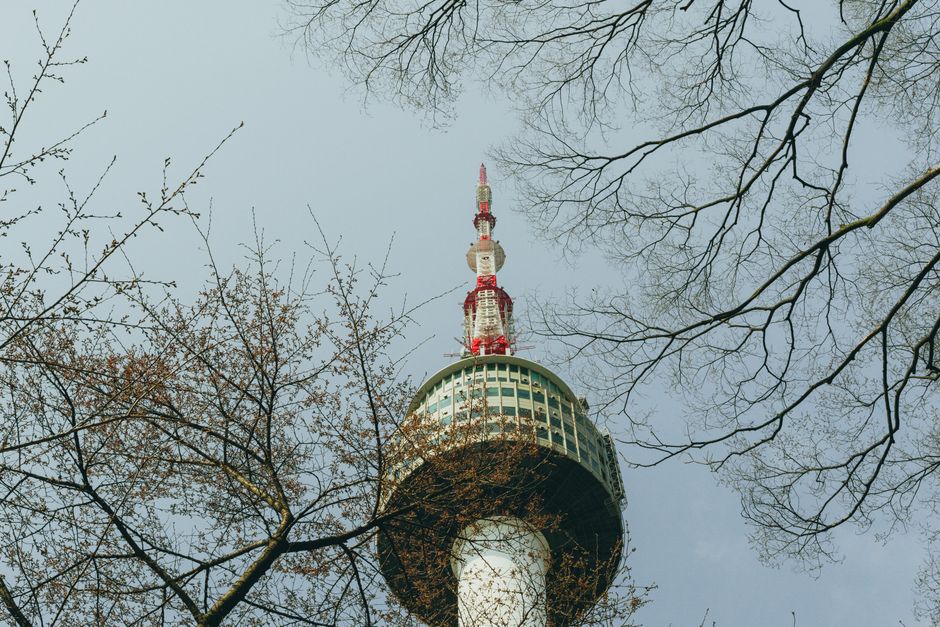
Changdeokgung and its Secret Garden sit just east and reward a separate timed ticket. For skyline views, N Seoul Tower on Namsan caps the day, reachable by the Namsan cable car or a short uphill bus.
Pro Tip: Wear a rented hanbok to enter all four grand palaces free. Rental shops near Gyeongbokgung charge about ₩15,000 for four hours, which beats the ₩3,000 palace ticket and makes for better photos.
If you have a half-day to spare, Bukhansan National Park sits inside the city limits. The Baegundae peak trail is a steep but non-technical hike with granite ridgelines that few capital cities can match.
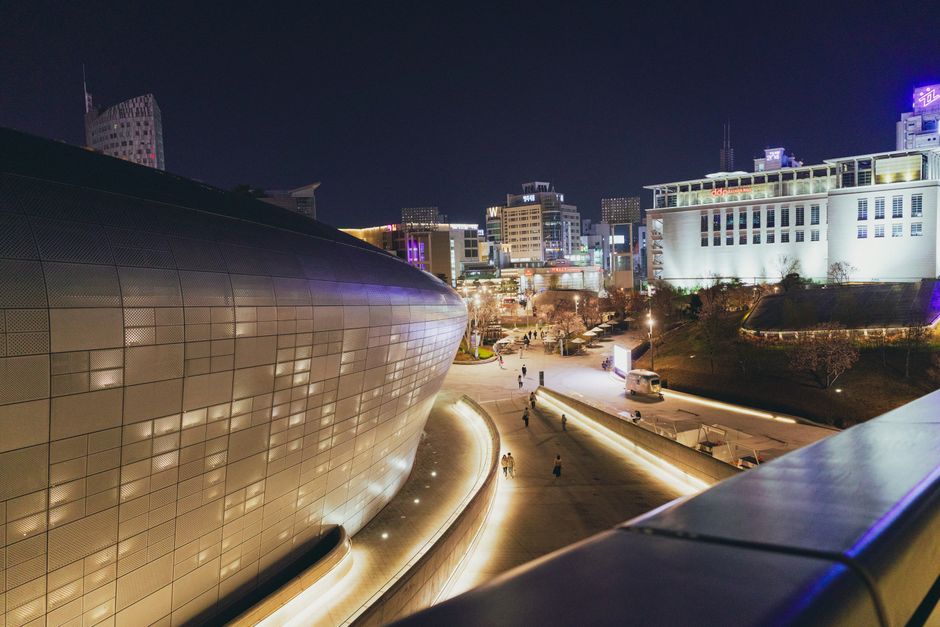
For modern Seoul, cross the Han River to the Dongdaemun Design Plaza, Zaha Hadid’s silver landmark that anchors a 24-hour shopping district. Nearby Cheonggyecheon, a restored 11km stream, is a cool walking corridor through downtown.
Art lovers should add the Leeum Museum in Hannam and the gallery lanes of Samcheong-dong. Both sit within a short walk of the palace circuit and break up a day of temples and gates.
When is the best time to visit Seoul?
Spring and autumn are the clear winners for weather and scenery. Late March to mid-April brings cherry blossoms along the Han River and Yeouido, while October delivers crisp air and foliage at Bukhansan.
Summer, from late June through August, is hot, humid, and includes the monsoon “jangma” rains. Pack a compact umbrella and expect afternoon downpours rather than all-day washouts.
Winter is cold and dry, with January lows near minus 6°C, but it is also low season with cheaper rooms. The palaces under a dusting of snow are genuinely beautiful if you dress for it.
Warning: Cherry-blossom week and the Chuseok holiday (autumn harvest, dates shift yearly) book out fast. Reserve guesthouses 6–8 weeks ahead for late March and early-October travel, or expect doubled rates.
How much does a day in Seoul cost?
A mid-range traveler can do Seoul comfortably on about ₩120,000 (roughly US$88) per day. That figure assumes a private guesthouse room, transit, two restaurant meals, and one paid attraction.
Budget backpackers can drop that to ₩55,000–70,000 with a dorm bed and street-food meals. At the other end, a hotel-and-taxi day in Gangnam climbs past ₩300,000 quickly.
Here is how I see a realistic mid-range day breaking down across the line items that matter.
| Item | Mid-range cost (KRW) |
|---|---|
| Guesthouse private room | ₩60,000 |
| Subway + bus (T-money) | ₩6,000 |
| Two restaurant meals | ₩28,000 |
| Coffee + snacks | ₩10,000 |
| One attraction / activity | ₩16,000 |
| Daily total | ~₩120,000 |
For live cost comparisons before you book, Numbeo and Trip.com both track Seoul hotel and meal prices, and Booking.com Genius members often see an extra 10–15% off mid-range rooms.
What and where should you eat in Seoul?
Seoul’s best eating splits between markets, barbecue houses, and late-night snack streets. Gwangjang Market is the classic first stop for bindae-tteok (mung-bean pancakes) and mayak gimbap at counter stalls, most under ₩8,000.
For Korean BBQ, look for samgyeopsal (pork belly) joints where staff grill at your table. A two-person spread with sides and a bottle of soju runs about ₩35,000–45,000.
Don’t skip the convenience-store ecosystem. A GS25 or CU stocks hot bansang meals, fresh gimbap, and the banana-milk-and-ramyeon combo that fuels late nights for under ₩6,000.
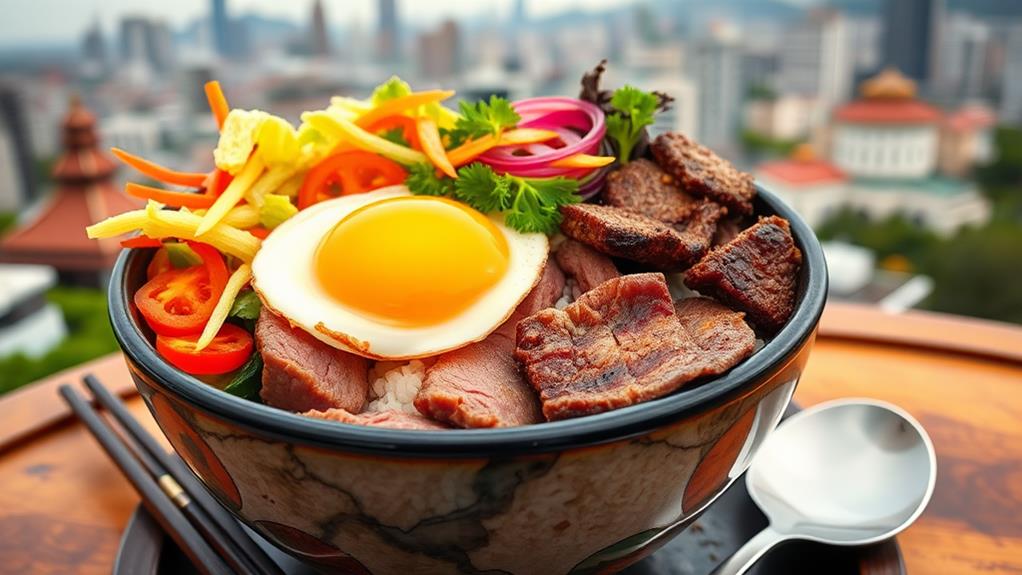
Vegetarians can eat well with a little planning. Temple-cuisine restaurants near Insadong, bibimbap without egg, and the growing cafe scene in Hongdae cover most needs, though many soups use anchovy or beef stock by default.
According to the Korea Tourism Organization, food and dining consistently rank among the top motivations cited by international visitors to Seoul, alongside shopping and the city’s historic palaces.
Pro Tip: Many smaller eateries and traditional-market stalls still prefer cash, and a few are cash-only. Carry ₩30,000–50,000 in notes for a day of market grazing.
On shopping, Myeongdong is the cosmetics and street-food strip, Dongdaemun runs late into the night for fashion, and Hongdae mixes indie boutiques with K-pop merchandise. Foreign-passport holders can claim instant tax refunds on purchases over ₩15,000 at participating stores.
How do you take a day trip from Seoul?
Seoul’s rail network makes several day trips easy without a car. The most popular is the DMZ, the demilitarized zone on the North Korean border, which must be visited on a guided tour for security and access reasons.
Suwon’s Hwaseong Fortress, a UNESCO World Heritage site, is a 35-minute ride on Line 1 and walkable in a half-day. Nami Island and the Garden of Morning Calm pair well via the Gyeongchun Line and a short shuttle.
For nature, the KTX high-speed train reaches Gangneung on the east coast in under two hours, putting beaches and Seoraksan within day-trip range if you start early.
Closer to home, Incheon’s Chinatown and Songwol-dong fairy-tale village are a 40-minute ride on the AREX or subway. It is an easy half-day if your flight leaves in the evening and you want to stay near the airport.
What should you know before you go?
Seoul is one of the safest large cities you will visit, but a few practical habits smooth the trip. Tap water is officially potable, though many locals drink filtered or bottled water out of taste preference.
Get connected on arrival. A tourist SIM or eSIM from KT, SK Telecom, or LG U+ is inexpensive and widely sold, with short-stay data plans commonly available, and the airport counters speak English. [unverified]
On etiquette, accept and pass items with two hands to elders, take shoes off in guesthouses and hanok, and stand right on escalators. Tipping is not expected anywhere, including restaurants and taxis.
According to the Korea Tourism Organization, for emergencies, dial 112 for police and 119 for fire or ambulance; the 1330 Korea Travel Hotline offers 24-hour help in English. Pharmacies (look for the green cross) are common, though many close on Sundays.
What does a 4-day Seoul itinerary look like?
Four days is the sweet spot for a first Seoul trip, balancing the historic core with one day trip. Here is the route I hand to friends arriving for the first time.
Day 1 — Palaces and old Seoul. Start at Gyeongbokgung for the 10:00 guard ceremony, walk up to Bukchon Hanok Village, then wander Insadong for tea and lunch. Close with sunset at N Seoul Tower on Namsan.
Day 2 — Markets and modern downtown. Graze breakfast at Gwangjang Market, follow Cheonggyecheon stream west, then explore the Dongdaemun Design Plaza. End in Myeongdong for cosmetics shopping and street food.
Day 3 — Day trip. Take a DMZ tour, or ride Line 1 to Suwon’s Hwaseong Fortress for a UNESCO half-day. Return for a Korean BBQ dinner in Hongdae and live music after.
Day 4 — Nature and farewell. Hike a Bukhansan trail in the morning, then relax along the Han River at Yeouido or Ttukseom. Save the afternoon for souvenir shopping in Insadong before the AREX train back to Incheon.
Pro Tip: Group sights by neighborhood, not by ranking. Seoul’s subway is fast, but back-and-forth across the Han River burns 40–60 minutes each way you will wish you had spent eating.
Key Takeaway
Sort the K-ETA (or confirm your waiver), take the AREX train in, base yourself in Myeongdong or Hongdae, and run everything else on a T-money card. Budget around ₩120,000 a day, carry some cash for markets, and use Naver or Kakao Map instead of Google for transit.
Frequently asked questions
Is Seoul expensive for tourists?
Seoul is mid-priced for a major Asian capital. Transit and street food are cheap, while hotels and taxis cost more; a mid-range day lands near ₩120,000 (~US$88).
How many days do you need in Seoul?
Four full days covers the palaces, two or three neighborhoods, and one day trip. A week lets you add the DMZ, Bukhansan, and a slower pace.
Can you use credit cards everywhere in Seoul?
Cards work at most shops, restaurants, and chains, but traditional markets, some street stalls, and T-money top-up machines remain cash-only. Carry ₩30,000–50,000 in notes.
Do people speak English in Seoul?
English signage is widespread on transit and at major sights, and younger staff often speak some English. A translation app still helps in markets and smaller restaurants.
Is the Seoul subway easy for first-time visitors?
Yes. Stations and trains show English names and numbers, lines are color-coded, and the Naver or Kakao Map app gives door-to-door transit routing in English.
What is the best month to visit Seoul?
October offers the most reliable mix of clear skies, mild temperatures, and autumn foliage. Early-to-mid April is the other top pick for cherry blossoms.
Do I need a tour to visit the DMZ?
Yes. The demilitarized zone is only accessible to tourists on authorized guided tours, which handle the security checkpoints and transport from central Seoul.
Last updated: 2026-06-03. Prices in Korean won (KRW) are current as of 2026 and approximate; exchange rates and fares change. Verify K-ETA requirements on the official k-eta.go.kr portal before travel.
Explore All Our Seoul Travel Guides
- 10 Must-Know Facts About Seoul and Busan Subway Systems
- 10 Must-Try Street Foods in Myeongdong Seoul
- 10 Must-Visit Hanok Guesthouses in Seoul for an Authentic Experience
- 24 Hours in Seoul: A Quick Itinerary
- 5 Budget-Friendly Street Food Spots in Seoul
- 5 Hidden Spots in Seoul You Must Explore
- 5 Must-Try Cheap Eats in Seoul
- 7 Best Luxury Hotels in Seoul for an Unforgettable Experience
- 7 Essential Korean BBQ Restaurants in Seoul You Must Visit
- 7 Must-Visit Autumn Foliage Spots in Seoul
- 7 Must-Visit Tea Houses for Sampling Traditional Korean Tea in Seoul
- 7-Day Seoul Itinerary for Culture Lovers
- Best Bibimbap Places to Try in Seoul
- Best Coworking Spaces for Digital Nomads in Tokyo and Seoul
- BudgetFriendly Accommodation Options in Beijing Seoul and Kyoto
- Bukhansan National Park Guide 2026: Trails, Maps & How to Get There
- Cheong Wa Dae (Blue House) Guide 2026: Tickets, Tours & Getting There
- Cheonggyecheon Stream Guide 2026: The Walk, Lights & Getting There
- Digital Nomads’ Tech Essentials Packing List for Tokyo and Seoul
- Dongdaemun & DDP Guide 2026: Night Shopping, Design Plaza & Getting There
- Experiencing the Seoul Lantern Festival: A MustSee Event?
- Free and Budget-Friendly Activities in Gangnam
- Gangnam Station Underground Shopping Guide 2026 & How to Get There
- Gwanghwamun Square Guide 2026: What to Do & Getting There
- Gwangjang Market Guide 2026: Best Street Food & Getting There
- Gyeongbokgung Palace Guide 2026: Tickets, Hours & Getting There
- Han River Parks Guide 2026: Best Spots & How to Get There
- Ikseondong Hanok Village Guide 2026: Cafes, Alleys & Getting There
- Insadong Guide 2026: Shop, Eat & How to Get There
- Jongmyo Shrine Seoul: Korea Royal Ancestral Rites
- Lotte World Seoul – Tickets, Attractions, History, and Visitor Guide
- Luggage Storage in Beijing, Seoul and Osaka
- N Seoul Tower & Namsan Guide 2026: Cable Car, Tickets & How to Get There
- Namdaemun Market Guide 2026: What to Buy, Eat & Getting There
- Navigating Public Transportation in Tokyo Shanghai and Seoul
- Royal Tombs Near Seoul: UNESCO Heritage Guide (2026)
- Samcheongdong Guide 2026: Cafes, Galleries & Getting There
- Seoul and Beyond: South Korea’s Best Cities to Visit
- Seoul Travel Guide for First-Time Visitors
- Seoul Travel Guide: Top Attractions, Culture & Experiences
- Starfield Library & COEX Guide 2026: Library, Aquarium & Mall
- Top 3 Famous Korean Dessert Cafes in Seoul
- Top 5 Glamping Sites Near Seoul for Luxurious Escapes
- Top 5 Urban Hanok Style Hostels in Insa-dong Seoul
- Traditional Korean Knot Making: Bukchon’s Heartbeat
- Try These Top 3 Spots for Ginseng Chicken Soup (Samgyetang)
- Weekend in Seoul: 2-Day Itinerary Guide
More on Korea Destinations:
Planning a trip to Korea?
Check out our Korea Travel Hub for more guides, including Korean BBQ Guide.

Written by East Asia Explorer Editorial Team
Sam Konneh is an AI strategist and digital marketer based in Seoul, South Korea. With years spent living, working, and exploring across Korea, Japan, and China, he shares firsthand insights into East Asia's cultures, hidden gems, and everyday life. A graduate of Inha University and KDI Graduate School, Sam combines data-driven expertise with on-the-ground experience. His journey also includes studying in Malaysia and traveling through Southeast Asia. Through practical tips, local stories, and travel guides, he helps fellow explorers discover both the celebrated highlights and the lesser-known corners of East Asia.