Last Updated: July 17, 2026 | Originally Published: October 16, 2023
- Budget CNY 3,500–6,000/month in Tier 1 cities (Beijing, Shanghai); CNY 2,000–3,500/month is realistic for Tier 2 cities like Chengdu or Wuhan
- The Chinese Government Scholarship (CSC) pays CNY 2,500/month (undergraduate), CNY 3,000 (master’s), or CNY 3,500 (PhD) — enough to cover Tier 2 costs entirely
- University cafeterias charge CNY 4–12 per meal via campus meal card (饭卡); this is the single biggest money-saving tool available to students
- Health insurance is mandatory and charged at registration — CNY 800–1,200/year for most universities’ Comprehensive Student Health Insurance (CSHI)
- Open a Bank of China (BOC) or ICBC account within the first 2 weeks — you need a Chinese bank account before you can fund your meal card, pay rent, or use Alipay/WeChat Pay with a local balance
Last updated: July 17, 2026
China’s student cost of living varies enormously by city tier — you can spend the same CNY 3,000 per month comfortably in Chengdu that barely covers rent in Shanghai. Having spent time researching student life across Chinese campuses for this guide, the single most consistent finding is that city selection matters more than any individual spending choice.
This article breaks down actual 2026 costs across accommodation, food, transport, banking, and extras, with specific numbers by city tier — and explains how scholarship stipends align with those costs.
How Much Does Accommodation Cost by City Tier?
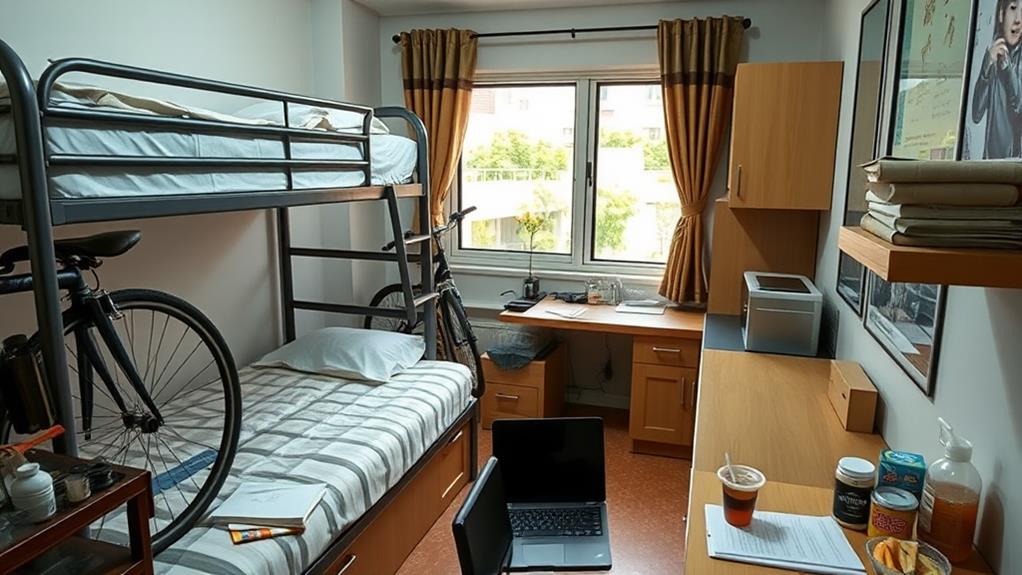
Accommodation is typically your largest expense, and Chinese universities offer both on-campus dormitories and off-campus apartment options.
| City Tier / Example Cities | On-Campus Dorm (CNY/month) | Off-Campus Studio (CNY/month) | Total Monthly Budget |
|---|---|---|---|
| Tier 1 Beijing, Shanghai | CNY 600–1,500 | CNY 2,500–5,000 | CNY 3,500–6,000+ |
| Tier 2 Chengdu, Wuhan, Xi’an, Nanjing | CNY 400–900 | CNY 1,200–2,500 | CNY 2,000–3,500 |
| Tier 3 Kunming, Guilin, Harbin | CNY 300–700 | CNY 700–1,500 | CNY 1,500–2,500 |
Most universities strongly recommend on-campus dormitories for first-year international students — the pricing is subsidized, campus security is included, and you avoid the complexity of signing a Chinese-language lease contract.
Does the Chinese Government Scholarship Cover These Costs?
The Chinese Government Scholarship (CSC), administered by China’s Ministry of Education, provides monthly living stipends at these fixed rates in 2026:
- Undergraduate students: CNY 2,500/month
- Master’s students: CNY 3,000/month
- PhD students: CNY 3,500/month
The CSC also covers full tuition and university accommodation fees separately — so the monthly stipend goes entirely toward food, transport, personal expenses, and leisure.
At a Tier 2 city, a CNY 3,000 master’s stipend covers all living costs with CNY 300–800 to spare each month. At a Tier 1 city like Beijing, the same stipend is tight — plan on supplementing with part-time work (legally permitted up to 20 hours/week on a student visa with university approval).
How Much Does Food Cost at Chinese Universities?
The campus meal card (饭卡) is the most underrated money-saving tool for international students. University cafeterias are subsidized — meals typically cost CNY 4–12, compared to CNY 25–60 at local restaurants and CNY 40–90 via Meituan (美团) food delivery.
The meal card works like a stored-value transit card. You top it up through the university’s own WeChat mini-program or dedicated campus app — note that regular Alipay or WeChat Pay does not work at most campus canteen terminals. Load it via the official channel in the first week of semester.
- Campus cafeteria breakfast: CNY 4–8 (congee + baozi, or noodle soup)
- Campus cafeteria lunch/dinner: CNY 8–15 (rice + two dishes)
- Local restaurant meal: CNY 20–40
- Meituan delivery: CNY 35–75 including delivery fee (heavily discounted with new-user promotions)
- Supermarket groceries (weekly): CNY 80–150 at Carrefour, Sam’s Club, or local wet markets
What Are the Transport Costs for Students in China?
China’s urban public transport is among the most affordable in the world for the infrastructure quality it delivers.
- Metro single ride: CNY 3–6 depending on distance and city (Beijing starts at CNY 3; Shanghai, Chengdu, Wuhan similar)
- Student monthly metro pass: Many cities offer half-price student cards — Wuhan’s metro card costs CNY 60–80/month for unlimited rides
- DiDi (ride-hailing): CNY 15–35 for intra-city trips; Didi Taxi is cheaper than Express for short routes
- Campus e-bike share (Hello Bike / Meituan Bike): CNY 1.5–3 per 30 minutes; CNY 25–35 for a monthly unlimited pass
- High-speed rail intercity (G/D trains): CNY 180–450 for student-discount second class tickets (12306 student card required)
What Other Mandatory Costs Should Students Budget For?
Beyond rent, food, and transport, these costs catch many students off guard:
- Health insurance (CSHI): Mandatory at registration. Most universities charge CNY 800–1,200/year. This covers outpatient visits at university clinics and reimbursement (60–80%) at affiliated hospitals.
- Residence permit fee: CNY 400 for the initial permit (within 30 days of arrival); renewals are typically free through the university’s foreign student office.
- SIM card + mobile data: China Mobile, China Unicom, or China Telecom student plans cost CNY 29–59/month for 20–100 GB data. Register with your passport at a carrier store.
- VPN (for Google, WhatsApp, Instagram): CNY 30–100/month for a reliable paid service. Free VPNs are unreliable behind China’s firewall. Budget for this if you need access to these services.
- Textbooks + printing: CNY 100–300 per semester. Chinese universities have low textbook costs versus Western counterparts; most departments also share digital resources.
“China remains one of the most cost-effective destinations for international higher education globally, with total annual living costs — including accommodation, food, transport, and insurance — ranging from approximately USD 3,500 to USD 8,000 depending on city tier,” according to the Chinese Ministry of Education’s 2026 international student services overview, which benchmarks these costs against OECD country averages.
How Do I Open a Chinese Bank Account as a Foreign Student?
A Chinese bank account is not optional — it is how you fund your campus meal card, pay rent, receive your CSC stipend, and use Alipay and WeChat Pay with a local balance. Open one within the first two weeks of arrival.
Three banks dominate international student use. Each has a different strength:
| Bank | Why Students Use It | Card Type | Annual Card Fee |
|---|---|---|---|
| Bank of China (BOC 中国银行) | Has dedicated international student branches on or near most major campuses; staff often speak English; fastest CSC stipend transfers | UnionPay debit (+ optional Visa/Mastercard dual-currency) | CNY 10 |
| ICBC (工商银行) | Largest ATM network in China; good if your city has limited BOC branches | UnionPay debit | CNY 10–20 |
| China Merchants Bank (CMB 招商银行) | Best mobile app (招商银行 app is in English); popular with tech-savvy students; good for online transfers | UnionPay debit | CNY 10 |
Most students choose Bank of China first because many universities process CSC stipend deposits directly into BOC accounts, and BOC branches inside university districts are accustomed to the international student document set.
Documents you need to bring — all four, on the same visit:
- Original passport (+ photocopy)
- Student visa or residence permit (X1/X2 visa or the residence permit if already issued)
- University enrollment confirmation letter (学籍证明 — get this from the International Students Office on Day 1)
- Temporary residence registration form (临时住宿登记 — issued by your dorm reception or local police station within 24 hours of arrival)
Minimum opening deposit is typically CNY 50–100 in cash. There is no ongoing minimum balance requirement at BOC or ICBC student accounts. Bring CNY 200 in cash to cover the deposit and any miscellaneous charges.
What Is a Realistic Monthly Budget Summary?
Combining all categories, here is what a typical month actually costs for an international student in China in 2026:
| Category | Tier 1 (Beijing/Shanghai) | Tier 2 (Chengdu/Wuhan) | Tier 3 (Kunming/Guilin) |
|---|---|---|---|
| Accommodation (dorm) | CNY 800–1,500 | CNY 400–900 | CNY 300–700 |
| Food (cafeteria + occasional restaurant) | CNY 800–1,200 | CNY 600–900 | CNY 500–700 |
| Transport | CNY 200–400 | CNY 100–200 | CNY 80–150 |
| Phone + VPN + misc | CNY 200–350 | CNY 150–300 | CNY 120–250 |
| Entertainment + travel | CNY 300–600 | CNY 200–400 | CNY 150–300 |
| Total Monthly Estimate | CNY 2,300–4,050 | CNY 1,450–2,700 | CNY 1,150–2,100 |
How Do I Receive Money From Home in China?
Many international students rely on regular transfers from family to cover living costs. China’s banking system handles international wire transfers, but the method you choose affects both the cost and how long you wait.
| Method | Fee | Transfer Speed | Best For |
|---|---|---|---|
| Wise (formerly TransferWise) | 0.4–1.5% of amount | 1–2 business days | Lowest cost for regular transfers |
| Western Union | CNY 35–120 fixed fee | 1–4 business days | Cash pickup option at agent locations |
| Bank Wire (SWIFT) | USD 25–50 sender’s bank + CNY 80–150 receiving fee at BOC/ICBC | 3–7 business days | Large one-time transfers only |
China’s State Administration of Foreign Exchange (SAFE) limits each individual to receiving the equivalent of USD 50,000 per calendar year in foreign currency. Most CSC scholarship students stay well under this limit. Self-funded students paying tuition from abroad may need to spread large transfers across two calendar years if costs approach the threshold.
How Does China Compare to South Korea and Japan for Student Costs?
Students choosing between East Asian study destinations often ask whether China is genuinely cheaper. The honest answer is yes — by a significant margin — but the gap depends on which Chinese city you choose and which Korean or Japanese city you compare against.
| Destination | Monthly Living Budget | ~USD/month | Flagship Scholarship |
|---|---|---|---|
| China — Tier 2 (Chengdu, Wuhan) | CNY 1,500–2,700/month | ~$210–$375 | CSC: CNY 3,000/month (master’s) |
| China — Tier 1 (Beijing, Shanghai) | CNY 2,500–4,500/month | ~$350–$625 | CSC covers basic costs; top up CNY 500–1,000 |
| South Korea — Seoul (SNU, Yonsei) | KRW 800,000–1,500,000/month | ~$590–$1,100 | KGSP: KRW 900,000/month — tight in Seoul |
| Japan — Tokyo (Waseda, Sophia) | JPY 100,000–200,000/month | ~$680–$1,350 | MEXT: JPY 143,000/month — tight in Tokyo |
| Malaysia — Kuala Lumpur (UTM, UM) | RM 1,200–2,000/month | ~$260–$430 | Scholarships less widely available for internationals |
According to JASSO (Japan Student Services Organization), the average international student in Japan spends JPY 130,000–170,000 per month on total living costs — roughly 2.5–3× what a Tier 2 China student spends on the same categories. The gap widens further when you account for part-time work access: Japan’s student visa allows up to 28 hours per week of legal part-time employment, which can offset costs substantially; China’s rules are more restrictive and require written university approval for off-campus work.
Off-Campus Housing in China: The 押一付三 Deposit System Explained
Moving off-campus can lower costs in some cities — but China’s standard lease deposit structure catches many international students by surprise. Understanding it before you sign anything is essential.
押一付三 (yā yī fù sān) is the standard lease arrangement across most Chinese cities. Literally: “one month security deposit plus three months rent upfront.” At signing you need four months’ worth of rent available in cash — before you’ve had time to settle in or earn any income here.
At a Tier 2 city studio (CNY 1,500–2,000/month), that’s CNY 6,000–8,000 due on Day 1 of your lease. At a Beijing or Shanghai studio at CNY 3,000–5,000/month, expect CNY 12,000–20,000 ready at the table.
| Platform | Type | Fee / Commission | Best For |
|---|---|---|---|
| Ziroom (自如) | Managed apartments (sub-leased from landlords) | 8–15% premium over local market rate; monthly payment option available | Furnished, verified photos, monthly payment avoids the large upfront lump sum |
| Lianjia / Beike (链家 / 贝壳) | Agency with verified landlords | Agent commission = 1 month rent (often split tenant/landlord); 押一付三 standard | Widest selection; landlord identity verified against 房产证 ownership certificate |
| University Housing Office list | Pre-vetted landlords approved for international students | No agent fee; landlords familiar with international student document requirements | Lowest risk; often offers 押一付一 (month-by-month) payment rather than 押一付三 |
The 24-hour registration rule: When you move into any off-campus address, Chinese law requires you to register at the local police station within 24 hours, co-signed by your landlord. Missing the deadline risks a fine. Ziroom agents routinely handle this paperwork for foreign tenants; if you rent through Lianjia or a private landlord, confirm the registration process before moving in.
Furnishing cheaply with Xianyu (闲鱼): Once you have a room, furnishing it is the next cost shock. Xianyu — Alibaba’s secondhand marketplace — is where departing students sell furniture and appliances at 20–70% below retail. Typical finds near campus: a study desk for CNY 50–150 (versus CNY 200–400 new at IKEA), a mini-fridge for CNY 100–250 (versus CNY 400–800 new), a desk chair for CNY 30–80. Filter the Xianyu app by your campus district to surface same-day pickup listings within walking distance.
How Much Can International Students Earn From Part-Time Work in China?
The FAQ below confirms part-time work is legal on an X1/X2 student visa with written university approval. What the FAQ doesn’t cover is what you can realistically earn — and whether it meaningfully offsets living costs.
Working 10–15 approved hours per week, international students typically earn CNY 1,200–3,500/month depending on role. Here are the four most accessible options in 2026:
| Role | Hourly Rate (CNY) | Typical Hours/Week | Monthly Estimate |
|---|---|---|---|
| Campus tutoring center (辅导中心) | CNY 50–100 | 6–10 | CNY 1,200–4,000 |
| Faculty research assistant (科研助理) | CNY 20–40 | 10–15 | CNY 800–2,400 |
| Paid English conversation partner / language tutor | CNY 60–120 | 5–8 | CNY 1,200–3,840 |
| University international events / cultural liaison | CNY 150–350/day | 2–5 days/month | CNY 300–1,750 |
The permit process runs in three steps: (1) apply to your International Students Office with the job description and department name; (2) the university issues an internal approval letter (大学同意函); (3) submit this plus your residence permit to the local Labour Bureau (劳动局) for the formal Work Permit for Study (打工许可证). Allow 2–4 weeks. Working without the permit risks visa status — enforcement in university districts is not rare.
Frequently Asked Questions
Can I work part-time as a student in China?
Yes, but with restrictions. Student visa holders (X1/X2) need written permission from their university and a work permit issued by the local labour bureau. On-campus roles (tutoring, research assistantships) are generally approved; off-campus commercial work requires more paperwork. The legal limit is 20 hours per week during term.
Is Numbeo’s cost-of-living data accurate for China?
Numbeo’s China city data is broadly directionally correct for off-campus costs but tends to overstate food costs because its data skews toward restaurant meals rather than campus cafeteria pricing. On-campus students spending through the meal card will spend notably less than Numbeo’s averages suggest.
How do I set up Alipay and WeChat Pay as a foreign student?
Both apps now support foreign debit and credit cards directly (this changed in 2023). Open Alipay, go to “International Card” in settings, and link a Visa/Mastercard. WeChat Pay’s process is similar under “Me → Services → Wallet.” For campus meal card top-ups, use the specific university WeChat mini-program — the general Alipay/WeChat wallet doesn’t connect to most campus canteen terminals.
What is the cheapest city to study in China?
Tier 3 cities — Kunming, Guilin, Harbin, Guiyang — offer the lowest costs, with total monthly budgets under CNY 2,000 achievable. Trade-offs include fewer international restaurants, less English spoken outside campus, and smaller job markets for post-graduation networking. Chengdu and Wuhan represent the best value-to-opportunity ratio for most international students.
Is health insurance mandatory for international students in China?
Yes. The Comprehensive Student Health Insurance (CSHI) is compulsory at virtually all Chinese universities and is billed automatically at registration. Coverage includes outpatient treatment at university clinics and partial reimbursement at affiliated public hospitals. It does not cover dental or vision unless you purchase the supplementary tier. Budget CNY 800–1,200/year.
Which bank is best for international students in China?
Bank of China (BOC) is the most practical first choice for international students. Most university campuses have a BOC branch or ATM, the staff at student-oriented branches often speak English, and many universities route CSC stipend payments through BOC accounts. ICBC is a strong alternative if BOC has limited presence in your city. China Merchants Bank (CMB) has the best mobile app (available in English) and is worth opening as a secondary account once you’re settled. All three require the same document set: passport, student visa, enrollment letter, and temporary residence registration.
What are the cheapest apps for everyday student shopping in China?
Three platforms cover 90% of student purchases, each suited to a different category:
| Platform | Best For | Typical Price (example) | Authenticity |
|---|---|---|---|
| Pinduoduo (拼多多) | Daily basics — cleaning supplies, bedding, cable organisers, stationery | USB-C cable: CNY 5–8 | Variable; fine for non-electrical basics |
| Taobao (淘宝) | Widest range — clothes, accessories, room decor, specialty items | Desk lamp: CNY 18–40 | Variable; check store ratings + reviews |
| JD.com (京东 — 自营) | Electronics, appliances, health products — buy 自营 (JD self-operated) items only | USB-C cable: CNY 28–55 | Authentic guarantee on 自营 items |
What does university tuition cost in China if I’m not on a scholarship?
Self-funded international students pay tuition set by each university. Annual tuition for undergraduate programmes at major universities in 2026–2026 typically ranges as follows: Peking University and Tsinghua University charge approximately CNY 24,000–36,000/year for most disciplines (engineering and science are lower; medical programmes are higher). Fudan University charges approximately CNY 20,000–28,000/year. Wuhan University and Sichuan University charge approximately CNY 16,000–22,000/year — significantly cheaper for an equivalent quality of programme. Always verify current tuition directly with the university’s international admissions office, as fees can change between academic years. The CSC scholarship covers 100% of tuition for recipients.
More on Study in China:

Written by East Asia Explorer Editorial Team
Sam Konneh is an AI strategist and digital marketer based in Seoul, South Korea. With years spent living, working, and exploring across Korea, Japan, and China, he shares firsthand insights into East Asia's cultures, hidden gems, and everyday life. A graduate of Inha University and KDI Graduate School, Sam combines data-driven expertise with on-the-ground experience. His journey also includes studying in Malaysia and traveling through Southeast Asia. Through practical tips, local stories, and travel guides, he helps fellow explorers discover both the celebrated highlights and the lesser-known corners of East Asia.