Published: September 2, 2026
Last updated: August 12, 2026
Quick Answer: China’s Golden Triangle Itinerary 2026
- Beijing → Xi’an → Shanghai covers imperial history, the Terracotta Army, and modern China in one HSR loop
- Budget 9-10 days minimum: 3 in Beijing, 2-3 in Xi’an, 3 in Shanghai, plus travel days
- High-speed rail links all three cities — Beijing–Xi’an runs about 4.5-5.5 hours, Xi’an–Shanghai about 6-6.5 hours
- Many passport holders can enter visa-free for up to 240 hours (10 days) transiting through these exact three cities — check current eligibility before booking
The “Golden Triangle” isn’t an official tourism board term — it’s what independent travelers and China-focused travel forums have called the Beijing–Xi’an–Shanghai loop for over a decade, because it’s the single route that covers imperial China, the Terracotta Army, and modern skyline China without doubling back.
I’ve routed this trip for friends three separate times since 2023, and the question that trips people up every time isn’t which cities to see — it’s how many days each city actually needs, and whether the visa-free transit policy applies to their specific passport and route.
This guide breaks down the classic 9-10 day version: the high-speed rail legs, a realistic day-by-day split, what each city’s must-sees actually cost, and the transit-visa rules that let many travelers skip the visa application entirely.
For single-city detail, see our guides to Tiananmen and the Forbidden City, the Terracotta Army, and The Bund in Shanghai.
Why Beijing–Xi’an–Shanghai and Not a Different Route

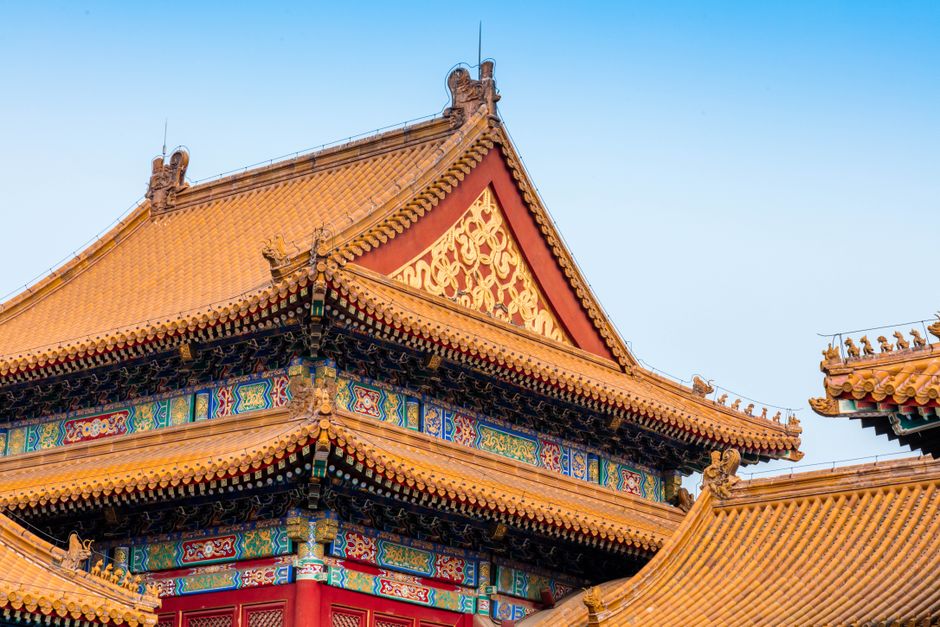
Beijing gives you the Ming and Qing dynasties: the Forbidden City, the Great Wall, the Summer Palace. Xi’an gives you the Qin dynasty and the Silk Road’s eastern terminus — the Terracotta Army and a fully intact 14th-century city wall.
Shanghai gives you the 20th and 21st centuries: colonial-era architecture on the Bund facing Pudong’s skyline across the Huangpu River.
No other three-city combination in China covers that much historical range with direct high-speed rail connections between all three stops. Chengdu adds pandas but requires backtracking; Guilin adds karst scenery but sits outside the HSR triangle’s efficient loop.
Pro Tip: Route Direction Matters
Fly into Beijing and out of Shanghai (or reverse) rather than flying round-trip through one city. Beijing Capital (PEK) or Daxing (PKX) in, Shanghai Pudong (PVG) out — this avoids a backtrack HSR leg and typically costs the same as a round-trip fare on most international carriers.
How Many Days You Actually Need
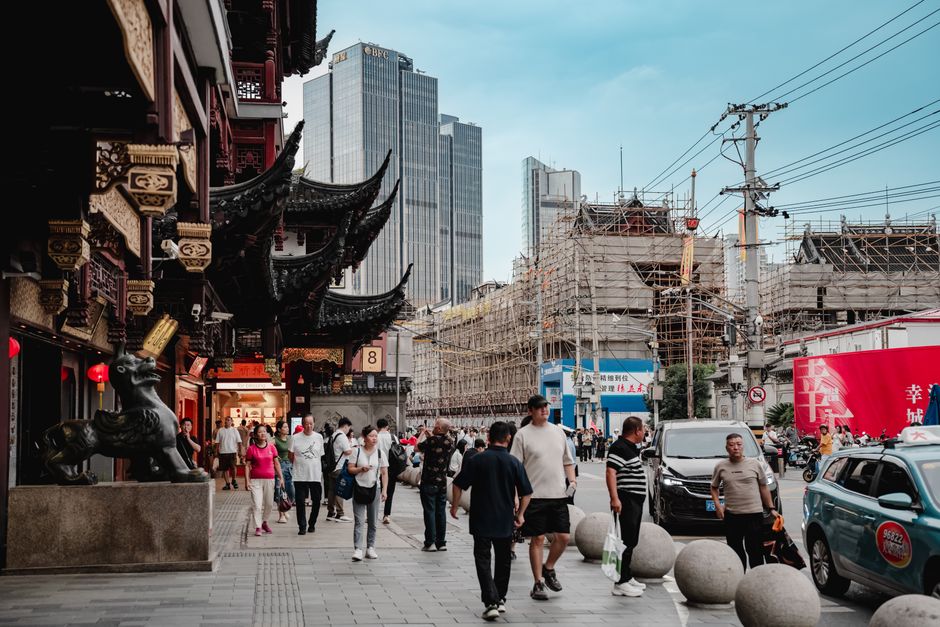
Nine days is the practical minimum for a first-timer who wants to see the headline sights without rushing every stop. Ten to twelve days lets you add the Great Wall at Mutianyu (a full day) or a Xi’an side trip to the Hua Shan cliffside trails.
| City | Minimum Days | Comfortable Days | Why |
|---|---|---|---|
| Beijing | 3 | 4-5 | Forbidden City, Great Wall day trip, and Tiananmen area alone fill 2 full days |
| Xi’an | 2 | 3 | Terracotta Army is a half-day trip alone; city wall and Muslim Quarter fill the rest |
| Shanghai | 3 | 4 | The Bund, Yu Garden, and French Concession each need a half-day minimum |
| Travel days | 1 | 1-2 | HSR legs eat 4.5-6.5 hours but you can arrive by early afternoon |
Getting Between Cities: High-Speed Rail Times and Fares
All three legs run on China’s G-series high-speed trains, which top 300 km/h on the newer lines. You board at Beijing West (Xi’an leg) or Beijing South (Shanghai leg), Xi’an North, and Shanghai Hongqiao.
| Route | Journey Time | 2nd Class Fare | Station Pair |
|---|---|---|---|
| Beijing → Xi’an | ~4.5-5.5 hrs | ~¥515-575 | Beijing West → Xi’an North |
| Xi’an → Shanghai | ~6-6.5 hrs | ~¥660-710 | Xi’an North → Shanghai Hongqiao |
| Beijing → Shanghai (skip Xi’an option) | ~4.5-5.5 hrs | ~¥550-660 | Beijing South → Shanghai Hongqiao |
Fares fluctuate by train speed tier and how far ahead you book — treat these as planning ranges, not fixed prices, and confirm current fares in the 12306 app before finalizing a budget.
Warning: Book HSR Tickets Ahead of Golden Week
Tickets for the Beijing-Xi’an-Shanghai corridor sell out fast around China’s Golden Weeks (May 1-5, Oct 1-7) and the week around Chinese New Year. Book at least 2 weeks ahead for those dates — the 12306 system releases tickets exactly 15 days before departure.
Beijing Leg: The Forbidden City, the Great Wall, and the Summer Palace
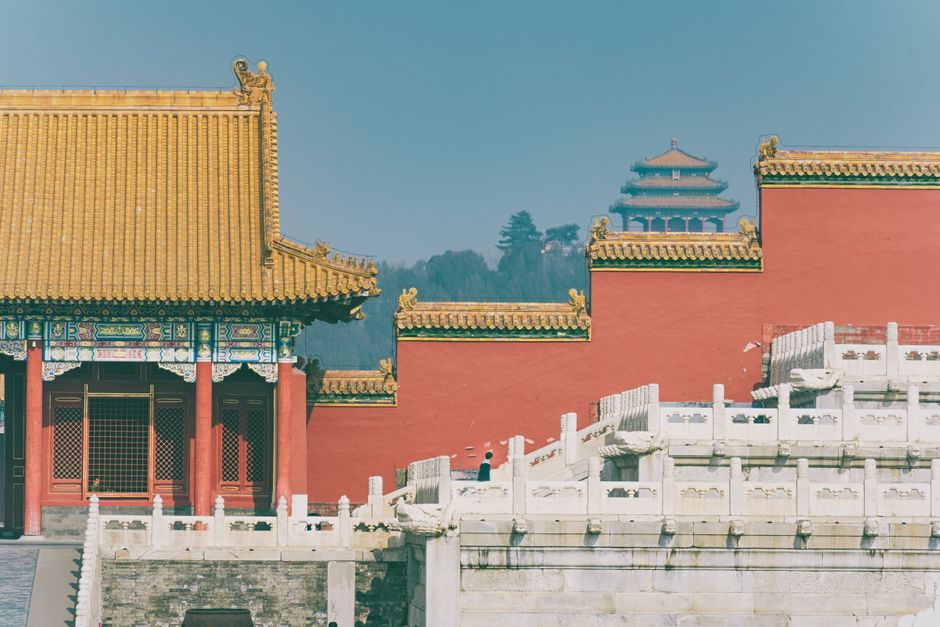
Three days is tight but workable. Day one covers Tiananmen Square and the Forbidden City — book Forbidden City tickets online in advance, since there’s no walk-in option. Day two is a full-day trip to the Great Wall.
Mutianyu is the better section for first-timers over Badaling: fewer tour buses, a cable car option, and a toboggan ride down. Day three covers the Summer Palace, reachable via Metro Line 4 to Beigongmen Station.
I’d add a half-day for the Temple of Heaven if your schedule allows a fourth day — it’s a shorter, calmer visit than the Forbidden City and shows a different architectural style entirely.
Xi’an Leg: The Terracotta Army and the City Wall
The Terracotta Army sits about an hour from central Xi’an — Bus 306 (also signed as 游5) runs directly from the Xi’an Railway Station to the site. Budget a half-day for Pit 1, the largest and most photographed of the three excavation pits.
Xi’an’s Ming-dynasty city wall is fully intact and walkable or bikeable on top — a 13.7 km loop that most visitors ride in 2-3 hours by rental bike rather than walk in full.
The Muslim Quarter, just inside the wall’s north gate, is where you eat: roujiamo (Chinese hamburger), liangpi cold noodles, and Xi’an-style biangbiang noodles.
Pro Tip: Combine the Terracotta Army with Huaqing Palace
Huaqing Palace, a Tang-dynasty hot spring complex tied to the Xi’an Incident of 1936, sits roughly 20 minutes from the Terracotta Army site by taxi. Most guided day tours bundle the two — worth doing if you’d otherwise have a half-empty afternoon in Xi’an.
Shanghai Leg: The Bund and Beyond
Start on The Bund at dusk, when the colonial-era buildings on the west bank and Pudong’s neon skyline on the east bank are both lit. Cross via the Bund Sightseeing Tunnel or the Metro to see Pudong’s observation decks up close.
Give a half-day to Yu Garden and the Old Town, and another half-day to the French Concession’s tree-lined streets — Wukang Road and Anfu Road hold Shanghai’s best café and boutique density.
Three days lets you add a Shanghai Disneyland day if traveling with kids, or a day trip to West Lake in Hangzhou, reachable in about an hour by HSR.
Budget Breakdown for the Full Trip
| Category | Budget (per person) | Mid-range (per person) |
|---|---|---|
| HSR (3 legs, 2nd class) | ~¥1,700-1,900 | ~¥1,700-1,900 |
| Hotels (9 nights) | ~¥2,700 (¥300/night, 3-star) | ~¥5,400 (¥600/night, 4-star) |
| Attraction tickets (all 3 cities) | ~¥700-900 | ~¥700-900 |
| Food (9 days) | ~¥900 (¥100/day) | ~¥2,250 (¥250/day) |
That puts a budget 9-day trip around ¥6,000-6,400 per person (roughly $830-890 USD) excluding international flights, and a mid-range version around ¥10,300-11,000 (roughly $1,430-1,530 USD). Both exclude visa fees, which the transit policy below can eliminate entirely for many travelers.
The 240-Hour Visa-Free Transit Policy: Do You Need a Visa At All?
China’s National Immigration Administration has progressively expanded its visa-free transit policy since 2013, and by 2026 it covered stays of up to 240 hours (10 days) at a growing list of entry ports for eligible passport holders — provided you enter and exit through different ports and don’t leave the permitted transit area.
Beijing, Xi’an, and Shanghai are all included ports under this policy for many nationalities, which is part of why the Golden Triangle route works so well without a visa application for eligible travelers on a 9-10 day trip.
Eligibility, permitted duration, and covered ports change by nationality and have been updated repeatedly in recent years — travelers should verify current terms directly with China’s National Immigration Administration or a Chinese embassy/consulate before booking flights around this policy.
— per China National Immigration Administration transit-visa guidance
Warning: Different Entry and Exit Ports Required
The visa-free transit policy typically requires entering and exiting China through different ports (for example, flying into Beijing and out of Shanghai) and holding a confirmed onward ticket to a third country. Flying round-trip through the same city usually does not qualify. Confirm your exact routing meets current requirements before you commit to non-refundable flights.
Booking HSR Tickets: 12306 vs Trip.com
China Railway’s official 12306 app is the cheapest option — no booking fee — but its English interface is limited and it requires a Chinese phone number or passport-linked account for some features.
Trip.com’s English-language app books the same trains with a small service fee and accepts foreign cards without friction.
Pro Tip: Book Through Trip.com, Then Learn 12306
Book your first HSR leg on Trip.com to avoid app friction on arrival day. Once you’re in China with a working SIM or eSIM, register a 12306 account for later legs — it releases seat inventory a few minutes before Trip.com’s mirrored inventory during high-demand periods.
Sample 9-Day Golden Triangle Itinerary
- Day 1-3, Beijing: Forbidden City + Tiananmen (Day 1), Great Wall at Mutianyu (Day 2), Summer Palace + Temple of Heaven (Day 3)
- Day 4, Travel: HSR Beijing West → Xi’an North (~5 hrs), afternoon at the city wall
- Day 5-6, Xi’an: Terracotta Army + Huaqing Palace (Day 5), Muslim Quarter food crawl + Big Wild Goose Pagoda (Day 6)
- Day 7, Travel: HSR Xi’an North → Shanghai Hongqiao (~6.5 hrs)
- Day 8-9, Shanghai: The Bund + Yu Garden (Day 8), French Concession + Pudong observation deck (Day 9)
Key Takeaway: Golden Triangle Planning Checklist
- Budget 9 days minimum: 3 Beijing, 2-3 Xi’an, 3 Shanghai, plus travel days
- Book HSR tickets 2+ weeks ahead around Golden Week and Chinese New Year
- Check the 240-hour visa-free transit policy against your passport before applying for a visa
- Fly into Beijing, out of Shanghai (or reverse) to avoid backtracking
- Budget roughly ¥6,000-11,000 per person excluding international flights
FAQ: China Golden Triangle Itinerary 2026
Is 9 days enough for Beijing, Xi’an, and Shanghai?
Yes, 9 days is the practical minimum: 3 days in Beijing, 2-3 in Xi’an, and 3 in Shanghai, with the remaining time spent on high-speed rail transfers. Ten to twelve days gives more breathing room if you want to add Hua Shan or a Hangzhou day trip.
How long does the train from Beijing to Xi’an take?
The Beijing West to Xi’an North high-speed rail journey takes approximately 4.5-5.5 hours depending on the specific train, with second-class fares typically running around ¥515-575. Book through the 12306 app or Trip.com.
Can I skip Xi’an and just do Beijing and Shanghai?
Yes, and the direct Beijing-Shanghai HSR runs about 4.5-5.5 hours. But skipping Xi’an means skipping the Terracotta Army, which most first-time China travelers consider a core reason to make the trip at all.
Do I need a visa for this route?
Many travelers can use China’s visa-free transit policy, which covers stays up to 240 hours (10 days) at ports including Beijing, Xi’an, and Shanghai, provided you enter and exit through different ports with onward tickets. Eligibility varies by nationality — verify current terms with China’s National Immigration Administration before booking.
Which city should I visit first: Beijing or Shanghai?
Starting in Beijing works better logistically for most international flights and lets you build historical context (imperial China, then the Silk Road, then modern China) before finishing in Shanghai. Reverse the order if your flights make more sense that way — the route works both directions.
What’s the best way to book high-speed rail tickets from outside China?
Trip.com’s English-language app is the most friction-free option for foreign travelers, accepting international cards without needing a Chinese phone number. China Railway’s own 12306 app is cheaper but has a steeper setup process for non-Chinese passport holders.
How much should I budget per day for this trip?
Excluding international flights and hotels, a budget traveler can expect around ¥150-200 per day for food and local transport; mid-range travelers should budget ¥300-400 per day. Add hotel costs of ¥300-600 per night depending on comfort level.
Is the Great Wall included in a Beijing stop on this itinerary?
Yes — allow a full day for a Great Wall trip from Beijing. Mutianyu is the recommended section for first-timers: less crowded than Badaling, with a cable car and toboggan option that Badaling doesn’t offer.
For more on China travel, see our Beijing vs Shanghai comparison and China safety guide for 2026.
More on China Destinations:

Written by East Asia Explorer Editorial Team
Sam Konneh is an AI strategist and digital marketer based in Seoul, South Korea. With years spent living, working, and exploring across Korea, Japan, and China, he shares firsthand insights into East Asia's cultures, hidden gems, and everyday life. A graduate of Inha University and KDI Graduate School, Sam combines data-driven expertise with on-the-ground experience. His journey also includes studying in Malaysia and traveling through Southeast Asia. Through practical tips, local stories, and travel guides, he helps fellow explorers discover both the celebrated highlights and the lesser-known corners of East Asia.